

Latest News
‘We’ve lost half our deposit’: About 4000 first-home buyers owe more than their homes worth


Rising interest rates are not welcome news for most borrowers, but they hit especially hard for those who are paying off a home loan on a house that is now worth less than they paid for it.
Cotality chief economist Kelvin Davidson said, assuming all first-home buyers had a 20 percent deposit at the time they purchased, there were still about 3600 households nationwide who now owed more than the value of their homes.
Most would be people who had bought during the peak of the market, in late 2021 and early 2022. Prices are still down about 17 percent since that point, and more than 20 percent in Auckland and Wellington. Some parts of the country, such as Canterbury and Otago, have since returned to the prior peaks.
The true number in negative equity is likely to be higher than 3600 because many bought with a deposit much smaller than 20 percent. Cotality said about 29,000 first-home buyers bought properties during the 18-month peak of the market and a large proportion of them would now still be worth less than they paid.
Some recent buyers have posted anonymously on social media in recent weeks, sharing the human implications of the downturn.

Is there any point in KiwiSaver if I’m on a total remuneration package?
One said they were separating from a partner and worried that their townhouse would not sell because next door was vacant and had not sold. “Our CV is down by $100,000 from our purchase price. Either way we will be in debt with mortgage repayments even if the house sells.”
Another who said they had bought a house in 2023 had seen their house value drop $80,000, even though they missed the peak.
“When you add the $35,000 agent fee to sell, we’ve lost half our deposit.”
Another said they had been left jealous of renters. “I bought at the peak in 2021 and the house has dropped at least $200,000 easily. It’s taken years to accept this is one financial mistake I’ve made which won’t kill me but still hurts.”
Some buyers talked about being stuck in townhouses and apartments longer than they intended to, because they had listened to advice that they did not need to buy a “forever home” first up.

SUPPLIED
Davidson his data assumed that they had not paid off much of the mortgage yet, which would be normal for a new borrower with a table loan. A large part of early repayments is interest and only a small amount goes to principal.
“It can’t be great for the mindset to be in negative equity, but it’s not necessarily a huge problem if people keep servicing the debt, which the majority are, there are hardly any non-performing loans at present. The bank won’t come knocking solely because of negative equity.”
Kiwibank chief economist Jarrod Kerr said it could be tough going for some people. He said he bought his first house in 2007, which then lost value and did not recover for years. There was a mental element to falling prices, he said.
“With interest rates going up on top of what is being labelled a cost of living crisis, it’s unhelpful, it really is. It’s not what we should be doing right now, in my opinion.”
Bruce Patten, chief executive at New Zealand Financial Services Group, said negative equity was primarily a problem when people needed or wanted to move.

Supplied / NZFSG
“Our recommendation to them is, sit tight for a few more years, until the market starts moving again. So far, touch wood, we haven’t had a situation similar to that during the GFC, when there were lots of mortgagee sales with negative equity, leaving people with personal loans after their properties sold and nothing to show for it.
“The main advice is to speak to your adviser if you are struggling. We can help negotiate interest-only payments or repayment holidays in some cases but do your best to ride this point in time out.”
Campbell Hastie, of Hastie Mortgages, said he advised people to keep paying their mortgages and try not to think about it. He said he would look at borrowers’ equity positions when they came to refix mortgages because people who had bought with less than a 20 percent deposit were usually also paying a low equity premium on top of their interest rates, too.
“The fact of whether your equity position is improving or not in a sense sort of doesn’t matter so long as your loan is going down.
“That’s what a principal and interest loan is… so long as you’re making your minimum commitment there as long as the bank is concerned, they are not going to squawk at you.”
While Kerr said falling house prices could make people more reluctant to invest, such as business people seeking borrowing secured against their home, Otago University economist Murat Ungor said the number was likely too small to make a large difference.
“For those 3600 households, this is real and it is painful. Negative equity is a balance-sheet problem, not a cash-flow one, as long as they keep servicing the mortgage. The bank is not calling the loan provided they keep paying. But it does trap people: they cannot easily sell to move for a better job, and they cannot use their home as collateral to start a business. So there will be individual stories of lost opportunity. But as a drag on national investment or the wider economy? No. This is a personal finance story, not an economic one.”
rnz


The Ministry of Foreign Affairs and Trade says police are supporting the families of five New Zealanders who remain missing after August’s catastrophic flash flood at the Nepal-China border.
A massive flash flood, believed to have been triggered by a glacial collapse, tore through a Himalayan valley on 26 August, burying villages.
The disaster killed more than 1300 people, with at least 5000 others unaccounted for, according to latest reports on both sides of the border.
In New Zealand, community groups have raised more than $200,000 for the flood victims, according to former honorary consul for Nepal Dinesh Khadka.
“I’m so proud of the Indian community here who … supported us, saying it is not a Nepal problem but our problem,” Khadka said.
He said about 80 percent of the donations had come from New Zealand’s Indian community.

Supplied
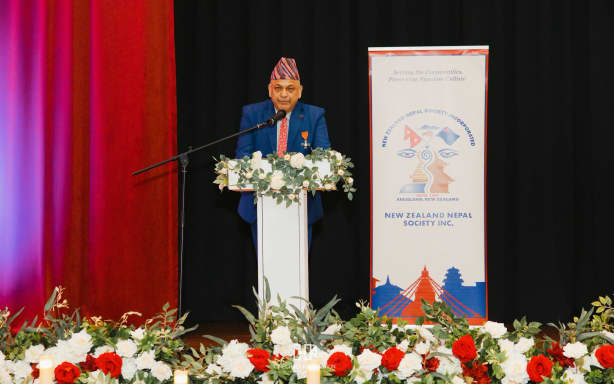
Last week, the Nepali community raised $100,000 through a fundraising dinner at the Freemans Bay Community Centre in Auckland.
The Central Sikh Association donated $50,000 to Nepal that same night.
Earlier this month, Gurdwara Shri Dashmesh Darbaar Sahib in Papatoetoe pledged $15,000, which was matched by the New Zealand Indian Central Association.
Shiv Mandir in Manurewa donated $4000, while Manurewa Local Board member Marshal Ahluwalia and National Party Manurewa candidate Ghouse Majeed donated $7500.
Khadka said the Federation of Islamic Associations of New Zealand had pledged $5000, which would be directly deposited into Nepal’s Prime Minister’s Disaster Relief Fund.
Other fundraising events included a dosa event in Māngere organised by Thiru Subramaniyar Aalayam on 5 September, and a fundraising dinner organised by the Nepal-New Zealand Friendship Society of Canterbury in Rolleston on 12 September.
A similar dinner was organised by the Waikato Indian Association and Nepal-New Zealand Waikato Friendship Society in Hamilton on 9 September, while the Taranaki Nepalese Community is planning a fundraising dinner in New Plymouth on 26 September.
He said the fundraising was a temporary effort to support people who had lost everything in the floods.
“Nepal will take decades to rebuild and whatever we raise now will go to the people who are in most need right now,” he said.
Khadka said more fundraising events were being planned across New Zealand.
Next week, Wellington Mutamizh Sangam’s youth wing will hold a youth festival to raise funds for Nepal, while the Indian Film Festival in October has also pledged to support fundraising efforts for the country, with a Nepali film included in its programme.
Khadka said the response had shown him how much New Zealanders cared about Nepal.
“Wherever we go, I see New Zealanders approaching me and asking how they can support Nepal,” he said.
“That makes me proud of New Zealand and how lucky we are to be called New Zealanders.”
Khadka also warned that some organisations were using the disaster to make money.
“It is very sad to see that there are organisations who are raising money but it doesn’t reach the Prime Minister’s Disaster Relief Fund, so my request to people who are donating their hard-earned money is to make sure that you donate through the right channels,” he said.
Supplied
Khadka said he was receiving regular updates from Nepal Police, who were doing their best to recover bodies and search for survivors.
“More than 1400 bodies [have] already [been] found but they’re looking through the rubble and buildings to find more than 5000 bodies or even survivors,” he said.
Khadka said he did not have an update on the missing New Zealanders.
Five New Zealanders remain missing following the deadly flash floods: Dejan Kuzmic, Shweta Mhatre, Mihir Patel, Kinnari Patel and Suhasini Reddy.
More than 300 foreign nationals have been rescued, according to an update from Nepal’s National Disaster Risk Reduction and Management Authority.
No New Zealanders have been included in that number.
RNZ understands Mhatre and Kuzmic were part of the Isha Foundation’s pilgrimage, and Sadhguru had previously said two New Zealanders were missing from his trekking group.
Meanwhile, Reddy’s family has called on rescuers not to stop searching for the 44-year-old after conflicting reports about her status emerged online.
Reddy’s brother Rajeev and his wife Lauren urged people to keep searching for survivors in a Facebook post several weeks ago.
A spokesperson for the Ministry of Foreign Affairs and Trade said New Zealand’s consular response team in Kathmandu was engaged with local authorities and the Nepalese Government.
“However, challenges on the ground mean that new, verified information will continue to take time to emerge.”
A spokesperson for the Ministry of Foreign Affairs and Trade said New Zealand had extended an offer of technical expertise to aid Nepal’s response effort in addition to humanitarian assistance worth $3.5 million to support the humanitarian response.
rnz
Latest News
NRL finals schedule: Who plays who in week 2 and how the Warriors can make the Grand Final

The Warriors will need to take the hard path to the NRL Grand Final, having lost to the Dolphins in their qualifier at Go Media Mount Smart Stadium.
A victory in week one would have seen the Warriors take a week off and advance straight to the preliminiary finals in week three.
Instead they’ll take on the Newscastle Knights in a must-win elimination final on Sunday.
Here’s who plays who next:
Week two: Semi-finals
The teams that lost their qualifying finals get another chance. They play the winners of the elimination finals in two sudden death games.
The two winners would then move on to the preliminary finals.
- Cronulla Sharks v Sydney Roosters, Saturday, 9.50pm at Allianz Stadium, Sydney
- Warriors v Newcastle Knights, Sunday 6.05pm at Eden Park, Auckland
Warriors boss Cameron George is expecting Sunday’s game to sell out, in what he describes as an international for his side.
“It’s us versus Australia. So the more people we get there, the better New Zealand will be.
“There are 17 teams in this comp and we’re the only one from here so it’s us against them. This is our New Zealand grand final in the NRL and it’s pretty special.”
Warriors club members can buy tickets from midday Monday with general public tickets going on sale Tuesday.

Andrew Cornaga/www.photosport.nz
Week three: Preliminary final
The four remaining teams play in the preliminary finals.
The Panthers and Dolphins have advanced straight to the prelims where they’ll meet the winners of the semi finals.
If the Warriors win against the Knights this weekend, they’ll go on to play the Panthers.
The winner of the Sharks v Roosters match this weekend will face the Dolphins.
The winners book their place in the Grand Final.
rnz


National vows to try to split Pak’nSave and New World

Tom Phillips report: The missed opportunities to find the children

Pieces still missing from Tom Phillips inquiry – academic


-

 Fiji News2 months ago
Fiji finalising diaspora policy to ensure citizens abroad ‘keep coming back’
-

 Latest News2 months ago
41 percent of Kiwis taking on debt to cover increased living costs – Kiwibank
-

 NZ News2 months ago
Mother of Marokopa children says Tom Phillips would take her phone to stop 111 calls
-

 Latest News2 months ago
Police searching for missing woman recover body in West Auckland
-

 NZ News2 months ago
Coroner told about LynnMall terrorist’s time in prison’s extreme risk unit
-

 NZ News2 months ago
Queenstown bouncers guilty of selling drugs while on the job
-

 Sports2 months ago
Junior Bula Boys reach OFC U-16 final, seal U-17 World Cup berth
-

 World2 months ago
Ex-Fiji prosecutions office employee ‘scared to leave Australia’ after leaked corruption allegations