Connect with us

HTML Image

i

NZ News

Driver fatigue blamed for crash near Picton that killed 7 family members

Published

on

A coroner has found seven members of the same family died when their van crashed head on into a truck near Picton last year because the driver was fatigued.

The van carrying nine people crashed after crossing the centre line of State Highway 1 on 19 June 2022.

Paul Brown, his wife Diseree Lagud, Mark John Lagud,15, Flordeliza Dolar, 19, Divina Dolar, 47, Li-Hsuan Chen, and Mika Ella Chen Clariman, aged six months, died in the crash.

Coroner Alison Mills found the driver, Paul Brown, had been experiencing microsleep, when a person drifts in and out of sleep without knowing it.

“These naps can last between three and five seconds and are the main cause of fatigue-related crashes where the driver runs off the road.

“If this happens while driving it can cost you and your loved ones their lives.”

She concluded Brown had no more than three hours and 50 minutes sleep in the 24 hours before the accident.

Although it was possible he may have had slightly more sleep between Timaru and Rolleston Mills, she said she accepted it would have been minimal and would not have been meaningful deep sleep.

The van’s break filaments showed no signs of hot shock, indicating they were not illuminated and that the brakes were not used during the crash.

Nor was there any physical evidence Brown reacted or made an effort to avoid colliding with the oncoming truck.

Brown and his wife Diseree Lagud, together with seven members of their extended family had planned the trip to attend Brown’s aunt’s funeral in Gore, which was held the day before the fatal crash, and to visit his mother in Dunedin.

It was meant to be a chance to show family visiting from the Philippines parts of the South Island.

Brown was described as a “very safe driver” who always kept to the left because it was safer, was not known to drive fast and always told passengers to wear their seat belts, the report said.

On the morning of the fatal crash, Brown woke his family at 2.30am and told them to get in the van. Brown had had no sleep because he was talking to his friend.

His wife’s 26-year-old son Pedro Lagud Clariman commented he thought they were going to stay and sleep at the friend’s house until about 5am, but Brown wanted to get to Picton early and have breakfast before catching the midday ferry.

Brown’s friend confirmed in the Coroner’s report that he offered the family a chance to stay despite not having enough beds for everyone. He and Brown spent the night chatting as they had not seen each other for four years.

He provided hot drinks and food but no alcohol.

He had no concerns about the family’s choice to continue driving after they left.

The family left Rolleston at around 3am with Pedro in the driver’s seat for almost four hours, though he pulled over for a 15-minute break because he felt sleepy.

Brown took over the driving.

Richard Thompson, the driver of the truck and trailer unit, said as he came around the bend on State Highway 1 he saw a van coming towards him which kept coming across the centre line.

He said he tried to avoid the van by hugging the left side of the road and applying the brakes but was unable to avoid the collision.

He lost steering of the truck as the wheel locked up while he was pulling hard on it.

The truck ended up in a ditch on the opposite side of the road and rolled over.

The crash knocked the van backwards about 20 metres. It was extensively damaged, including the driver’s side being mangled and pushed back and over to the right passengers side.

At the time of the accident, Pedro remembers dozing and listening to the noise of the van. He could not hear anything then suddenly felt and heard an impact.

He opened his eyes and felt his legs and face hurting.

Pedro’s six-month-old daughter Mika was not restrained properly in her car seat. The baby capsule was found lodged against the pillar by the driver’s seat and was severely damaged.

Several members of the public including two nurses arrived at the scene and attempted to provide first aid and assess injuries.

When Pedro managed to get out of the van he was in extreme shock.

Coroner Alison Mills said the accident was avoidable and a reminder of the real risks of driving when tired or fatigued.

She encouraged drivers to be aware of the signs of fatigue, plan journeys that did not involve travelling excessive distances and make sure they got sufficient sleep.

Source: RNZ

Photo: Trish Rawlings

Continue Reading
Click to comment

Leave a Reply

Your email address will not be published. Required fields are marked *

NZ News

Football player Shinnichiro Joey Omotani lured drunk woman out of pub before sexual assault

Published

on

A representative football player lured a drunk woman out of a pub and took her to a nearby casino where he was seen on CCTV trying to kiss her as she pulled away from him.

Shinnichiro Joey Omotani then helped the woman into a taxi and took her to his home, where he left her sitting on the footpath with her head in her hands for “a lengthy time”.

He took a photo of the victim, telling a friend in Australia that she looked “dead”.

But instead of calling for help or police, the 28-year-old dragged her into his house and sexually assaulted her twice.

The victim woke once during the night, noticing Omotani beside her, and told him to “f*** off”, before passing out again.

Her next memory was walking to the entrance of Lake Rotoroa on Hamilton’s Lake Crescent and calling her partner to pick her up.

Omotani, a midfielder, has played for clubs in New Zealand and Australia, including Waitākere United youth (2016), North Shore United (2016-2017), West Coast Rangers, Melville United and Hamilton Wanderers.

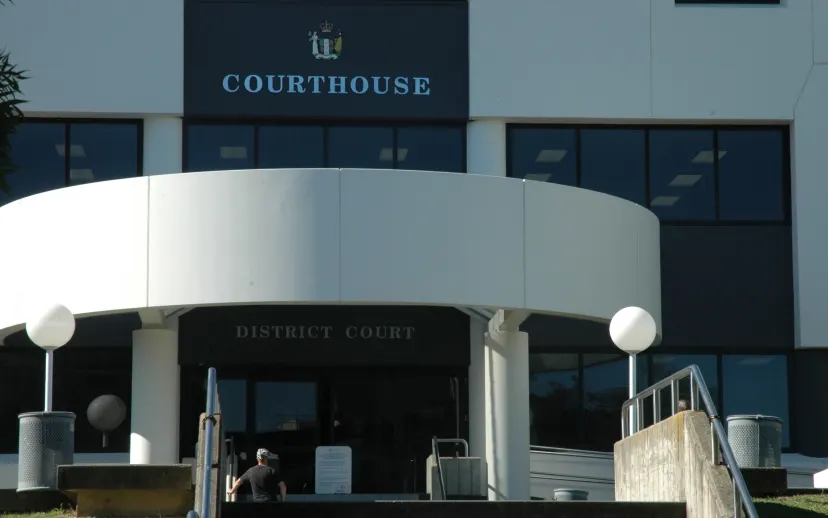
He appeared for sentencing in the Hamilton District Court on Wednesday after being found guilty on two charges of sexual violation by unlawful sexual connection.

A jury found him not guilty on a charge of abduction.

The circumstances of the case, including the victim’s loss of memory, also led Judge Noel Cocurullo to discuss whether her drink had been spiked.

In her victim impact statement, she described waking up in a strange house with no idea where she was, how she got there, or who she was with.

“Having no idea what had happened to me was terrifying, and all I wanted to do was get out of there.

“This was the most traumatising day of my life, and I am still affected by it today.”

She had to endure an invasive sexual assault inspection, have photos taken by police of the many bruises on her body, and get treatment for infections she suffered as a result of Omotani’s actions.

Compounding the physical and psychological impacts was waiting nearly three years for a jury trial and being cross-examined for “hours and hours was excruciating and humiliating”.

“The defendant had no right to do what he did to me.”

She hoped by going through with the trial and speaking out that it might prevent something similar happening to someone else.

The victim had been drinking with friends at an inner-city pub in Hamilton in October 2023.

By about 2am, many of the victim’s friends had left.

Omotani then began dancing near the victim.

By 3am, the lights in the pub turned on, and Omotani moved away but remained nearby as the victim spoke with her remaining friends.

As she walked out and was separated from them, Omotani waited as she finished her drink, then quickly grabbed her arm and pulled her out of the bar and walked up Victoria Street.

About 10 minutes later, they arrived at Sky City Casino holding hands.

The victim was unable to walk straight but remained upright.

Omotani continually grabbed her or put his arms around her when she pulled her hand away.

As he withdrew $80 from an ATM, she was approached by two of her friends.

Two minutes later, the pair were denied entry into the casino but instead of leaving, he led her into an elevator.

She turned away when he leaned in to kiss her.

For about nine minutes, CCTV showed Omotani pulling the victim around the casino carpark, taking her into private corners where they stopped walking and he became “physically very close” to her.

However, his exact actions at those points were unknown because of their distance from the camera.

He then took her back to a lift and continued trying to kiss her as she turned and pulled away from him.

At 3.23am, he pulled her into a taxi outside the casino and went to his house near Hamilton Lake.

During the taxi ride, she sat forward with her head in her hands without saying anything.

Arriving at his house, Omotani got out while the victim remained inside.

He walked around to her door and pulled her out by her arms, and she immediately sat on the roadside.

The taxi driver asked her if she was okay and she said she wasn’t feeling well.

Her next memory was waking up in Omotani’s house with no underwear on and seeing him beside her.

When she next woke, she left and got her partner to pick her up.

Police questioned him two weeks later and examined his phone.

In WhatsApp, they found messages he’d sent to an associate on the morning of the sexual assault confirming he carried out two acts on her.

Omotani told police that the oral sex he performed was consensual.

‘She looked dead’

Crown prosecutor Rebecca Mann said while there was an element of premeditation to his offending, it was more about her vulnerability.

Judge Cocurullo noted that in his 35 years in the justice sector, he hadn’t seen “a more compelling witness”.

“As I listened to her evidence, I couldn’t help but think that her drinks were spiked.”

The judge said there was no evidence of that happening and he wasn’t accusing Omotani of doing that but he wanted the issue aired.

Mann said drink spiking was a “challenging” thing to confirm, given the half-life of the substances.

Judge Cocurullo labelled the defence argument – that the victim had made up the story to cover up an infidelity – an “utter nonsense”.

Mann pointed to Omotani’s message to a friend, where he described the victim looking “dead” as she sat outside his home “for a lengthy time”.

She noted his comments in a pre-sentence report, in which he said the victim asked for oral sex but by the time he did the act, he described himself as “perhaps too carefree”.

“That is not an accurate version of these events.”

‘He believed she was consenting’

Omotani’s counsel, Joon Yi, said it was about his client’s “belief of consent”.

“Mr Omotani had been forthcoming with all the information that he could provide.”

Although his client was now 28, he pushed for a youth discount for his client, who was 25 at the time, citing the slow frontal lobe development in young people.

As for the victim sitting outside so long, Yi said his client had gone into the house to get her water, and relied on a “mistaken belief” for taking her inside.

“We did see attempts at having been sensible in terms of speaking with a friend, asking what should be done … so there were some thinking process going on.

“Certainly an effort was put in rather than just a reckless dragging of someone from the kerbside.”

It was also his client’s first conviction; he lived in New Zealand with no family support and had a very small friend circle.

As a result, he had to spend 805 days on electronically monitored bail in a motel.

Yi acknowledged the impact on the victim, but said there was no “physical violence” against the victim.

* This story originally appeared in the New Zealand Herald.

Source: RNZ

Continue Reading

Latest News

Explainer: What are special votes and why they could decide New Zealand’s election?

Published

on

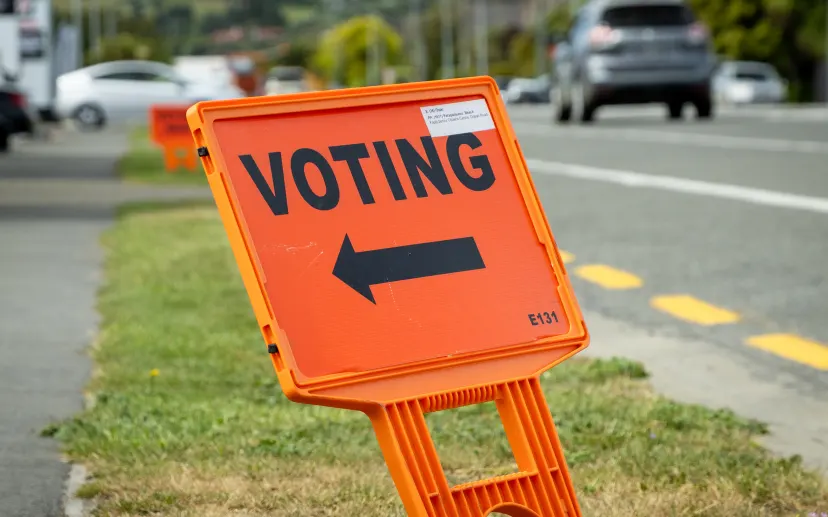
Explainer – Election Day was nearly three weeks ago, but we still don’t quite know who won. Tomorrow’s special votes and the final count will reveal all.

Special votes, which are counted slower, have shifted the last preliminary election results the last several times. They may well do it again in 2026.

Here’s what you need to know about what makes a vote special, why they take longer to sort and why some may end up getting discarded.

What are special votes?

Special votes are made by anyone who isn’t on their electoral roll at their voting place, on the unpublished roll, lives overseas or votes away from a polling place because they can’t get to one.

Anyone who enrolled after the printed roll for this year’s election closed on Writ Day, October 4, but before voter enrolment closed entirely on October 25, has also cast a special vote.

Are there less special votes this year?

Based on the preliminary count information, they have dropped considerably from the 602,488 seen in 2023 and what was a forecast 700,000 for this year.

Statements by the Electoral Commission since the election indicate only approximately 400,000 special votes were received this year.

If that holds, it’d be the lowest special vote total since 2014.

Special votes since 2014

Special votes recorded by the Electoral Commission in general elections from 2014-2026

200,000400,000600,000

Why such a big drop? We won’t truly know until all the final count is settled and post-election analyses are done.

When RNZ inquired of the Electoral Commission if there were any indications of why the special vote numbers were so much lower, a spokesperson said on Monday, “we haven’t done that analysis yet – right now, our focus is on the post-election period and the official count.”

Richard Shaw, professor of politics at Massey University, tipped one possible cause as the government changing the deadline so one had to be enrolled 13 days before the election, instead of being able to enrol right up to election day.
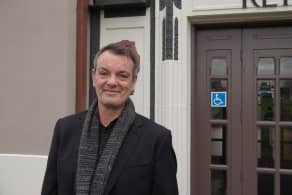
Professor Richard Shaw says the proposed changes have wide effects for society.
Richard Shaw, professor of politics at Massey University.

RNZ / Jimmy Ellingham

“Given the numbers, the most plausible explanation for the drop in number of expected specials has to do with the coalition’s electoral law reforms (which, to no one’s surprise, have had precisely no impact on the time taken to process the final vote).”

Shaw noted that in the last election many people enrolled during the early voting period.

He said that Electoral Commission “data points from 2023 include that about 450K specials were cast during the voting period (can’t do that any more); about 110K were cast on the big day (can’t do that either).”

In 2023, Shaw said 12.8 percent of all special votes were from overseas voters, which he said was likely to be higher this year, while voters casting a vote outside their home electorate comprised 24.7 percent of all specials cast.

Before the election, the Electoral Commission told RNZ it had expected more special votes than ever.

“Our forecasts indicate we could receive around 700,000 special votes,” a commission spokesperson told RNZ in mid-October.

The number of special votes had been steadily rising in recent elections.

“Over 600,000 special votes were issued in 2023 – meaning 21 percent of voters cast a special vote,” the commission spokesperson told RNZ.

This year, that doesn’t seem to be the case.

“What the commission can’t estimate is what proportion of specials were cast by people who enrolled during the advance voting period/on election day,” Shaw said. “We can only extrapolate.”

Opposition politicians have called the enrolment changes a form of voter suppression, which National party leader Christopher Luxon has denied.

“I know we can’t use the language of voter suppression in polite society but perhaps we can say the reforms have had a ‘chilling effect,'” Shaw said.

Have special votes made a difference in past elections?

They have. In the last three general elections, the final results including special votes have seen National lose two party seats and some electorates have changed sides from the preliminary tally.

With this year’s knife-edge preliminary vote, that could make all the difference.

Special votes generally tend to benefit the left-leaning parties.

Shaw said that tends to reflect the demographics of those who cast them: “typically younger; typically more mobile (e.g. renters); typically a little less attached to institutional politics”.

“Those groups don’t always break left, but they tend to. Or they tend not to engage at all.”

In 2017, 2020 and 2023, National lost two seats with special votes, while Labour gained one in 2017 and 2020, Te Pāti Māori gained one in 2020 and two in 2023, and the Greens gained one party seat in 2017 and 2023.

The enrolment deadline change is likely to affect special votes, Shaw said before the election.

“There will almost certainly be a higher rate of rejection of special votes this time round.

“At this point, of course, we have no way of knowing how many people are going to show up and cast a special which won’t be counted … some specials will be tallied, of course, because they are overseas votes or people out of their electorate or whatever, but plenty won’t.”
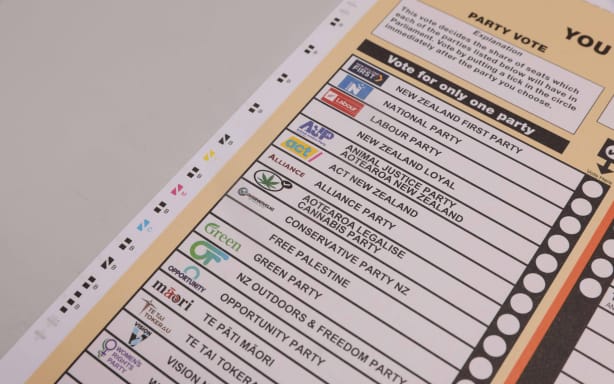
Voting papers being printed in Petone, Wellington weeks ahead of the election.

Samuel Rillstone/RNZ

Why do they take longer to count?

They have a stricter checking procedure, and any overseas votes can also take longer to process. In 2023 it took three weeks for special votes to be counted to confirm the election results.

“We understand how important it is to deliver timely results, and we also need to make sure they are accurate,” Karl Le Quesne, Chief Electoral Officer, said.

When you cast a special vote, you must also sign a declaration form that must be witnessed by another person. (If you vote at a voting place, that witness can be an Electoral Commission volunteer or staff member.)

By law, 10 days are allowed for votes to be returned from overseas.

Special votes have to be returned to the electorate they were cast for before they’re counted. Every special vote declaration is checked to make sure the voter is enrolled and eligible to vote.

“We check the voter was enrolled in the electorate where they voted, and check that the special declaration form has been completed and witnessed,” the Electoral Commission spokesperson said.

“Special votes that are allowed can only be counted after these checks have been done. Votes are tallied and quality assurance checks are made before we release the results.”

Shaw said overseas votes, once they’re counted, could also affect how the election shakes out.

“The overseas voting population is interesting this year: there are more of them than previously (and at least some of them are presumably people who have left the country while they might rather have remained, had the economic conditions been better), so that might count against the incumbent administration too.”

The government pushed for this year’s changes to enrolment deadlines and one of the reasons it gave was to speed up vote counting.

“I just think three weeks is way too long to count special votes, I think that needs to be sped up,” Prime Minister Christopher Luxon said in 2023.

However, when those enrolment changes were still being considered last year as part of the Electoral Amendment Bill, Le Quesne said it ultimately wouldn’t make results arrive any faster.

And in the end, it’s taken 20 days for the final count after election day.

ACT supporters watch results come in.
ACT party supporters watch returns on Election Night.

Baz Macdonald

Why can special votes be tossed out?

In the 2023 general election, 15,555 special votes were disqualified.

“Reasons special votes are disallowed include if the voter is not enrolled, the vote received was late, or the declaration was not signed by an authorised witness or not signed by voter,” the Electoral Commission spokesperson said.

The Electoral Commission has a full breakdown of why special votes were disallowed in 2023 broken down by electorate on their website.

By far the biggest reason was that voters were not actually enrolled at all, with 10,566 discounted for that reason. Far behind was having a declaration not being signed by an authorised witness, with 2384 rejections.

In last year’s Auckland local body elections, nearly half of the special votes were disqualified.

Auckland Council said 4162 special votes were deemed invalid, due to incorrect or missing declaration details, or outdated enrolment details. Special votes were only 1.68 percent of the total vote cast, it said. Similar high rates of disqualification were seen in Kaipara’s local council election.

However, it’s important to note that local body elections are not run by the Electoral Commission, but by local councils, and have different rules and procedures.

Shaw said before the election that the changes to voter enrolment this year are a bit of an X-factor in trying to figure out how important special votes will be this year.

“One possibility, given the new policy settings, is that special votes are less, not more, important as far as the final outcome is concerned, in the sense that there may well be fewer of them that count this time round.

“In another respect, they might be more consequential – if there is a large number that are disqualified, that may cast shadows over any outcomes.”

rnz

Continue Reading

NZ News

Drugs in Kiwi onion dip sachets among dark web haul

Published

on

Nearly a quarter of a tonne of drugs traded on the dark web have been seized, some of which was disguised as the Kiwi delicacy of powdered onion dip sachets.

Detective Sergeant Johno Wylde said the months-long investigation that involved Europol and law enforcement from 13 other countries also seized $500,000 of cryptocurrency and helped take down a prolific dark web drugs supplier.

“We know dark web suppliers use sophisticated online marketplaces and encrypted communications to distribute illicit drugs at scale, often while maintaining a significant degree of anonymity,” Wylde said.
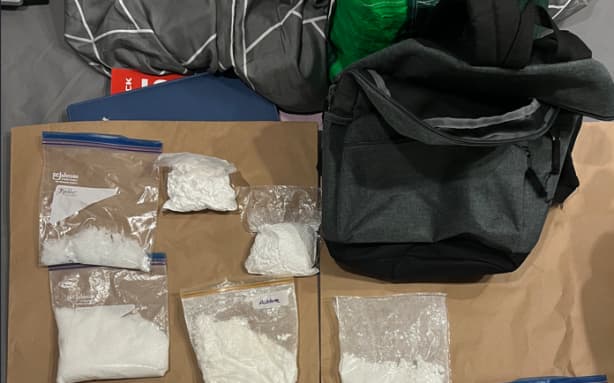
Dark Web drug suppliers allegedly turned to Kiwi onion soup mix, and other sachets, in an effort to fly under the radar. 
Their efforts didn’t work, however, and now New Zealand authorities have seized nearly a quarter tonne of drugs as part of a months-long global sting targeting an area of the internet many consider to be untraceable.

Supplied / NZ Police

He said the dark web was seen as a safe space for drug dealers but that is no longer the case.

“The scale of offending is significant, and infiltrating these criminal networks is challenging. The operation involved specialist teams including the National Organised Crime Group, High Tech Crime Group and staff from multiple Police districts,” he said.
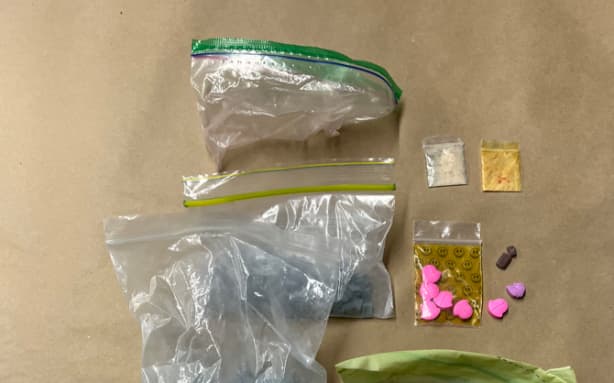
Dark Web drug suppliers allegedly turned to Kiwi onion soup mix, and other sachets, in an effort to fly under the radar. 
Their efforts didn’t work, however, and now New Zealand authorities have seized nearly a quarter tonne of drugs as part of a months-long global sting targeting an area of the internet many consider to be untraceable.

Supplied / NZ Police

The detective said some of the drugs were hidden in sachets of Kiwi onion dip and were packaged in Auckland and destined for communities across the country.

Source: RNZ

Continue Reading

Trending

Copyright © 2026 The Buzz: Powered by Apna Network Limited - Concept by Digital Hub NZ