Connect with us

HTML Image

i

Breaking News

Unregulated online gambling attracting children, harm prevention agency says

Published

on

Children as young as 11 are racking up thousands of dollars in debt because of online gambling, according to a support service.

The head of Mapu Maia said it had had an increase in school counsellors and social workers reaching out with concerns of problem online gambling among secondary school students and even some children at intermediate.

The organisation works to prevent harm from online gambling and said more research and support was needed, with offshore gambling websites posing a particular risk.

Mapu Maia chief executive Pesio Ah-Honi said she was approached by distressed parents, whose child was up all night gambling online.

“Parents of a child who was in intermediate, so that would be around 11 to 12 years old, were beside themselves because he would sleep at school. He wasn’t engaging in the family and he was completely disconnected,” she said.

The boy had been using his mother’s credit card to fuel his online gambling habits.

“We found out that he had clocked up on his mother’s credit card over $16,000 because he was spending it on online gambling and he was up all night gambling,” she said.

Ah-Honi said thousands of young people and their parents used Mapu Maia services but believed this was only the tip of the iceberg, because many people were too embarrassed to speak about the issue.

The service is designed to work with teens aged between 13 and 17 and has team of clinicians and health promoters, who run several youth-based gambling harm programmes across New Zealand.

Ah-Honi said sports betting sites were deliberately targeting young people.

“There are lots of adverts and marketing out there around online and betting on games, I believe the marketing to young people is really rife,” she said.

She told Checkpoint social media was being used more frequently to draw in young people.

“The industry uses those platforms to specifically target young people. They’re not using social media to target the older generation. We believe it’s specifically targeted to young people when they use social media,” she said.

She said she understood regulating online gambling sites would be a challenge for government due to many gambling websites being offshore, but said more education and support was needed.

Ah-Honi said problem gambling must also be brought into the conversation around youth mental health.

“It’s moved slightly from your pokie machine pubs in the community to online places where it’s not regulated. You can gamble away in the privacy of your own home, you can gamble underage,” she said.

The Ministry of Health’s Strategy to Prevent and Minimise Gambling Harm 2022/23 to 2024/25 says research into secondary school students gambling found that one in three had participated in gambling at some point in their lives.

The link between online gaming features and gambling also poses risks for youth problem gambling.

Aaron Drummond, a professor based in Tasmania and previous professor at the University of Waikato, said research conducted in New Zealand, Australia and the United States indicated people who showed signs of problem gambling were more likely to spend more money on online gaming features.

One of those problematic features is called a ‘loot box‘.

“What we know about them, it’s quite concerning. People who have symptoms of problem gambling also tend to spend more on loot boxes, and recent evidence suggests people who engage with these loot boxes are at greater risk of migrating into conventional gambling behaviours later down the road,” he said.

In Australia, online games that feature loot boxes must be rated M.

Drummond said on average people spend $10-12 a month on loot boxes, but some people have spent up to $1000 per month.

He said there had been an increase of the amount of loot boxes appearing in games.

“What we found that was interesting was income didn’t affect how much people were spending on loot boxes. It was actually consistently the case that in every income bracket higher spenders were always people with the highest problem gambling symptoms, so loot boxes tend to disproportionately be attractive to people who have problems controlling their gambling behaviours,” he said.

The Problem Gambling Foundation said they had noticed a rise in young clients under 25 seeking support for online gambling harm.

The current Gambling Act 2003 was outdated and did not include any mention of today’s online gambling scene, they said.

In a statement to Checkpoint, the Department of Internal Affairs said “in March this year, Cabinet made an in-principle decision to regulate online casino gambling”.

“The department is supporting the minister of internal affairs to prepare a report back to Cabinet on the high-level design of the regulatory system.”

It said it is “mindful of the need to ensure operators have effective age verification systems, and tools to minimise harmful gambling will be a key component in the new regulations

VIA RNZ

Continue Reading
Click to comment

Leave a Reply

Your email address will not be published. Required fields are marked *

Breaking News

Trump administration denounces CNN for airing Iranian leaders’ messages

Published

on

The Trump administration denounced CNN on Thursday (local time) for airing a portion of the new Iranian supreme leader’s public statement, the second time in three days the network has been targeted for reporting on how the regime is responding to the American attacks.

The attack illustrated the care news outlets must take in reporting during wartime, and the responsibilities of American journalists to report the perspective of countries its government views as enemies. It also exposed inconsistencies.

The message of Supreme Leader Ayatollah Mojtaba Khamenei during his first public statement since he succeeded his father, who was killed in an Israeli airstrike, was widely available elsewhere.

The White House said on social media that “fake news CNN just aired four straight minutes of uninterrupted Iranian state TV, run by the same psychotic and murderous regime that prided itself on brutally slaughtering Americans for 47 years”.

Earlier CNN interview criticised by Trump’s communications leader

Two days earlier, White House communications director Steven Cheung took issue with CNN anchor Erin Burnett’s interview with Hossein Mousavian, a former Iranian nuclear negotiator. Burnett asked Mousavian what he had been hearing about the Iranian government’s interest in having talks with the United States. There wasn’t much, he said.

“Ever notice how CNN just regurgitates quotes and unverified information from Iranian terrorists?” Cheung wrote on X.

“Total disgrace. They have become the murderous Iranian Regime’s version of Pravda,” he said, referring to the official newspaper of the former Soviet Union.

CNN did not address Cheung’s statement but did respond to the White House attack on Thursday. It noted that CNN, Sky News and Al Jazeera also showed portions of the ayatollah’s statement live.

“The world is watching with anticipation which direction this war will take,” CNN said. “Purported remarks from Iran’s new supreme leader are a critical component in helping audiences understand where this conflict is heading and were aired for their obvious news value.”

Other news outlets, including The Associated Press, sent out alerts on what Khamenei said. His vow to keep up attacks on other Arab countries in the region and plans to choke off the world’s oil supply were headlines.

Mojtaba Khamenei, the son of Iran's Supreme Leader, Ayatollah Ali Khamenei, center, attends the annual Quds, or Jerusalem Day, rally in Tehran, Iran, May 31, 2019.

The New York Times led its website with a story on the speech in its immediate aftermath, later writing that the speech “was an early indication of how the new supreme leader would approach the war, as well as how he would lead the country”.

CNN has long been a favoured target of President Donald Trump, dating back to his first term. It’s a particularly vulnerable time for the network with Paramount Global’s agreement to purchase CNN’s parent company, Warner Bros Discovery, raising questions about its future editorial independence.

CNN showed a news anchor reading a portion of Khameini’s remarks in Farsi, with an English translation. It did not air them in full. After the speech, correspondent Nick Paton Walsh gave a debrief to anchor Kate Bolduan, noting how the non-appearance of the leader — reportedly injured in an air attack — was as important as what he said.

“We were waiting to see the face of the man to have proof of his health and survival,” Walsh said, “and they’ve not met that moment. Instead, a handwritten message, it seems, that mostly reiterates things we kind of already knew.”

A social media message board for Iran’s point of view

The Tech Transparency Project has reported that several Iranian leaders and institutions maintain verified accounts on X, formerly Twitter, owned by Trump ally Elon Musk. CNBC said Thursday that Khamenei has one of them, and an X account with his portrait posted the text of his remarks, available in Farsi and in an English translation.

Even though Khamenei’s father is dead, an account with his portrait was active on Thursday, mainly reposting messages from his son. “The revenge we have in mind is not just because of the martyrdom of the illustrious Leader of the Revolution,” read one message posted Thursday. “Every member of the nation martyred by the enemy is a separate case that demands we seek revenge.”

X is officially blocked in Iran, although many use a virtual private network to bypass restrictions. A message sent to the platform on Thursday was not immediately returned.

There’s a long history of journalists seeking interviews with world leaders, even when they are regarded as enemies of the United States. Most notable was 60 Minutes correspondent Mike Wallace’s interview with Iran’s Ayatollah Ruhollah Khomeini in 1979, when that country was holding Americans hostage.

Thursday’s remarks by Iran’s new supreme leader were absolutely newsworthy and legitimate for CNN to air them, said Jane Ferguson, a veteran international correspondent and founder of the journalism platform Noosphere. It’s not the job of government leaders to pick apart what CNN is reporting, she said.

“We’ve always faced this,” she said, about when reporters interview leaders or other figures hostile to American interests. “This has been a bit of low-hanging fruit for a while.”

Historian Douglas Brinkley of Rice University said that it’s unfair for CNN to be singled out in this instance. He, too, believes it is newsworthy to learn what leaders of an adversary are thinking, but it’s important to make sure that journalists are careful.

“You have to be leery of being used as a propaganda tool by the Iranian regime,” he said. “On the other hand, knowing what the enemy is saying and looking for a sign of a peace offering or a nuance is important … It’s a difficult balance.”

Continue Reading

Breaking News

University of Auckland building on fire

Published

on

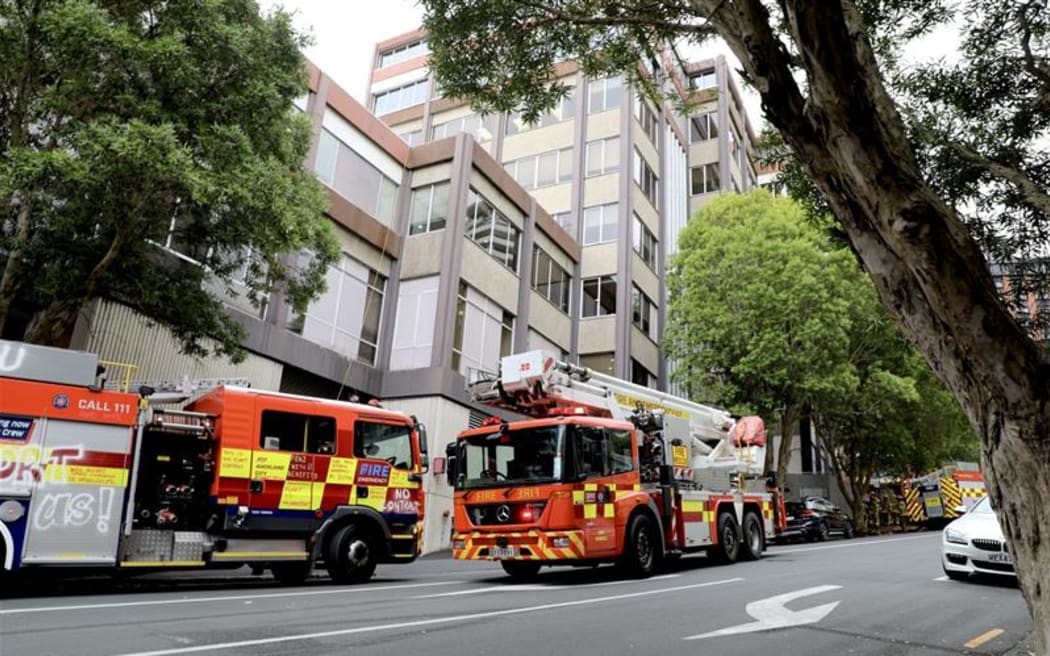
A fire at the University of Auckland law school building has now been extinguished.

A Fire and Emergency spokesperson said there had been a fire at the University and six fire trucks were at the scene on Short Street. The call to 111 came through at about 2.40pm.

FENZ said the fire was now extinguished but crews will stay near the building this afternoon.

Staff and students were seen going in floor by floor, starting with level 6, to retrieve any belongings left behind

A student who was evacuated from the fourth floor of the building said it seemed the fire started on level two.

Police were at the scene talking to students who have been evacuated.

Student Talisha Lal said when the fire alarm went off she, and other students, thought it was a drill.

Lal said once she was out of the building, she could see smoke.

More to come…

~ RNZ 

Continue Reading

Breaking News

Teacher struck off after filming explicit videos at school

Published

on

An Auckland teacher has had her registration cancelled after recording explicit videos of herself urinating on the floor of a classroom and on a student’s belongings.

The New Zealand Teachers Disciplinary Tribunal found Lisa Marie Edmondson had committed serious misconduct.

The school was alerted to the content after the deputy principal of the school was approached by a member of the public who had come across a video on TikTok and recognised the setting. A search for the username led to a pornographic account.

The account contained more than 30 explicit videos which had been recorded at various locations over a period of two-and-a-half years.

In one of the videos, Edmondson appeared to urinate on the floor of a classroom with genitalia clearly visible. A second video showed the teacher urinating on a hat with a student’s name clearly visible in a lost property box.

The summary of facts stated there was an “ongoing urine smell” in some classrooms during the time of her employment which had been attributed to rats and mice. Bait stations had been set up during the school holidays but no rodent activity was noted. The tribunal said her students were “likely to have been adversely affected” due to evidence of an “unpleasant smell that required deep cleaning”.

While she was not visible in the videos, the teacher was recognised due to her voice and clothing.

Edmondson resigned in May 2023 after receiving notice of a formal investigation.

Following her resignation, Edmondson worked as a relief teacher at a second school before being invited to apply for a fixed-term position.

The tribunal found that Edmondson had failed to disclose her full employment history when applying for – and subsequently working at – a new school in 2023 and failing to inform her employer that she was the subject of a mandatory report and current investigation by the Teaching Council.

In her reflective statement, Edmondson acknowledged that she had let her students down and “was not the role model that I should have been for them”.

“I have accepted that the likelihood of returning as a teacher has ended. This has been a very difficult concept to accept because I loved teaching, loved being in the classroom and loved my students and their whānau.”

The tribunal noted Edmondson failed to address the conduct head on or express concern for her former students and colleagues.

Edmondson’s registration was cancelled and the former teacher was issued a formal censure. She was ordered to pay $3,255.87 towards the Complaints Assessment Committee’s costs and $582 to the Teaching Council.

‘I have let down so many people’

In a statement to Stuff, Edmondson said she had no choice but to accept the ruling, but regretted her actions.

“During a two-year period which covers this time I was suffering from extreme anxiety, I can’t explain why I did it other than self sabotage and treating myself badly for things that had happened. By the time it was reported, I really did not even remember and hadn’t done anything else.”

Her actions had impacted her children and her ability to provide for them.

“I can’t change what I have done, but can make sure it never happens again.”

~ RNZ

Continue Reading

Trending

Copyright © 2026 The Buzz: Powered by Apna Network Limited - Concept by Digital Hub NZ