

NZ News
Mother of Marokopa children says Tom Phillips would take her phone to stop 111 calls

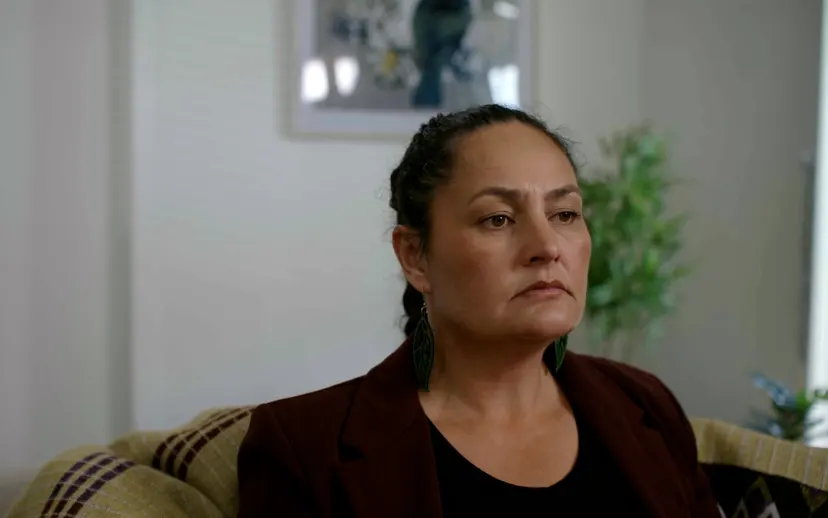
For most people, the Tom Phillips case began when he first disappeared with his children into the bush in 2021 and ended when he was shot dead by police last year.
But for the children’s mother, Cat Christey, the saga stretches back many more years, through a volatile and sometimes violent relationship – and the nightmare she’s experienced continues.
In her first interview since her children were recovered from the bush, Cat told Mata Reports: “I would like to see anybody else endure what I have endured for all these years.
“People think that this started … when Thomas abducted the children the first time. This started long before that. This has been going on for a long, long time.”
‘There was no room for compromise’
As she still deals with agency meetings and the fallout from the dramatic end to Phillips’ time on the run, Cat has spoken out about the difficulties of her relationship with him and the toll it has taken.
“He was a good provider but very controlling. It was a very… imbalanced relationship. His views on what a marriage should be were different to my own. We should have been a team. But there was no room for compromise; it was his way or the highway.
“And he liked to be in control, he was a dictator.”
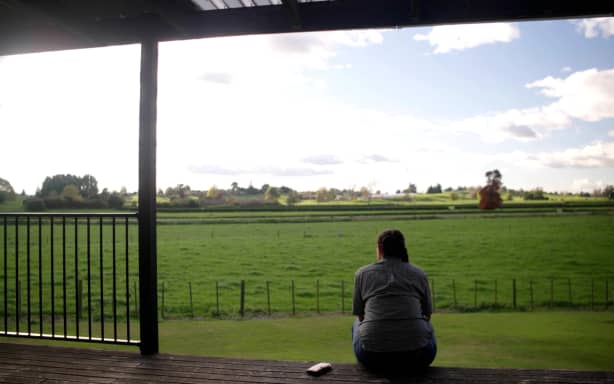
RNZ / MATA
Phillips first took the couple’s three children into the bush near Marokopa in the western Waikato in September 2021 without telling Cat where he was going. They were separated at the time.
He returned several weeks later, but then, in December 2021, he went bush with the children again.
Phillips remained a fugitive until he was killed in a shoot-out with police following a ram-raid in Piopio.
Cat says that during their relationship, Phillips “wasn’t extremely violent” although she described slaps and how he once strangled her.
“He would control all the finances, he would take vehicle keys away from me … he would control who I saw and when I saw them.”

RNZ / MATA
A fascination with guns
She says Phillips had a fascination with guns and that at one point, she twice rang 111 to tell the police about it. However, she says, Phillips took the phone off her and hung up both times. “I truly believed police would show up because it was a 111 call … but police did not come.”
Phillips ordered her out of the house after that incident. Although he later begged her to come back, Cat says she wouldn’t.
A few days later, he began proceedings against her and the situation spiralled over the next few years.
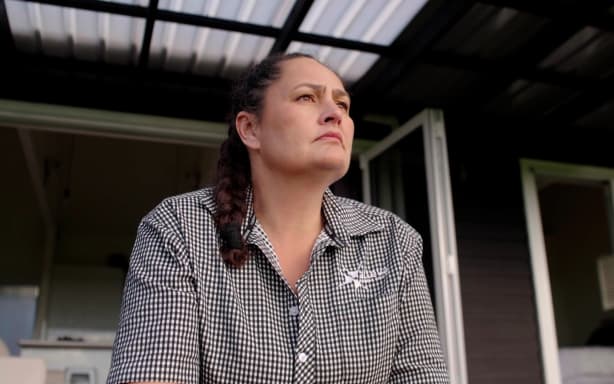
RNZ / MATA
Cat found out about the shooting and the discovery of her children after police had first told a Netflix documentary crew – a documentary she says she told the officer in charge, Detective Inspector Andrew Saunders, that she objected to.
“I was dead set against it when they first told me. It was very blunt and I said they do not have my permission.
“[Saunders] told me they didn’t need my permission, that they were just letting me know.”
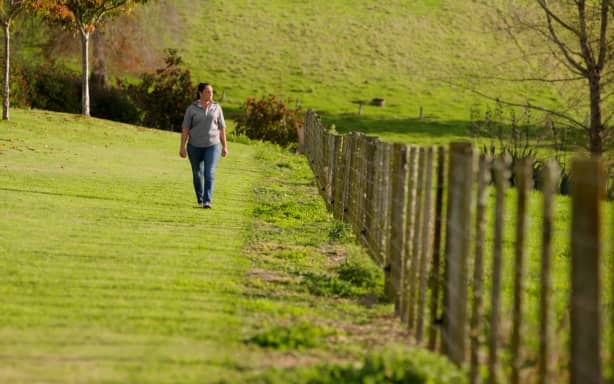
RNZ / MATA
Not a victim
It’s one way in which she says she feels like she has been disregarded by police throughout the case.
For instance she says that she only found out through the media about the fact the police had decided not to charge anyone with assisting Phillips while he was on the run and that the case was no longer being actively investigated.
Also, she says, she was declined support for counselling because she was not considered a victim of crime.
“I had reached out to Victim Support … in the hopes that they might be able to assist with some sessions with my psychologist.”

RNZ / MATA
Cat says Victim Support spoke to the police about her situation but was told nothing could be done.
“Police refused to do a referral stating that we’re not victims of crime.” This was because what had happened to her was not considered domestic violence, a point disputed by Auckland University associate professor of law Carrie Leonetti.
“This abduction, I think, was an act of child abuse, but it was also an act of domestic violence against these children’s mother,” says Leonetti.
“Taking children and saying, ‘You will not see them for three years, they will live or die depending on what I decide’ is an act of domestic violence.”
RNZ / MATA
Even Police Minister Mark Mitchell, who would not comment specifically about police actions, said he personally believed Cat was a victim.
“Any right-minded person would say that a mother, regardless of the circumstances, when they’re separated from their children, and they’ve been through the tragedy that we all saw unfold in front of the country, a lot of people would probably consider her as much a victim in terms of what has happened,” Mitchell told Mata.
“But I cannot talk to the police response other than saying, in my experience, police are very, very good at making sure they identify, communicate and support [victims] as much as they can.”
RNZ / MATA
Agencies respond
In response to questions from Mata Reports about Cat’s treatment and allegations, Detective Inspector Ross McKay said: “A number of the matters you are asking about are subject to the government inquiry into the disappearance of the Phillips children, and it would therefore be inappropriate for us to comment at this time.”
A spokesperson for Manaaki Tāngata Victim Support said the organisation could not comment on individual cases, but added: “The Victims Assistance Scheme, which Victim Support administers on behalf of the Ministry of Justice, has specific eligibility criteria.
“Our Support Workers carefully consider each person’s circumstances and identify the support available to them.”

RNZ / MATA
A public inquiry into the disappearance of Phillips and his children has been delivered to Attorney-General Chris Bishop.
The inquiry, led by the Honourable Simon Moore KC, was set up under the orders of the previous Attorney-General, Judith Collins, and tasked with considering whether government agencies took all practicable steps to protect the welfare and safety of the children.
Bishop says the report will be presented to Parliament once the government has considered the recommendations and how to deal with suppression orders that are in place in the High Court and Family Court.
Made with the help of Te Māngai Pāho and NZ on Air.
Source: RNZ



Latest News
Opportunities to mitigate multi-million-dollar RNZ budget blowout likely missed – experts

Multiple opportunities to identify and mitigate a multi-million-dollar budget blowout at RNZ appear have been missed, according to the former executive director at Audit New Zealand.
The public broadcaster on Monday revealed a near $12 million shock financial loss after a litany of financial blunders, which will now lead to sweeping job cuts.
The $11.8m loss is more than 25 times the $470,000 RNZ had expected to lose over the year to June.
CEO Paul Thompson took responsibility for the result, and said internal reports gave an inaccurate picture of the finances, meaning the scale of the loss only became clear in October.
RNZ’s former chief financial officer Hilary Parker resigned unexpectedly in early October.
The board said it would commission an independent review into what went wrong.
Independent contractor Stephen Walker, who left the Audit Office earlier this year, said the size of the loss was surprising, as was the length of time it took to identify it – months after the financial year ended.

Supplied / OAG
“Probably more of a concern is that they had seemingly been unaware that they were running up a significant deficit until they were in the preparation stage of their annual report in October.”
Walker said public entities typically produced monthly financial reports.
An interim audit also took place before the end of the financial year, he said, but if the organisation hadn’t identified significant losses at that stage, the auditor could also be in the dark.
“It seems that there’s a real weakness in forecasting and budgeting that’s occurred here and that the monthly accounts, when they’re produced, either haven’t identified these significant variances against budget or the magnitude of them really hasn’t come to light until right towards the end of the financial year,” Walker said.
“And really at that point, there’s no opportunity for the chief executive, the leadership team to take, and the board to take, any corrective action because the year has effectively been completed.”
Walker said the “significant miss” was difficult to account for given it was more than 10 percent of RNZ’s total funding.
He said based on RNZ’s annual report, financial complexity didn’t appear to be a factor.
“This $11.8m loss isn’t made up of one particular item … it seems to have been contributed to by a number of separate expense lines running over budget. So I don’t think it’s necessarily to do with complexity.”
Among the errors, RNZ wrongly counted $2m from land sales as income in its budget. Staff costs also came in $3.2m over budget, including $1.4m in redundancy payments.
Professor at Auckland University’s business school Norman Wong said based on media reports the issues identified were “significant and troubling”.

Supplied / University of Auckland
“But recognising the sale of land as income in their budget is a basic error that one would have expected to have been caught and corrected well before it got to this point.”
With funding reductions at RNZ over the past two years, Walker expected greater scrutiny of financial results.
“Virtually every public entity has had their annual budget reduced. And so you would expect … the leadership team on a monthly basis and board – I’m not sure how frequently the board will consider the information – but you would expect them to be interrogating the results on a regular basis throughout the year,” he said.
Walker said initiating an independent review was the correct course of action and that he’d want to understand what information the leadership team and the board were regularly receiving.
He said he’d “love to say” surprising financial results were rare, but conceded they occured on a semi-frequent basis during his time leading the Audit Office.
“The benefit of independent scrutiny by the Audit Office – and the auditors providing that support to the Auditor General – [is] that the reporting is fairly presented at the end of the year, whether it’s good, bad or ugly.”
rnz


Police say person who fired gun at officers still at large

New Zealand sides named for RLWC finals

Parliamentary Service working on extra chairs and offices for increased number of MPs


-

 Latest News2 months ago
‘Chilling’: Business groups speak out against National’s supermarket break-up plan
-

 NZ News2 months ago
Tom Phillips report: The missed opportunities to find the children
-

 Politics2 months ago
National vows to try to split Pak’nSave and New World
-

 Latest News2 months ago
Cars bearing Chinese police markings stir unease in Auckland
-

 Fiji News2 months ago
Plans to have new Constitution by Dec 24th 2026
-

 NZ News2 months ago
Cop who stole $68,000 can now be named as champion Muay Thai fighter Haimona Tamati-Te Paki
-

 Politics2 months ago
MBIE confirms botched biometric projects costs blown out to $50.7 million
-

 Latest News2 months ago
Five Karangahape Road venues lose their liquor licences after police intervention