

Latest News
No particular reason’ National can’t cut deal with NZ First – Jim Bolger

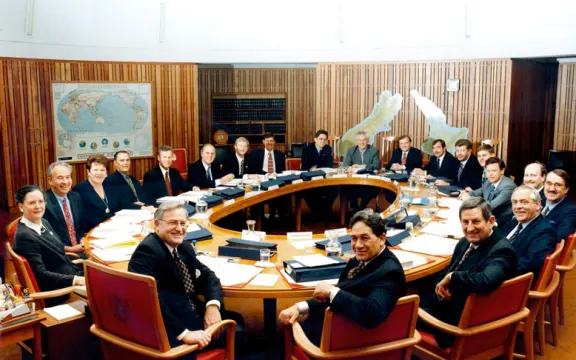
The first prime minister who had to strike a deal with Winston Peters to form a government under MMP says he expects a government to form after election day without much fuss.
But if it does not, it would be at least a month-and-a-half before a second election could take place, in addition to however long it takes for politicians to realise their negotiations are going nowhere, an expert says.
National has warned there could be a second election needed if forming a coalition with both ACT and New Zealand First proves too difficult. There is also the possibility of a hung parliament, with the polls tightening and Labour convinced – and not unreasonably – their support is being undercounted.
Back in 1996, Jim Bolger formed the country’s first MMP government with NZ First, despite a fractious relationship. He told Checkpoint he did not expect Peters to hold up the formation of a new government after the results are announced on Saturday night.
“I expect the leaders of the parties who are the majority after next Saturday’s election to form the government, and no particular reason why they won’t,” he said.
“You talk to people and I don’t think the conditions are very difficult to form a deal. I mean, clearly people want a change in government.”
In 1996 it took Bolger and Peters two months of negotiations to form a coalition. Bolger had previously fired Peters from Cabinet, when the latter was a National MP prior to forming NZ First. The coalition fell apart in 1998 after Jenny Shipley rolled Bolger, with NZ First splintering and its remaining MPs going into opposition.
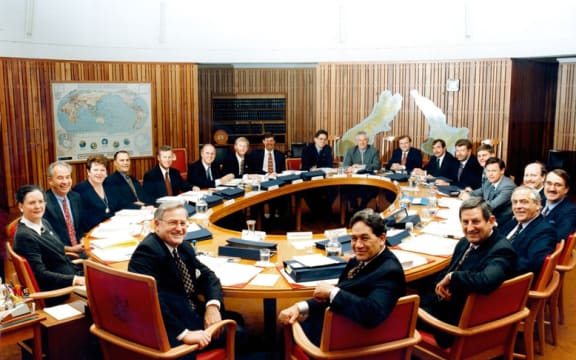
Jim Bolger and Winston Peters at the head of the first MMP coalition government Photo: Supplied
“Winston is smart, he’s experienced and he will test the parameters of the discussion,” Bolger said. “I mean, the fact is he stayed with the team we put together, he never caused it to fall apart. So we took a while to bring the coalition together, but once we were together, there were no particular issues… It wasn’t Winston Peters who had destroyed the coalition government he was in with me at all. It was others who took that honour upon themselves.”
Bolger likened discussions between parties to those which went on in each party’s own caucus.
“He’ll test policy ideas or thinking because he might have a slightly different one, and I don’t have any objection to that. I think that’s totally legit to test political ideas. You’re bringing three parties together we’re talking about now and we’ll all have nuances and subtleties and what they mean and what they don’t mean, and what it might mean for the public at large.
“I mean, that’s inevitable. It happens in every caucus every week, so nothing to be frightened of, but to be aware that you need to have your arguments well-mustered, you need to have a clear idea as to what you intend to do and be able to explain that clearly – both to Winston… but also to the caucus, but much more importantly to the country at large.”
What if a new election is needed?
University of Otago law professor Andrew Geddis, also appearing on Checkpoint, said there was no limit to how long post-election negotiations could continue.
“There is a requirement that Parliament meets six weeks after the election results are announced, but you can have Parliament meet without a government having formed, and carry on thereafter.
“So the short answer is it’ll take as long as it takes for them to talk, and as long as the public will stomach the ongoing uncertainty. The biggest constraint here is kind of political culture – people want a government, that’s what’s likely to start put a time limit on it.”
The governor-general was not able to intervene, he explained, simply having to wait until an arrangement had been made.

Photo: RNZ / Cole Eastham-Farrelly
“If this process carries on and the negotiations just don’t appear to be working, the actual require the actual way a new election is held is that the caretaker prime minister – the person who remains in office, Chris Hipkins, running the country on a day-to-day basis, just basically keeping the lights on keeping the power going – he is one who actually goes to the governor-general and says ‘this isn’t going to work, there needs to be a new election’.
“But that caretaker prime minister… could only do it if a majority of MPs, parties with a majority, say there needs to be a new election. He can’t do it off his own bat. He can only reflect the will of Parliament.”
If it was deemed a new election was required, it could not happen right away, Geddis said.
“An election involves literally tens of thousands of people being hired to run the thing, thousands of polling stations around the country – all of those would have to be found, they would have to be staffed, all that machinery would have to be able to be put in place.
“Back in 2002, which is the last time we had a kind of unscheduled election, that happened very quickly. There was a 46-day gap between… the election date being announced, and the actual election – it would be hard to see how you could do it any quicker than that. So at least you know, a month-and-a-half before you get to vote.”
New Zealand has never had a truly hung parliament, he said.
“Things have just got a little bit more uncertain and fractious because the parties that look like they might have to do a deal are sort of arguing with each other, but this is MMP. This is how it works.”
RNZ



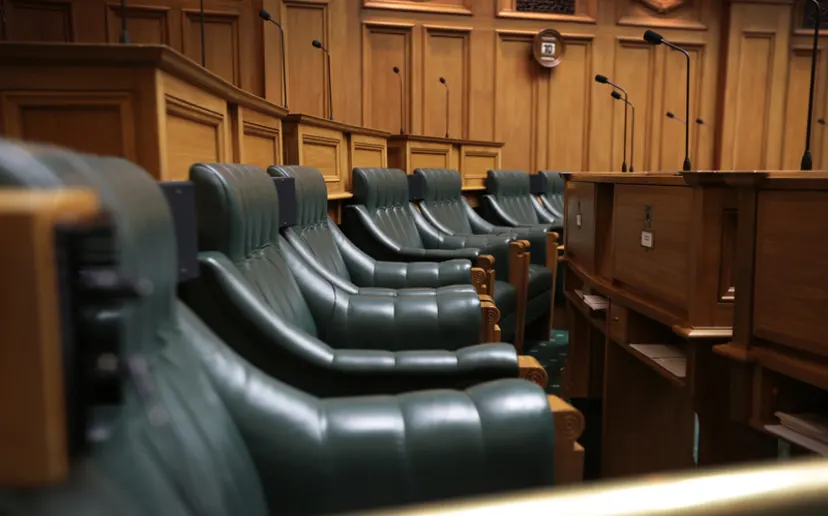
The chief executive of the Parliamentary Service is confident there will be enough room to accommodate the increased number of MPs and their staff coming into Parliament.
On current numbers, up to 131 MPs could be sitting in the Chamber following the election, brought on by a record overhang result.
Clerk of the House of Representatives Dr David Wilson told the Spinoff that currently the debating chamber had enough chairs to seat 124 MPs – including the Speaker of the House – and work was being done to accommodate more by altering the seating arrangement.
In a statement, Parliamentary Service chief executive Rafael Gonzalez-Montero said planning for a larger Parliament had been going for “some time”.
“Now that the election results have confirmed an increase to the number of members we are looking at several options.
“We are confident we will be able to accommodate all members within the Chamber.”
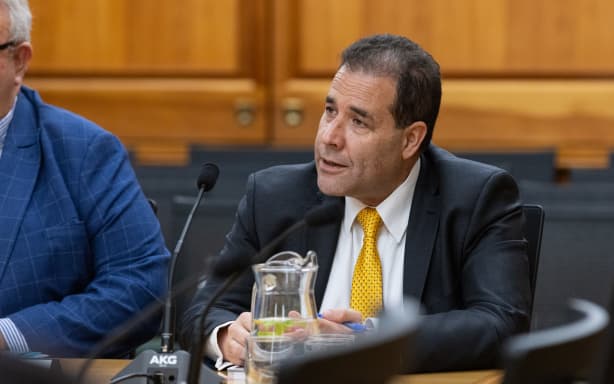
VNP / Phil Smith
Gonzalez-Montero said office accommodation for members and their staff would be “stretched” for a short time, but the new Members’ Building was only a few months away from “practical completion”.
That building – located behind Parliament – was due to be ready to occupy in April next year and had capacity to accommodate around 30 backbench MPs.
“All members should be in fit-for-purpose accommodation from that point,” Gonzalez-Montero said.
Following the 2023 election, 123 MPs sat in the Chamber – a record number at the time. That decreased to 122 following the resignation of National MP Judith Collins.
Collins held the seat of Papakura and stepped down in May and Parliament voted against holding a by-election because it was too close to the election.
The election result also meant high-ranking National Party MPs like Chris Bishop, Paul Goldsmith, Nicola Willis and Gerry Brownlee – Speaker of the House and an MP for 30 years – would likely not make it back into Parliament.
Only resigning or retiring MPs were permitted to give a valedictory speech meaning none of them would get the chance to give a valedictory statement.
Asked if their would be special allowances for valedictories, Wilson said in a statement that normally only MPs were allowed to speak in the House but the House could suspend its own rules or temporarily alter them.
“It could do so to allow former members to address the House.”
Wilson said no such arrangements could be made until the next Parliament opened and members sworn in.
rnz


Police say person who fired gun at officers still at large

New Zealand sides named for RLWC finals

Parliamentary Service working on extra chairs and offices for increased number of MPs


-

 Latest News2 months ago
‘Chilling’: Business groups speak out against National’s supermarket break-up plan
-

 Latest News2 months ago
Cars bearing Chinese police markings stir unease in Auckland
-

 Fiji News2 months ago
Plans to have new Constitution by Dec 24th 2026
-

 Latest News2 months ago
Five Karangahape Road venues lose their liquor licences after police intervention
-

 NZ News2 months ago
Cop who stole $68,000 can now be named as champion Muay Thai fighter Haimona Tamati-Te Paki
-

 Politics2 months ago
MBIE confirms botched biometric projects costs blown out to $50.7 million
-

 NZ News2 months ago
Nearly 1000 stalking warnings, 140 charges since law came into effect
-
 NZ News2 months ago
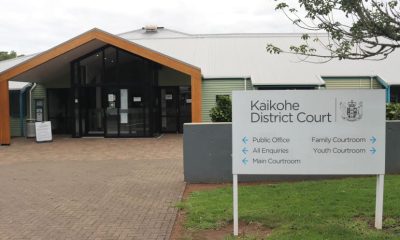
Kaikohe man jailed nine years for rape, bat attack and family violence