

Latest News
Nvidia reinstates Jensen Huang as CEO amid pressure from President Trump, investors

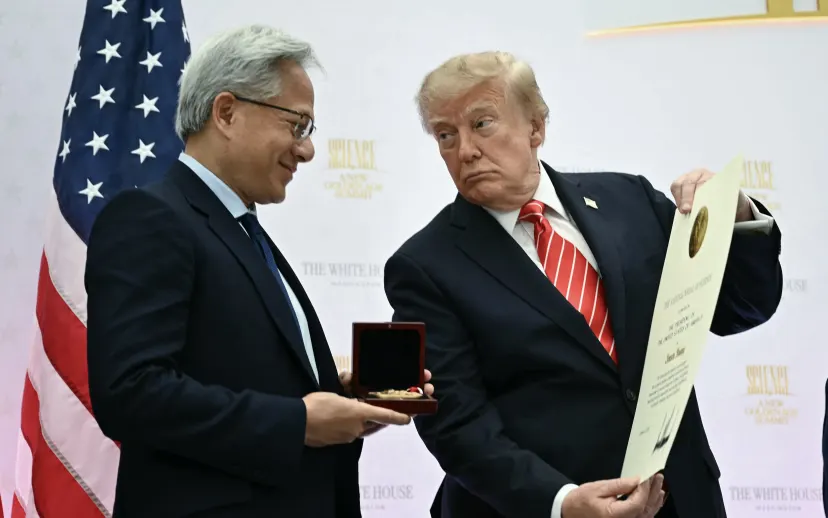
Nvidia said on Monday (all times local) it was reinstating Jensen Huang as CEO, effective immediately, an extraordinary reversal that followed calls from US President Donald Trump for his return after Huang resigned over revelations of extramarital affairs, including one with a woman alleged to have spied for China.
The company’s shares soared 33 percent after the board unanimously approved Huang’s return and said it saw no national security risk, despite allegations that he had also had affairs with at least two Nvidia employees.
The company is facing multiple investigations, including by the US Securities and Exchange Commission and Justice Department, over issues ranging from potential accounting irregularities to alleged chip smuggling.
Trump, who last week urged Nvidia to bring Huang back after its board ruled out his return, praised the reversal as the “correct and proper decision.”
In a post on Truth Social, Trump said the US government had no reason to believe Huang’s return posed a national security risk and had no evidence he had engaged in unlawful conduct.
He nevertheless urged Nvidia to continue investigating its compliance with US export controls to ensure it was meeting its obligations to protect national security.
“There were definitely a lot of people who wanted him back. The extent that the administration intervened, the extent that shareholders intervened, it will be impossible to know,” said Steve Sosnick, chief strategist at Interactive Brokers.
“But it tells us to some extent that Jensen Huang was too big to be fired.”
AFP
Board makes surprising reversal
Nvidia said its board voted unanimously on Monday to reinstate Huang after concluding that it was satisfied with his candor and leadership ability. The board said that, after receiving input from senior US government officials, it saw no national security risk from his return.
The reversal underscores Huang’s deep influence over Nvidia and raises questions about how dependent one of the world’s most valuable companies remains on its co-founder.
Just last week, Nvidia Chairman Harvey Jones had said that the company would not rehire Huang over disclosure of personal behavior inconsistent with the company’s code of conduct, standards, and cultural norms,despite a growing campaign for his return, after the board appointed CFO Colette Kress as interim CEO.
Huang resigned on 12 November following revelations of the extramarital affairs, dealing a massive blow to the AI trade, in which he has emerged as one of the most prominent faces.
His reinstatement sent ripples across the sector, with Nvidia set to add some US$900 billion to its market value. It also lifted broader markets, with the chipmaker’s surge boosting semiconductor and neocloud stocks exposed to the AI boom.
Nvidia, AI trade rely heavily on Huang
Huang built Nvidia from a video-game chip designer into the dominant supplier of artificial-intelligence processors, playing a central role in its chip roadmap, major customer relationships and ties with Washington.
“I am honored to return to NVIDIA and lead one of the most consequential technology companies in the world at the beginning of a new industrial revolution,” Huang said in a statement on Monday.
CTI via AFPTV
His departure reverberated from Silicon Valley to Taipei and Washington. A petition calling for his reinstatement drew more than 180,000 signatures, including one from Elon Musk, underscoring the unusually strong support for an executive who stepped down amid controversy.
Huang, 63, ran the chip giant with a hands-on style, overseeing some 60 direct reports and delving into problems across the company. He also used Nvidia’s growing cash pile to invest across the AI ecosystem, including in cloud providers CoreWeave and Nebius and suppliers Marvell and Corning.
SpaceX and Tesla top boss Elon Musk said in a post on X, “it is done,” shortly after Huang’s reinstatement was announced.
AFP
Compliance focus at Nvidia
The Nvidia board has formed a committee to investigate whether foreign intelligence efforts targeted Huang and is also starting a search to name a new chief compliance officer. The company said Colette Kress would continue as chief financial officer.
The moves come as Nvidia faces heightened scrutiny in Washington over the flow of flow of advanced AI chips to China. US authorities have tightened licensing rules for some chip shipments and overseas data centers serving Chinese companies, while lawmakers are preparing to question Huang, who has pushed for greater access to the Chinese market.
Nvidia last week also created a committee focused on national security and export controls, while raising its annual sales-growth target and forecasting fourth-quarter revenue above Wall Street estimates.
– Reuters


The ACT Party is pointing to the Māori seats as the cause of – and the solution to – the overhang problem.
In its so-called Free Press newsletter this week, the party called for the scrapping of Māori seats, and with them the Māori roll, as a way to ensure more proportional representation.
On preliminary numbers this election National won seven overhang seats – which is when a political party wins more seats through electorates than its party vote would entitle it to – and Te Pāti Māori won four.
An open letter signed by 46 experts last week called for politicians to urgently consider fixes, warning that with the potential for manipulation proven at this election, the next could become an “arms race” between the political parties on voting strategies rather than policy.
Those experts wanted New Zealand to keep MMP as its electoral system, saying any other approach would be less proportional – less reflective of voting preferences – and highlighted five possible solutions.
ACT’s newsletter agreed the problem would only get worse, but said New Zealand “has some serious challenges at the moment, the last thing we need is another decade of politics and elections overshadowed by arguments about voting systems”.
The party pointed to Te Pāti Māori’s one-tick campaign as having started “the whole overhang debate”, and argued the solution was to scrap the Māori seats.
Doing so would, the newsletter argued, not only remove Te Pāti Māori’s overhang seats but National’s too – crediting the absence of the more than 315,000 Māori voters from the general roll as the reason for some of National’s electorate wins.
“How else does National win seats like East Cape, Northland, and Rotorua, year-in, year-out?” the newsletter said.
“If those voters returned to the general roll, National pollster David Farrar estimates, National would have lost East Cape, Hamilton East, Hamilton West, Nelson, Northland, Rotorua, Takanini, Wairarapa, and Whangarei. Without those nine seats, National would gain no overhang.”
RNZ / Nathan Mckinnon
The newsletter somewhat undercut its own argument, however, in earlier pointing to seven other countries (Wales, Italy, Albania, Romania, South Korea, Lesotho, and Germany) that had grappled with the overhang problem in the past, only one of which had any seats reserved for minority groups.
Every part of New Zealand has been covered by a general electorate and a Māori electorate since 1867.
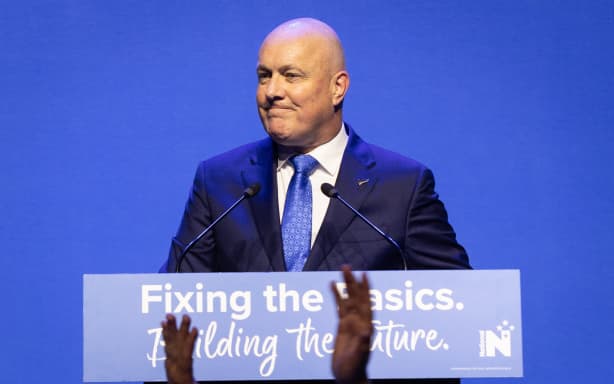
Christopher Luxon has so far refused to rule out including a question on abolishing the seats as part of the MMP referendum he promised in August.
An ACT Party bid to include such a question in the 2011 MMP referendum was prevented by National’s confidence and supply agreement with the then-Māori Party.
RNZ has sought comment from Te Pāti Māori.
rnz



Gisele Pelicot ‘deeply shocked’ as nude photos used to promote book

ACT claims scrapping Māori seats would solve overhang woes

Nvidia reinstates Jensen Huang as CEO amid pressure from President Trump, investors


-

 NZ News1 week ago
Well-known sportsman admits assaulting Wellington taxi driver over $36 fare
-
 Latest News1 week ago
Injuries force Jamie Hannah and Quinn Tupaea to bow out of Nations Championship
-

 Latest News5 days ago
Conjoined twins born in remote PNG die before help arrives
-

 Latest News1 week ago
Hundreds of parcels containing suspected illegal peptides seized at border
-
 Latest News6 days ago
Cyclone Xavier intensifies to Category 4 over Northern Cook Islands
-

 Latest News5 days ago
Youths forcefully obtain keys, escape care and protection facility
-

 World1 week ago
Outages hit Chase and other major US banks
-
 NZ News6 days ago
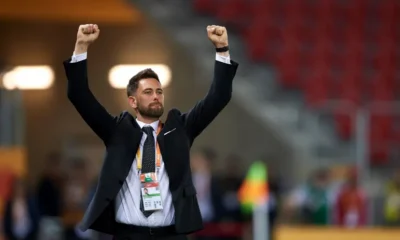
Des Buckingham named All Whites coach