Connect with us

HTML Image

i

NZ News

Former worker of controversial chemical plant in New Plymouth raises questions over his baby’s death

Published

on

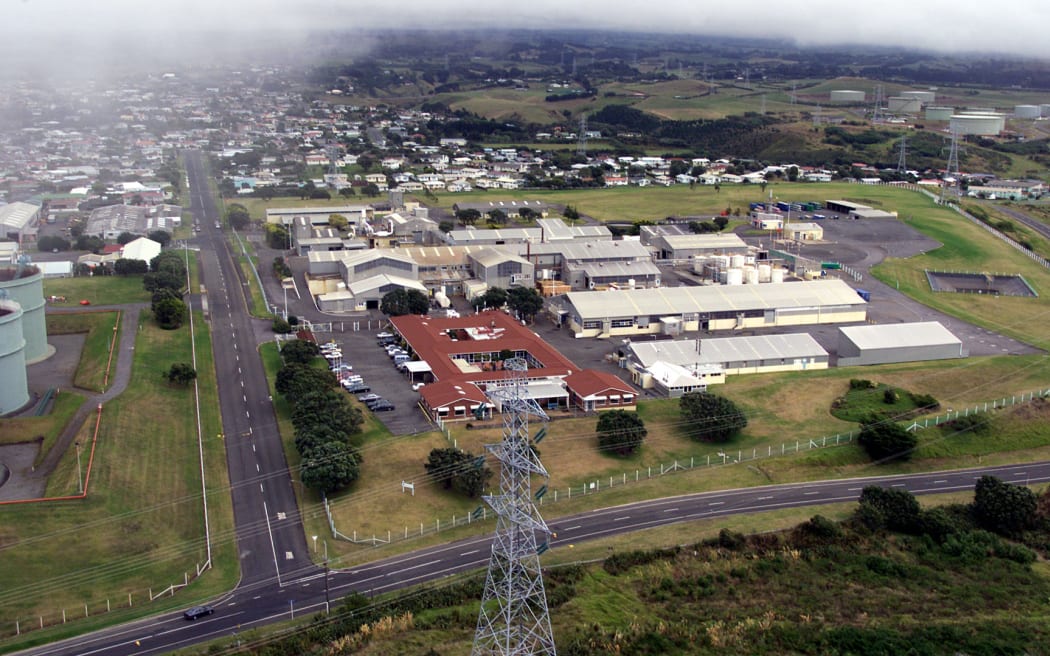
A former employee of a controversial chemical plant in New Plymouth wonders if the death of his first child from spina bifida was related to his time working there.

The multi-national company Dow is surveying anyone who was involved at its Paritūtū site, to fill in the picture of how chemicals there were used.

Graeme Platt had a student job at Ivon Watkins Dow (IWD) during the 1960s where he mixed chemicals in the lab and sprayed herbicides on test paddocks.

“There was never a time where I had any face protection or breathing protection or gloves or any other protection and, of course, when you’re out working in the paddocks with sprays there was never an occasion or opportunity to wash your hands or anything before you ate your lunch.”

From the 1960s through to 1987, Ivon Watkins (later Ivon Watkins-Dow) made the herbicide 2,4,5-T which contained the toxic dioxin TCDD, at Paritūtū.

The herbicide was a key component of Agent Orange – the defoliant used by the US military in the Vietnam War – which has been linked to cancers and birth defects.

Graeme Platt also sprayed the verges of the New Plymouth to Inglewood railway line with what he assumed was 2,4, 5-T.

Now a retired pharmacist, he never got a safety briefing while at IWD.

“No, no safety briefings because I don’t believe safety briefings happened back in the 60s. I don’t think face masks were a thing and I don’t know if they realised the toxicity of what we were using.”

About a decade later he had his first child.

“In 1974 it was and the baby was born with spina bifida and not expected to live, but she did actually for 15 months and then died.

“And of course we always wonder and my dad always wondered was there a connection, who knows?”

Platt said it was a very difficult time and he still thought about baby Juliette.

“I still wonder and I still don’t know and no amount of research could definitely link it.”

Platt, who went on to have two healthy children, did not blame Dow for Juliette’s death.

He said the company operated to the health and safety standards of the day.

Graeme Platt helped spray the railway line between New Plymouth and Inglewood while working at IWD. Photo: Supplied

Malcolm Flett worked at a Hastings tannery in the 1970s and handled an array of chemicals.

One was a fungicide, Trinap 40, which he said was manufactured at IWD and contained Trichlorophenol a dioxin contaminated precursor for 2, 4, 5-T.

“During my time as a tanner I became quite unwell … weight loss, migraine headaches and an inability to put on any sort of weight, so I weighed 42 kilos at 6ft tall.”

A neurologist examined him.

“He went through the list of chemicals I was working with and his immediate reaction was ‘oh, if I was you I’d never father any children because the genetic damage done by these chemicals will be severe’.”

After a decades-long battle ACC recognised Flett had been poisoned, not by Trinap 40, but the solvent gluteraldehyde.

He never did have children.

“After 29 years when they finally came up with something they then said ‘well there’s nothing we can do for you, so just go away and die’ which, of course, I refused to do, so that’s fine.”

Flett still harboured suspicions about Trinap 40.

Corteva Agricience took over Paritūtū as part of the DowDupont agro-chemicals merger in 2019.

It said it took employee and public safety very seriously.

It also said over several decades numerous governmental health reports, and one Dow-instigated University of Otago study of its employees, did not suggest the plant caused any adverse health impacts.

Dow took back control of the now decommissioned site earlier this year and was in the process of cleaning it up.

Te Whatu Ora reports

Te Whatu Ora’s website holds two reports into the link between birth defects and Paritūtū.

The 2002 Neural Tube Defects At Westown Maternity Hospital, 1965-72, study was inconclusive. It said there was a higher number of defects in the Paritūtū area but it was not statistically significant and not possible to link them to the IWD plant at that time.

It recommended a review of the cluster following blood serum testing.

A 2010 Birth Defects Report prepared by Massey University’s Centre for Public Health Research compared New Plymouth records between 1965-70 and wider Taranaki records between 1980-89 with the rest of the country.

It showed a high rate of birth defects in New Plymouth but not at levels substantially different from other parts of the country, noting some limitations in the available data.

The report said once dislocation of the hips and club feet were accounted for, the rate of birth defects was no different from anywhere else while observing these deformities were caused by physical pressure in the womb.

Rates of spina bifida – which had been linked to dioxin exposure – were little different between New Plymouth and the rest of country even during 1965-71 when the city’s birth defect rates were highest, the report said.

It concluded the high rates of birth defects in the area were more likely to be due to local differences in clinical diagnosis, rather than any exposure to the Ivon Watkins Dow plant.

A later correction to the 2010 report pointed out that if congenitally displaced hips (CDH) were not included, the overall birth defect rate at the Westown Maternity Hospital in New Plymouth was significantly higher than National Women’s Hospital as well as the rates reported at Queen Mary Hospital in Dunedin and in Northland.

Dioxin researcher Andrew Gibbs said that by reporting on Taranaki and New Plymouth the 2010 study used populations of around 100,000 and 40,000 which diluted the 1960s impact on Paritūtū.

“The Taranaki District Health Board’s 2002 Neural Tube Defects report recommended a review of the Paritūtū 1968-72 anencephaly cluster which was 11.5 times the expected New Zealand rate – instead the 2010 report investigated the rate of anencephaly in wider New Plymouth.”

In 1977, the Department of Health said stillbirths were the most likely impact following maternal exposures to 2, 4, 5-T, but Gibbs said the Paritūtū cluster of female stillbirths and any associated defects were not reported.

He said the 2010 report claimed high rates of birth defects were due to over-reporting of congenitally displaced hips (CDH), however the report’s author was informed by the district health board in 2002 that CDH was not included in the 1965-70 Westown Maternity Hospital data.

“That aside the sharp rise in defects in 1970 at the same time as the spike in Paritutu stillbirths cannot be explained by the over reporting of CDH and club foot,” said Gibbs.

Te Whatu Ora was unable to comment the impacts of Trinap 40, despite its link to 2, 4, 5, T, as this did not fall within scope of the Paritūtū dioxin study conducted by ESR.

It urged anyone who suspected they may have been affected by this chemical to seek advice from a health professional.

According to its website, NZ Veterans Affairs pays an ex-gratia payment of $30,000 to natural-born children of veterans who served in Vietnam between 1964 and 1972.

To be eligible people need to have been diagnosed with either:

  • acute myeloid leukaemia
  • adrenal gland cancer
  • cleft lip
  • cleft palate
  • spina bifida.

If a child passes away from any of the conditions specified their immediate family may be able to claim an ex gratia payment of $30,000.

Source: RNZ

Continue Reading
Click to comment

Leave a Reply

Your email address will not be published. Required fields are marked *

Latest News

Police say person who fired gun at officers still at large

Published

on

Police say a person who fired a gun at officers in Napier is still at large.

Eastern District Commander Superintendent Joel Lamb said Police tried to stop a vehicle in the Pirimai Area at about 10pm on Tuesday.

He said someone in the back seat pointed what was presumed to be a firearm at officers pursuing the vehicle.

“Staff have then heard two distinct gunshots as the firearm was discharged.

“Fortunately, neither of our officers were injured, and the patrol vehicle did not sustain any damage.”

He said hours later, the vehicle was seen travelling north on the Waikato Expressway towards Auckland.

Police seized the vehicle at an address in Manurewa, but they had not found the alleged offender.

Lamb said people who lived at the Manurewa address were engaging with Police.

He said Eastern District and Counties Manukau Police were making enquiries.

“Presenting a firearm at a Police officer is a serious escalation that puts our staff and the wider community at risk. This behaviour is entirely unacceptable.

“We are taking this incident extremely seriously and will be pursuing all lines of enquiry to locate the offender and hold them accountable.”

Police asked anyone who witnessed the incident to contact Police on 105 or online using the reference number 261111/3764.

Information could also be provided anonymously via Crime Stoppers on 0800 555 111.

rnz

Continue Reading

Latest News

New Zealand sides named for RLWC finals

Published

on

The players tasked with ending Australia’s Rugby League World Cup dominance have been named.

The Kiwis and Kiwi Ferns have announced their squads for this Sunday’s World Cup finals in Brisbane.

Both sides are chasing their first titles since 2008, and both are looking to end their opponents run of three crowns in a row.

“Our Kiwi Ferns have been so dominant in years gone by, and we want to bring dominance back to this jersey, so I think it will be a case of who wants it more,” said co-captain Georgia Hale of the impending clash.

The Kiwis get a major boost for the final as they welcome back Ronaldo Mulitalo after he served a one-match ban for a high tackle against Fiji Bati.

Mulitalo replaces Charnze Nicoll-Klokstad, who moves to the six-man bench, which again includes utility Te Maire Martin, middle forwards Naufahu Whyte, Erin Clark and Xavier Willison plus fullback Keano Kini.

Loose forward Joseph Tapine will make his 30th Test appearance in a familiar pack again, including second-rowers Isaiah Papali’i and Briton Nikora, and props James Fisher-Harris and Moses Leota.

Winger Jamayne Isaako is on the cusp of claiming the New Zealand record for most Test points.

His five goals against Tonga lifted his career points tally to 225 – level with Shaun Johnson – while centre Casey McLean goes into the final with 16 tries in just eight Tests.

Fisher-Harris will again captain the team.

Fullback Ponga said the goal of the group was clear.

“We have high expectations around what we want to achieve, and obviously winning a world Cup is one of them.”

Meanwhile, Ricky Henry has selected a settled side to take on the Jillaroos, led by their lethal centre combination of Stacey Waaka and Mele Hufanga.

Veteran Apii Nicholls takes the number one jersey, Leianne Tufuga and Mackenzie Wiki on the wings.

Henry has stuck with his halves pairing of Chantay Kiria-Ratu and Raecene McGregor with Alexis Tauaneai, Georgia Hale and Otesa Pule up front.

Rounding out the starting pack is Shaniece Monschau, Kaiyah Atai, and Angelina Teakaraanga-Katoa.

“We have been building well throughout the tournament; we understand the Jillaroos side, and will give it our all to make New Zealand proud this weekend,” said Henry.

RLWC Finals:

Kiwi Ferns vs Jillaroos- 6.10pm

Kiwis vs Kangaroos – 9.35pm

Sunday November 15

Suncorp Stadium, Brisbane

Live blog updates on RNZ

Kiwi Ferns:

1. Apii Nicholls 2. Leianne Tufuga 3. Mele Hufanga 4. Stacey Waaka 5. Mackenzie Wiki 6. Chantay Kiria-Ratu 7. Raecene McGregor 8. Alexis Tauaneai 9. Georgia Hale 10. Otesa Pule 11. Shaniece Monschau 12. Kaiyah Atai 13. Angelina Teakaraanga-Katoa.

Interchange: 14. Ashleigh Quinlan 15. Annessa Biddle 16. Shannon Mato 17. Ivana Lauitiiti.

Reserves: 18. Brooke Anderson 19. Zahara Temara 20. Brianna Clark 21. Abigail Roache 22. Tenika Willison.

Kiwis:

1. Kalyn Ponga, 2. Jamayne Isaako, 3. Dane Gagai, 4. Casey McLean, 5. Ronaldo Mulitalo, 6. Kodi Nikorima, 7. Jahrome Hughes, 8. James Fisher-Harris (c), 9. Jeremy Marshall-King, 10. Moses Leota, 11. Isaiah Papali’i, 12. Briton Nikora, 13. Joseph Tapine (v/c).

Interchange: 14. Te Maire Martin, 15. Naufahu Whyte, 16. Erin Clark, 17. Xavier Willison.

Reserves: 18. Keano Kini, 19. Phoenix Crossland, 20. Charnze Nicoll-Klokstad, 21. Scott Sorensen, 22. Leo Thompson.

rnz

Continue Reading

Latest News

Opportunities to mitigate multi-million-dollar RNZ budget blowout likely missed – experts
Published

on

Multiple opportunities to identify and mitigate a multi-million-dollar budget blowout at RNZ appear have been missed, according to the former executive director at Audit New Zealand.

The public broadcaster on Monday revealed a near $12 million shock financial loss after a litany of financial blunders, which will now lead to sweeping job cuts.

The $11.8m loss is more than 25 times the $470,000 RNZ had expected to lose over the year to June.

CEO Paul Thompson took responsibility for the result, and said internal reports gave an inaccurate picture of the finances, meaning the scale of the loss only became clear in October.

RNZ’s former chief financial officer Hilary Parker resigned unexpectedly in early October.

The board said it would commission an independent review into what went wrong.

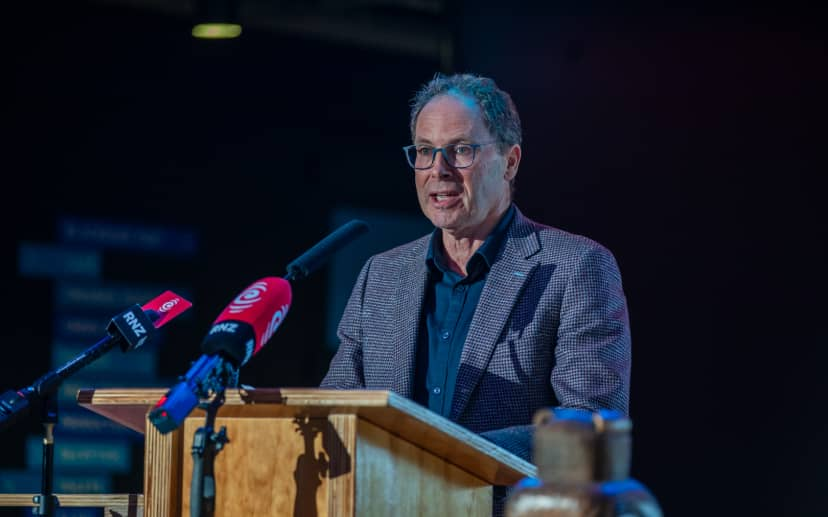
Independent contractor Stephen Walker, who left the Audit Office earlier this year, said the size of the loss was surprising, as was the length of time it took to identify it – months after the financial year ended.

Stephen Walker.
Independent contractor Stephen Walker is a former executive director at Audit New Zealand.

Supplied / OAG

“Probably more of a concern is that they had seemingly been unaware that they were running up a significant deficit until they were in the preparation stage of their annual report in October.”

Walker said public entities typically produced monthly financial reports.

An interim audit also took place before the end of the financial year, he said, but if the organisation hadn’t identified significant losses at that stage, the auditor could also be in the dark.

“It seems that there’s a real weakness in forecasting and budgeting that’s occurred here and that the monthly accounts, when they’re produced, either haven’t identified these significant variances against budget or the magnitude of them really hasn’t come to light until right towards the end of the financial year,” Walker said.

“And really at that point, there’s no opportunity for the chief executive, the leadership team to take, and the board to take, any corrective action because the year has effectively been completed.”

Walker said the “significant miss” was difficult to account for given it was more than 10 percent of RNZ’s total funding.

He said based on RNZ’s annual report, financial complexity didn’t appear to be a factor.

“This $11.8m loss isn’t made up of one particular item … it seems to have been contributed to by a number of separate expense lines running over budget. So I don’t think it’s necessarily to do with complexity.”

Among the errors, RNZ wrongly counted $2m from land sales as income in its budget. Staff costs also came in $3.2m over budget, including $1.4m in redundancy payments.

Professor at Auckland University’s business school Norman Wong said based on media reports the issues identified were “significant and troubling”.

Norman Wong.
Norman Wong.

Supplied / University of Auckland

“But recognising the sale of land as income in their budget is a basic error that one would have expected to have been caught and corrected well before it got to this point.”

With funding reductions at RNZ over the past two years, Walker expected greater scrutiny of financial results.

“Virtually every public entity has had their annual budget reduced. And so you would expect … the leadership team on a monthly basis and board – I’m not sure how frequently the board will consider the information – but you would expect them to be interrogating the results on a regular basis throughout the year,” he said.

Walker said initiating an independent review was the correct course of action and that he’d want to understand what information the leadership team and the board were regularly receiving.

He said he’d “love to say” surprising financial results were rare, but conceded they occured on a semi-frequent basis during his time leading the Audit Office.

“The benefit of independent scrutiny by the Audit Office – and the auditors providing that support to the Auditor General – [is] that the reporting is fairly presented at the end of the year, whether it’s good, bad or ugly.”

rnz

Continue Reading

Trending

Copyright © 2026 The Buzz: Powered by Apna Network Limited - Concept by Digital Hub NZ






