Connect with us

HTML Image

i

NZ News

Government makes changes to farm-level emissions pricing plan

Published

on

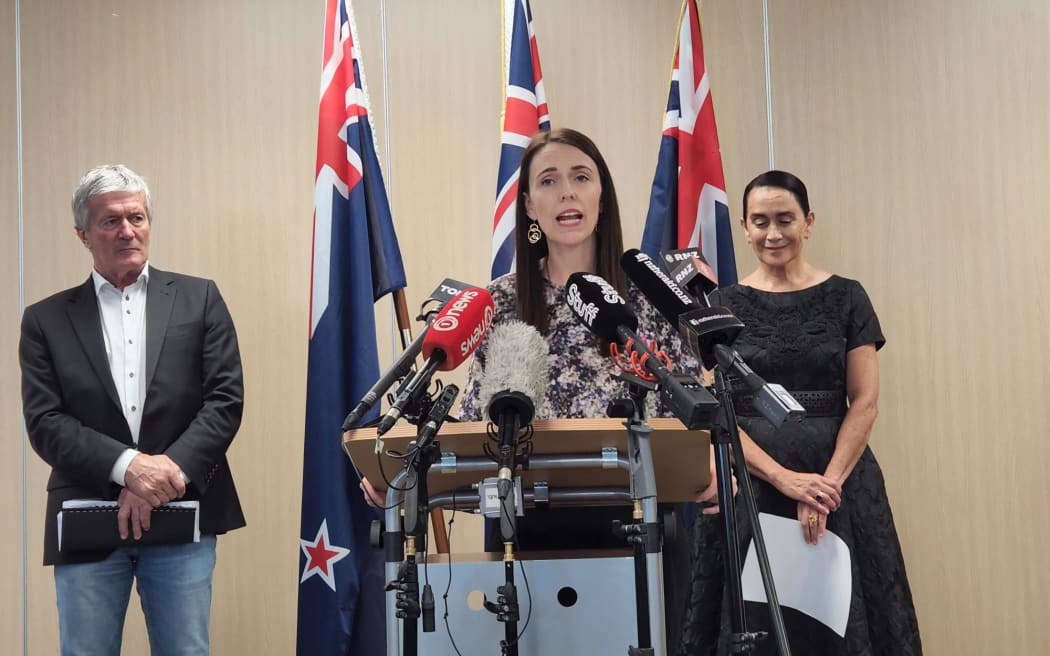
Prime Minister Jacinda Ardern and Agriculture Minister Damien O’Connor address media after the government made changes to its proposal to price agricultural carbon emissions. Photo: RNZ/Lucy Xia

After a huge outcry from farmers the government has made some changes to its proposal to price agricultural carbon emissions.

It has released its response to the more than 23,000 submissions to its plan, though final decisions will not be made until next year.

“After listening to farmers and growers through our recent consultation, and engaging over recent months with industry leaders, today we have taken the next steps in establishing a proposed farm-level emissions reduction system as an alternative to the ETS backstop,” Prime Minister Jacinda Ardern said.

Agriculture Minister Damien O’ Connor said the government understood the need for greater certainty for farmers and growers in their business planning.

“We have committed to a five-year price pathway for levy rates from 2025, giving farmers the price certainty the have asked for out to 2030,” he said.

The plan is similar to the its initial proposal, with emissions counted at the individual farm level, and biogenic methane from animals and nitrous oxide from fertiliser priced separately. Carbon dioxide from things like vehicles is not part of the pricing system.

However, a crucial difference is that instead of using the rising price of carbon to drive behavioural change, as the Climate Change Commission suggested, the government is now going to set the levy price as low as possible.

It will also increase what types of trees and vegetation on farms can be used to offset emissions.

The farming industry and Māori will be allowed to give input on setting the price of the levy.

Prime Minister Jacinda Ardern said overseas customers want low-emissions products and without a credible plan to cut dangerous gases the future of New Zealand exports were at stake.

Ardern told media this morning she always felt government and the industry had the same goals in mind, “that is to be the most sustainable food producers in the world”.

The question of sequestration

Initially, the government wanted to exclude scattered stands of trees and shelter belts, but there was pushback from farmers who objected to being charged for emissions without being recognised for the full range of sequestration efforts.

Last month the government announced it was having another look at the strategy, and today said it was working on a process to recognise stands of trees that can be quantified in a “scientifically robust”.

At a minimum it means that from 2025 management of indigenous vegetation and riparian margin planting done since 2008 will be eligible for offsets.

Initially the system will be managed in the pricing scheme, farmers will fill out a declaration about their eligible land at the same time as they report emissions data.

Payments would be available for the uptake of incentives and eligible sequestration.

Management of the system would transition to the ETS as soon as possible.

This ultimately means the trees and vegetation must be recognised by international methods of accounting for tree planting which counts towards New Zealand’s targets and emissions budgets, but for now that higher standard would not be required.

The report said the ETS was the most appropriate mechanism to reward all forms of eligible sequestration from vegetation. Having one system that recognises sequestration for all landowners in Aotearoa is a coherent, efficient and equitable approach.

The government is proposing to reform the Emissions Trading Scheme (NZ ETS) to encourage interested parties to invest in science and research, to include further categories in New Zealand’s emissions inventory and the emissions trading scheme.

Change in philosophy

There has been a change in the approach to driving behaviour change from farmers.

The Climate Change Commission’s advice had been to let the rising price of emissions be the engine for innovation and for the take-up of new technology – with government hardship payments to help ease the transition.

But officials said this method would be too complicated to set up by the 2025 deadline.

Instead the government is following what the He Waka Eke Noa industry group wanted, to set the emissions levy at the lowest price possible to achieve the outcome, and to use the revenue generated to fund incentives to drive the behaviour.

In the meantime officials are working with the sector on options for transitional support.

What does the government say?

Prime Minister Jacinda Ardern said: “Our shared goal is supporting farmers to grow their exports, reduce emissions, and maintain our agricultural sectors international competitive edge into the future. By continuing to work through our different positions together, we move closer to achieving long term consensus on a plan that works.

She said our export markets wanted sustainable produced products and without a credible plan to reduce emissions the future of New Zealand exports were at stake.

“Tesco, the biggest buyer of New Zealand products in Britain, wants all their products to be environmentally accredited and reach net zero across their entire supply chain by 2050.

“And Fonterra has warned farmers it risks losing customers and facing trade barriers if it doesn’t meet sustainability expectations, prompting the co-operative to look at setting a target for reducing emissions across its supply chain.

Climate Minister James Shaw admitted that “overall, emissions are yet to come down on a sustained basis”.

He said doing so was not the job for farmers alone, and that government had a role.

Shaw added the government was committed to pricing agricultural emissions.

Government had to cut methane emissions by 10 percent by 2030 to have any chance of limiting global warming to 1.7C and that the report released today marked “an important step to our promise to reduce agricultural emissions.”

Who sets the levy, and how?

As well as hitting reduction goals, factors that will be weighed up to determine the levy include: the availability and cost of current and future mitigation; social, cultural and economic impacts on farmers and communities; and whether it will cause price increases that lead to loss of international market share.

The price of nitrous oxide would be capped for the first five years at a level that the sector would be no worse off than if the sector had entered the NZ ETS at this point.

Government ministers will be responsible for setting the levy with advice from the Climate Change Commission, but a board including agriculture sector representatives and Māori will give input.
No caption

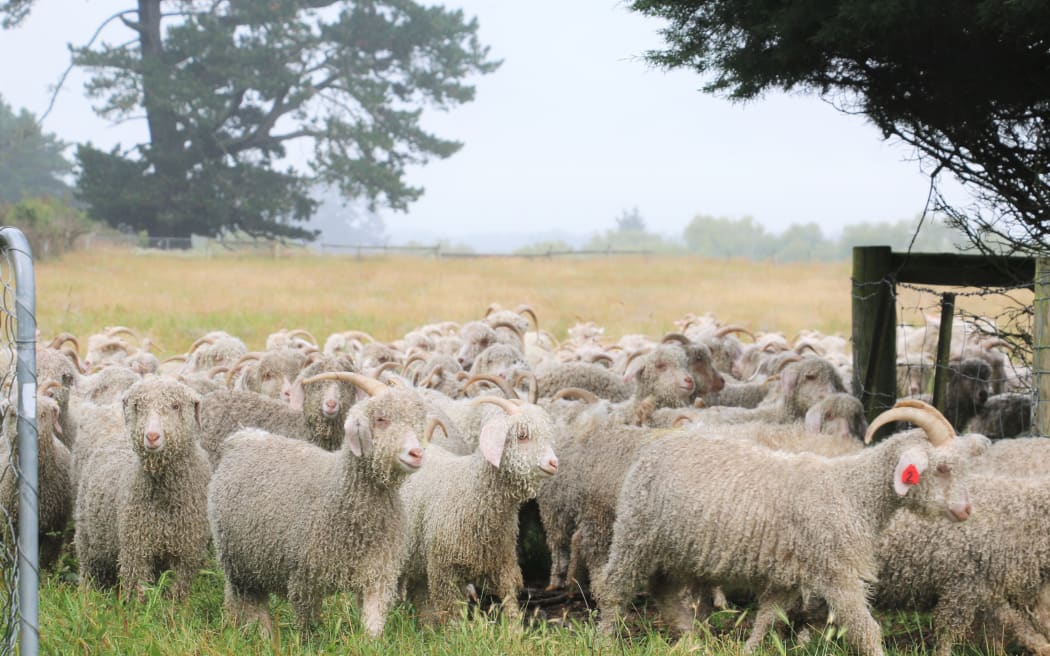
It is proposed ‘minor-emitting sectors’, including swine, poultry, goats, horses, alpacas, llamas, mules and asses, be excluded from the pricing system in 2025. Photo: RNZ / Cosmo Kentish-Barnes

Meanwhile, the sector will help oversee where money raised by the scheme is spent.

Another change is that there are plans to allow groups of farmers to be allowed to band together on reporting and payment obligations.

Who is covered by the scheme?

The proposed farm-level pricing system would capture approximately 23,000 farmers and growers, which is around 96 per cent of the agriculture sector’s emissions.

The legal point of responsibility would lie with GST-registered business owners who meet the following emissions thresholds (equivalent to 200 tonnes CO2-e per year):

  • 550 stock units (inclusive of sheep, cattle and deer, calculated on a weighted annual average basis), or
  • 50 dairy cattle, or
  • applying over 40 tonnes of nitrogen through fertiliser.

It is proposed to exclude minor-emitting sectors (including swine, poultry, goats, horses, alpacas, llamas, mules and asses) from the pricing system in 2025. Over time, changes in emissions profiles could be addressed by reviewing exclusions and amending thresholds.

Agriculture is currently the only sector that does not have to pay for its emissions, despite being responsible for about half of green house gases.

Tee sector was allowed to work with the government and Māori to design their own plan which, if the government could agree on it, rather than be forced into the emissions trading scheme.

The agricultural pricing legislation will be introduced to Parliament by the middle of 2023.

Move in right direction – farming industry

He Waka Eke Noa partners, who jointly submitted on emissions pricing, said the report was moving in the right direction on the pricing system, though there was still work to do on the detail.

The partnership – farmers, industry bodies and Māori with the support of the Primary Industries and Environment Ministries – said it showed the government was listening to the sector.

“This is a high-level, direction-setting report and does not have all the detail farmers and growers will need, but it is an important milestone” He Waka Eke Noa Independent Chair Sarah Paterson said in a statement.

“It confirms that He Waka Eke Noa has been successful in putting the case for a farm-level split-gas levy instead of including agriculture in the New Zealand Emissions Trading Scheme.”

The partners wanted continued focus on ensuring there is a balanced approach to price setting, and that the farm-level system was up and running by 2025 as they did not support the introduction of an interim processor-level levy.


Continue Reading
Click to comment

Leave a Reply

Your email address will not be published. Required fields are marked *

Latest News

Police say person who fired gun at officers still at large

Published

on

Police say a person who fired a gun at officers in Napier is still at large.

Eastern District Commander Superintendent Joel Lamb said Police tried to stop a vehicle in the Pirimai Area at about 10pm on Tuesday.

He said someone in the back seat pointed what was presumed to be a firearm at officers pursuing the vehicle.

“Staff have then heard two distinct gunshots as the firearm was discharged.

“Fortunately, neither of our officers were injured, and the patrol vehicle did not sustain any damage.”

He said hours later, the vehicle was seen travelling north on the Waikato Expressway towards Auckland.

Police seized the vehicle at an address in Manurewa, but they had not found the alleged offender.

Lamb said people who lived at the Manurewa address were engaging with Police.

He said Eastern District and Counties Manukau Police were making enquiries.

“Presenting a firearm at a Police officer is a serious escalation that puts our staff and the wider community at risk. This behaviour is entirely unacceptable.

“We are taking this incident extremely seriously and will be pursuing all lines of enquiry to locate the offender and hold them accountable.”

Police asked anyone who witnessed the incident to contact Police on 105 or online using the reference number 261111/3764.

Information could also be provided anonymously via Crime Stoppers on 0800 555 111.

rnz

Continue Reading

Latest News

New Zealand sides named for RLWC finals

Published

on

The players tasked with ending Australia’s Rugby League World Cup dominance have been named.

The Kiwis and Kiwi Ferns have announced their squads for this Sunday’s World Cup finals in Brisbane.

Both sides are chasing their first titles since 2008, and both are looking to end their opponents run of three crowns in a row.

“Our Kiwi Ferns have been so dominant in years gone by, and we want to bring dominance back to this jersey, so I think it will be a case of who wants it more,” said co-captain Georgia Hale of the impending clash.

The Kiwis get a major boost for the final as they welcome back Ronaldo Mulitalo after he served a one-match ban for a high tackle against Fiji Bati.

Mulitalo replaces Charnze Nicoll-Klokstad, who moves to the six-man bench, which again includes utility Te Maire Martin, middle forwards Naufahu Whyte, Erin Clark and Xavier Willison plus fullback Keano Kini.

Loose forward Joseph Tapine will make his 30th Test appearance in a familiar pack again, including second-rowers Isaiah Papali’i and Briton Nikora, and props James Fisher-Harris and Moses Leota.

Winger Jamayne Isaako is on the cusp of claiming the New Zealand record for most Test points.

His five goals against Tonga lifted his career points tally to 225 – level with Shaun Johnson – while centre Casey McLean goes into the final with 16 tries in just eight Tests.

Fisher-Harris will again captain the team.

Fullback Ponga said the goal of the group was clear.

“We have high expectations around what we want to achieve, and obviously winning a world Cup is one of them.”

Meanwhile, Ricky Henry has selected a settled side to take on the Jillaroos, led by their lethal centre combination of Stacey Waaka and Mele Hufanga.

Veteran Apii Nicholls takes the number one jersey, Leianne Tufuga and Mackenzie Wiki on the wings.

Henry has stuck with his halves pairing of Chantay Kiria-Ratu and Raecene McGregor with Alexis Tauaneai, Georgia Hale and Otesa Pule up front.

Rounding out the starting pack is Shaniece Monschau, Kaiyah Atai, and Angelina Teakaraanga-Katoa.

“We have been building well throughout the tournament; we understand the Jillaroos side, and will give it our all to make New Zealand proud this weekend,” said Henry.

RLWC Finals:

Kiwi Ferns vs Jillaroos- 6.10pm

Kiwis vs Kangaroos – 9.35pm

Sunday November 15

Suncorp Stadium, Brisbane

Live blog updates on RNZ

Kiwi Ferns:

1. Apii Nicholls 2. Leianne Tufuga 3. Mele Hufanga 4. Stacey Waaka 5. Mackenzie Wiki 6. Chantay Kiria-Ratu 7. Raecene McGregor 8. Alexis Tauaneai 9. Georgia Hale 10. Otesa Pule 11. Shaniece Monschau 12. Kaiyah Atai 13. Angelina Teakaraanga-Katoa.

Interchange: 14. Ashleigh Quinlan 15. Annessa Biddle 16. Shannon Mato 17. Ivana Lauitiiti.

Reserves: 18. Brooke Anderson 19. Zahara Temara 20. Brianna Clark 21. Abigail Roache 22. Tenika Willison.

Kiwis:

1. Kalyn Ponga, 2. Jamayne Isaako, 3. Dane Gagai, 4. Casey McLean, 5. Ronaldo Mulitalo, 6. Kodi Nikorima, 7. Jahrome Hughes, 8. James Fisher-Harris (c), 9. Jeremy Marshall-King, 10. Moses Leota, 11. Isaiah Papali’i, 12. Briton Nikora, 13. Joseph Tapine (v/c).

Interchange: 14. Te Maire Martin, 15. Naufahu Whyte, 16. Erin Clark, 17. Xavier Willison.

Reserves: 18. Keano Kini, 19. Phoenix Crossland, 20. Charnze Nicoll-Klokstad, 21. Scott Sorensen, 22. Leo Thompson.

rnz

Continue Reading

Latest News

Opportunities to mitigate multi-million-dollar RNZ budget blowout likely missed – experts

Published

on

Multiple opportunities to identify and mitigate a multi-million-dollar budget blowout at RNZ appear have been missed, according to the former executive director at Audit New Zealand.

The public broadcaster on Monday revealed a near $12 million shock financial loss after a litany of financial blunders, which will now lead to sweeping job cuts.

The $11.8m loss is more than 25 times the $470,000 RNZ had expected to lose over the year to June.

CEO Paul Thompson took responsibility for the result, and said internal reports gave an inaccurate picture of the finances, meaning the scale of the loss only became clear in October.

RNZ’s former chief financial officer Hilary Parker resigned unexpectedly in early October.

The board said it would commission an independent review into what went wrong.

Independent contractor Stephen Walker, who left the Audit Office earlier this year, said the size of the loss was surprising, as was the length of time it took to identify it – months after the financial year ended.

Stephen Walker.
Independent contractor Stephen Walker is a former executive director at Audit New Zealand.

Supplied / OAG

“Probably more of a concern is that they had seemingly been unaware that they were running up a significant deficit until they were in the preparation stage of their annual report in October.”

Walker said public entities typically produced monthly financial reports.

An interim audit also took place before the end of the financial year, he said, but if the organisation hadn’t identified significant losses at that stage, the auditor could also be in the dark.

“It seems that there’s a real weakness in forecasting and budgeting that’s occurred here and that the monthly accounts, when they’re produced, either haven’t identified these significant variances against budget or the magnitude of them really hasn’t come to light until right towards the end of the financial year,” Walker said.

“And really at that point, there’s no opportunity for the chief executive, the leadership team to take, and the board to take, any corrective action because the year has effectively been completed.”

Walker said the “significant miss” was difficult to account for given it was more than 10 percent of RNZ’s total funding.

He said based on RNZ’s annual report, financial complexity didn’t appear to be a factor.

“This $11.8m loss isn’t made up of one particular item … it seems to have been contributed to by a number of separate expense lines running over budget. So I don’t think it’s necessarily to do with complexity.”

Among the errors, RNZ wrongly counted $2m from land sales as income in its budget. Staff costs also came in $3.2m over budget, including $1.4m in redundancy payments.

Professor at Auckland University’s business school Norman Wong said based on media reports the issues identified were “significant and troubling”.

Norman Wong.
Norman Wong.

Supplied / University of Auckland

“But recognising the sale of land as income in their budget is a basic error that one would have expected to have been caught and corrected well before it got to this point.”

With funding reductions at RNZ over the past two years, Walker expected greater scrutiny of financial results.

“Virtually every public entity has had their annual budget reduced. And so you would expect … the leadership team on a monthly basis and board – I’m not sure how frequently the board will consider the information – but you would expect them to be interrogating the results on a regular basis throughout the year,” he said.

Walker said initiating an independent review was the correct course of action and that he’d want to understand what information the leadership team and the board were regularly receiving.

He said he’d “love to say” surprising financial results were rare, but conceded they occured on a semi-frequent basis during his time leading the Audit Office.

“The benefit of independent scrutiny by the Audit Office – and the auditors providing that support to the Auditor General – [is] that the reporting is fairly presented at the end of the year, whether it’s good, bad or ugly.”

rnz

Continue Reading

Trending

Copyright © 2026 The Buzz: Powered by Apna Network Limited - Concept by Digital Hub NZ