Connect with us

HTML Image

i

NZ News

UK national Andrew Glauberman sentenced for Auckland home improvement scam

Published

on

When a woman received a flyer for “Everlast Home Improvement” in her letterbox she made contact and asked for a quote to paint her house.

Soon after, British national Andrew Yeshua Glauberman and another man visited the woman’s home and quoted her $55,000.

She got a bank loan and paid 50 percent into Glauberman’s account.

But after three days of minimal sanding at the woman’s property, the contractors disappeared and stopped responding to her calls.

She wasn’t the only one to fall for Glauberman’s scam.

In a statement read in the Manukau District Court this month, the woman said she felt “embarrassed” and still owed the bank a “large sum” of money, causing her family financial stress.

Liverpool-born Glauberman, 21, has now been sentenced for 12 charges relating to the home improvement scam and shoplifting from Bunnings between the start of the year and his arrest in May.

Judge Lynn Hughes calculated he had taken more than $54,000 from his six New Zealand victims, who paid him deposits for work that was never done.

Police announced in May that Glauberman’s “associate” had fled the country and there was a warrant for his arrest.

Flyers in letterboxes

Glauberman arrived in New Zealand in December 2025 on a visitor’s visa from Britain.

In early 2026, he began dropping flyers in Auckland letterboxes advertising a property maintenance company, “Everlast Home Improvement”.

A man in Glenfield responded to one of the flyers, saying he needed his roof fixed.

Glauberman and an associate went to the man’s house and gave him a quote of $3000 to repair the roof.

After the tradies began work, they told the man more repairs were needed and the cost was $13,500. The home owner deposited $5000 into Glauberman’s account.

The scammers then claimed they discovered rotten wood in the roof and it would cost $34,000 to fix.

The man grew suspicious, stuck to the agreed $13,500, and less than a week later, after “Everlast” did three hours of work on the home, he was asked for the rest of the money.

The unknowing victim transferred the final amount but, on inspecting their handiwork, realised the roof hadn’t been fixed.

Instead, holes had been drilled into it.

A month later, Glauberman scammed the woman out of a $27,500 deposit for the supposed paint job on her Mt Albert house.

Glauberman then took a 50 percent deposit on a $10,580 quote to fix leaks in an Avondale home. After the work was completed, the man who commissioned it said it wasn’t satisfactory. He never heard from the Brit again.

Another Manurewa man lost $1000 to a similar scheme, and a woman in Hamilton was approached by Glauberman, who introduced himself using a fake name.

Hamilton termites

Glauberman, again with a fake flyer, offered to fix an exterior wall in the woman’s home and, when he came to inspect it, told her it had termites.

She paid a deposit of $1000.

“Another associate”, police said, removed problematic weatherboards from the wall and told the woman to stay away while he worked because he was using toxic chemical treatments.

She could see no treatments being used.

The woman later looked under the tarp laid by the contractor and realised the workmanship was poor.

Despite this, the scammers contacted the woman demanding the rest of the $8000 quote, but after she threatened to call the police they left her alone.

The woman had to pay someone else to repair the damage.

Bunnings steals

Glauberman and another man also stole power tools, plumbing gear and other items, including a DeWalt vest and hoodie, from Bunnings stores in Auckland in March and April.

At a Manukau Bunnings, Glauberman and his friend entered the carpark in a Ford Ranger with a ladder on top.

They went inside, bought a new ladder, put it on the car, took down the old one and returned it using the new receipt.

Lying, straight to her face

In court, Judge Hughes read two victim impact statements, one from the woman who lost $27,500 and said she was “embarrassed”.

Another victim, the judge said, recalled having a lot on her mind and wasn’t thinking straight the day she was duped by Glauberman.

Her statement said it made her “very angry” that she had welcomed Glauberman into her home, looked him in the eyes, and he had lied straight to her face.

The woman had lost trust in people because of the incident, the judge reported.

Born to Irish Travellers

In a pre-sentence report, Glauberman told the report writer he was born in Liverpool to Irish Traveller parents.

Glauberman’s father had since died, his mother had significant health issues and he had to leave his home country after receiving “threats”, which the judge didn’t expand upon.

The 21-year-old claimed he lived in the United States and Canada before coming to New Zealand, where he was offered a job by another man.

The man asked Glauberman to open a bank account in his name, Glauberman told the report writer, and while it was wrong to steal from the victims he “never saw that money”.

Glauberman told the report writer he had no money for food or clothing, was under the influence of drugs and alcohol and believed he was taken advantage of by that man.

Straight out of the ‘playbook’

Police prosecutor Sergeant Richard Van Arendonk said he rejected the idea that Glauberman’s scheme was “unsophisticated”.

Van Arendonk said he was a police officer in Britain for 15 years and aware of the “Travelling fraternity’s” methods.

The painting scam was straight out of the UK Travellers’ “playbook”, Van Arendonk claimed.

“This is what happens in the UK, frequently, more often than people would like.”

Glauberman’s lawyer Sanjay Kumar said his client had participated in a restorative justice meeting, where he was read a letter from one of the victims.

Glauberman had $21,000 in his bank account, which he had offered to give back to those he had stolen from, Kumar said.

The account, the court heard, was frozen by police.

* This story originally appeared in the New Zealand Herald.

Source: RNZ

Continue Reading
Click to comment

Leave a Reply

Your email address will not be published. Required fields are marked *

Latest News

National MP Nicola Grigg taking medical leave following cancer diagnosis

Published

on

Minister for Women and National MP Nicola Grigg is taking medical leave to deal with a cancer diagnosis, the Prime Minister says.

In a statement, Christopher Luxon said Grigg recently underwent surgery and is scheduled for another in a fortnight, before beginning further treatment.

“Nicola has a positive prognosis and is hopeful of a successful outcome.”

“I want Nicola to take the time she needs for her treatment and recovery. The whole National team backs her as she focuses on getting well.”

Luxon confirmed National MP Penny Simmonds would take over Grigg’s portfolio’s of Minister for the Environment and Women while she was on medical leave.

Grigg went to Parliament in 2020 after winning the safe National seat of Selwyn in the 2020 election. She worked as a journalist before shifting to politics, working for former National leaders Bill English and Simon Bridges.

Luxon said Grigg is a very committed MP.

“She wants to assure Selwyn residents her electorate office is fully operational, and her team will be available to help with their enquiries while she is on leave,” he said.

RNZ

Continue Reading

Fiji News

How a weak NZ dollar could help and hurt you

Published

on

A weak New Zealand dollar might be hard on anyone shopping from international websites for Christmas presents or putting fuel in their cars but could be helping us in other ways, ASB says.

Over the past 20 years, the average value of the dollar has been about US70c.

On Friday, it was worth US54c.

ASB senior economist Chris Tennent-Brown said the impact would be felt differently across the economy. Households and New Zealanders travelling internationally would feel the pinch, but exporters, tourism operators and investors could benefit.

Tennent-Brown said the dollar was historically low against most major currencies except the Japanese yen. That was because our interest rates have got out of step with most other countries’.

“We’ve got very high inflation, which is something that many western economies are dealing with, but we’re coming at that problem from a very low interest rate setting, and I’d still say our interest rates are quite low on a historical basis.

“If we compare it to across the Tasman, Australia’s official cash rate is a couple of percent higher than ours, and normally New Zealand needs to have a bit of a premium over other countries, so we’re below Aussie, we’re below the US in terms of an official cash rate, that impacts wholesale rates and that does weigh on the New Zealand dollar.”

The focus on interest rates would continue for some time, he said.

“I think interest rates will be important over the next couple of years, and some of that will be the Reserve Bank returning our official cash rate and our interest rates towards more normal levels – or neutral when we put some economic jargon in there about where the official cash rate should be – and likewise some of the countries that have been pretty aggressive on tightening over the past year, Australia is a good example, will perhaps be easing interest rates next year whilst we’re still trying to get them back to more normal levels, so that will all impact the exchange rate over the year ahead.”

How the dollar moved had different effects on various parts of the economy.

“For households buying imported goods, or Kiwis spending money overseas, it can mean higher prices and less bang for buck. But for exporters earning offshore, tourism businesses and some investors with international exposure there can be meaningful upside,” he said.

Oil and refined products like diesel, petrol and aviation fuel are priced globally in US dollars, meaning a weaker NZ dollar compounds already high international fuel costs. The impact is ultimately felt at the petrol pump, in airline ticket prices, and in the cost of transporting people and goods.

But it made New Zealand a more appealing tourism destination and could also encourage New Zealanders to holiday at home, too.

“That could provide a double boost for parts of the tourism and hospitality sector over summer, with more international visitors coming and more Kiwi choosing to spend their holiday dollars at home. Some of us may even remember the 1980s tourism campaign – ‘don’t leave town until you’ve seen the country’. It’s true, and it worked,” Tennent-Brown said.

The weak dollar also boosted key exports such as dairy and meat.

“It’s painful every time we buy something that has an international price, and petrol’s the obvious one, but it is supporting the rural recovery with things like the Fonterra milk price update … reflecting how the weak New Zealand dollar flows through to improved incomes at the farm gate, but it has some impacts on the rest of the economy.

“The rural income story is definitely a beneficiary of the weak New Zealand dollar … it’s a twin-edged sword though, because things like fertilizer prices, investing in plant and machinery is clearly going up, just as the New Zealand dollar goes down.”

He said there could also be a silver lining for those with money invested offshore, including through KiwiSaver. A weaker NZ dollar can provide a currency tailwind for international investors.

“Every investment manager will have an approach to FX management. ASB maintains a deliberate mix of hedged and unhedged international assets. Keeping a portion of global equities unhedged provides a natural buffer during global market downturns, as the NZD historically tends to fall during periods of economic stress, lifting the value of overseas shares.”

RNZ

Continue Reading

Latest News

Last decade sees more people charged for low-level drug offending than ever

Published

on

More people are being charged for low-level drug offending than ever in the last decade, despite a 2019 law change telling police not prosecute unless it’s in the public interest.

Authorities had been told to consider a health-centred approach instead, but data collated by the Drug Foundation shows more than 4200 people were charged for unlawful possession or use in 2025 and 2026 period.

Of those cases, 960 had possession or use as the only charge they faced.

In the same year, 15 people were imprisoned for drug possession or use alone.

The maximum penalty for possession or use is three to six months in prison depending on class, or a fine of $500 to $1000.

Dave Burnside is the lived experience leader at Odyssey Trust, an addiction treatment service based in Auckland.

He said the trend was worrying.

“Particularly when most of the world is turning to a health not handcuffs approach and recognising the futility of criminalising drug use particularly and possession,” he said.

Dave Burnside.
Odyssey Trust lived experience leader Dave Burnside.

Supplied / Odyssey Trust

Burnside had his own experience with the system, where minor cannabis charges led him on a downward spiral to other offending and prison time.

“It gave me a criminal record, it affected my opportunities in terms of employment, travel, education and other things,” he said.

“I ended up spending considerable time in jail over my life, and the offending increased.”

It was only when Burnside was able to get treatment later in his life that he was able to break free from that world.

“There are alternatives that exist, and we’re just not using them,” he said.

He said there needed to be investment and provision for treatment options, as well as a shift in perception.

“One of the key things is that criminalising people, charging more people, imprisoning more people does not make communities safer,” Burnside said.

“Those people will come out, they will have lost any sort of employment, any housing, any supports that they’ve had and be expected to rebuild that with very little support.”
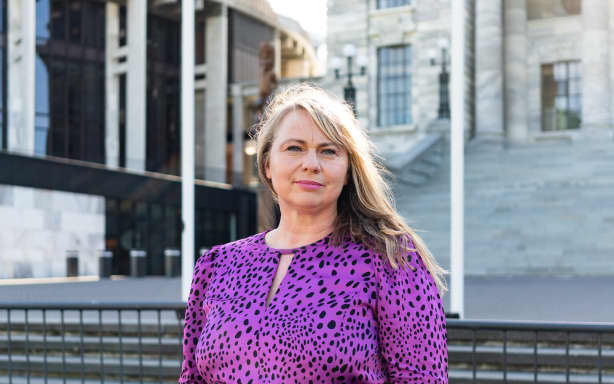
NZ Drug Foundation executive director Sarah Helm

Supplied/ NZ Drug Foundation

Executive director of the Drug Foundation, Sarah Helm, said over the period covered by the report, consumption of meth and cocaine had surged, as did the harm it caused.

“It does pose the question whether or not it is in the public interest to continue prosecuting for drug use and possession,” she said.

The report also highlighted that Māori were charged with drug offences nearly five times more than the rate of non-Māori in the last year.

Helm said that was the tip of the iceberg.

“The disparity grows as you move into convictions and imprisonment, with almost 60 percent of people imprisoned for drug crime are Māori.”

Police’s Greg Williams of the National Organised Crime Group investigates the most serious level of drug and gang offending.
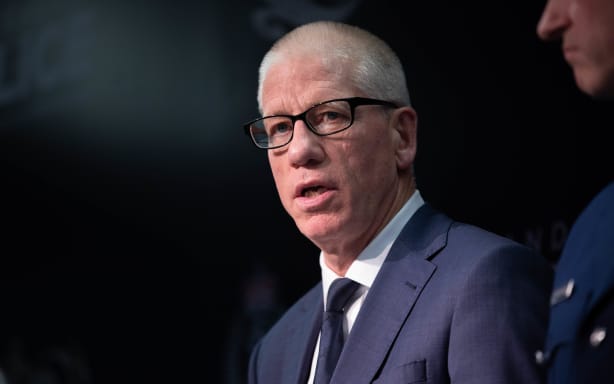
Police speak to media after seizing 3.2 tonnes of cocaine
Greg Williams, of Police’s National Organised Crime Group.

RNZ / Angus Dreaver

He said those who were charged with minor drug offences were often also facing more serious crimes.

“What you’re seeing in that charging data is a lot of examples of [possession of a drug utensil] but the reality, even the report accepts this, is that it was associated with other more serious offending,” he said.

“You can talk about people charged, but actually what this report fails to realise is the other resolutions that occur around the back of this.”

Williams said from the start of July 2021 to the end of July 2026 there had been 12,429 people charged with drug offences who went through non-court action, like diversion and warnings.

Police wanted to see more investment in treatment programmes also, but enforcement was still needed against those at the top of the drug trade, he said.

“We believe there’s that need to provide that support to people who have that addiction the opportunity to get off it, because they really want to get away from it.”

rnz

Continue Reading

Trending

Copyright © 2026 The Buzz: Powered by Apna Network Limited - Concept by Digital Hub NZ