

Latest News
‘Not the way MMP was supposed to work’: Experts urge politicians to act on overhang

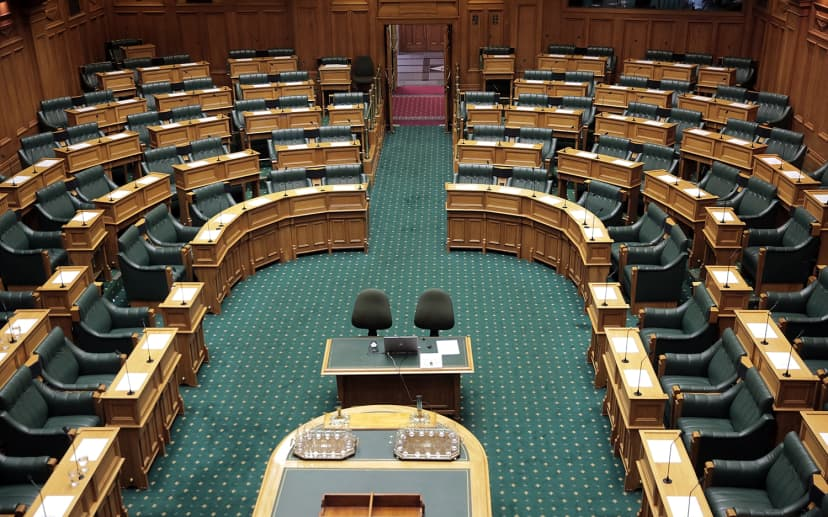
A group of 46 experts wants politicians to urgently consider improving the MMP electoral system, to avoid undemocratic elections in future.
Their open letter – led by Andrew Geddis, Lara Greaves and Max Rashbrooke – is titled “Keep the ‘P’ in MMP” and points to the 11-seat overhang indicated by the initial results putting the proportionality the ‘P’ stands for at risk.
“I don’t think it’s how people want MMP to work,” Rashbrooke told RNZ. “People should be speaking out on it and trying to underline for MPs the urgency of tackling it, and try and find a bipartisan solution.”
Geddis said the four-seat overhang for Te Pāti Māori was the result of a deliberate campaign to expand influence well beyond its party vote entitlement, and despite campaigns calling for the same thing National’s seven overhang seats were “more like an organic result of the National Party continuing to do reasonably well in individual electorates, while its party vote fell off”.
Overall, the result distorted representation in Parliament, and he pointed to the ’78 and ’81 elections that delivered National governments despite Labour winning more votes. That mismatch was “one of the reasons we actually shifted to MMP”.
“The overhang could well deliver the same outcome, where you have three parties that have a majority of the seats in the House, but receive fewer votes across the country than the other four parties in Parliament.
“Not really the way democracy is supposed to work, and it’s definitely not the way MMP was supposed to work”.

Supplied
Rashbrooke warned it could also become the norm in future.
“Now that people have seen that it is at least possible to engineer an overhang the very real likelihood is that next election that will just become an arms race,” he said.
The open letter warned this could lead to disillusionment and lower trust in democracy, and suggested setting up a dedicated select committee to tackle the problem and put solutions in place.
Geddis said while some would argue politicians should not be the ones designing electoral systems – “like allowing panel beaters to design intersections, they are going to do so with their own best interests in mind” – there was a need to get the problem fixed before the next election, leaving little time for a broader discussion.
“We’ve only got three years … if we get a Parliamentary select committee doing the thinking about it, it’ll help MPs come to realise what the best solution is rather than having an external examination which then has to go to Parliament.”
The letter suggested options for fixing the overhang problem:
- Add more list seats so that Parliament would get bigger, to make up for any overhang
- Reduce the number of electorates which would reduce the number of possible overhang seats
- Remove electorate seats from parties that win too many overhang seats by (in line with Germany) requiring parties to have enough party votes to cover their overhang wins, perhaps allowing one or two overhang seats per party
- Only have one vote, so that electorate-based votes also count as party votes, electing both a local MP and contributing to a party vote that could bring in additional list MPs
- Change how votes in Parliament work so that it’s based on the proportion of party vote, rather than the number of MPs
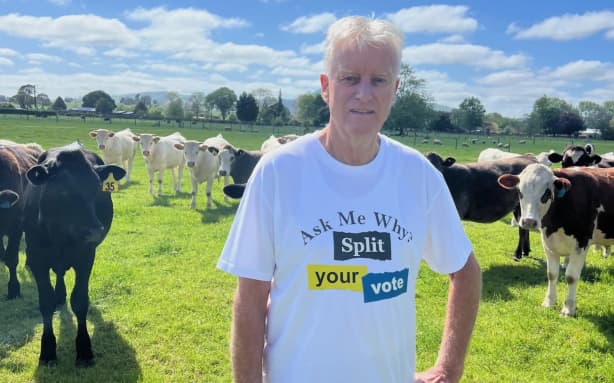
One campaign for such a strategy at the election led by billionaire Harry Mowbray explicitly aimed to undermine MMP, which he called a “complete dog” because it ensured power for minority voices.
Supplied
However, Mowbray himself preferred something resembling the supplementary member system, which would be less representative and guarantee outsized influence from electorates.
“There’s an irony there,” Rashbrooke said, “that some of the people who are trying to engineer a situation where MMP becomes less proportional, and then argue that’s a weakness in the system, are also people who want an electoral system that is much less proportional than MMP.”
Geddis agreed.
“Harry Mowbray’s criticism of MMP seems slightly confused … he thinks it gives smaller parties too much power, and the way that he sought to undermine MMP was to show smaller parties how they could get more power.”
He said he was not sure such campaigns were successful, but the real risk was future elections would become less policy, more about tactical voting strategies.
“There’s no such thing as a perfect electoral system. There’s always going to be pros and cons to any change.”
The open letter also highlighted the three public referendums New Zealand had held on the electoral system – in 1992, ’93 and 2011 – all favouring MMP.
Rashbrooke said there was no need to throw the proverbial baby out with the bathwater.
“The problem with any system other than MMP is it will be less proportional, it will do a worse job of translating what people actually want into seats in Parliament … we have discovered there is a weakness in it, that weakness needs to be fixed.
“A bit like the case of: you’ve got a perfectly solid house, it’s a really good house but you’ve just discovered that there’s a little vulnerability in it … something that needs to be patched up, something that needs to be mended – but the foundations are all totally secure.”
RNZ / Cole Eastham-Farrelly
An independent review following the 2011 referendum had also called for overhang seats to be abolished, and despite changes to the electoral system – including in both the most recent terms of Parliament, one led by National and one by Labour – politicians have never tackled that or a number of other recommendations.
Neither Geddis nor Rashbrooke believed the major parties could be blamed.
“The fixes that were proposed in the past were fixes for a much smaller problem that you know wasn’t quite as pressing. This time around, we can see what the problem is, we can see its magnitude, and we can predict that it’s likely to reoccur in the future,” Geddis said.
Rashbrooke pointed to the 1986 Royal Commission on Electoral Reform’s finding that “accidental deviations [from proportional results] are most unlikely, and that any attempt to deliberately manipulate the system would be both difficult to implement and likely to attract an electoral backlash”.
“I didn’t see this coming … it’s crept up upon us,” Rashbrooke said. “I’m not sure that I would blame anyone very strongly for not seeing that coming, I think the point is just now that the problem is staring us in the face. We have to do something about it.
“I suspect they didn’t think that it would be a problem … it’s not in the nature of the National Party to assume that they’re going to get a really low party vote and have a whole lot of overhang seats. You know, that’s not how National’s ego works, if you like.”
rnz


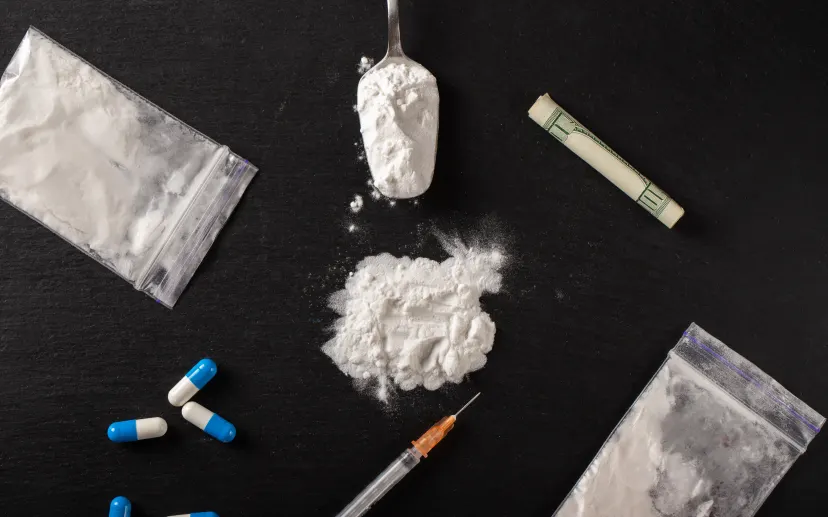
More people are being charged for low-level drug offending than ever in the last decade, despite a 2019 law change telling police not prosecute unless it’s in the public interest.
Authorities had been told to consider a health-centred approach instead, but data collated by the Drug Foundation shows more than 4200 people were charged for unlawful possession or use in 2025 and 2026 period.
Of those cases, 960 had possession or use as the only charge they faced.
In the same year, 15 people were imprisoned for drug possession or use alone.
The maximum penalty for possession or use is three to six months in prison depending on class, or a fine of $500 to $1000.
Dave Burnside is the lived experience leader at Odyssey Trust, an addiction treatment service based in Auckland.
He said the trend was worrying.
“Particularly when most of the world is turning to a health not handcuffs approach and recognising the futility of criminalising drug use particularly and possession,” he said.
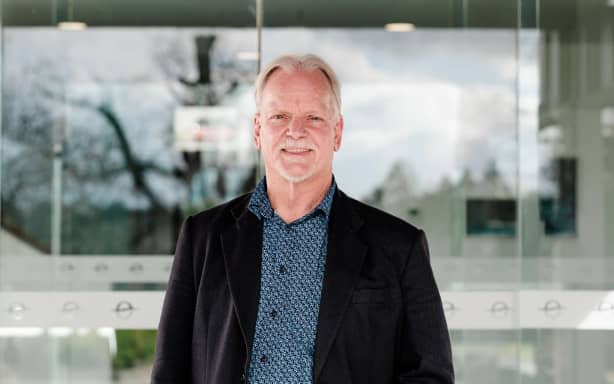
Supplied / Odyssey Trust
Burnside had his own experience with the system, where minor cannabis charges led him on a downward spiral to other offending and prison time.
“It gave me a criminal record, it affected my opportunities in terms of employment, travel, education and other things,” he said.
“I ended up spending considerable time in jail over my life, and the offending increased.”
It was only when Burnside was able to get treatment later in his life that he was able to break free from that world.
“There are alternatives that exist, and we’re just not using them,” he said.
He said there needed to be investment and provision for treatment options, as well as a shift in perception.
“One of the key things is that criminalising people, charging more people, imprisoning more people does not make communities safer,” Burnside said.
“Those people will come out, they will have lost any sort of employment, any housing, any supports that they’ve had and be expected to rebuild that with very little support.”
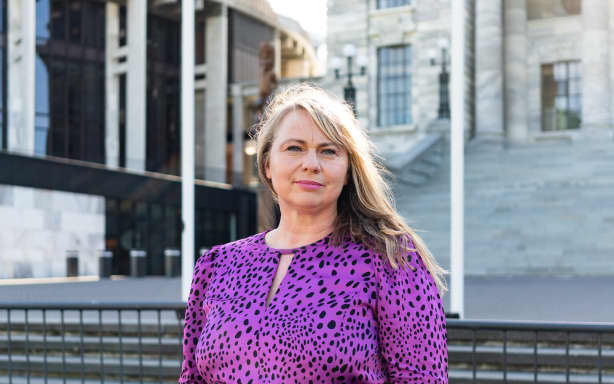
Supplied/ NZ Drug Foundation
Executive director of the Drug Foundation, Sarah Helm, said over the period covered by the report, consumption of meth and cocaine had surged, as did the harm it caused.
“It does pose the question whether or not it is in the public interest to continue prosecuting for drug use and possession,” she said.
The report also highlighted that Māori were charged with drug offences nearly five times more than the rate of non-Māori in the last year.
Helm said that was the tip of the iceberg.
“The disparity grows as you move into convictions and imprisonment, with almost 60 percent of people imprisoned for drug crime are Māori.”
Police’s Greg Williams of the National Organised Crime Group investigates the most serious level of drug and gang offending.
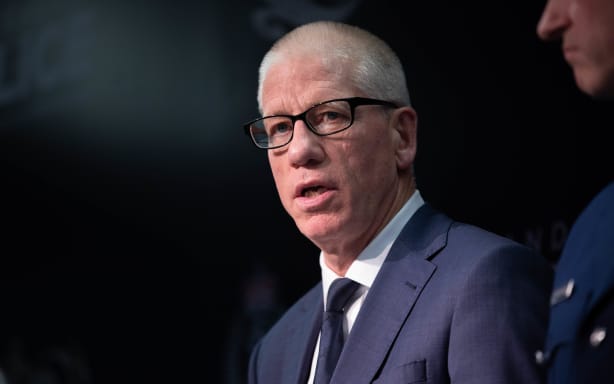
RNZ / Angus Dreaver
He said those who were charged with minor drug offences were often also facing more serious crimes.
“What you’re seeing in that charging data is a lot of examples of [possession of a drug utensil] but the reality, even the report accepts this, is that it was associated with other more serious offending,” he said.
“You can talk about people charged, but actually what this report fails to realise is the other resolutions that occur around the back of this.”
Williams said from the start of July 2021 to the end of July 2026 there had been 12,429 people charged with drug offences who went through non-court action, like diversion and warnings.
Police wanted to see more investment in treatment programmes also, but enforcement was still needed against those at the top of the drug trade, he said.
“We believe there’s that need to provide that support to people who have that addiction the opportunity to get off it, because they really want to get away from it.”
rnz



’Fought until she couldn’t’: Globally adored hippo Fiona dies after eating hat

Cricket: Nicholls century resurrects Black Caps on day one of first test against India

Last decade sees more people charged for low-level drug offending than ever


-
 NZ News5 days ago
Well-known sportsman admits assaulting Wellington taxi driver over $36 fare
-
 Latest News4 days ago
Injuries force Jamie Hannah and Quinn Tupaea to bow out of Nations Championship
-

 Latest News4 days ago
Hundreds of parcels containing suspected illegal peptides seized at border
-

 World4 days ago
Outages hit Chase and other major US banks
-
 Latest News3 days ago
Cyclone Xavier intensifies to Category 4 over Northern Cook Islands
-

 NZ News4 days ago
The message was about a real parking fine – but they lost thousands in a scam
-
 Latest News4 days ago
Punch-up between staff member and young person at youth justice facility
-

 Latest News2 days ago
Conjoined twins born in remote PNG die before help arrives