

Latest News
Melbourne Cup: What you need to know

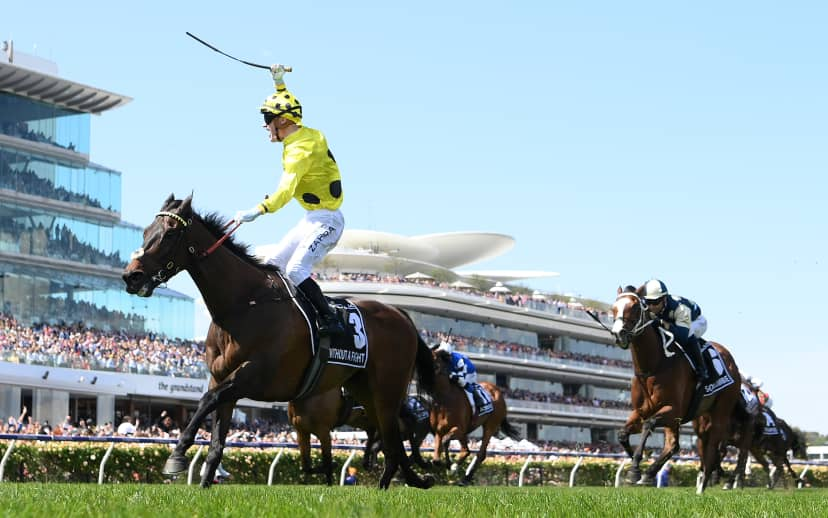
There will be three New Zealand trained horses lining up in the 164th running of the Melbourne Cup, but most interest again will be on the northern raiders.
The three New Zealand horses are all at long odds.
2023 New Zealand derby winner Sharp ‘N’ Smart was the best priced at $84 after the field of 24 runners was confirmed, while Positivity and Trust In You were among the longest odds of more and $112.
Early favourites Buckaroo from Great Britain has drawn gate 21, while French entry Vauban, who disappointed as favourite last year, will jump from barrier 11.
Sixteen of the 24-strong field were bred in the northern hemisphere.
The 164th Melbourne Cup
Flemington Race course, Melbourne
5pm (NZ time) on Tuesday, November 5
Distance 3200m (2 miles)
Prize money $9.4 million (World’s richest handicap race) Winner earns $4.8 million.
Kingston Rule set the current Melbourne Cup race record winning in a time of 3 minutes 16.3 seconds in 1990.
New Zealand trained horses
Sharp ‘n’ Smart. 53.5kg The five year old gelding is a multiple group one winner with $3 million in winnings. He’s trained by Graeme and Debbie Rogerson near Hamilton. Graeme Rogerson won the Melbourne Cup with Efficient in 2007. Sharp ‘N’ Smart won the New Zealand Derby in 2023. Finished third in its last start in the Moonee Valley Gold Cup (2400m). Expat Kiwi jockey Mick Dee to ride.
Positivity. Bred by the Hogans the four year old mare made it into the field following the withdrawal of a number of other horses over the last week.
She is trained by Andrew Forsman at Cambridge. Had four wins including a 2000m race at Caulfield in September. Finished second in the New Zealand Oaks at Trentham in March. Was eighth of ten runners in last start in the Moonee Valley Gold Cup (2400m)
Trust In You. Trust In You, trained by Bruce Wallace and Grant Cooksley in Karaka. 30 starts for four wins. Last race was a fourth place in the Group 3 St Leger at Randwick (2600m). Mark de Plessis to ride.
Watch out for
Chris Waller…. the ex-pat kiwi trainer has five horses from his stable in the race. Buckaroo, Kovalica, Land Legend, Valiant King and Manzoice.
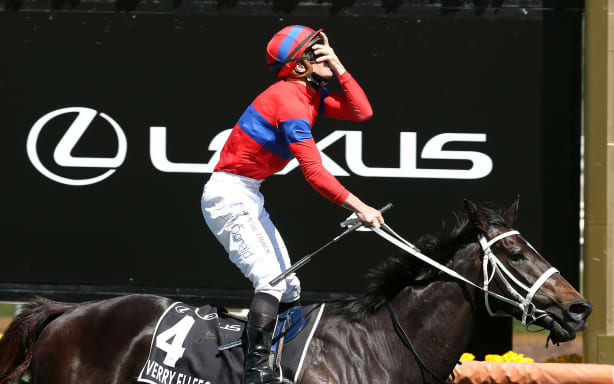
Waller has trained 170 group one winners but only one Melbourne Cup victory with Verry Elleegant in 2021. He has been the inform trainer so far during the spring carnival and can expect to be a contender in Tuesday’s big race.
Who’s missing
Jockey James McDonald. He was set to ride Via Sistina before the Cox Plate was withdrawn last week.
The ex-pat Kiwi is in hot form having ridden home two group one winners at Flemington on Saturday. Switzerland (Coolmore Stakes) and Atishu (Empire Rose Stakes) taking his tally of group one winners to 102. He won the Melbourne Cup in 2021 onboard Verry Elleegant.
New Zealand-bred horses
#5 – Kovalica (Ocean Park (sire)-Vitesse (dam), bred by Nearco Stud Ltd)
#6 – Sharp ‘N’ Smart (Redwood-Queen Margaret, bred by G Harvey)
#21 – Positivity (Almanzor-Pussy O’Reilly, bred by Sir Patrick & Justine, Lady Hogan & P J
Walker)
#24 – Trust In You (Sweynesse-Shinko Bay, bred by Explosive Breeding Ltd)
Jockeys with New Zealand links
#6 Sharp ‘N’ Smart – Michael Dee
#24 Trust In You – Mark du Plessis
PHOTOSPORT
Facts
History: The Melbourne Cup has been run every year since 1861 although to took a break during World War I and World War II.
The first Tuesday in November has been a public holiday for most of Victoria since 1876.
Qualifying: Initial entry fee is around $600 while the fourth and final acceptance fee is $46,000.
To get the field down to 24, horses are gradually balloted out based on a number of factors including wins, placings, prize money and handicaps.
There are also a number of races that the winner of is exempt of the balloting for the Cup.
Handicap: Handicap races are meant to even out the field with the more fancied horses carrying more weight.
The extra weight (over and above the weight of the jockey) are held in pockets on the saddle.
Trophy: The first winner of the Melbourne Cup received a gold watch. A new trophy is struck every year An 18-carat solid gold trophy valued at around $600,000 is awarded to the winner.
Distance: 3200m. The distance is the equivalent of the old two miles (2 miles). The Melbourne Cup distance was cut from 3219m to 3200m in 1972 when Australia adopted the metric system.
Prize money: $9.4 million (World’s richest handicap race) Winner earns $4.8 million. Prize money for horses finishing first to 12th.
Race time: The Race is scheduled to start at 5pm NZ time. Kingston Rule set the current Melbourne Cup race record winning in a time of 3 minutes 16.3 seconds in 1990.
NZ records: New Zealand bred horses have won the Melbourne Cup 43 times with 19 of those horses also owned in New Zealand.
The last New Zealand bred horse to win the Melbourne Cup was Verry Elleegant in 2021 and the last New Zealand owned and trained horse to win was Ethereal in 2001.
2021 was a good year for New Zealand with Verry Elleegant trained by Chris Waller and ridden by James McDonald.
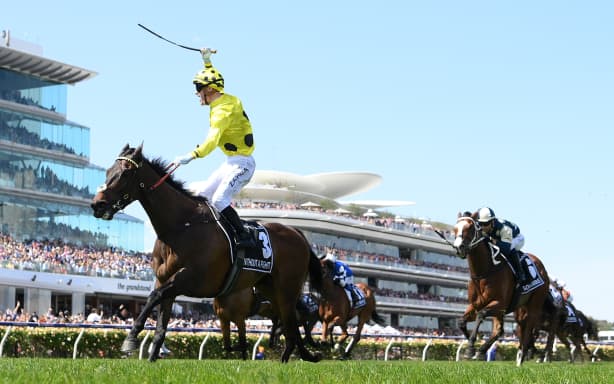
Betting: Last year: In 2023 the race was won by Australian stayer Without A Fight.
There was $13.4 million gambled by New Zealand punters on the Cup with a turnover of $28.4m on the day.
At the height of interest in the race shortly before the 5pm race start, 6850 bets were being processed each minute.
Quinn Rooney
Melbourne Cup – final field (bred)
1- Vauban (France)
Weight: 55.5kg. Barrier: 11
2 – Buckaroo (Great Britain)
Weight: 54.5kg. Barrier: 21
3 – Circle of Fire (Great Britain)
Weight: 54.5kg. Barrier: 24
4 – Warp Speed (Japan)
Weight: 54.5kg. Barrier: 3
5 – Kovalica (New Zealand)
Weight: 53.5kg. Barrier: 17
6 – Sharp ‘N’ Smart (New Zealand)
Weight: 53.5kg. Barrier: 15
7 – Just Fine (Ireland)
Weight: 53kg. Barrier: 13
8 – Land Legend (France)
Weight: 53kg. Barrier: 18
9 – Absurde (France)
Weight: 52.5kg. Barrier: 7
10 – Athabascan (France) Scratched
Weight: 52kg. Barrier: 2
11 – Knight’s Choice (Australia)
Weight: 51.5kg. Barrier: 6
12- Okita Soushi (Ireland)
Weight: 51kg. Barrier: 10
13 – Onesmoothoperator (USA)
Weight: 51kg. Barrier: 12
14 – Zardozi (Australia)
Weight: 51kg. Barrier: 4
15 – Sea King (Great Britain)
Weight: 50.5kg. Barrier: 1
16 – Valiant King (Great Britain)
Weight: 50.5kg. Barrier: 22
17 – Fancy Man (Ireland)
Weight: 50kg. Barrier: 19
18 – Interpretation (Ireland)
Weight: 50kg. Barrier: 14
19 – Manzoice (Australia)
Weight: 50kg. Barrier: 8
20 – Mostly Cloudy (Ireland)
Weight: 50kg. Barrier: 16
21 – Positivity (New Zealand)
Weight: 50kg. Barrier: 20
22 – Saint George (Great Britain)
Weight: 50kg. Barrier: 9
23 – The Map (Australia)
Weight: 50kg. Barrier: 23
24 – Trust in You (New Zealand)
Weight: 50kg. Barrier: 5
Sign up for Ngā Pitopito Kōrero, a daily newsletter curated by our editors and delivered straight to your inbox every weekday.


Analysis: Beauden Barrett signing with the Bristol Bears is the headline grabber for his global star power, but of the three All Blacks recently linked with departures after the World Cup – Barrett and loose forwards Luke Jacobson and Wallace Sititi – it is Sititi’s which will have by far the biggest impact in New Zealand.
Barrett has yet to confirm his move to Bristol, where he will link with Pat Lam, the former Blues head coach, but the news reports which emerged on Wednesday about a two-year deal worth almost $5 million do not lack for detail.
The arrival of a such a well known individual who has played 150 tests will be hugely popular in south west England and it is significant because it will likely represent the most lucrative deal in Premiership history.
But from a New Zealand Rugby perspective? Not so much. Barrett’s deal with the organisation runs out after next year’s World Cup and he was not going to be offered a new one.
Indeed, there have been whispers that Barrett ignored suggestions from some of those close to him that he take up the release clause in his contract and leave a year early, thereby maximising his earning potential by pre-empting the traditional post-World Cup international exodus.
Barrett, who will be 36 by the time he joins his new club, did not have a happy time of it at the Blues this year, and was apparently told by the All Blacks at the start of the test season that he had slipped on the playmaking pecking order below Ruben Love, Damian McKenzie and Richie Mo’unga.
David Neilson / www.photosport.nz
But, despite not being involved in the first six tests of the year – something he admitted challenged him mentally – Barrett has since played an influential role at fullback in the wake of the injuries to Love and Mo’unga which pushed McKenzie from the No.15 jersey into first-five.
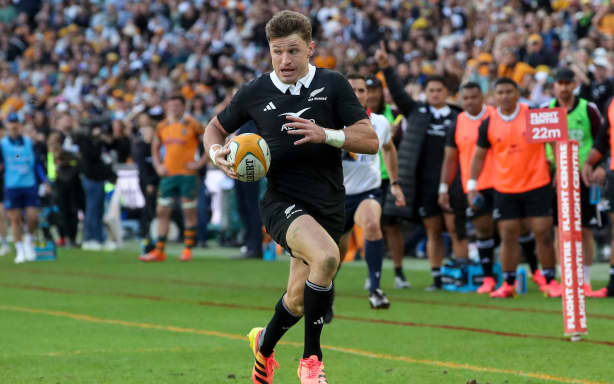
It must be said that Barrett has distinguished himself through his character and he showed in scoring tries against the Wallabies, Scotland (two), and England – several of which were from long range – that he has retained his eye for an opportunity, not to mention his pace.
Such displays from a veteran who consistently tore up defences in his prime – including during the 2015 World Cup playoffs – have reinforced his value to the squad. They have also added to his bargaining power ahead of his move.
Flanker Jacobson, who resurrected his test career under new coach Dave Rennie this year and captained the team in South Africa, is more of a surprise departure for his relative youth – he is only 29 – and his elevated place within the loose forward pecking order.
Jacobson, recovering from elbow surgery following an injury in South Africa, announced on Tuesday that he is joining French club Aviron Bayonnais at the end of next year. The Chiefs captain has played 30 tests.
“Luke really established himself as our No.7 and was really physical, so we’ll miss him, definitely,” assistant coach Jason Ryan said on Wednesday morning.
But Jacobson’s departure will pale in significance to Sititi’s should the No.8 take up a contract at Stade Francais as reported.

Ron Gaunt / www.photosport.nz
Sititi is only 24, was named as World Rugby’s breakthrough player of the year in 2024, and is one of New Zealand’s most dynamic ball carriers. He has played 28 tests.
Ryan said he was “across” a potential move for Sititi but noted it had not be confirmed yet.
“He would be [a big loss]. He… skyrocketed on to the scene. He’s played some good All Black rugby. He was potentially a little bit slow out of the blocks this year and potentially last year as well.
“He’s playing well at the moment and he’s established himself as the No.8. He and Pete Lakai are playing some good rugby together and developing cohesion.
“If he’s got an opportunity – and it sounds like he has… we’ll have to work through that. It may give someone else an opportunity. We haven’t had [captain] Ardie [Savea] all year, virtually, and those guys have played well.”
It is not unusual for promising young Polynesian All Blacks to seek the financial certainty of an overseas contract – think midfielder Charles Piutau who left in 2015 for Wasps in England and ended up playing at Bristol for six seasons – or loose forward Steven Luatua, who, funnily enough, has been at Bristol since 2017.
However, neither were as assured of their places within the All Blacks as Sititi. It may be that the best NZ Rugby can hope for is that he returns at some point – and sooner rather than later.
Ominously, perhaps, Piutau, now 35, is plying his trade in Japan, while Luatua, also 35, has just extended his contract to his 10th season at the Bears.
rnz
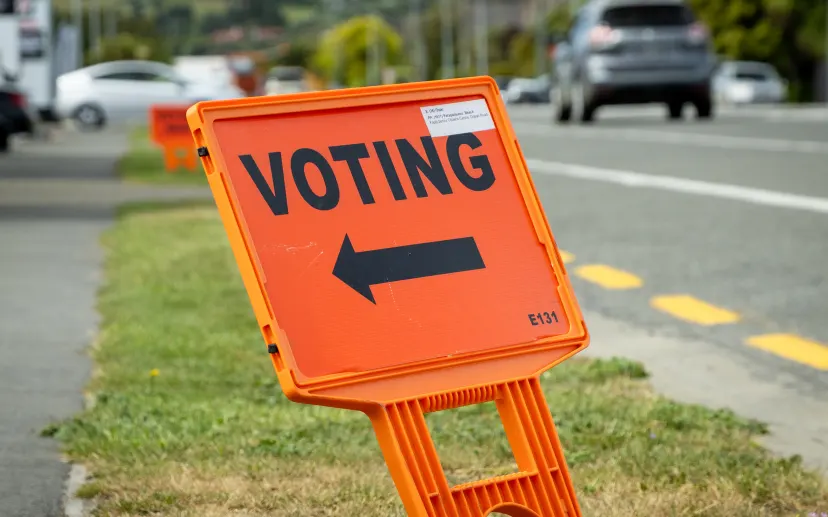
Explainer – Election Day was nearly three weeks ago, but we still don’t quite know who won. Tomorrow’s special votes and the final count will reveal all.
Special votes, which are counted slower, have shifted the last preliminary election results the last several times. They may well do it again in 2026.
Here’s what you need to know about what makes a vote special, why they take longer to sort and why some may end up getting discarded.
What are special votes?
Special votes are made by anyone who isn’t on their electoral roll at their voting place, on the unpublished roll, lives overseas or votes away from a polling place because they can’t get to one.
Anyone who enrolled after the printed roll for this year’s election closed on Writ Day, October 4, but before voter enrolment closed entirely on October 25, has also cast a special vote.
Are there less special votes this year?
Based on the preliminary count information, they have dropped considerably from the 602,488 seen in 2023 and what was a forecast 700,000 for this year.
Statements by the Electoral Commission since the election indicate only approximately 400,000 special votes were received this year.
If that holds, it’d be the lowest special vote total since 2014.
Why such a big drop? We won’t truly know until all the final count is settled and post-election analyses are done.
When RNZ inquired of the Electoral Commission if there were any indications of why the special vote numbers were so much lower, a spokesperson said on Monday, “we haven’t done that analysis yet – right now, our focus is on the post-election period and the official count.”
Richard Shaw, professor of politics at Massey University, tipped one possible cause as the government changing the deadline so one had to be enrolled 13 days before the election, instead of being able to enrol right up to election day.
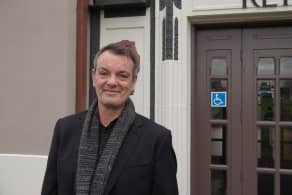
RNZ / Jimmy Ellingham
“Given the numbers, the most plausible explanation for the drop in number of expected specials has to do with the coalition’s electoral law reforms (which, to no one’s surprise, have had precisely no impact on the time taken to process the final vote).”
Shaw noted that in the last election many people enrolled during the early voting period.
He said that Electoral Commission “data points from 2023 include that about 450K specials were cast during the voting period (can’t do that any more); about 110K were cast on the big day (can’t do that either).”
In 2023, Shaw said 12.8 percent of all special votes were from overseas voters, which he said was likely to be higher this year, while voters casting a vote outside their home electorate comprised 24.7 percent of all specials cast.
Before the election, the Electoral Commission told RNZ it had expected more special votes than ever.
“Our forecasts indicate we could receive around 700,000 special votes,” a commission spokesperson told RNZ in mid-October.
The number of special votes had been steadily rising in recent elections.
“Over 600,000 special votes were issued in 2023 – meaning 21 percent of voters cast a special vote,” the commission spokesperson told RNZ.
This year, that doesn’t seem to be the case.
“What the commission can’t estimate is what proportion of specials were cast by people who enrolled during the advance voting period/on election day,” Shaw said. “We can only extrapolate.”
Opposition politicians have called the enrolment changes a form of voter suppression, which National party leader Christopher Luxon has denied.
“I know we can’t use the language of voter suppression in polite society but perhaps we can say the reforms have had a ‘chilling effect,'” Shaw said.
Have special votes made a difference in past elections?
They have. In the last three general elections, the final results including special votes have seen National lose two party seats and some electorates have changed sides from the preliminary tally.
With this year’s knife-edge preliminary vote, that could make all the difference.
Special votes generally tend to benefit the left-leaning parties.
Shaw said that tends to reflect the demographics of those who cast them: “typically younger; typically more mobile (e.g. renters); typically a little less attached to institutional politics”.
“Those groups don’t always break left, but they tend to. Or they tend not to engage at all.”
In 2017, 2020 and 2023, National lost two seats with special votes, while Labour gained one in 2017 and 2020, Te Pāti Māori gained one in 2020 and two in 2023, and the Greens gained one party seat in 2017 and 2023.
The enrolment deadline change is likely to affect special votes, Shaw said before the election.
“There will almost certainly be a higher rate of rejection of special votes this time round.
“At this point, of course, we have no way of knowing how many people are going to show up and cast a special which won’t be counted … some specials will be tallied, of course, because they are overseas votes or people out of their electorate or whatever, but plenty won’t.”

Samuel Rillstone/RNZ
Why do they take longer to count?
They have a stricter checking procedure, and any overseas votes can also take longer to process. In 2023 it took three weeks for special votes to be counted to confirm the election results.
“We understand how important it is to deliver timely results, and we also need to make sure they are accurate,” Karl Le Quesne, Chief Electoral Officer, said.
When you cast a special vote, you must also sign a declaration form that must be witnessed by another person. (If you vote at a voting place, that witness can be an Electoral Commission volunteer or staff member.)
By law, 10 days are allowed for votes to be returned from overseas.
Special votes have to be returned to the electorate they were cast for before they’re counted. Every special vote declaration is checked to make sure the voter is enrolled and eligible to vote.
“We check the voter was enrolled in the electorate where they voted, and check that the special declaration form has been completed and witnessed,” the Electoral Commission spokesperson said.
“Special votes that are allowed can only be counted after these checks have been done. Votes are tallied and quality assurance checks are made before we release the results.”
Shaw said overseas votes, once they’re counted, could also affect how the election shakes out.
“The overseas voting population is interesting this year: there are more of them than previously (and at least some of them are presumably people who have left the country while they might rather have remained, had the economic conditions been better), so that might count against the incumbent administration too.”
The government pushed for this year’s changes to enrolment deadlines and one of the reasons it gave was to speed up vote counting.
“I just think three weeks is way too long to count special votes, I think that needs to be sped up,” Prime Minister Christopher Luxon said in 2023.
However, when those enrolment changes were still being considered last year as part of the Electoral Amendment Bill, Le Quesne said it ultimately wouldn’t make results arrive any faster.
And in the end, it’s taken 20 days for the final count after election day.

Baz Macdonald
Why can special votes be tossed out?
In the 2023 general election, 15,555 special votes were disqualified.
“Reasons special votes are disallowed include if the voter is not enrolled, the vote received was late, or the declaration was not signed by an authorised witness or not signed by voter,” the Electoral Commission spokesperson said.
The Electoral Commission has a full breakdown of why special votes were disallowed in 2023 broken down by electorate on their website.
By far the biggest reason was that voters were not actually enrolled at all, with 10,566 discounted for that reason. Far behind was having a declaration not being signed by an authorised witness, with 2384 rejections.
In last year’s Auckland local body elections, nearly half of the special votes were disqualified.
Auckland Council said 4162 special votes were deemed invalid, due to incorrect or missing declaration details, or outdated enrolment details. Special votes were only 1.68 percent of the total vote cast, it said. Similar high rates of disqualification were seen in Kaipara’s local council election.
However, it’s important to note that local body elections are not run by the Electoral Commission, but by local councils, and have different rules and procedures.
Shaw said before the election that the changes to voter enrolment this year are a bit of an X-factor in trying to figure out how important special votes will be this year.
“One possibility, given the new policy settings, is that special votes are less, not more, important as far as the final outcome is concerned, in the sense that there may well be fewer of them that count this time round.
“In another respect, they might be more consequential – if there is a large number that are disqualified, that may cast shadows over any outcomes.”
rnz
By Milly Matthews, student journalist
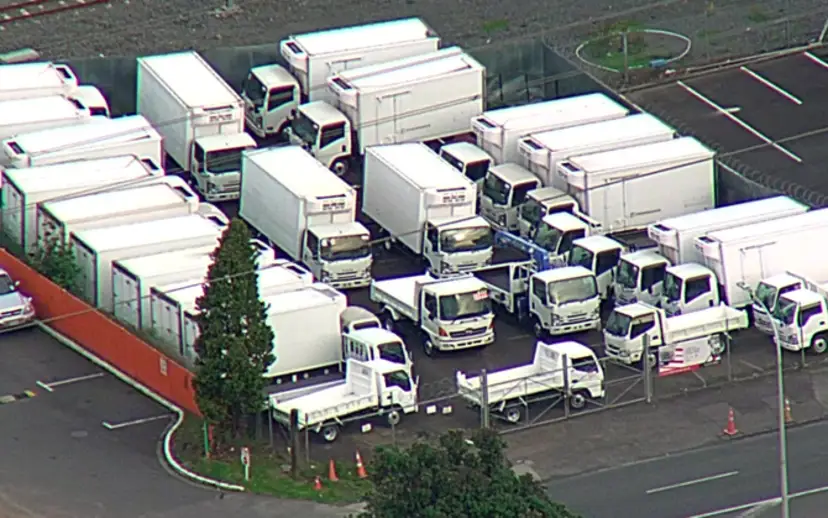
An Auckland vehicle importer has been jailed for nearly two and a half years for winding back odometers by almost 50 million kilometres.
The man was also ordered to pay $27,000 in reparation, while his company was ordered to pay a further $315,000.
A Customs investigation – in collaboration with the NZ Transport Agency Waka Kotahi – looked at 174 used vehicles imported from Japan and found the importer had been intentionally winding back odometers between August 2020 and January 2024 to make the vehicles appear more valuable.
In total, 48,674,800 kilometres in mileage was wiped from odometers.
Individual vehicles had between 60,000 and 840,000 kilometres wound back, and Customs estimated the profit was close to $5.6 million.

Supplied
Customs acting investigations manager Nigel Barnes said the man’s actions were not an error.
“This was deliberate and calculated fraud. The man wound back odometers and forged export certificates to conceal the vehicles’ true histories and inflate their value.
“Accurate mileage helps people assess a vehicle’s value, safety, and maintenance needs. The deception denied buyers the information they needed to make informed decisions.”
Some forged certificates contained false information about their year of manufacture or carrying capacity.
NZTA head of vehicle regulation Geoff Williamson said all affected vehicle owners had been contacted, and those in use were “recalled, corrected, and when required, recertified”.
rnz


At least 30 killed in blaze after vehicle overturns in Egypt, health ministry says

Football player Shinnichiro Joey Omotani lured drunk woman out of pub before sexual assault

Wallace Sititi will be by far the biggest loss in All Blacks’ exodus


-

 NZ News2 weeks ago
Well-known sportsman admits assaulting Wellington taxi driver over $36 fare
-

 Latest News1 week ago
Injuries force Jamie Hannah and Quinn Tupaea to bow out of Nations Championship
-
 Latest News1 week ago
Cyclone Xavier intensifies to Category 4 over Northern Cook Islands
-

 Latest News1 week ago
Youths forcefully obtain keys, escape care and protection facility
-

 Latest News1 week ago
Conjoined twins born in remote PNG die before help arrives
-

 NZ News1 week ago
Des Buckingham named All Whites coach
-

 Latest News1 week ago
Hundreds of parcels containing suspected illegal peptides seized at border
-

 Latest News7 days ago
Last decade sees more people charged for low-level drug offending than ever