

Latest News
Explainer: What are special votes and why they could decide New Zealand’s election?

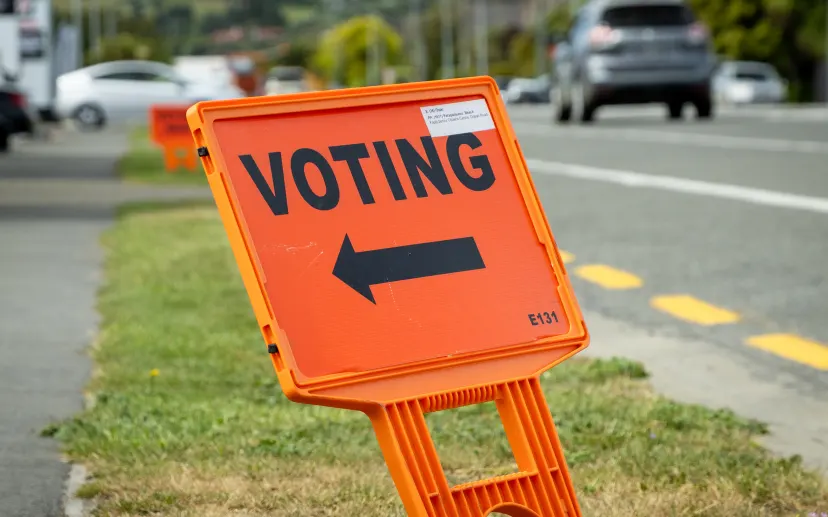
Explainer – Election Day was nearly three weeks ago, but we still don’t quite know who won. Tomorrow’s special votes and the final count will reveal all.
Special votes, which are counted slower, have shifted the last preliminary election results the last several times. They may well do it again in 2026.
Here’s what you need to know about what makes a vote special, why they take longer to sort and why some may end up getting discarded.
What are special votes?
Special votes are made by anyone who isn’t on their electoral roll at their voting place, on the unpublished roll, lives overseas or votes away from a polling place because they can’t get to one.
Anyone who enrolled after the printed roll for this year’s election closed on Writ Day, October 4, but before voter enrolment closed entirely on October 25, has also cast a special vote.
Are there less special votes this year?
Based on the preliminary count information, they have dropped considerably from the 602,488 seen in 2023 and what was a forecast 700,000 for this year.
Statements by the Electoral Commission since the election indicate only approximately 400,000 special votes were received this year.
If that holds, it’d be the lowest special vote total since 2014.
Why such a big drop? We won’t truly know until all the final count is settled and post-election analyses are done.
When RNZ inquired of the Electoral Commission if there were any indications of why the special vote numbers were so much lower, a spokesperson said on Monday, “we haven’t done that analysis yet – right now, our focus is on the post-election period and the official count.”
Richard Shaw, professor of politics at Massey University, tipped one possible cause as the government changing the deadline so one had to be enrolled 13 days before the election, instead of being able to enrol right up to election day.
RNZ / Jimmy Ellingham
“Given the numbers, the most plausible explanation for the drop in number of expected specials has to do with the coalition’s electoral law reforms (which, to no one’s surprise, have had precisely no impact on the time taken to process the final vote).”
Shaw noted that in the last election many people enrolled during the early voting period.
He said that Electoral Commission “data points from 2023 include that about 450K specials were cast during the voting period (can’t do that any more); about 110K were cast on the big day (can’t do that either).”
In 2023, Shaw said 12.8 percent of all special votes were from overseas voters, which he said was likely to be higher this year, while voters casting a vote outside their home electorate comprised 24.7 percent of all specials cast.
Before the election, the Electoral Commission told RNZ it had expected more special votes than ever.
“Our forecasts indicate we could receive around 700,000 special votes,” a commission spokesperson told RNZ in mid-October.
The number of special votes had been steadily rising in recent elections.
“Over 600,000 special votes were issued in 2023 – meaning 21 percent of voters cast a special vote,” the commission spokesperson told RNZ.
This year, that doesn’t seem to be the case.
“What the commission can’t estimate is what proportion of specials were cast by people who enrolled during the advance voting period/on election day,” Shaw said. “We can only extrapolate.”
Opposition politicians have called the enrolment changes a form of voter suppression, which National party leader Christopher Luxon has denied.
“I know we can’t use the language of voter suppression in polite society but perhaps we can say the reforms have had a ‘chilling effect,'” Shaw said.
Have special votes made a difference in past elections?
They have. In the last three general elections, the final results including special votes have seen National lose two party seats and some electorates have changed sides from the preliminary tally.
With this year’s knife-edge preliminary vote, that could make all the difference.
Special votes generally tend to benefit the left-leaning parties.
Shaw said that tends to reflect the demographics of those who cast them: “typically younger; typically more mobile (e.g. renters); typically a little less attached to institutional politics”.
“Those groups don’t always break left, but they tend to. Or they tend not to engage at all.”
In 2017, 2020 and 2023, National lost two seats with special votes, while Labour gained one in 2017 and 2020, Te Pāti Māori gained one in 2020 and two in 2023, and the Greens gained one party seat in 2017 and 2023.
The enrolment deadline change is likely to affect special votes, Shaw said before the election.
“There will almost certainly be a higher rate of rejection of special votes this time round.
“At this point, of course, we have no way of knowing how many people are going to show up and cast a special which won’t be counted … some specials will be tallied, of course, because they are overseas votes or people out of their electorate or whatever, but plenty won’t.”
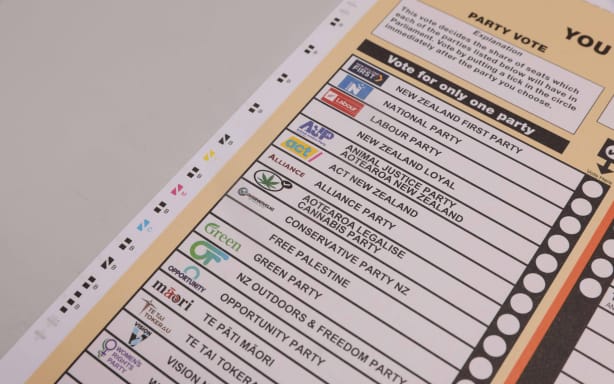
Samuel Rillstone/RNZ
Why do they take longer to count?
They have a stricter checking procedure, and any overseas votes can also take longer to process. In 2023 it took three weeks for special votes to be counted to confirm the election results.
“We understand how important it is to deliver timely results, and we also need to make sure they are accurate,” Karl Le Quesne, Chief Electoral Officer, said.
When you cast a special vote, you must also sign a declaration form that must be witnessed by another person. (If you vote at a voting place, that witness can be an Electoral Commission volunteer or staff member.)
By law, 10 days are allowed for votes to be returned from overseas.
Special votes have to be returned to the electorate they were cast for before they’re counted. Every special vote declaration is checked to make sure the voter is enrolled and eligible to vote.
“We check the voter was enrolled in the electorate where they voted, and check that the special declaration form has been completed and witnessed,” the Electoral Commission spokesperson said.
“Special votes that are allowed can only be counted after these checks have been done. Votes are tallied and quality assurance checks are made before we release the results.”
Shaw said overseas votes, once they’re counted, could also affect how the election shakes out.
“The overseas voting population is interesting this year: there are more of them than previously (and at least some of them are presumably people who have left the country while they might rather have remained, had the economic conditions been better), so that might count against the incumbent administration too.”
The government pushed for this year’s changes to enrolment deadlines and one of the reasons it gave was to speed up vote counting.
“I just think three weeks is way too long to count special votes, I think that needs to be sped up,” Prime Minister Christopher Luxon said in 2023.
However, when those enrolment changes were still being considered last year as part of the Electoral Amendment Bill, Le Quesne said it ultimately wouldn’t make results arrive any faster.
And in the end, it’s taken 20 days for the final count after election day.

Baz Macdonald
Why can special votes be tossed out?
In the 2023 general election, 15,555 special votes were disqualified.
“Reasons special votes are disallowed include if the voter is not enrolled, the vote received was late, or the declaration was not signed by an authorised witness or not signed by voter,” the Electoral Commission spokesperson said.
The Electoral Commission has a full breakdown of why special votes were disallowed in 2023 broken down by electorate on their website.
By far the biggest reason was that voters were not actually enrolled at all, with 10,566 discounted for that reason. Far behind was having a declaration not being signed by an authorised witness, with 2384 rejections.
In last year’s Auckland local body elections, nearly half of the special votes were disqualified.
Auckland Council said 4162 special votes were deemed invalid, due to incorrect or missing declaration details, or outdated enrolment details. Special votes were only 1.68 percent of the total vote cast, it said. Similar high rates of disqualification were seen in Kaipara’s local council election.
However, it’s important to note that local body elections are not run by the Electoral Commission, but by local councils, and have different rules and procedures.
Shaw said before the election that the changes to voter enrolment this year are a bit of an X-factor in trying to figure out how important special votes will be this year.
“One possibility, given the new policy settings, is that special votes are less, not more, important as far as the final outcome is concerned, in the sense that there may well be fewer of them that count this time round.
“In another respect, they might be more consequential – if there is a large number that are disqualified, that may cast shadows over any outcomes.”
rnz


Analysis: Beauden Barrett signing with the Bristol Bears is the headline grabber for his global star power, but of the three All Blacks recently linked with departures after the World Cup – Barrett and loose forwards Luke Jacobson and Wallace Sititi – it is Sititi’s which will have by far the biggest impact in New Zealand.
Barrett has yet to confirm his move to Bristol, where he will link with Pat Lam, the former Blues head coach, but the news reports which emerged on Wednesday about a two-year deal worth almost $5 million do not lack for detail.
The arrival of a such a well known individual who has played 150 tests will be hugely popular in south west England and it is significant because it will likely represent the most lucrative deal in Premiership history.
But from a New Zealand Rugby perspective? Not so much. Barrett’s deal with the organisation runs out after next year’s World Cup and he was not going to be offered a new one.
Indeed, there have been whispers that Barrett ignored suggestions from some of those close to him that he take up the release clause in his contract and leave a year early, thereby maximising his earning potential by pre-empting the traditional post-World Cup international exodus.
Barrett, who will be 36 by the time he joins his new club, did not have a happy time of it at the Blues this year, and was apparently told by the All Blacks at the start of the test season that he had slipped on the playmaking pecking order below Ruben Love, Damian McKenzie and Richie Mo’unga.
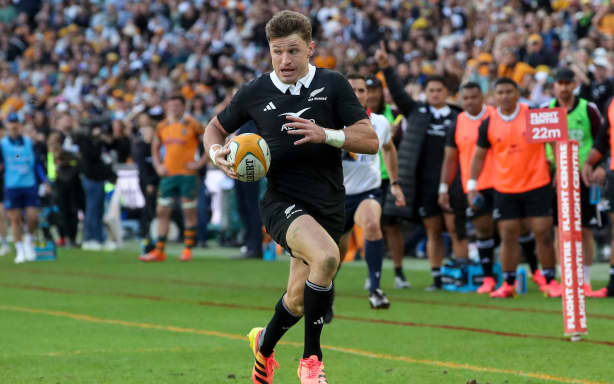
David Neilson / www.photosport.nz
But, despite not being involved in the first six tests of the year – something he admitted challenged him mentally – Barrett has since played an influential role at fullback in the wake of the injuries to Love and Mo’unga which pushed McKenzie from the No.15 jersey into first-five.
It must be said that Barrett has distinguished himself through his character and he showed in scoring tries against the Wallabies, Scotland (two), and England – several of which were from long range – that he has retained his eye for an opportunity, not to mention his pace.
Such displays from a veteran who consistently tore up defences in his prime – including during the 2015 World Cup playoffs – have reinforced his value to the squad. They have also added to his bargaining power ahead of his move.
Flanker Jacobson, who resurrected his test career under new coach Dave Rennie this year and captained the team in South Africa, is more of a surprise departure for his relative youth – he is only 29 – and his elevated place within the loose forward pecking order.
Jacobson, recovering from elbow surgery following an injury in South Africa, announced on Tuesday that he is joining French club Aviron Bayonnais at the end of next year. The Chiefs captain has played 30 tests.
“Luke really established himself as our No.7 and was really physical, so we’ll miss him, definitely,” assistant coach Jason Ryan said on Wednesday morning.
But Jacobson’s departure will pale in significance to Sititi’s should the No.8 take up a contract at Stade Francais as reported.

Ron Gaunt / www.photosport.nz
Sititi is only 24, was named as World Rugby’s breakthrough player of the year in 2024, and is one of New Zealand’s most dynamic ball carriers. He has played 28 tests.
Ryan said he was “across” a potential move for Sititi but noted it had not be confirmed yet.
“He would be [a big loss]. He… skyrocketed on to the scene. He’s played some good All Black rugby. He was potentially a little bit slow out of the blocks this year and potentially last year as well.
“He’s playing well at the moment and he’s established himself as the No.8. He and Pete Lakai are playing some good rugby together and developing cohesion.
“If he’s got an opportunity – and it sounds like he has… we’ll have to work through that. It may give someone else an opportunity. We haven’t had [captain] Ardie [Savea] all year, virtually, and those guys have played well.”
It is not unusual for promising young Polynesian All Blacks to seek the financial certainty of an overseas contract – think midfielder Charles Piutau who left in 2015 for Wasps in England and ended up playing at Bristol for six seasons – or loose forward Steven Luatua, who, funnily enough, has been at Bristol since 2017.
However, neither were as assured of their places within the All Blacks as Sititi. It may be that the best NZ Rugby can hope for is that he returns at some point – and sooner rather than later.
Ominously, perhaps, Piutau, now 35, is plying his trade in Japan, while Luatua, also 35, has just extended his contract to his 10th season at the Bears.
rnz
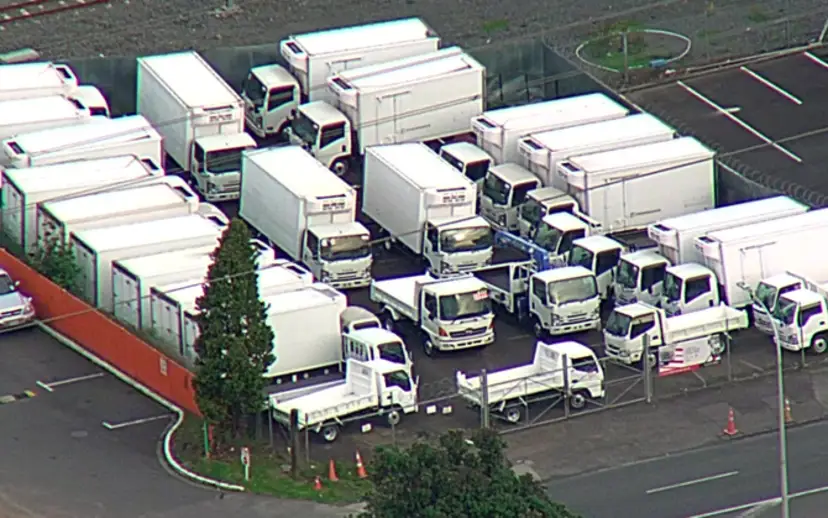
By Milly Matthews, student journalist
An Auckland vehicle importer has been jailed for nearly two and a half years for winding back odometers by almost 50 million kilometres.
The man was also ordered to pay $27,000 in reparation, while his company was ordered to pay a further $315,000.
A Customs investigation – in collaboration with the NZ Transport Agency Waka Kotahi – looked at 174 used vehicles imported from Japan and found the importer had been intentionally winding back odometers between August 2020 and January 2024 to make the vehicles appear more valuable.
In total, 48,674,800 kilometres in mileage was wiped from odometers.
Individual vehicles had between 60,000 and 840,000 kilometres wound back, and Customs estimated the profit was close to $5.6 million.

Supplied
Customs acting investigations manager Nigel Barnes said the man’s actions were not an error.
“This was deliberate and calculated fraud. The man wound back odometers and forged export certificates to conceal the vehicles’ true histories and inflate their value.
“Accurate mileage helps people assess a vehicle’s value, safety, and maintenance needs. The deception denied buyers the information they needed to make informed decisions.”
Some forged certificates contained false information about their year of manufacture or carrying capacity.
NZTA head of vehicle regulation Geoff Williamson said all affected vehicle owners had been contacted, and those in use were “recalled, corrected, and when required, recertified”.
rnz
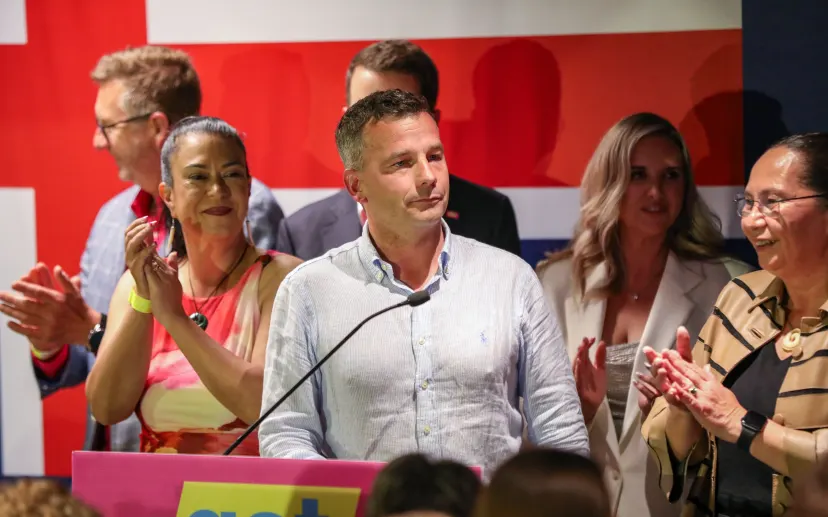
The ACT Party is pointing to the Māori seats as the cause of – and the solution to – the overhang problem.
In its so-called Free Press newsletter this week, the party called for the scrapping of Māori seats, and with them the Māori roll, as a way to ensure more proportional representation.
On preliminary numbers this election National won seven overhang seats – which is when a political party wins more seats through electorates than its party vote would entitle it to – and Te Pāti Māori won four.
An open letter signed by 46 experts last week called for politicians to urgently consider fixes, warning that with the potential for manipulation proven at this election, the next could become an “arms race” between the political parties on voting strategies rather than policy.
Those experts wanted New Zealand to keep MMP as its electoral system, saying any other approach would be less proportional – less reflective of voting preferences – and highlighted five possible solutions.
ACT’s newsletter agreed the problem would only get worse, but said New Zealand “has some serious challenges at the moment, the last thing we need is another decade of politics and elections overshadowed by arguments about voting systems”.
The party pointed to Te Pāti Māori’s one-tick campaign as having started “the whole overhang debate”, and argued the solution was to scrap the Māori seats.
Doing so would, the newsletter argued, not only remove Te Pāti Māori’s overhang seats but National’s too – crediting the absence of the more than 315,000 Māori voters from the general roll as the reason for some of National’s electorate wins.
“How else does National win seats like East Cape, Northland, and Rotorua, year-in, year-out?” the newsletter said.
“If those voters returned to the general roll, National pollster David Farrar estimates, National would have lost East Cape, Hamilton East, Hamilton West, Nelson, Northland, Rotorua, Takanini, Wairarapa, and Whangarei. Without those nine seats, National would gain no overhang.”
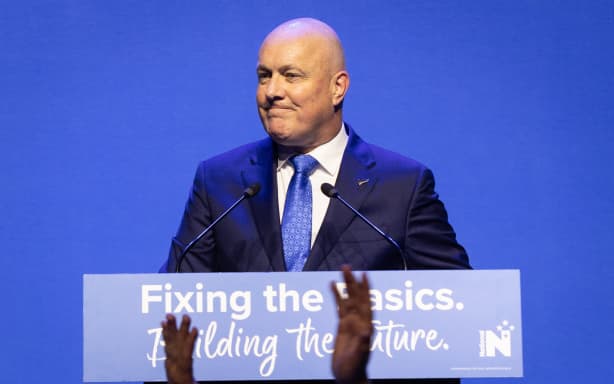
RNZ / Nathan Mckinnon
The newsletter somewhat undercut its own argument, however, in earlier pointing to seven other countries (Wales, Italy, Albania, Romania, South Korea, Lesotho, and Germany) that had grappled with the overhang problem in the past, only one of which had any seats reserved for minority groups.
Every part of New Zealand has been covered by a general electorate and a Māori electorate since 1867.
Christopher Luxon has so far refused to rule out including a question on abolishing the seats as part of the MMP referendum he promised in August.
An ACT Party bid to include such a question in the 2011 MMP referendum was prevented by National’s confidence and supply agreement with the then-Māori Party.
RNZ has sought comment from Te Pāti Māori.
rnz


Wallace Sititi will be by far the biggest loss in All Blacks’ exodus

Explainer: What are special votes and why they could decide New Zealand’s election?

UN slams Iran’s ‘abhorrent’ flogging of singer Parastoo Ahmadi


-

 NZ News1 week ago
Well-known sportsman admits assaulting Wellington taxi driver over $36 fare
-

 Latest News1 week ago
Injuries force Jamie Hannah and Quinn Tupaea to bow out of Nations Championship
-

 Latest News7 days ago
Conjoined twins born in remote PNG die before help arrives
-
 Latest News1 week ago
Cyclone Xavier intensifies to Category 4 over Northern Cook Islands
-

 Latest News7 days ago
Youths forcefully obtain keys, escape care and protection facility
-

 NZ News1 week ago
Des Buckingham named All Whites coach
-

 Latest News1 week ago
Hundreds of parcels containing suspected illegal peptides seized at border
-

 Latest News6 days ago
Last decade sees more people charged for low-level drug offending than ever