

World
Harvey Weinstein sentenced to 15 years in prison for 2006 sex crime in New York

Associated Press via CNN
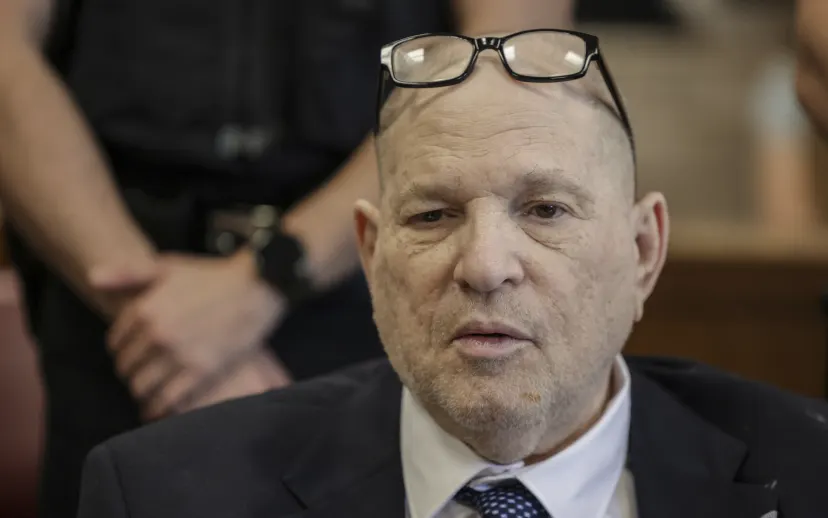
Harvey Weinstein, the disgraced movie mogul, was sentenced to 15 years in prison for a felony sex crime in another #MeToo reckoning.
Weinstein’s sentencing on Wednesday (US time) for sexually assaulting one-time TV production assistant Miriam Haley followed a legal odyssey spanning more than six years after his 2020 conviction was overturned. A jury found Weinstein guilty again at a retrial last year.
Once among the most powerful figures in the entertainment industry, Weinstein was an Oscar-winning producer whose hits included “Shakespeare in Love,” “Pulp Fiction” and “Chocolat.” But his downfall came quickly after sexual assault allegations in 2017 set off the #MeToo movement.
In 2024, New York’s highest court erased Weinstein’s conviction six years ago and ordered a new trial, ruling that Weinstein was prejudiced by testimony from other women whose allegations weren’t part of the case.
Weinstein, 74, faced up to 25 years in prison for sexually assaulting Haley at his Manhattan apartment in 2006. He has already served more than six years as his case has cycled again and again through the criminal justice system. Haley gave her account of the assault at two trials and spoke again in court Wednesday just before Weinstein was to be sentenced.
“Having been sexually assaulted by Harvey Weinstein has had a devastating effect on my life and sense of security that may never go away. Making the decision to speak up will have me looking over my shoulder for years to come,” Haley said. “It’s a life sentence for me.”
“I’ve been further traumatised in exercising my right to hold him accountable. All of this traces back to his actions,” she said, adding that she thought about ending her pursuit of justice many times.
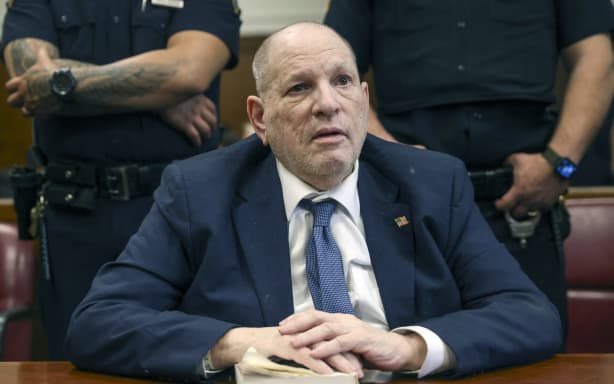
Minutes later, Weinstein apologised in court to those he may have hurt. “I do have remorse for Miriam Haley’s pain, but I have to reiterate my innocence,” he told the judge while seated in a wheelchair.

2017 Getty Images
Why Weinstein is being sentenced a second time
He was originally sentenced to 23 years in prison after a jury convicted him of assaulting Haley and raping an aspiring actress, Jessica Mann, in 2013.
But New York’s highest court erased those guilty verdicts in 2024, ruling that Weinstein was prejudiced by testimony from other women whose allegations weren’t part of the case.
Tried for a second time last year, Weinstein was again convicted of a first-degree criminal sex act for assaulting Haley, who has also gone by the name Mimi Haleyi. In a messy split verdict, the jury acquitted him of forcibly performing oral sex on another woman, Kaja Sokola, and could not reach a verdict on a rape charge involving Mann.
After another retrial ended in a hung jury in May, Manhattan prosecutors dropped the rape charge rather than pursue a fourth trial after Mann said she could not bear to testify again.
That decision cleared the way for Weinstein’s sentencing.
Weinstein’s health issues are central to the defense’s plea for leniency
Manhattan prosecutors asked for 20 years in prison – which would keep him behind bars until at least his late 80s.
Defense lawyer Jacob Kaplan asked that Weinstein receive a sentence of three more years on top of the six years he’s already served, saying a longer sentence would make it more likely that Weinstein dies in prison.
Weinstein is in failing health and has been in the hospital six times since 2025, Kaplan said, while dealing with blood cancer, congestive heart failure, and kidney issues. He has used a wheelchair now for several years.
Weinstein has denied raping or sexually assaulting anyone. Once he’s sentenced, he can appeal.
“I will be proven innocent. That I promise you,” Weinstein told The Hollywood Reporter in a jailhouse interview in March.
Weinstein is also awaiting resentencing in a separate rape case in Los Angeles. A California appeals court upheld the 2022 conviction but threw out his original 16-year sentence because the judge had considered his New York convictions that were later thrown out as an aggravating factor.
After shuffling between state prison, where he tested positive for Covid-19 early in the pandemic, and New York City’s notorious Rikers Island complex, the ailing Weinstein is now housed at a medical unit for jail inmates at Bellevue Hospital in Manhattan.
His health issues in recent years have included chronic myeloid leukemia, diabetes and walking difficulties that necessitate a wheelchair to get in and out of court, his lawyers said. Two years ago, he underwent emergency surgery to remove fluid on his heart and lungs.
AFP / Getty Images / Pool
Haley describes the assault that led to Weinstein’s conviction
Haley, 49, is a former entertainment producer now working in advertising.
Born in Finland and raised in Sweden, she said she met Weinstein through a mutual connection and worked briefly as a production assistant on a reality competition show that he produced, “Project Runway.”
Haley said she accepted an invitation to visit Weinstein’s Manhattan apartment because it would have been odd to decline since she was scheduled to fly to Los Angeles the next day on his company’s dime to attend a film premiere.
After she and Weinstein briefly chatted on his living room sofa, he lunged to kiss her, she testified. She said she leaped up and rebuffed him, but he grabbed her, forcibly backed her into a bedroom and sexually assaulted her, ignoring her pleas to stop.
She recalled Weinstein asking, “Don’t you think we’re much closer now?” after either the alleged assault or a subsequent occasion when she says she had unwanted, but not forced, sex with him.
She also recalled telling him after the second encounter, “You know you can’t keep doing this.”
The Associated Press does not typically identify people who say they are victims of sexual assault unless they grant permission, which Haley, Sokola and Mann have done.
– AP via CNN

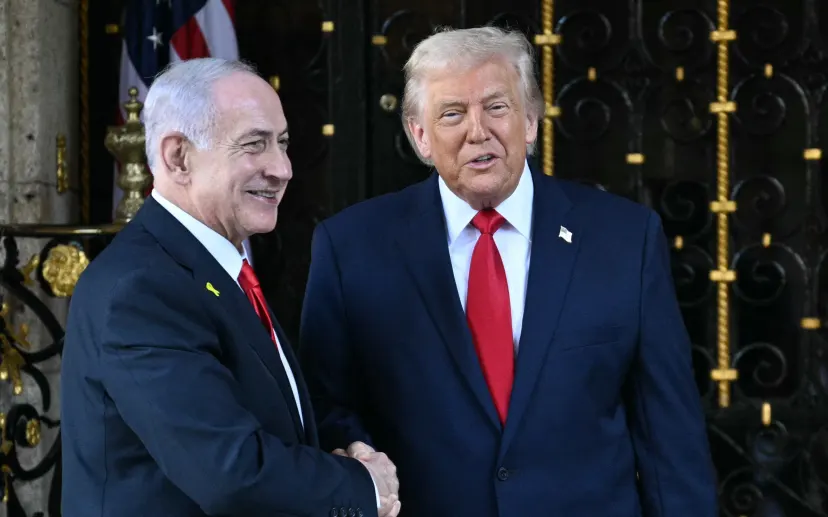
Israeli Prime Minister Benjamin Netanyahu boasted of his endorsement from Donald Trump on the eve of Israel’s election, suggesting the two leaders could restart their war against Iran if he wins, after Trump said they should “finish the job”.
“US President Donald Trump has come with a friendship that has never existed before between an Israeli prime minister and an American president. And it is doubtful we will ever have such a friendly president again,” Netanyahu said in a televised appearance late on Sunday night. “He has another two years, and he says he is calling on you to vote for me.”
In his own social media post on Sunday, Trump, who launched the Iran war jointly with Netanyahu in February, said: “Vote for Bibi Netanyahu for Prime Minister, we have to finish the job that we started!”
Netanyahu said Trump was willing to take action “that would finally, finally, remove the Iranian threat”, but only as long as Netanyahu himself remains in power.
“And I have already instructed the Mossad and the IDF (military) to bring down this regime, to bring down this regime because that is the only way to put an end to this threat,” Netanyahu said, referring to Israel’s main intelligence service and military.
Asked for comment on Netanyahu’s remarks, White House Deputy Press Secretary Anna Kelly said: “As President Trump stated, Iran is in very bad condition, both economically and militarily, and the blockade will remain in full force and effect, with oil flowing in record numbers of barrels through the Hormuz Strait.”
“The United States will not be attacking Iran at any time prior to the midterm elections,” Kelly added via email, referring to the November 3 vote in the US.
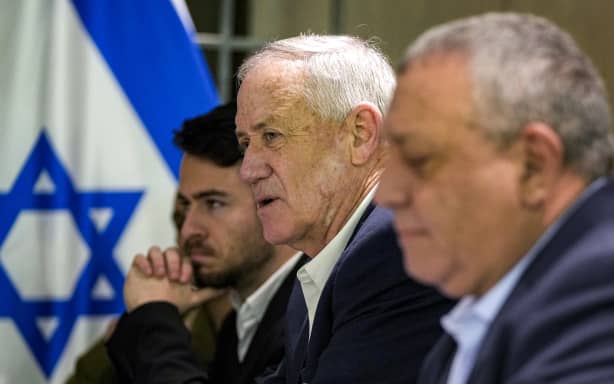
Netanyahu’s leading opponent, centrist former military Chief of Staff Gadi Eisenkot, posted his own comments on social media, praising Trump as “a true friend of Israel”.
“I value his efforts and his commitment to Israel’s security, and I am confident that he will work in full cooperation with any leader chosen by the people.”
Mark Schiefelbein / POOL / AFP
Eisenkot accuses Netanyahu of fear-mongering
Tuesday’s vote, Israel’s first since the October 7, 2023, Hamas attacks, is the first chance for voters to deliver a verdict on the worst security failure in generations and the wars on multiple fronts that followed.
With Netanyahu already at the helm of the most right-wing government in Israeli history, politics have shifted even further to the right. Nearly all Jewish-led parties, including that of the hawkish Eisenkot, now oppose the “two-state solution” that underpinned decades of peace negotiations with the Palestinians.
But many voters say the divisive politics of Israel’s longest-serving leader make the country weaker. Polls suggest Netanyahu’s Likud Party will lose seats, potentially depriving his coalition of right-wing, far-right and ultra-Orthodox parties of its narrow majority.
Eisenkot and an array of opposition parties ranging from the rump of the centre-left to the right, also have no clear path to unseat him.
Netanyahu, 77, is an unrivaled master of political survival: the only time since 2009 that opponents managed to wrest him briefly from the premiership, it took four inconclusive elections within two years to get him out. He was back 18 months later.
Neither side planned major public events for Monday. But both posted on social media, drumming on the election’s major themes: for Netanyahu, that he is the only leader with the mettle to face down Israel’s enemies; for his opponents, that his divisive politics have weakened the country.
Netanyahu shared an AI-generated video on Monday of Iran’s Supreme Leader Ayatollah Mojtaba Khamenei, whose father Ali Khamenei was killed on the first night of US-Israeli strikes on Iran in February. Lying in a hospital bed, the younger Khamenei says his own vote would be “definitely not Bibi. Another term like this and I will be meeting my father sooner than expected.”
On Sunday Netanyahu posted a computer-generated photo of a mushroom cloud over Tel Aviv, saying Israel was in existential danger from Iran.
Eisenkot responded by accusing him of “relying on a campaign of fear-mongering, lies, and threats – including images of nuclear bombs in the heart of Tel Aviv. This time, it won’t work for him.”
Trump’s endorsement of Netanyahu carries its own political risks a week before a legislative election in which his own Republicans are seeking to hold onto power.
The Iran war is deeply unpopular in the United States, blamed for a surge in prices especially for fuel. Major fighting has been suspended for months after ceasefire negotiations held without Israeli participation.
Source: Reuters & RNZ


Police say person who fired gun at officers still at large

New Zealand sides named for RLWC finals

Parliamentary Service working on extra chairs and offices for increased number of MPs


-

 Latest News2 months ago
‘Chilling’: Business groups speak out against National’s supermarket break-up plan
-

 NZ News2 months ago
Tom Phillips report: The missed opportunities to find the children
-

 Politics2 months ago
National vows to try to split Pak’nSave and New World
-

 Latest News2 months ago
Cars bearing Chinese police markings stir unease in Auckland
-

 Fiji News2 months ago
Plans to have new Constitution by Dec 24th 2026
-

 NZ News2 months ago
Cop who stole $68,000 can now be named as champion Muay Thai fighter Haimona Tamati-Te Paki
-

 Politics2 months ago
MBIE confirms botched biometric projects costs blown out to $50.7 million
-

 Latest News2 months ago
Five Karangahape Road venues lose their liquor licences after police intervention