

Latest News
What’s going on with fuel prices?

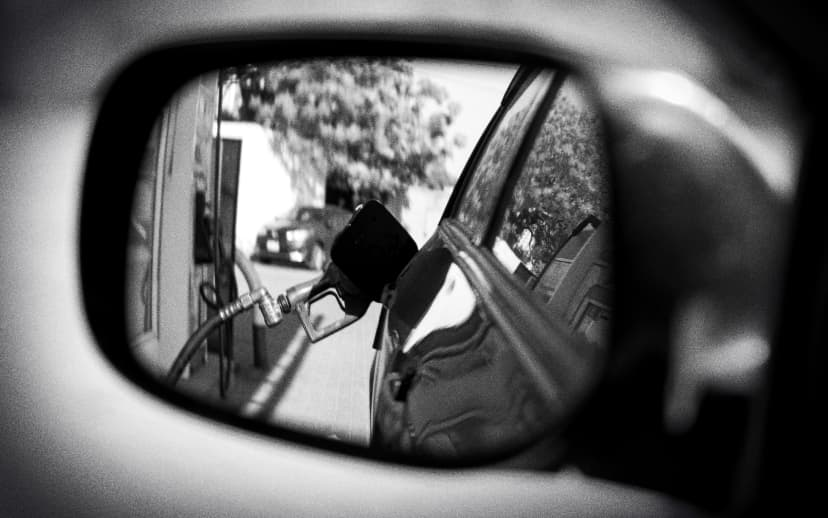
The cost of fuelling up your car has gone up again, and experts say it’s unlikely to drop any time soon.
New Zealand fuel prices have been volatile since conflict broke out in the Middle East earlier this year. There was a reprieve when a ceasefire looked to be taking effect, allowing more oil to travel out of the area, but that has reversed.
Oil prices have edged back up over US$100 a barrel, taking 91 petrol above $3 a litre across the country.
So what’s going on?
The price that you pay at the petrol pump is made up of the dated Brent physical oil price, plus refining margins, shipping costs, and the exchange rate. (Then there is the fuel excise tax and other levies on top of that.)
Westpac chief economist Kelly Eckhold said oil prices had been volatile in the 24 hours to Thursday.

Supplied / LinkedIn
“They were under US$100 [a barrel] because there was talk from the Qataris and the Iranians that there were some kind of talks going on … but then later in the day it came out that the Iranians had a list of demands they wanted satisfied before they could commit to significant negotiations, including opening the Strait [of Hormuz].
“Most of those were quite difficult things for the United States to agree to, for example around the nuclear programme. So we’ve seen the prices go back up again. They’re continuing to rise.”
He said there was a period in June and July where it was relatively easier to get oil out of the region but it had subsequently tightened up.
“It’s like any market where if people think there is less risk in the future and that things are going to get better, then they’ll be happier to sell their oil now. But if they think that it’s going to be tight in the future, if you’ve got oil, you’re going to be less willing to sell it because you don’t really know what it will be worth in a week’s time. So there’s quite a strong sentiment impact that on these commodity markets.”
It’s more than just the oil
AA spokesperson Terry Collins said while oil prices used to be a reasonable indicator of what retail fuel prices might be, other factors had started to play a much larger part.

Supplied / AA
He said, when fuel prices lifted earlier in the year, they were being pushed up by very high refining costs. “Record high, that we hadn’t seen before and it really distorted the market. We’ve got high ones now but not so high.”
But he said it was costing more to get fuel out of the Middle East.
“I’ve seen quotes of to insure a ship or get it through the Strait, of US$1 million for insurance … some of the large tanker rates have gone up nearly 1000 percent … We’re seeing these distorted elements externally occurring around the refining costs and the shipping costs.”
Another thing that counts against New Zealanders is the exchange rate, because all trading happens in US dollars. Our dollar has fallen recently, from almost US$0.60 in late August to US$0.56 now.
“When we model what petrol prices are going to do, we take the futures price in US dollars, then we adjust it by the exchange rate to bring it back to NZ dollars,” Eckhold said.
“Then typically there will be a lag between when those prices have adjusted and when you start to see it at the pump here. That looks to us to be around a two-week lag these days.”
He said, at roughly $3.40 a litre on average, it looked like much of the expected change in prices had already happened. “Obviously, it’s very variable.”
But Infometrics managing director Gareth Kiernan said he thought there might be more to come. “I’m not entirely sure we’ve seen the full effect of the life internationally over the last two or three weeks come through yet. It’s probably most of the way through, but there might still be a bit of upward pressure.”
RNZ / Rebekah Parsons-King
He said commentators might have argued that futures and oil markets were not adequately pricing in likely risk in June and July, when prices were lower.
Demand from China had also increased, he said. “They’ve been running down their reserves quite substantially and that’s been almost artificially suppressing demand internationally. I think they’ve got to a point where they don’t really have a lot more to run down.
“That demand and supply equation – while the supply side doesn’t look any more critical than it might have four or five months ago, it is possible that demand is a little stronger going forward.”
And what about diesel?
There are more concerns about the future track for diesel than for petrol.
Eckhold said in the past three or six months, there had been much more difference developing between the prices for the two products, due to the degree of inventory shortage for each.
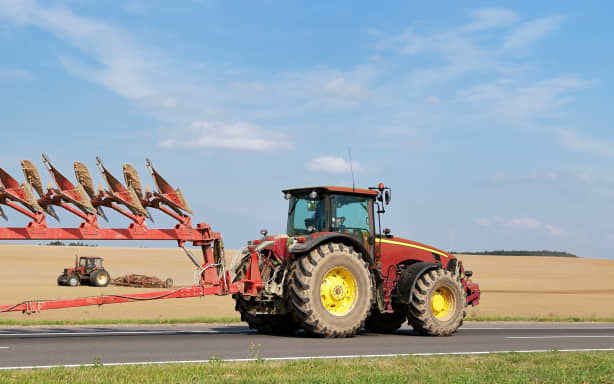
“Part of that is that for petrol, it’s easier for people to substitute out of it, because it’s too expensive. You know, you don’t drive a car, you take the bus, all of those sorts of things, whereas with diesel, it’s predominantly used for commercial purposes and is typically non-substitutable.
“If you want to run your tractor or your bus or something like that, your only real choice is to not run it at all.”
123RF
Eckhold said diesel prices still looked not to have fully adjusted to what occurred in the last few weeks. “There is a relative shortage of diesel globally, particularly in Europe. United States and European inventories of diesel have fallen to quite low levels and that’s forced the price of diesel up relative to other refined fuels.
“That has meant the US diesel price has gone up through US$6.50 a gallon, which is a very painful level for American business. It’s become an increasingly important political issue, bearing in mind that they have an election themselves coming in a month. So the US authorities have been talking about the potential of imposing limitations on exports of diesel from the United States to preserve more supply domestically.
“If that was to occur, that would have quite a significant impact on global diesel markets because the US is an important supplier of diesel to places like Mexico, but also Europe, which means that if those countries could not get their diesel from the United States, they would then go into the open market and start bidding for whatever else is available around the world, including coming out of the Middle East. And that would be how it would translate through to high diesel prices and potentially a shortage of availability down in this part of the world.”
He said US President Donald Trump was facing heavy criticism. “But it is totally up Donald Trump’s street. He’s famous for doing stuff that is dangerous and has adverse consequences. Just because you probably shouldn’t do it doesn’t mean it won’t happen.”
What next?
Collins said he did not see any indication that prices would fall. “The rises may slow down, they may stabilise. But actual downward pressure occurring … I think there is too much uncertainty and volatility internationally.”
He said there needed to be better leadership from the world’s superpowers. “That’ll be the number one thing. The rule of law internationally would sort a lot of that out.”
Sign up for Money with Susan Edmunds, a weekly newsletter covering all the things that affect how we make, spend and invest money.
rnz



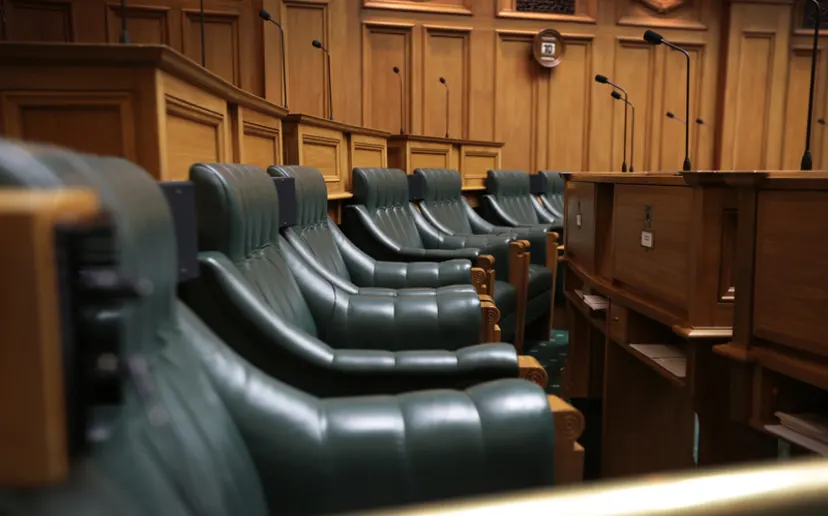
The chief executive of the Parliamentary Service is confident there will be enough room to accommodate the increased number of MPs and their staff coming into Parliament.
On current numbers, up to 131 MPs could be sitting in the Chamber following the election, brought on by a record overhang result.
Clerk of the House of Representatives Dr David Wilson told the Spinoff that currently the debating chamber had enough chairs to seat 124 MPs – including the Speaker of the House – and work was being done to accommodate more by altering the seating arrangement.
In a statement, Parliamentary Service chief executive Rafael Gonzalez-Montero said planning for a larger Parliament had been going for “some time”.
“Now that the election results have confirmed an increase to the number of members we are looking at several options.
“We are confident we will be able to accommodate all members within the Chamber.”
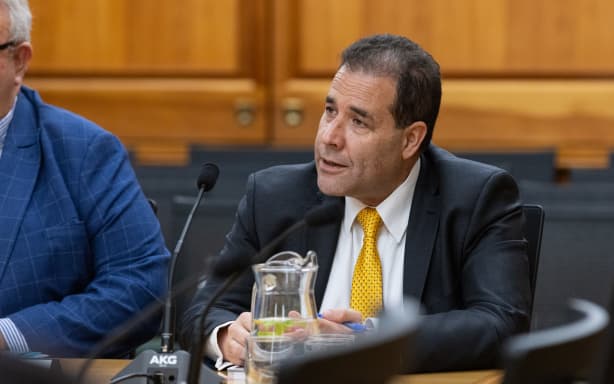
VNP / Phil Smith
Gonzalez-Montero said office accommodation for members and their staff would be “stretched” for a short time, but the new Members’ Building was only a few months away from “practical completion”.
That building – located behind Parliament – was due to be ready to occupy in April next year and had capacity to accommodate around 30 backbench MPs.
“All members should be in fit-for-purpose accommodation from that point,” Gonzalez-Montero said.
Following the 2023 election, 123 MPs sat in the Chamber – a record number at the time. That decreased to 122 following the resignation of National MP Judith Collins.
Collins held the seat of Papakura and stepped down in May and Parliament voted against holding a by-election because it was too close to the election.
The election result also meant high-ranking National Party MPs like Chris Bishop, Paul Goldsmith, Nicola Willis and Gerry Brownlee – Speaker of the House and an MP for 30 years – would likely not make it back into Parliament.
Only resigning or retiring MPs were permitted to give a valedictory speech meaning none of them would get the chance to give a valedictory statement.
Asked if their would be special allowances for valedictories, Wilson said in a statement that normally only MPs were allowed to speak in the House but the House could suspend its own rules or temporarily alter them.
“It could do so to allow former members to address the House.”
Wilson said no such arrangements could be made until the next Parliament opened and members sworn in.
rnz


Police say person who fired gun at officers still at large

New Zealand sides named for RLWC finals

Parliamentary Service working on extra chairs and offices for increased number of MPs


-

 Latest News2 months ago
‘Chilling’: Business groups speak out against National’s supermarket break-up plan
-

 NZ News2 months ago
Tom Phillips report: The missed opportunities to find the children
-

 Politics2 months ago
National vows to try to split Pak’nSave and New World
-

 Latest News2 months ago
Cars bearing Chinese police markings stir unease in Auckland
-

 Fiji News2 months ago
Plans to have new Constitution by Dec 24th 2026
-

 NZ News2 months ago
Cop who stole $68,000 can now be named as champion Muay Thai fighter Haimona Tamati-Te Paki
-

 Politics2 months ago
MBIE confirms botched biometric projects costs blown out to $50.7 million
-

 Latest News2 months ago
Five Karangahape Road venues lose their liquor licences after police intervention