

Latest News
Young man died after allergic reaction to meal at mental health facility

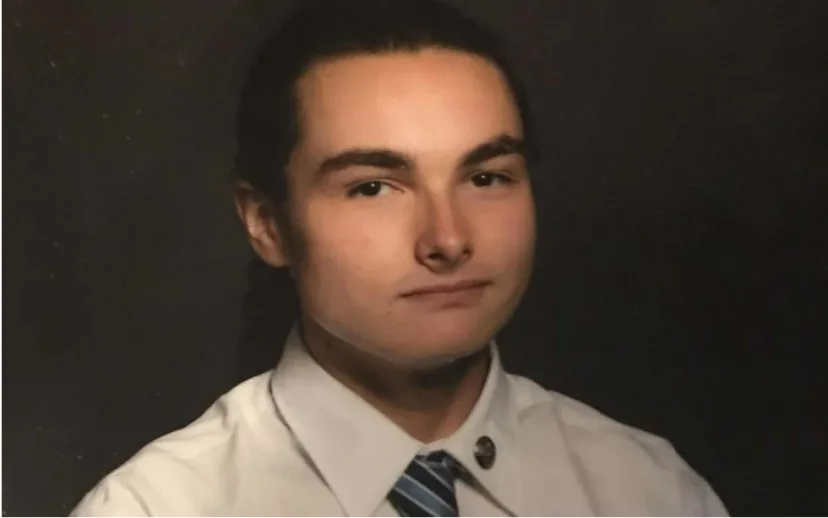
About 6.45pm, Riley Brown sat down for dinner.
That morning, the 24-year-old had been re-admitted to a community mental health respite service. During an admission less than a week earlier, he was recorded as allergic to peanuts.
Less than 30 minutes after eating the stir-fry, Brown began to feel unwell.
He went outside and vomited, before returning and asking for an EpiPen, telling a nurse he was having an allergic reaction.
Emergency services were called, with three ambulances attending the scene.
Tragically, Brown died outside the facility, despite the efforts from paramedics.
RNZ earlier revealed a review was underway into Brown’s death.
Fourteen months on, coroner Meenal Duggal said several matters “tragically aligned” to result in Riley’s death, including a nurse “inadvertently” using a curry paste that was labelled as potentially containing peanuts to prepare the dinner he ate.
His mother said she felt “extremely let down” by the facility and said it was a “senseless waste of a life”.
Staff recorded peanut allergy
Brown was a “much-loved only child”, mother Paula Brown said.
“Riley loved footy and was a staunch Manchester United supporter. He had also, from a young age, enjoyed WWE wrestling, Hot Wheels cars and gaming.
“Riley had a good group of friends, some right from kindy.”
Duggal’s report said Brown had a history of mental illness.
On 24 May last year, his mother contacted police about a deterioration in his mental health.
“He had been acting out of character, which had been noticed by family and friends,” she told RNZ.
He was assessed by mental health services at Nelson Hospital and was later prescribed medication, including a beta-blocker, propranolol.
On 27 May, Brown was admitted to Halifax respite, a community crisis mental health service run by Pathways.
The coroner’s report said staff at the facility recorded he was allergic to peanuts in his admission documents.
Brown stayed at the respite facility for one night, but wanted to go to Christchurch and see his friends.
On 31 May, he returned from Christchurch and went to the facility. He was re-admitted on 1 June.
About 6.45pm, he ate the stir-fry that a nurse had made. About 7.10pm, he started feeling unwell and went outside.
When he returned, he told the nurse he’d vomited and he was having an allergic reaction, and asked for an EpiPen.
“He was sweaty, agitated and had taken off his shirt,” the report said.
The nurse called 111 and told them Brown was unwell with an allergic reaction. He was breathing and could talk in full sentences, the nurse told emergency services.
“Mr Brown was heard in the background of the call, asking for an EpiPen and confirming a severe allergic reaction about three years prior.”
An ambulance was dispatched. Less than 10 minutes after the call, the nurse called 111 again to say his symptoms were worsening with “erratic breathing and slower pulse”.
The first ambulance arrived at 7.31pm.
The emergency medical technician (EMT) assessed Brown, who said he could not breathe. A critical care paramedic was called.
“Mr Brown’s skin was cold and clammy with blue lips. He was making an increased effort to breathe but with very little chest movement. Mr Brown walked to the ambulance for further assessment.”
The EMT administered adrenaline into his thigh and put an oxygen mask on his face.
Riley became unconscious, while an ECG reading was being carried out. His condition continued to deteriorate and, despite the efforts from the paramedics, Riley was pronounced dead at 8.10pm, less than 90 minutes after eating the meal.
The meal
The coroner listed the ingredients that Pathways said was in the meal, including a curry paste.
The nurse who prepared the meal told police he usually purchased Exotic brand curry pastes. He said he did not read the labels of the ingredient used to cook the dinner on the evening of Brown’s death.
“If he was aware of a patient being ‘highly sensitive’ to an allergen, then he would have carefully read the ingredients and had done so in the past,” the coroner said.
Police looked inside the fridge at the facility and found two jars of curry paste. The labels on each of the curry flavours noted they “may contain” peanuts.
“Based on the information obtained by police and the timing of Mr Brown’s symptoms, it is more likely than not that the source of the peanut consumed by Mr Brown was from the dinner he ate and likely from an Exotic brand curry paste.”
Pathologist Dr Mark Houghton carried out a post mortem, finding the cause of death was anaphylaxis, due to peanut allergy.
Testing of Riley’s gastric contents found peanut allergen at levels exceeding regulatory thresholds and typical concentrations expected in products labelled as free from peanuts.
He also recorded the presence of propranolol as a “significant condition, which contributed to death, but was not related to the condition that caused death”.
The pathologist said propranolol could block or limit the effect of adrenaline as a treatment for acute anaphylaxis.
GP not aware of peanut allergy
The coroner said Paula Brown questioned St John’s response and whether propranolol was appropriately prescribed, given his allergy.
The coroner said the first ambulance arrived about nine minutes after the call was triaged.
“Accounting for driving time, this is a reasonably prompt response.”
She said the paramedics did not know that Brown was prescribed propranolol.
“When the EMT and paramedic arrived, Mr Brown was having difficulty breathing and speaking. His condition rapidly deteriorated further.
“In these emergency circumstances, it is understandable that St John staff attended to urgent treatment.”

Supplied
Coroner Duggal said Brown was tested for a peanut allergy in 2010, during an admission to Nelson Hospital. The then-eight year old vomited after being given small increments of peanuts, but did not exhibit other symptoms.
His mother was advised to avoid peanuts, but not foods with traces of peanuts.
In 2017, while applying for a disability allowance, another GP said he had a “moderate peanut allergy” and recommended he avoid eating whole peanuts.
The possible allergy was not recorded as a medical alert in Riley’s notes.
“This meant that the information about a possible allergy was not readily available on the GP practice’s medical records for subsequent GPs who provided care to Mr Brown.”
Brown had a “significant allergic reaction” to peanuts about three years before his death, but his GP was not informed of this.
It wasn’t until after Brown’s death that the GP became aware he had a peanut allergy.
Brown’s GP said the propranolol was prescribed by another GP in March 2023 for the physical symptoms of anxiety and panic attacks.
In her findings, Duggal said “several matters aligned tragically” leading to Brown’s death.
This included that, while his allergy was recorded at the respite facility, a curry paste labelled as potentially containing peanuts was “inadvertently” used to prepare the dinner, following which Brown suffered the allergic reaction.
The coroner also referenced Brown being prescribed propranolol, and that his peanut allergy was not recorded as an alert in either Health NZ’s or his GP practice’s electronic records.
“This may have been due to the peanut allergy first being identified in childhood as a limited response. Sadly, the GP was not advised of more recently worsening allergic reactions and it was inconsistently reported in ED presentations.”
She said that, based on guidance provided to her by clinical advisors, the effects of propranolol on treatment by adrenaline and allergens may not be sufficiently widely known among clinicians.
She made several recommendations, including that Brown’s GP practice reviews its processes for allergic reactions being recorded as alerts.
HNZ advised that work was underway nationally in relation to recording, and accessibility of allergy and adverse reaction information in the Medical Warning System.
“I endorse that work and encourage HNZ to involve general practice in this work, so that there is greater consistency across the health sector.”
The coroner found “on the balance of probabilities” that the curry paste was the likely source of the peanuts that Brown consumed. She found his death was accidental.
She recommended that Pathways look at its processes for addressing the needs of residents with known allergies and consider whether an EpiPen should be obtained, while a person with a known allergy is staying at a respite facility.
“Allergies can amplify and worsen over time. As such, I urge anyone with a known allergy to advise their doctor of the allergy and to keep their doctor informed of any allergic reactions that they have experienced, including if there is a worsening of their reaction or symptoms.”
‘We had been so vigilant’
Paula Brown told RNZ that, when she received the coroner’s report, she felt anxious and took 11 hours before finally reading it.
She said she already knew there had to have been nuts in his meal.
“What I was not aware of was the huge lack of communication and lapse of judgement about how serious this allergy is.”
She felt “extremely let down” by Pathways.
“My biggest concern is that Riley was fed nuts, despite the seriousness of the situation.
“The need for staff to be fully aware of his dietary and safety requirements was paramount, but totally overlooked, with poor communication at this Mental Health Respite Facility.”
The family had been “so vigilant” dealing with Brown’s allergy, she said.
“Always a step ahead of a situation where food was going to be presented, like birthday parties, camps, restaurants, takeaways… just everywhere,” she said. “We were very proactive, we had it under control.
“Never did I ever think Riley would eat nuts. It’s just a senseless waste of a life that could of been prevented.”
She wanted Pathways to “acknowledge what has gone wrong and take responsibility”, and show what changes would be made.
“The recommendations, if implemented as the coroner has suggested, could help prevent this from happening again.”
Pathways chief executive Sally Pitts-Brown told RNZ she wanted to express her “deepest sympathies” to Brown’s mum
“Pathways has taken his passing very seriously, and have been working with Health New Zealand to implement improvements and safeguards to ensure, as much as practicably possible, nothing like this ever occurs again.
“We acknowledge the recommendations of the coroner and are confident, as an organisation, that we have implemented the necessary changes. We acknowledge that none of this takes away from the tragedy of Riley’s passing.”
Health New Zealand (HNZ) Te Waipounamu regional manager Monique Gale said the agency extended its sympathies to the family for their loss.
“We fully supported the formal investigation process and note the recommendations in the report.”
Gale said Health NZ reviewed every serious adverse event that occurred within its services and was committed to implementing any recommended changes.
“We understand that Pathways undertook a significant investigation and learning review, resulting in an intensive allergy awareness programme and increased alert mechanisms throughout their practices.
“HNZ and Pathways continue to work in partnership with primary care to ensure whole-of-system support to people.”
She said work was underway nationally to strengthen the consistent recording and accessibility of allergy and adverse reaction information in the Medical Warning System.
“We note the coroner’s endorsement and encouragement to involve general practice to ensure consistency across the health sector, and will ensure we do involve general practice.
“We will also share material on the impact of propranolol and other beta blockers for patients with anaphylactic allergies.”
‘There will never be closure’
Fourteen months after her son’s death, Paula Brown said not a day went by when she didn’t think about him.
“The grief is like being dealt a life sentence,” she said. “Anyone who has lost a child knows how enormous and overwhelming it feels – it changes us.
“It doesn’t just disappear because time passes. You learn to carry it, but you don’t leave it behind.”
She said people had asked her if the report had brought closure.
“Closure is typically a contentious and stupid word, when you are talking about the passing of your child. We grieve because we love and we don’t need closure to heal.
“How do you put a lid on grief? There will never be closure for me.
“Riley will always be my son, and I will love him and miss him forever. I will always carry him with me and let the grief and the memories guide me into the future.
“I want to remember the happy, loving and fun son and friend that he was, and the relationship we shared.”
rnz




The chief executive of the Parliamentary Service is confident there will be enough room to accommodate the increased number of MPs and their staff coming into Parliament.
On current numbers, up to 131 MPs could be sitting in the Chamber following the election, brought on by a record overhang result.
Clerk of the House of Representatives Dr David Wilson told the Spinoff that currently the debating chamber had enough chairs to seat 124 MPs – including the Speaker of the House – and work was being done to accommodate more by altering the seating arrangement.
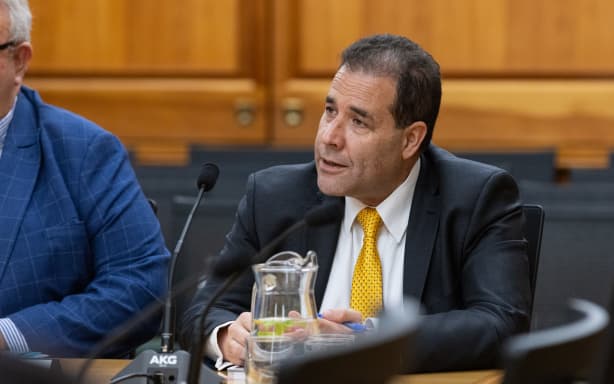
In a statement, Parliamentary Service chief executive Rafael Gonzalez-Montero said planning for a larger Parliament had been going for “some time”.
“Now that the election results have confirmed an increase to the number of members we are looking at several options.
“We are confident we will be able to accommodate all members within the Chamber.”
VNP / Phil Smith
Gonzalez-Montero said office accommodation for members and their staff would be “stretched” for a short time, but the new Members’ Building was only a few months away from “practical completion”.
That building – located behind Parliament – was due to be ready to occupy in April next year and had capacity to accommodate around 30 backbench MPs.
“All members should be in fit-for-purpose accommodation from that point,” Gonzalez-Montero said.
Following the 2023 election, 123 MPs sat in the Chamber – a record number at the time. That decreased to 122 following the resignation of National MP Judith Collins.
Collins held the seat of Papakura and stepped down in May and Parliament voted against holding a by-election because it was too close to the election.
The election result also meant high-ranking National Party MPs like Chris Bishop, Paul Goldsmith, Nicola Willis and Gerry Brownlee – Speaker of the House and an MP for 30 years – would likely not make it back into Parliament.
Only resigning or retiring MPs were permitted to give a valedictory speech meaning none of them would get the chance to give a valedictory statement.
Asked if their would be special allowances for valedictories, Wilson said in a statement that normally only MPs were allowed to speak in the House but the House could suspend its own rules or temporarily alter them.
“It could do so to allow former members to address the House.”
Wilson said no such arrangements could be made until the next Parliament opened and members sworn in.
rnz


Police say person who fired gun at officers still at large

New Zealand sides named for RLWC finals

Parliamentary Service working on extra chairs and offices for increased number of MPs


-

 Latest News2 months ago
‘Chilling’: Business groups speak out against National’s supermarket break-up plan
-

 NZ News2 months ago
Tom Phillips report: The missed opportunities to find the children
-

 Latest News2 months ago
Cars bearing Chinese police markings stir unease in Auckland
-

 Politics2 months ago
National vows to try to split Pak’nSave and New World
-

 Fiji News2 months ago
Plans to have new Constitution by Dec 24th 2026
-

 Latest News2 months ago
Five Karangahape Road venues lose their liquor licences after police intervention
-

 Politics2 months ago
MBIE confirms botched biometric projects costs blown out to $50.7 million
-

 NZ News2 months ago
Cop who stole $68,000 can now be named as champion Muay Thai fighter Haimona Tamati-Te Paki