

Latest News
Government seeks to clarify Disability Support Services functions

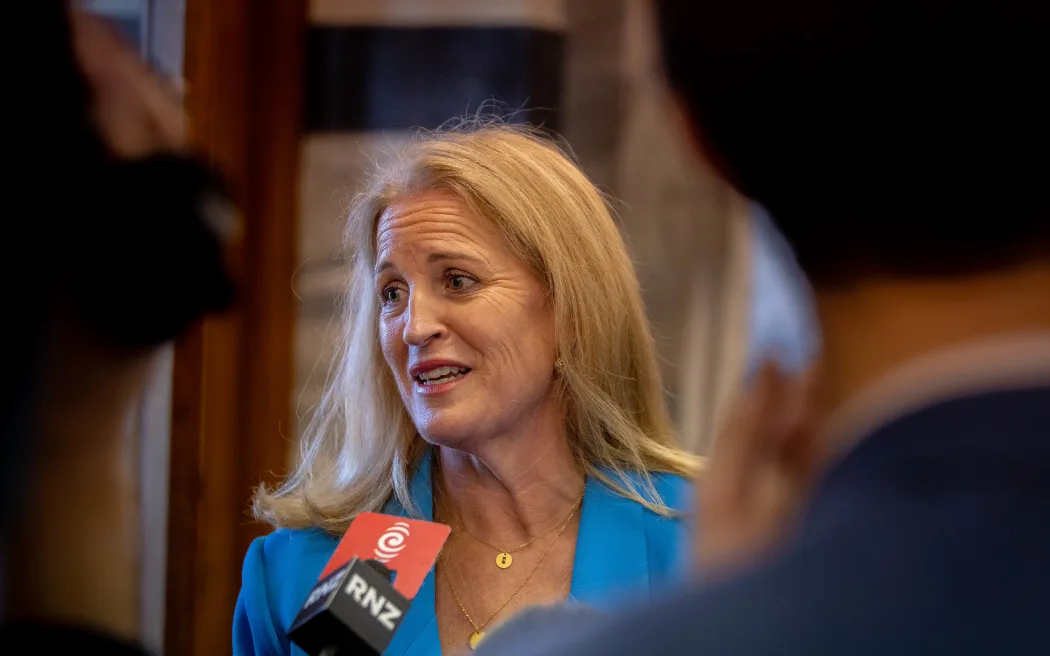
The government has introduced legislation that would clarify the purpose of Disability Support Services (DSS), including making it clear the Crown is not the employer of family carers.
The legislation would reduce the Crown’s exposure to fiscal and litigation risks, following a Supreme Court decision which ruled in favour of family carers last year.
In December, the Supreme Court ruled two parents who cared full-time for their disabled children were employees of the government, and should receive the same benefits and protections.
Disability issues minister Louise Upston said while the new legislation would not affect those two successful claims, she believed there were “better ways to recognise and support carers than treating family members as state employees”.
Upston said she had commissioned further work in that space, and would be consulting on a package for carers.
“This Bill clarifies that DSS funding is a contribution toward disabled people being able to live an everyday life. It makes clear that families and whānau have responsibility for the wellbeing of their members in the first instance and where appropriate,” she said.
“This reflects the way that DSS already works. It doesn’t mean that DSS won’t help where disabled people’s families support them.”
The Disability Support Services Bill, introduced on Monday evening, said it was never the policy intent for the Crown to be the employer of carers, and it would reaffirm that it was the Crown that made funding decisions.
“This provides certainty regarding the relationship between disabled people and paid family carers following the Supreme Court case. If a disabled person uses DSS-funded disability support services to employ another person, the employment relationship is solely between the disabled person and the carer,” it said.
Upston said Disability Support Services had been operating without a clear legislative function, which had made it harder for people to understand what support was available, who qualified, and how decisions were made.
“This Bill establishes foundations and sets a clear framework for how DSS operates. It sets out what the disability support system does, its purpose and how public funding can be used,” she said.
There would be no changes to current supports for disable people, whānau, and carers.
There would also be no changes to current funding allocations, or who could get disability support services.
The legislation stated it was intended to “strengthen and stabilise” the provision of DSS, by improving the consistency, transparency, and sustainability of the system, and it would clarify that “responsibility for care of disabled people rests in the first instance with their family and whānau, where appropriate.”
A Regulatory Impact Statement (RIS) from the Ministry of Social Development said in the absence of a legislative framework, policy settings were increasingly being made through court judgments.
“If the DSS Bill is not introduced, then MSD will have to manage fiscal costs through operational policy changes, for example, restricting eligibility, access to Flexible Funding, and/or level of DSS provided for disabled people and family carers,” officials said.
“The Government has a priority of fiscal responsibility, and any increases in appropriated funding would ordinarily be prioritised to address cost pressures. Increasing payment to family carers to meet historic claims and/or ongoing wage costs will not result in an increased level of care and support for disabled people compared with the status quo.”
The RIS noted there had been no community of prior agency consultation on the specific legislative proposals, given the urgency and confidential nature of the options.
The bill is set to have its first reading on Thursday, and will go to a Select Committee for public feedback.

Dr Huhana Hickey. Photo: Sharon Brettkelly
Writing on her Substack, lawyer and disability advocate Dr Huhana Hickey said the minister’s statement “that families and whānau have responsibility for the wellbeing of their members in the first instance” was concerning.
“It reinforces a long-standing assumption that families will step in where government support falls short. Officials often soften this language by referring to ‘natural supports,’ as though unpaid care simply happens without cost,” she said.
“But there is nothing natural about a parent leaving paid employment to provide full-time care. There is nothing natural about elderly spouses physically lifting partners without proper support. There is nothing natural about siblings restructuring their own futures because the State has stepped back. That is not natural support, that is policy design and increasingly, it feels like policy design built around withdrawal.”
Hickey said rather than the government using the Supreme Court’s decision as an opportunity to better recognise carers, it was moving quickly “to ensure broader obligations do not flow from that ruling”.
rnz



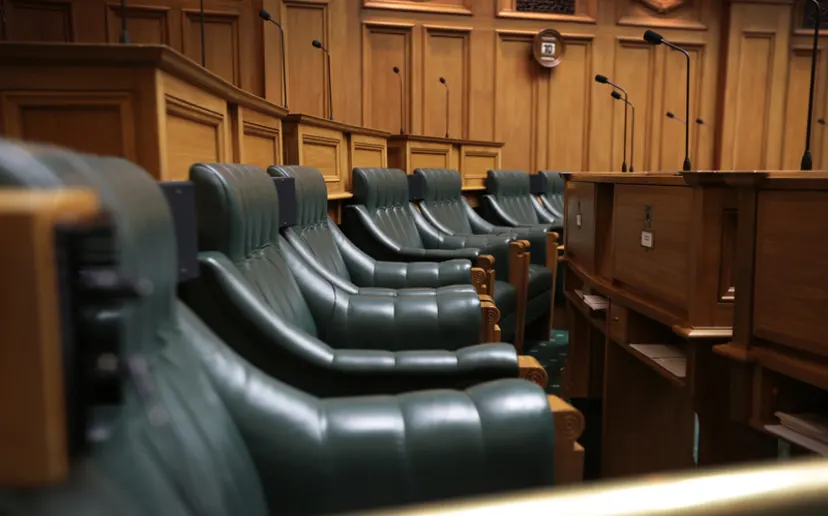
The chief executive of the Parliamentary Service is confident there will be enough room to accommodate the increased number of MPs and their staff coming into Parliament.
On current numbers, up to 131 MPs could be sitting in the Chamber following the election, brought on by a record overhang result.
Clerk of the House of Representatives Dr David Wilson told the Spinoff that currently the debating chamber had enough chairs to seat 124 MPs – including the Speaker of the House – and work was being done to accommodate more by altering the seating arrangement.
In a statement, Parliamentary Service chief executive Rafael Gonzalez-Montero said planning for a larger Parliament had been going for “some time”.
“Now that the election results have confirmed an increase to the number of members we are looking at several options.
“We are confident we will be able to accommodate all members within the Chamber.”
VNP / Phil Smith
Gonzalez-Montero said office accommodation for members and their staff would be “stretched” for a short time, but the new Members’ Building was only a few months away from “practical completion”.
That building – located behind Parliament – was due to be ready to occupy in April next year and had capacity to accommodate around 30 backbench MPs.
“All members should be in fit-for-purpose accommodation from that point,” Gonzalez-Montero said.
Following the 2023 election, 123 MPs sat in the Chamber – a record number at the time. That decreased to 122 following the resignation of National MP Judith Collins.
Collins held the seat of Papakura and stepped down in May and Parliament voted against holding a by-election because it was too close to the election.
The election result also meant high-ranking National Party MPs like Chris Bishop, Paul Goldsmith, Nicola Willis and Gerry Brownlee – Speaker of the House and an MP for 30 years – would likely not make it back into Parliament.
Only resigning or retiring MPs were permitted to give a valedictory speech meaning none of them would get the chance to give a valedictory statement.
Asked if their would be special allowances for valedictories, Wilson said in a statement that normally only MPs were allowed to speak in the House but the House could suspend its own rules or temporarily alter them.
“It could do so to allow former members to address the House.”
Wilson said no such arrangements could be made until the next Parliament opened and members sworn in.
rnz


Police say person who fired gun at officers still at large

New Zealand sides named for RLWC finals

Parliamentary Service working on extra chairs and offices for increased number of MPs


-

 Latest News2 months ago
‘Chilling’: Business groups speak out against National’s supermarket break-up plan
-

 NZ News2 months ago
Tom Phillips report: The missed opportunities to find the children
-

 Politics2 months ago
National vows to try to split Pak’nSave and New World
-

 Latest News2 months ago
Cars bearing Chinese police markings stir unease in Auckland
-

 Fiji News2 months ago
Plans to have new Constitution by Dec 24th 2026
-

 NZ News2 months ago
Cop who stole $68,000 can now be named as champion Muay Thai fighter Haimona Tamati-Te Paki
-

 Politics2 months ago
MBIE confirms botched biometric projects costs blown out to $50.7 million
-

 Latest News2 months ago
Five Karangahape Road venues lose their liquor licences after police intervention