

Breaking News
New Zealand border reopening fully from end of July


Prime Minister Jacinda Ardern has confirmed the border will fully reopen from the end of July, including for cruise ships and international students.
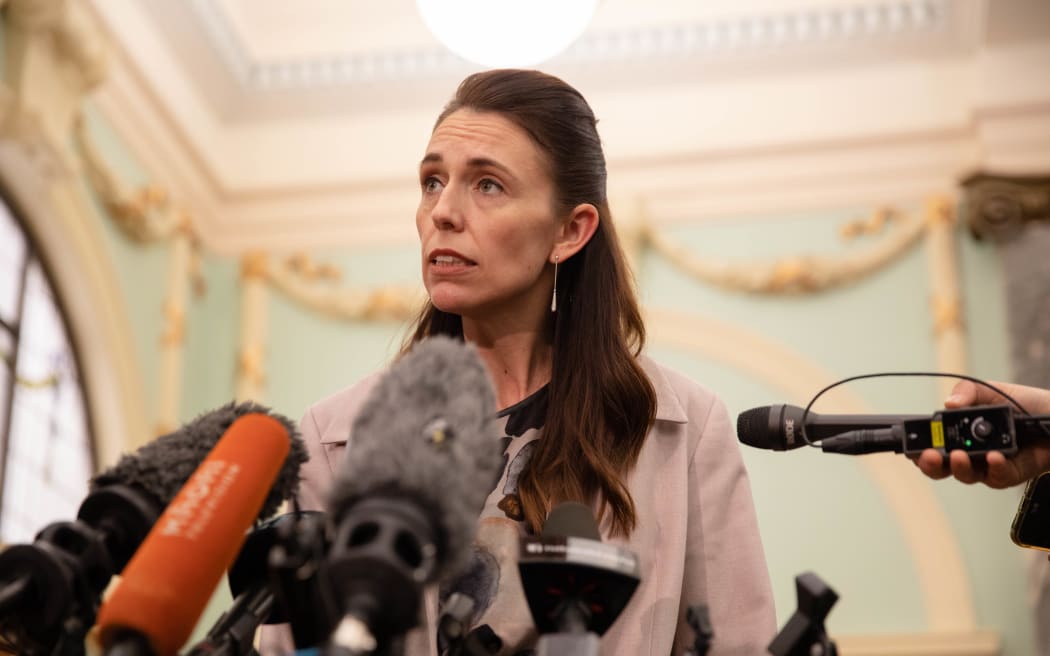
Jacinda Ardern Photo: RNZ / Angus Dreaver
It comes with a range of other immigration announcements, including sector-specific agreements to support a shift away from low-skilled migrant labour, and a new ‘Green list’ of 85 hard-to-fill high-skill roles that provides a priority pathway to residency.
Visas for some 20,000 migrants already in the country are also being extended, and there will be new restrictions on students being able to work.
Ardern, who is isolating with her partner at home, has announced the move virtually at a Business NZ lunch in Auckland this afternoon, with Minister of Immigration Kris Faafoi and Minister of Education Chris Hipkins at the event in person.
While the border is already open to New Zealand citizens and residents and visitors from visa-waiver countries, people from countries that need to get a visa to travel to New Zealand had been told it would be October before they could book flights.
The government has long signalled it intended to bring that date forward, however, and Ardern confirmed it would kick in from 11.59pm on 31 July – bringing the opening forward two months – allowing tourists with visas to begin arriving from August.
Ardern said today’s announcement was a simplification of immigration settings that would address immediate skills shortages and speed up the economic recovery from Covid-19.
“By helping to relieve urgent skills shortages, opening up tourism and putting our immigration settings on a more secure footing, we are building on our proven plan to secure New Zealand’s economic future,” she said.
“This follows our previous reconnecting work which has seen approvals granted for over 29,000 critical workers, 5000 students, working holidaymakers, Australian tourists, and visa-waiver visitors already able to enter the country.”
Faafoi said the Green List would include roles in sectors like construction engineering, trades, health workers and tech.
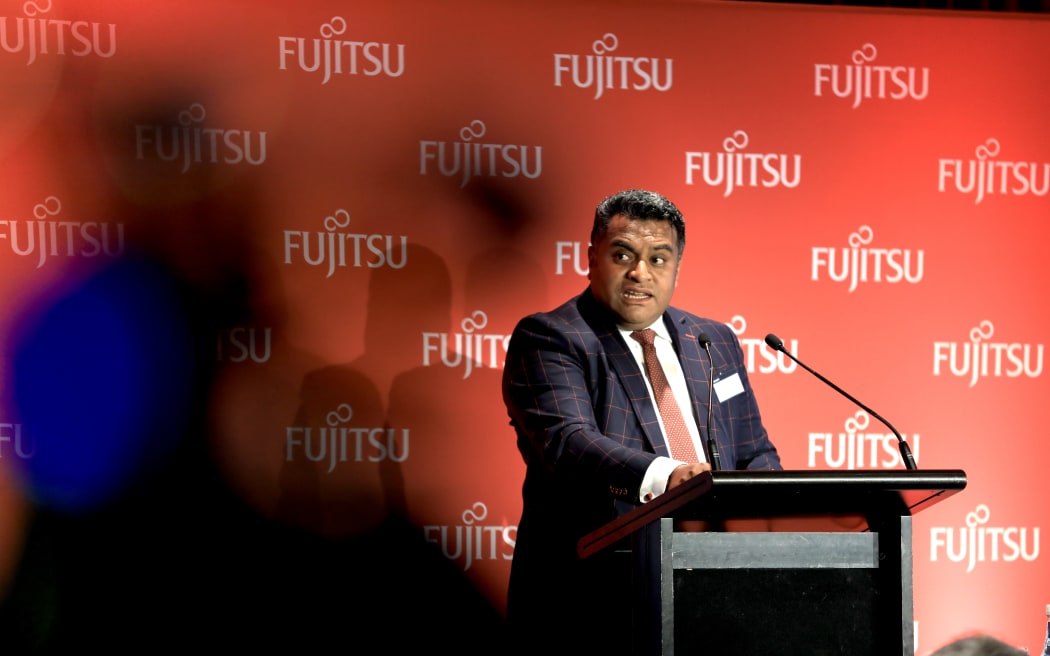
Kris Faafoi Photo: RNZ / Marika Khabazi
The new sector agreements care; construction and infrastructure; meat processing; seafood; and seasonal snow and adventure tourism sectors would provide for a short-term need for lower-paid migrant labour, he said, but signalled an overall shift away from relying on those kinds of workers.
“The government has agreed to temporarily exempt tourism and hospitality businesses from paying the median wage to recruit migrants on an Accredited Employer Work Visa into most roles. Instead, a lower wage threshold of $25 per hour will be required until April 2023,” he said.
The Accredited Employer Work Visa, which has been delayed twice and is expected to begin rolling out in July, would allow employers to use their own recruitment processes to prove New Zealanders were unavailable to fill roles, he said.
The system allows employers to become accredited for a year or two, covering multiple visa applications, and requires 10 working days for accreditation checks, a further 10 for job checks, and 20 for a migrant check.
“This follows the recent $27 per hour border exception that was granted around certain snow season roles to help the sector prepare for winter tourists.”
About 20,000 visas expiring before 2023 would also be granted six-month or a two-year extension with open work conditions, to keep skills in the country, Faafoi said.
International students to face new work restrictions
Hipkins said the reopening would help the international education sector rebuild, but with a new focus that would shut what he said was a backdoor to lower-paid migrant workers who were then at risk of exploitation.
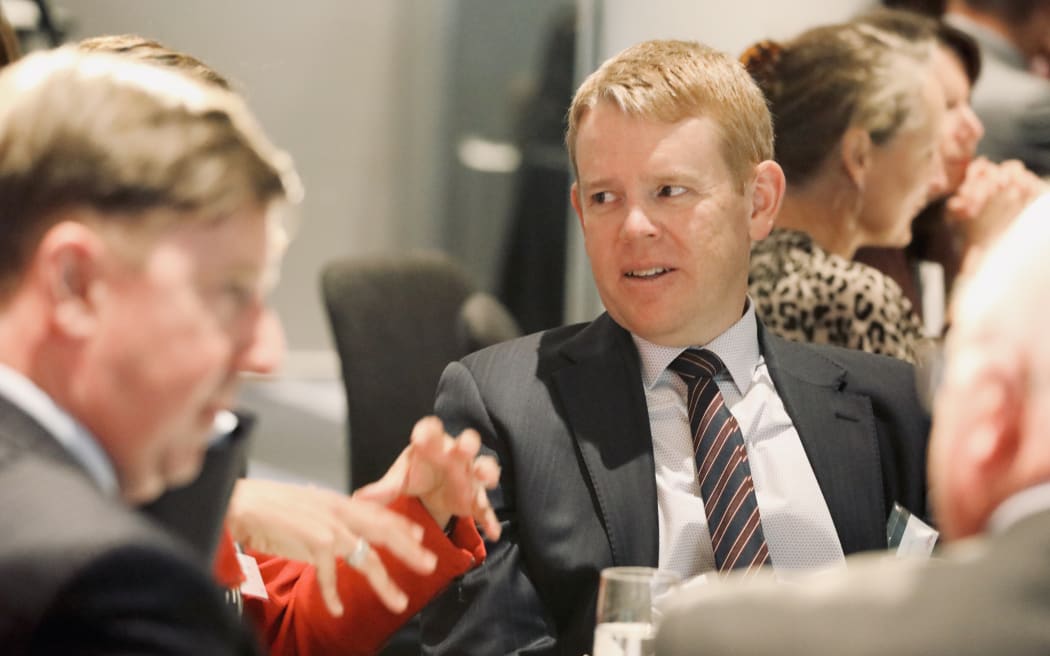
Chris Hipkins Photo: RNZ / Marika Khabazi
“From the end of July, all international students who meet normal entry criteria can enrol for study here … but the future will be different, we won’t be going back to National’s volume over value approach.”
The changes would include:
- Students in non-degree level courses not getting post-study work rights except in specified shortage and skilled occupations
- Degree-level and other eligible international students’ work rights last the same length as their studies. Masters and PhD students will retain the right to work in New Zealand for up to three years after their studies
- Students will also not be able to apply for a second post-study visa in New Zealand
Some students currently were able to work for up to three years in New Zealand after just 30 weeks of study, Hipkins said.
Source – RNZ






The Trump administration denounced CNN on Thursday (local time) for airing a portion of the new Iranian supreme leader’s public statement, the second time in three days the network has been targeted for reporting on how the regime is responding to the American attacks.
The attack illustrated the care news outlets must take in reporting during wartime, and the responsibilities of American journalists to report the perspective of countries its government views as enemies. It also exposed inconsistencies.
The message of Supreme Leader Ayatollah Mojtaba Khamenei during his first public statement since he succeeded his father, who was killed in an Israeli airstrike, was widely available elsewhere.
The White House said on social media that “fake news CNN just aired four straight minutes of uninterrupted Iranian state TV, run by the same psychotic and murderous regime that prided itself on brutally slaughtering Americans for 47 years”.
Earlier CNN interview criticised by Trump’s communications leader
Two days earlier, White House communications director Steven Cheung took issue with CNN anchor Erin Burnett’s interview with Hossein Mousavian, a former Iranian nuclear negotiator. Burnett asked Mousavian what he had been hearing about the Iranian government’s interest in having talks with the United States. There wasn’t much, he said.
“Ever notice how CNN just regurgitates quotes and unverified information from Iranian terrorists?” Cheung wrote on X.
“Total disgrace. They have become the murderous Iranian Regime’s version of Pravda,” he said, referring to the official newspaper of the former Soviet Union.
CNN did not address Cheung’s statement but did respond to the White House attack on Thursday. It noted that CNN, Sky News and Al Jazeera also showed portions of the ayatollah’s statement live.
“The world is watching with anticipation which direction this war will take,” CNN said. “Purported remarks from Iran’s new supreme leader are a critical component in helping audiences understand where this conflict is heading and were aired for their obvious news value.”
Other news outlets, including The Associated Press, sent out alerts on what Khamenei said. His vow to keep up attacks on other Arab countries in the region and plans to choke off the world’s oil supply were headlines.

The New York Times led its website with a story on the speech in its immediate aftermath, later writing that the speech “was an early indication of how the new supreme leader would approach the war, as well as how he would lead the country”.
CNN has long been a favoured target of President Donald Trump, dating back to his first term. It’s a particularly vulnerable time for the network with Paramount Global’s agreement to purchase CNN’s parent company, Warner Bros Discovery, raising questions about its future editorial independence.
CNN showed a news anchor reading a portion of Khameini’s remarks in Farsi, with an English translation. It did not air them in full. After the speech, correspondent Nick Paton Walsh gave a debrief to anchor Kate Bolduan, noting how the non-appearance of the leader — reportedly injured in an air attack — was as important as what he said.
“We were waiting to see the face of the man to have proof of his health and survival,” Walsh said, “and they’ve not met that moment. Instead, a handwritten message, it seems, that mostly reiterates things we kind of already knew.”
A social media message board for Iran’s point of view
The Tech Transparency Project has reported that several Iranian leaders and institutions maintain verified accounts on X, formerly Twitter, owned by Trump ally Elon Musk. CNBC said Thursday that Khamenei has one of them, and an X account with his portrait posted the text of his remarks, available in Farsi and in an English translation.
Even though Khamenei’s father is dead, an account with his portrait was active on Thursday, mainly reposting messages from his son. “The revenge we have in mind is not just because of the martyrdom of the illustrious Leader of the Revolution,” read one message posted Thursday. “Every member of the nation martyred by the enemy is a separate case that demands we seek revenge.”
X is officially blocked in Iran, although many use a virtual private network to bypass restrictions. A message sent to the platform on Thursday was not immediately returned.
There’s a long history of journalists seeking interviews with world leaders, even when they are regarded as enemies of the United States. Most notable was 60 Minutes correspondent Mike Wallace’s interview with Iran’s Ayatollah Ruhollah Khomeini in 1979, when that country was holding Americans hostage.
Thursday’s remarks by Iran’s new supreme leader were absolutely newsworthy and legitimate for CNN to air them, said Jane Ferguson, a veteran international correspondent and founder of the journalism platform Noosphere. It’s not the job of government leaders to pick apart what CNN is reporting, she said.
“We’ve always faced this,” she said, about when reporters interview leaders or other figures hostile to American interests. “This has been a bit of low-hanging fruit for a while.”
Historian Douglas Brinkley of Rice University said that it’s unfair for CNN to be singled out in this instance. He, too, believes it is newsworthy to learn what leaders of an adversary are thinking, but it’s important to make sure that journalists are careful.
“You have to be leery of being used as a propaganda tool by the Iranian regime,” he said. “On the other hand, knowing what the enemy is saying and looking for a sign of a peace offering or a nuance is important … It’s a difficult balance.”


Police say person who fired gun at officers still at large

New Zealand sides named for RLWC finals

Parliamentary Service working on extra chairs and offices for increased number of MPs


-

 Latest News2 months ago
‘Chilling’: Business groups speak out against National’s supermarket break-up plan
-

 NZ News2 months ago
Tom Phillips report: The missed opportunities to find the children
-
 Politics2 months ago
National vows to try to split Pak’nSave and New World
-

 Latest News2 months ago
Cars bearing Chinese police markings stir unease in Auckland
-

 Fiji News2 months ago
Plans to have new Constitution by Dec 24th 2026
-
 NZ News2 months ago
Cop who stole $68,000 can now be named as champion Muay Thai fighter Haimona Tamati-Te Paki
-

 Politics2 months ago
MBIE confirms botched biometric projects costs blown out to $50.7 million
-

 Latest News2 months ago
Five Karangahape Road venues lose their liquor licences after police intervention