

Latest News
Government promises to give police more information-collecting powers, details scant

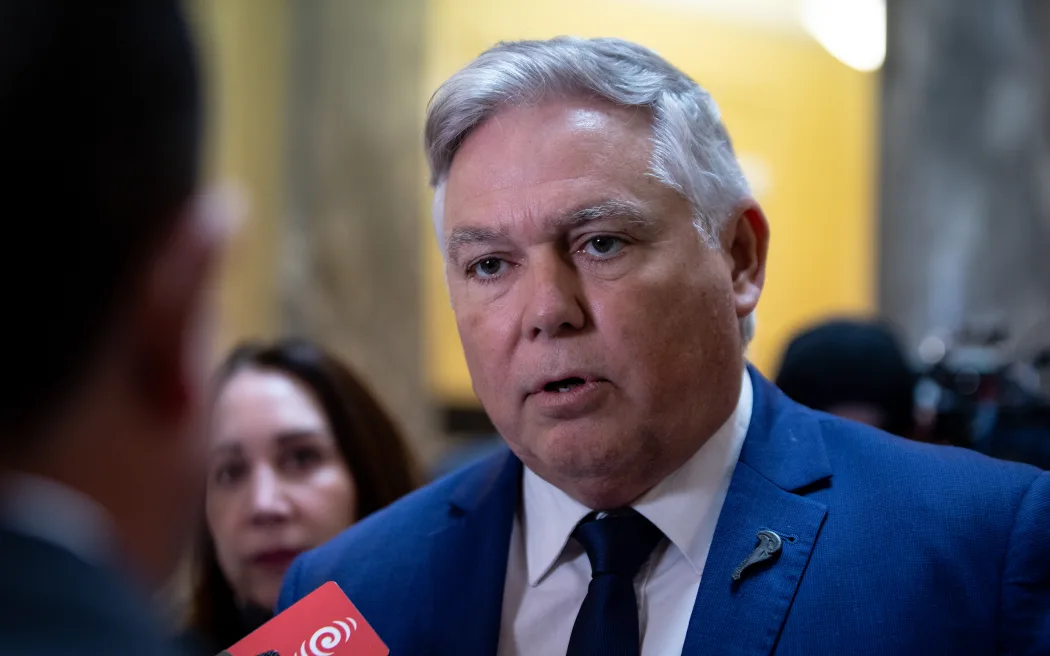
A law change around police powers to collect information about people is being promised by the government.
An expert in criminal procedure says it could signal a “sea change” to really expand powers, though nothing is clear yet.
On the other hand, the police union says officers desperately need clearer laws, after a couple of landmark cases hobbled them – especially when they could be using new technology tools such as facial recognition more.
Police Minister Mark Mitchell talks about making the country safer.
But civil liberties groups have warned of a step towards a surveillance state.
‘A real sea change’
Details of the law change are sketchy and Mitchell would not provide any.
“In the Quarter 3 plan the government has signalled its clear intent to change the law, so that police have the lawful ability to collect, use and retain information about individuals in public places for lawful policing purposes,” he told RNZ.
“As the specifics are currently being worked through, we will have more to say at the right time.”
Privacy Commissioner Michael Webster had been consulted but he would not give any details either.
This followed a couple of landmark cases: In one, the Supreme Court threw out a case that relied on a photo of a man – Mahia Tamiefuna – taken by police in public that just coincidentally matched to a crime; and police being ordered to delete countless thousands of pictures – mostly of young Māori – that they took although they were not investigating them.
Though it was not certain, it was very likely the law changes were sparked by the cases, various observers told RNZ.
“Tamiefuna was very clear, there is no general evidence-gathering power, you know, from people on a public street in New Zealand,” said University of Auckland associate law professor and expert in police investigations, Scott Optican.
“I mean, if they’re talking about some sort of powers of police to just stop people and get information particulars, I mean, and to hold that information in some way, shape or form, short of having actual grounds to arrest or detain under existing New Zealand law, yeah, that would be a real sea change.”
But “it was not even clear what they mean by evidence, it’s not clear what they mean by public places. It’s not clear what they mean by what level of suspicion, if any, suspicion”.

University of Auckland associate law professor and expert in police investigations, Scott Optican. Photo: University of Auckland
‘Make this country safer’
Police already had a lot of powers, enabled and controlled under law, and did they need more was the question, he said.
“It’s just by no means clear to me that this is worth it,” Optican said.
“What the power would look like, what they’re proposing. And whether it would really be beneficial compared to the potential significant abuses and intrusions on privacy that it could entail. We’re just gonna have to wait and see.”
Mitchell, though, had no doubts.
“You cannot put a price on public safety,” the minister told RNZ in a short statement.
“Allowing police the ability to lawfully hold information about individuals who are considered a threat to the public, and themselves, is one of the actions this government is taking to restore law and order, and make this country safer.”
Asked for more details, his spokesperson said: “When Cabinet has taken decisions, the minister will have more to say. Speculation until that has happened is inaccurate and unhelpful.”
Law and order was a big issue for the coalition parties at the last election campaign.
‘Balance needs to be restored’
Police Association head Chris Cahill said Tamiefuna and the mass photos cases had left officers very uncertain.
For instance, they were reluctant to take photos in public of gang members unless they were part of a specific investigation.
“We’ve gone from police operating in a way they always thought was legal, to the Tamiefuna case and now having … to go back almost the opposite,” Cahill told RNZ.
“Some balance needs to be restored.
“I’d also question whether society understands what police should or shouldn’t be able to do and whether things are changing [because] you’ve got facial recognition technology, these sorts of things.”
Cahill talked about needing “clarity” and “guidelines” acceptable to both sides.

Police Association head Chris Cahill. Photo: RNZ / Angus Dreaver
The Council for Civil Liberties and the Privacy Foundation would not disagree on clarity – they both saw grounds for alarm in the scant information coming from Mitchell.
“We need more information about this so that we can make proper judgments,” said council chair Thomas Beagle.
Police went too far when they illegally photographed young Māori boys “just up the road from me in Masterton” in what for years was routine police practice, he said.
“It was an invasion of privacy, and we’re worried that this [law change] might be interfering with that and trying to sort of, you know, gazump the Privacy Commissioner,” Beagle said.
Both he and the foundation’s Gehan Gunasekara were calling for a national debate and a reset on surveillance laws, before technology took things too far, carrying law enforcement along with it.
“With the click of a mouse, you can combine … licence plate information, people’s movements, the GPS,” Gunasekara said.
“You know the old argument is parroted, ‘If you’ve got nothing to hide, you’ve got nothing to fear’, but it’s not the police’s business to know what everyone is doing all the time.”
The police’s now-routine but rapidly escalating access to private surveillance camera footage made the problems much worse, he said.
rnz

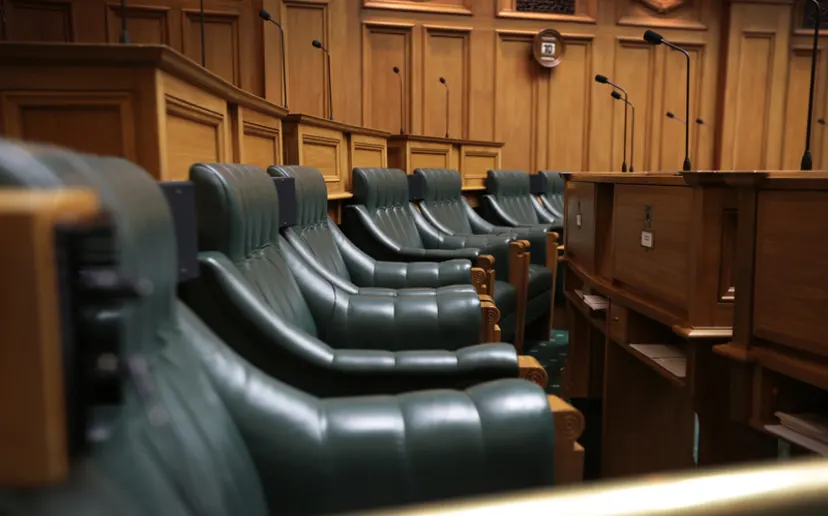
The chief executive of the Parliamentary Service is confident there will be enough room to accommodate the increased number of MPs and their staff coming into Parliament.
On current numbers, up to 131 MPs could be sitting in the Chamber following the election, brought on by a record overhang result.
Clerk of the House of Representatives Dr David Wilson told the Spinoff that currently the debating chamber had enough chairs to seat 124 MPs – including the Speaker of the House – and work was being done to accommodate more by altering the seating arrangement.
In a statement, Parliamentary Service chief executive Rafael Gonzalez-Montero said planning for a larger Parliament had been going for “some time”.
“Now that the election results have confirmed an increase to the number of members we are looking at several options.
“We are confident we will be able to accommodate all members within the Chamber.”
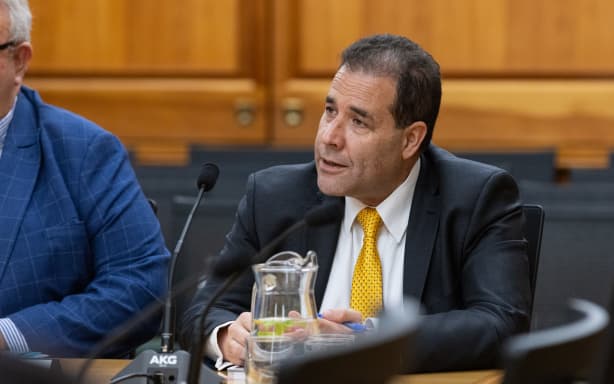
VNP / Phil Smith
Gonzalez-Montero said office accommodation for members and their staff would be “stretched” for a short time, but the new Members’ Building was only a few months away from “practical completion”.
That building – located behind Parliament – was due to be ready to occupy in April next year and had capacity to accommodate around 30 backbench MPs.
“All members should be in fit-for-purpose accommodation from that point,” Gonzalez-Montero said.
Following the 2023 election, 123 MPs sat in the Chamber – a record number at the time. That decreased to 122 following the resignation of National MP Judith Collins.
Collins held the seat of Papakura and stepped down in May and Parliament voted against holding a by-election because it was too close to the election.
The election result also meant high-ranking National Party MPs like Chris Bishop, Paul Goldsmith, Nicola Willis and Gerry Brownlee – Speaker of the House and an MP for 30 years – would likely not make it back into Parliament.
Only resigning or retiring MPs were permitted to give a valedictory speech meaning none of them would get the chance to give a valedictory statement.
Asked if their would be special allowances for valedictories, Wilson said in a statement that normally only MPs were allowed to speak in the House but the House could suspend its own rules or temporarily alter them.
“It could do so to allow former members to address the House.”
Wilson said no such arrangements could be made until the next Parliament opened and members sworn in.
rnz


Police say person who fired gun at officers still at large

New Zealand sides named for RLWC finals

Parliamentary Service working on extra chairs and offices for increased number of MPs


-

 Latest News2 months ago
‘Chilling’: Business groups speak out against National’s supermarket break-up plan
-

 NZ News2 months ago
Tom Phillips report: The missed opportunities to find the children
-

 Politics2 months ago
National vows to try to split Pak’nSave and New World
-

 Latest News2 months ago
Cars bearing Chinese police markings stir unease in Auckland
-

 Fiji News2 months ago
Plans to have new Constitution by Dec 24th 2026
-

 NZ News2 months ago
Cop who stole $68,000 can now be named as champion Muay Thai fighter Haimona Tamati-Te Paki
-

 Politics2 months ago
MBIE confirms botched biometric projects costs blown out to $50.7 million
-

 Latest News2 months ago
Five Karangahape Road venues lose their liquor licences after police intervention