

Latest News
Daylight saving: When it starts, why we observe it and how to change the time on your phone

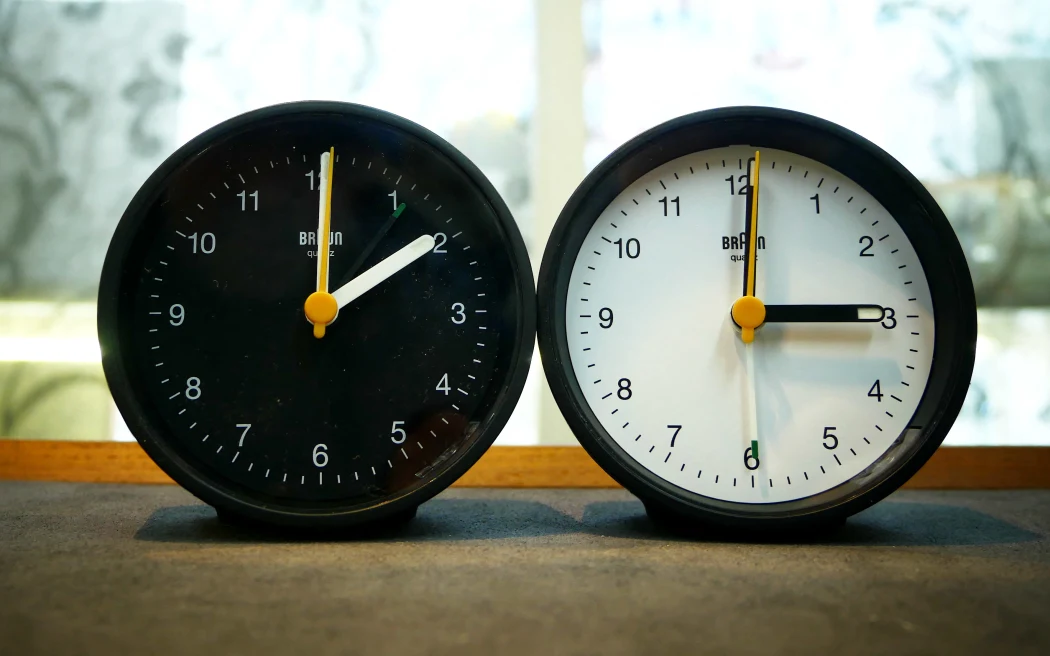
Get ready to spring into summer; daylight saving begins this month which will mean we lose an hour of sleep late September – but the days will be warmer and brighter.
So when do the clocks switch over? Why do we observe daylight saving? And how do you check the time on your phone is accurate? Here’s everything you need to know.
When does daylight saving start in New Zealand?
Clocks will go forward one hour at 2am on Sunday 29 September.
Do the clocks go forward or back?
Spring into summer!
Clocks go forward for summer, from 2am to 3am. That means you’ll lose an hour’s sleep and it will be darker when you wake up in the morning.
It also means the sun will go down an hour later, allowing extra extra time in the evening for those summer BBQs.
How do I change the time on my phone?
You probably won’t need to, because most smart phones will adjust to time zones automatically. Here’s how to check if your smartphone does that:
Android: Go into the clock app, tap more and then go into settings. Then go into change date and time, select set time zone automatically and then select use location to set time zone.
iPhone: Open settings, select general, to go date & time and make sure set automatically is turned on
Samsung: Open settings, go to general management, select date and time and then make sure automatic date and time is turned on. This should mean your phone will automatically reflect the time depending on where you are.

Photo: COLLANGES / BSIP / BSIP via AFP
Why do we have daylight saving?
Because the Earth is on a tilt (of about 23 degrees, for those curious), we are exposed to more sun during summer and less during winter.
That means the days are longer during the warmer months and shorter in the colder months.
Daylight saving is intended to make the most of those long daylight hours. It means an extra hour of light on summer evenings, rather than super early in the mornings when hardly anyone is awake to enjoy it.
How long have we been doing this?
New Zealand first observed daylight saving in 1927.
However, the dates that clocks went forward and back, and the amount of time they were changed, varied over the following years.
In 1941, daylight saving was extended year-round under emergency regulations to help save energy during World War II.
Five years later, daylight saving time (or summer time as it was then known) was adopted as standard time, effectively discontinuing daylight saving.
In 1975, daylight saving was introduced again.
It was extended to its current dates – from the last Sunday in September to the first Sunday in April – in 2007.
When will daylight saving time end?
Daylight saving time ends every year at 3am on the first Sunday in April.
That means it ends in 2025 at 3am on Sunday 6 April.

Daylight saving is intended to make the most of those long daylight hours. Photo: Unsplash
Do other countries observe daylight saving?
They do, but they’re in the minority. About two thirds of the world’s countries do not change their clocks throughout the year, according to Pew Research.
The practice is most popular in Europe, where 37 out of 44 countries observe daylight saving, and it’s also observed in parts of North America, Latin America and Australia.
Egypt is the only African nation with daylight saving after bringing it back in 2023.
Countries close to the equator do not usually change their clocks as the length of their days does not vary enough throughout the year to justify it.
What if I’m working when the time changes?
The rules around getting paid for working during daylight saving time are set out in the Time Act 1974.
It says that if you’re working when clocks go back an hour, you are entitled to be paid for that extra hour.
For example, if your shift started at 10pm and finishes at 6am, you will have actually worked nine hours and must be paid for nine hours of work.
If you’re working on 29 September when the clocks go forward, you are still entitled to be paid for your normal hours. In this instance, a 10pm-6am shift will only mean seven hours of work, but you must be paid for eight.
I’ve changed the clock on my microwave – what next?
Daylight saving is a good time to check the batteries on your smoke alarm by pushing the test button to sound the alarm.
Check the alarm’s expiry date too – most last a maximum of 10 years – and give the cover a clean to avoid false alarms from dust buildup.
~RNZ



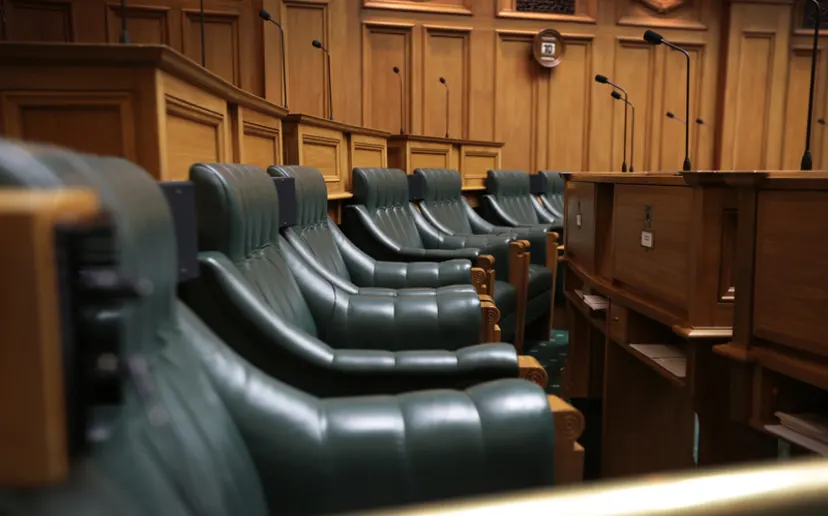
The chief executive of the Parliamentary Service is confident there will be enough room to accommodate the increased number of MPs and their staff coming into Parliament.
On current numbers, up to 131 MPs could be sitting in the Chamber following the election, brought on by a record overhang result.
Clerk of the House of Representatives Dr David Wilson told the Spinoff that currently the debating chamber had enough chairs to seat 124 MPs – including the Speaker of the House – and work was being done to accommodate more by altering the seating arrangement.
In a statement, Parliamentary Service chief executive Rafael Gonzalez-Montero said planning for a larger Parliament had been going for “some time”.
“Now that the election results have confirmed an increase to the number of members we are looking at several options.
“We are confident we will be able to accommodate all members within the Chamber.”
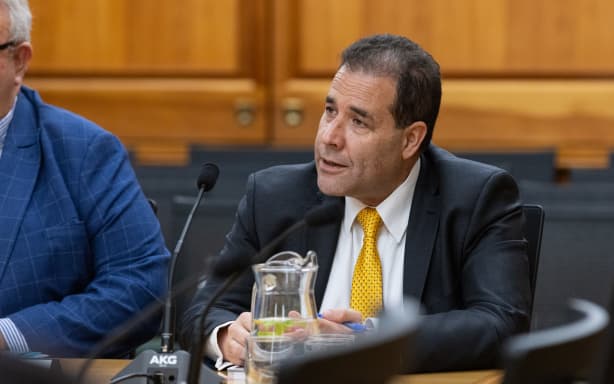
VNP / Phil Smith
Gonzalez-Montero said office accommodation for members and their staff would be “stretched” for a short time, but the new Members’ Building was only a few months away from “practical completion”.
That building – located behind Parliament – was due to be ready to occupy in April next year and had capacity to accommodate around 30 backbench MPs.
“All members should be in fit-for-purpose accommodation from that point,” Gonzalez-Montero said.
Following the 2023 election, 123 MPs sat in the Chamber – a record number at the time. That decreased to 122 following the resignation of National MP Judith Collins.
Collins held the seat of Papakura and stepped down in May and Parliament voted against holding a by-election because it was too close to the election.
The election result also meant high-ranking National Party MPs like Chris Bishop, Paul Goldsmith, Nicola Willis and Gerry Brownlee – Speaker of the House and an MP for 30 years – would likely not make it back into Parliament.
Only resigning or retiring MPs were permitted to give a valedictory speech meaning none of them would get the chance to give a valedictory statement.
Asked if their would be special allowances for valedictories, Wilson said in a statement that normally only MPs were allowed to speak in the House but the House could suspend its own rules or temporarily alter them.
“It could do so to allow former members to address the House.”
Wilson said no such arrangements could be made until the next Parliament opened and members sworn in.
rnz


Police say person who fired gun at officers still at large

New Zealand sides named for RLWC finals

Parliamentary Service working on extra chairs and offices for increased number of MPs


-

 Latest News2 months ago
‘Chilling’: Business groups speak out against National’s supermarket break-up plan
-

 NZ News2 months ago
Tom Phillips report: The missed opportunities to find the children
-

 Latest News2 months ago
Cars bearing Chinese police markings stir unease in Auckland
-

 Politics2 months ago
National vows to try to split Pak’nSave and New World
-

 Fiji News2 months ago
Plans to have new Constitution by Dec 24th 2026
-

 Politics2 months ago
MBIE confirms botched biometric projects costs blown out to $50.7 million
-

 NZ News2 months ago
Cop who stole $68,000 can now be named as champion Muay Thai fighter Haimona Tamati-Te Paki
-

 Latest News2 months ago
Five Karangahape Road venues lose their liquor licences after police intervention