

Breaking News
Patient faces 14 hour roundtrip to doctor as Kaitāia’s GP shortage bites

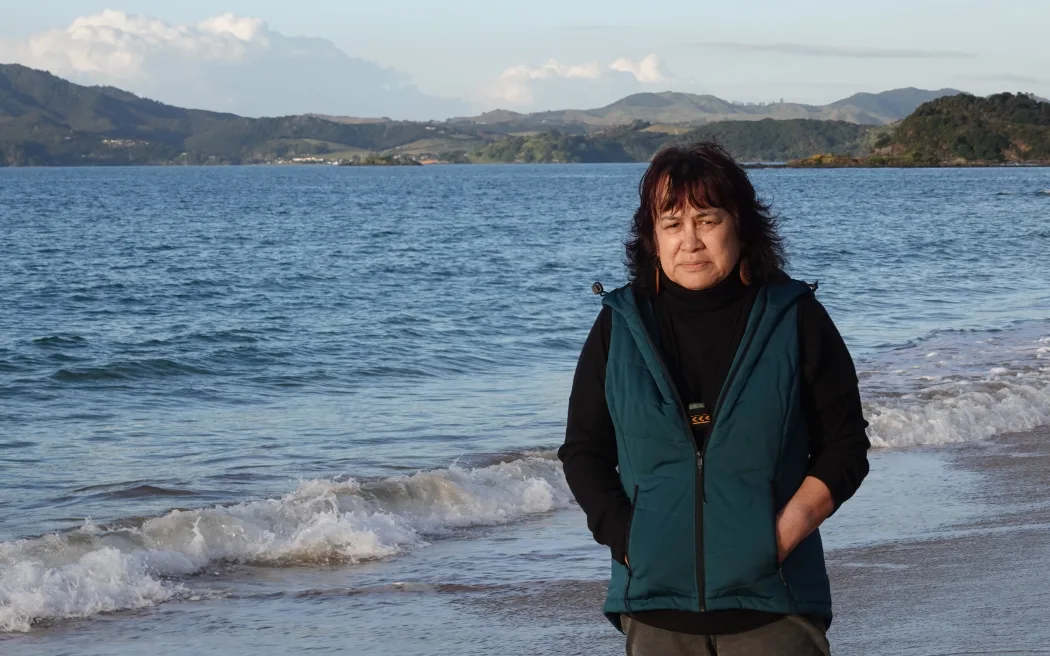
Kaitāia residents are being forced to drive as far as Auckland – and in one case all the way to Tokoroa – to see a doctor amid the town’s acute GP shortage.
Kaitāia’s GP clinics stopped enrolling new patients years ago, which means people moving to the top of the Far North have to stay registered in their former home towns – or try their luck registering elsewhere in Northland.
Tangipo Ryder returned home to family land in Hihi, in Doubtless Bay east of Kaitāia, just over a year ago.
She was working full-time but a serious health condition meant she needed to be enrolled with a doctor and have regular check-ups.
“I’ve made every attempt to get registered with a medical centre and get a GP, and it’s been very difficult. It’s just not happening. I’m really concerned, because I have health issues that need to be addressed. So I find that very, very difficult.”
He was able to send her prescriptions to a pharmacy in Doubtless Bay, but a face-to-face visit meant a drive of about seven hours each way.
Ryder said she was also concerned for others in the Far North, where hardship and poor health were common.
“I think there’s going to be a lot of risk to people’s lives. For me, it’s been a year, but I know for others, it’s been a lot longer.”
Unfortunately, Ryder’s situation is far from unique.
Thousands without a registered GP
A study carried out for Kaitāia’s ANT Trust found about 3500 people did not have a GP, or were registered with a clinic elsewhere in the country.
RNZ has spoken to people living in the Kaitāia area who are enrolled with doctors in Whangārei, Dargaville, Kāeo, Kerikeri, Auckland, and even Westport.

Some residents of Kaitāia, in the Far North, are forced to drive five hours to Auckland to see a doctor. Photo: Peter de Graaf/RNZ
Sally and her husband Peter, who did not want their surname used, were until recently registered at a clinic three hours away – despite Peter’s diabetes and a complex, life-threatening health condition.
“We now have a GP in Kaitāia, but only because both of us ended up in hospital and were adopted by different medical practices through the emergency department. Our daughter’s moved in with us, but she and her two children are still registered in Dargaville because there isn’t anywhere up here,” Sally said.
While her husband was now enrolled in town, every six months he had a new GP – always a locum, or short-term doctor, from overseas.
“So there’s no continuity of care. It’s really difficult.”
In Pamapuria, south of Kaitāia, Deirdre Ahu said she was desperate to register her mokopuna, a one-year-old and a newborn.
If they fell ill, all she could do was take them to the hospital’s emergency department, or try home remedies.
“That’s put a lot of strain on the family. We’re having to dash into A&E and sit there for four to six hours, sometimes even being turned away and told to come back the next morning. You just can’t get in to see a doctor or anything.”
Ahu believed Kaitāia’s distance from the main centres meant it was out of sight, out of mind.
“It feels like Kaitāia is just a dot on a map. We don’t really matter to anyone. We’re up here in the Far North. It’s okay. It’s pushed away. It’s hidden right up the top,” she said.
GP shortage not new
The biggest medical practice in the area is Te Hiku Hauora, which has 12,000 registered patients and clinics in Kaitāia and Cooper’s Beach.
Medical and dental general manager Cheryl Britton said the GP shortage was not new, and not limited to Northland or even to New Zealand.
Studies published decades ago had warned about the country’s ageing health workforce, but little had been done – apart from some initiatives such as a voluntary bonding scheme and increased medical school intake.
Of Te Hiku Hauora’s nine permanent GPs, six were over retirement age, she said.
“So this is certainly not a new problem, although everybody thinks it is. We’ve known about it for a long time. But there haven’t really been any active steps to solve it,” Britton said.

Te Whare Oranga is a nurse-led clinic aiming to fill a gap amid Kaitāia’s primary healthcare crisis. Photo: Peter de Graaf/RNZ
Kaitāia also faced the extra challenges of recruiting staff in a high-needs, rural area, where doctors did not have access to resources or equipment – such as a CT scanner or even five-day-a-week ultrasound scanning – available to their colleagues in the main centres.
Single doctors could be reluctant to move to the Far North because of the isolation, and those with families could struggle with a lack of work for their partners or limited educational opportunities for their children.
“It’s that whole wraparound package that needs to be attractive for a person to choose to come here, when they can go anywhere in the world.”
Britton said the clinic was often asked to start signing up new patients again.
“People say, ‘Why don’t you just open your books to everyone?’ Sure, any practice can open their books. The issue is the ability to service the patients that you enrol. And I feel it would be unethical to continue to sign patients up when we don’t have the clinical capacity to provide even a basic service, let alone really good healthcare that’s safe and ensures that we’re actively looking after them.”
Options other than a doctor
One of the attempts to ease Kaitāia’s healthcare crisis has come from the ANT [Aupōuri Ngāti Kahu Te Rarawa] Trust, which has previously focussed on social services.
Chief executive Hone Harawira, a former Te Tai Tokerau MP, said the need became apparent during the Covid pandemic, when people started turning to the trust for testing and vaccinations.
“During that time we found out a lot of our people didn’t even have a doctor. We got somebody to do a proper study and they came back with a figure of 3500 people in Muriwhenua alone, that’s just in the very Far North, who didn’t have a doctor, or their doctor was in Auckland, or Whangārei or Hamilton or Wellington. It was ridiculous. So we decided we wanted to do something about it.”
Just six months later, in July 2023, the trust opened Te Whare Oranga, a Māori nurse-led clinic with support from a virtual GP service.
Harawira said the clinic had signed up 1000 of the 3500 people who had been without primary healthcare.
“We have to stop people thinking they have to see a doctor every time they’re sick. They just need to get quality medical advice, and they can get that from good nurses and from health assistants, people who can advise them intelligently,” he said.
Harawira said it was vital that everyone could access health care, especially in an area at the bottom of the socio-economic ladder.
“People up here don’t have a lot of money, they don’t have a lot of employment opportunities. We just want to try to make sure that at least they can be healthy and start making healthy the decisions for themselves and their whānau.”


The Trump administration denounced CNN on Thursday (local time) for airing a portion of the new Iranian supreme leader’s public statement, the second time in three days the network has been targeted for reporting on how the regime is responding to the American attacks.
The attack illustrated the care news outlets must take in reporting during wartime, and the responsibilities of American journalists to report the perspective of countries its government views as enemies. It also exposed inconsistencies.
The message of Supreme Leader Ayatollah Mojtaba Khamenei during his first public statement since he succeeded his father, who was killed in an Israeli airstrike, was widely available elsewhere.
The White House said on social media that “fake news CNN just aired four straight minutes of uninterrupted Iranian state TV, run by the same psychotic and murderous regime that prided itself on brutally slaughtering Americans for 47 years”.
Earlier CNN interview criticised by Trump’s communications leader
Two days earlier, White House communications director Steven Cheung took issue with CNN anchor Erin Burnett’s interview with Hossein Mousavian, a former Iranian nuclear negotiator. Burnett asked Mousavian what he had been hearing about the Iranian government’s interest in having talks with the United States. There wasn’t much, he said.
“Ever notice how CNN just regurgitates quotes and unverified information from Iranian terrorists?” Cheung wrote on X.
“Total disgrace. They have become the murderous Iranian Regime’s version of Pravda,” he said, referring to the official newspaper of the former Soviet Union.
CNN did not address Cheung’s statement but did respond to the White House attack on Thursday. It noted that CNN, Sky News and Al Jazeera also showed portions of the ayatollah’s statement live.
“The world is watching with anticipation which direction this war will take,” CNN said. “Purported remarks from Iran’s new supreme leader are a critical component in helping audiences understand where this conflict is heading and were aired for their obvious news value.”
Other news outlets, including The Associated Press, sent out alerts on what Khamenei said. His vow to keep up attacks on other Arab countries in the region and plans to choke off the world’s oil supply were headlines.

The New York Times led its website with a story on the speech in its immediate aftermath, later writing that the speech “was an early indication of how the new supreme leader would approach the war, as well as how he would lead the country”.
CNN has long been a favoured target of President Donald Trump, dating back to his first term. It’s a particularly vulnerable time for the network with Paramount Global’s agreement to purchase CNN’s parent company, Warner Bros Discovery, raising questions about its future editorial independence.
CNN showed a news anchor reading a portion of Khameini’s remarks in Farsi, with an English translation. It did not air them in full. After the speech, correspondent Nick Paton Walsh gave a debrief to anchor Kate Bolduan, noting how the non-appearance of the leader — reportedly injured in an air attack — was as important as what he said.
“We were waiting to see the face of the man to have proof of his health and survival,” Walsh said, “and they’ve not met that moment. Instead, a handwritten message, it seems, that mostly reiterates things we kind of already knew.”
A social media message board for Iran’s point of view
The Tech Transparency Project has reported that several Iranian leaders and institutions maintain verified accounts on X, formerly Twitter, owned by Trump ally Elon Musk. CNBC said Thursday that Khamenei has one of them, and an X account with his portrait posted the text of his remarks, available in Farsi and in an English translation.
Even though Khamenei’s father is dead, an account with his portrait was active on Thursday, mainly reposting messages from his son. “The revenge we have in mind is not just because of the martyrdom of the illustrious Leader of the Revolution,” read one message posted Thursday. “Every member of the nation martyred by the enemy is a separate case that demands we seek revenge.”
X is officially blocked in Iran, although many use a virtual private network to bypass restrictions. A message sent to the platform on Thursday was not immediately returned.
There’s a long history of journalists seeking interviews with world leaders, even when they are regarded as enemies of the United States. Most notable was 60 Minutes correspondent Mike Wallace’s interview with Iran’s Ayatollah Ruhollah Khomeini in 1979, when that country was holding Americans hostage.
Thursday’s remarks by Iran’s new supreme leader were absolutely newsworthy and legitimate for CNN to air them, said Jane Ferguson, a veteran international correspondent and founder of the journalism platform Noosphere. It’s not the job of government leaders to pick apart what CNN is reporting, she said.
“We’ve always faced this,” she said, about when reporters interview leaders or other figures hostile to American interests. “This has been a bit of low-hanging fruit for a while.”
Historian Douglas Brinkley of Rice University said that it’s unfair for CNN to be singled out in this instance. He, too, believes it is newsworthy to learn what leaders of an adversary are thinking, but it’s important to make sure that journalists are careful.
“You have to be leery of being used as a propaganda tool by the Iranian regime,” he said. “On the other hand, knowing what the enemy is saying and looking for a sign of a peace offering or a nuance is important … It’s a difficult balance.”


Police say person who fired gun at officers still at large

New Zealand sides named for RLWC finals

Parliamentary Service working on extra chairs and offices for increased number of MPs


-

 Latest News2 months ago
‘Chilling’: Business groups speak out against National’s supermarket break-up plan
-

 NZ News2 months ago
Tom Phillips report: The missed opportunities to find the children
-

 Latest News2 months ago
Cars bearing Chinese police markings stir unease in Auckland
-

 Politics2 months ago
National vows to try to split Pak’nSave and New World
-

 Fiji News2 months ago
Plans to have new Constitution by Dec 24th 2026
-

 Politics2 months ago
MBIE confirms botched biometric projects costs blown out to $50.7 million
-

 NZ News2 months ago
Cop who stole $68,000 can now be named as champion Muay Thai fighter Haimona Tamati-Te Paki
-

 Latest News2 months ago
Five Karangahape Road venues lose their liquor licences after police intervention