

Latest News
Free school lunches: Year 7 students and above to shift to alternative model

Primary students already benefiting from free school lunches will continue to do so in the same way for the next two-and-a-half years, while older students will shift to an alternative model.
Associate education minister David Seymour has announced the government has found about $107 million a year in savings in the current Ka Ora, Ka Ako programme, some of which will be used to provide free morning tea and lunches to pre-schoolers.
Asked to explain how the Coalition reached $107m in savings, a spokesperson for Seymour said Labour had budgeted $323m for the school year, but the Ministry of Education forecasted the actual cost would be $342m due to food inflation and population growth.
Under the Coalition’s revised progamme it will cost $234.8 million for the 2025 school year – a saving of $107m on what the previous government’s programme was estimated to cost.
Of those savings, $4m will be repurposed to provide meals for some early childhood centres.
Until the end of this year, the school lunches programme will remain as it is for the 235,000 students in more than 1000 schools receiving it.
A new interim delivery model would kick in next year, which has temporary funding for two years, to allow time for a full redesign of the school lunch programme before any more money was dedicated.

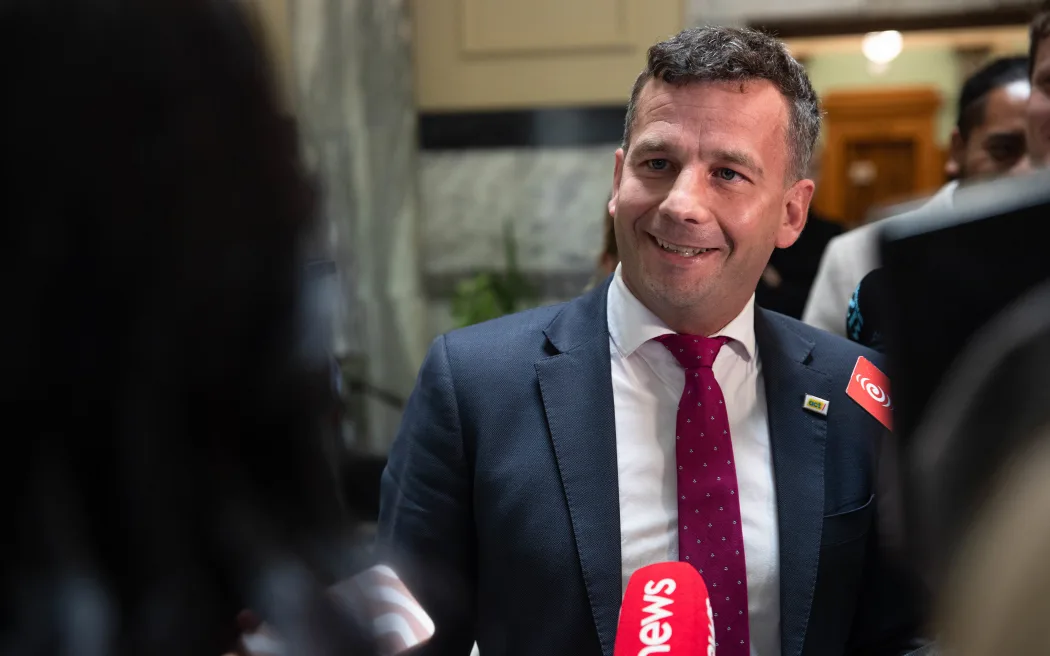
Associate Education Minister David Seymour says the changes will “significantly reduce the cost of the programme”. Photo: RNZ / Angus Dreaver
From February, up to 10,000 pre-schoolers in low-equity, not-for-profit, community-based early childhood centres would be eligible for a free morning tea and lunch five days a week at a cost of $4m.
“The first 1000 days are key to a child’s development. I am proud this government can innovate to help even more children who need it,” Seymour said.
“We are delivering on our commitment to treat taxpayers’ money with respect.”
While primary school aged students will continue from February to receive the same lunches prepared on site or delivered daily, an alternative provision model will begin for students in year 7 and above.
That programme will be bulk purchased by the government and delivered to schools, which Seymour said would “significantly reduce the cost of the programme”.
“Students will receive nutritious food that they want to eat. It will be made up of the sorts of food items thousands of mums and dads put into lunch boxes every day for their kids – forget quinoa, couscous, and hummus, it will be more like sandwiches and fruit,” Seymour said.
When asked about food items like sushi for lunches, he said,”If you don’t get that sushi’s woke, then I don’t know how to wake you up, but the key message here is that we are introducing the kinds of foods that are put in the lunchboxes of children, the other 75 percent of kids, who rely on their parents to send their lunch”.
But when questioned by a reporter about Japanese children and what is normal for them to eat, Seymour said schools would still have the ability to choose what food they ordered and decide how many lunches their school needed.

Libelle – a school food service – preps 25,000 meals a day for students around the country for the Ka Ora, Ka Ako programme. Photo: RNZ / Tom Taylor
Existing suppliers for the Ka Ora, Ka Ako programme will also be eligible to provide food for older year groups, and families who wanted to make their own lunches for their children will be able to.
An advisory group, which will have representatives from KidsCan, The Heart Foundation, Save The Children and Ryman Healthcare, will be set up by the government this year to work out the logistics and contracting for the new programmes, including nutritional value in the meals provided.
Seymour said that the government were budgeting for $3 per lunch.
“At the moment KidsCan budget $2. If you look at what big catering companies are able to to, they actually manage to do – I was sceptical myself – but they actually manage to provide very nutritious food at very low prices.”
Those composite schools that have a mixture of students from years 0 to 13 will need to operate a dual model in 2025 and 2026, whereby younger students receive the current lunch in schools programme and those in years 7 and above will get the alternative model.
Budget 2024 provides $478m of interim funding for the free lunches programme for the next two years.
“Through innovation and embracing commercial expertise, we’re delivering a better programme, saving taxpayers approximately $107 million per annum compared to how Labour funded it,” Seymour said.
“The previous government conditioned people to believe that the only way to show your love as a government is to spend more money and employ more people. We think getting improved outcomes for all New Zealanders is better and those things are not always connected.”
Students at schools receiving taxpayer-funded lunches will also continue to access the Kickstart Breakfast and Fruit in Schools programmes.
VIA RNZ



The chief executive of the Parliamentary Service is confident there will be enough room to accommodate the increased number of MPs and their staff coming into Parliament.
On current numbers, up to 131 MPs could be sitting in the Chamber following the election, brought on by a record overhang result.
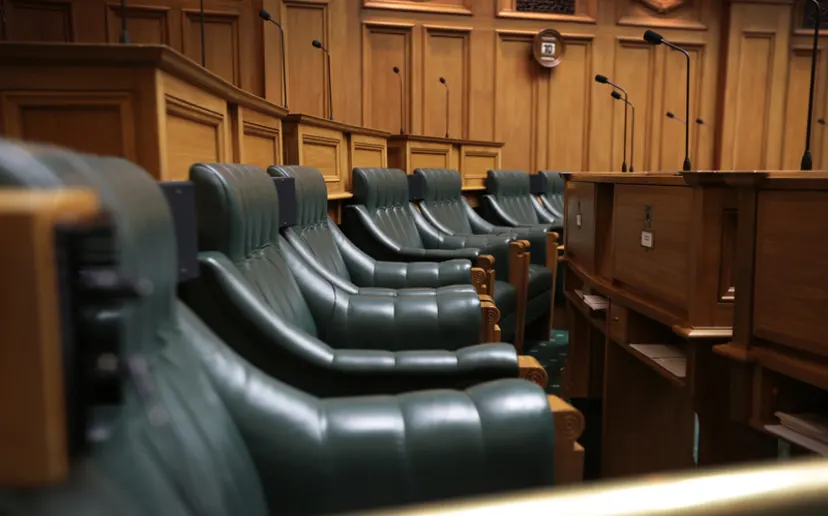
Clerk of the House of Representatives Dr David Wilson told the Spinoff that currently the debating chamber had enough chairs to seat 124 MPs – including the Speaker of the House – and work was being done to accommodate more by altering the seating arrangement.
In a statement, Parliamentary Service chief executive Rafael Gonzalez-Montero said planning for a larger Parliament had been going for “some time”.
“Now that the election results have confirmed an increase to the number of members we are looking at several options.
“We are confident we will be able to accommodate all members within the Chamber.”
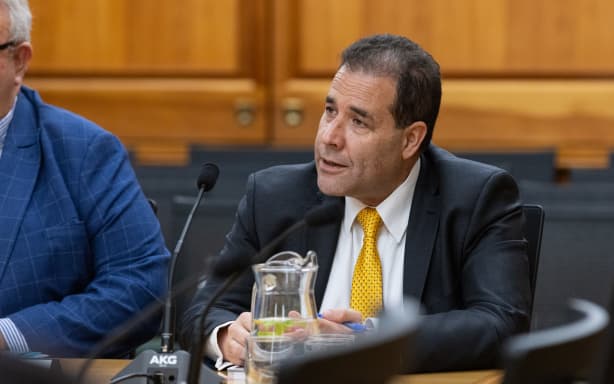
VNP / Phil Smith
Gonzalez-Montero said office accommodation for members and their staff would be “stretched” for a short time, but the new Members’ Building was only a few months away from “practical completion”.
That building – located behind Parliament – was due to be ready to occupy in April next year and had capacity to accommodate around 30 backbench MPs.
“All members should be in fit-for-purpose accommodation from that point,” Gonzalez-Montero said.
Following the 2023 election, 123 MPs sat in the Chamber – a record number at the time. That decreased to 122 following the resignation of National MP Judith Collins.
Collins held the seat of Papakura and stepped down in May and Parliament voted against holding a by-election because it was too close to the election.
The election result also meant high-ranking National Party MPs like Chris Bishop, Paul Goldsmith, Nicola Willis and Gerry Brownlee – Speaker of the House and an MP for 30 years – would likely not make it back into Parliament.
Only resigning or retiring MPs were permitted to give a valedictory speech meaning none of them would get the chance to give a valedictory statement.
Asked if their would be special allowances for valedictories, Wilson said in a statement that normally only MPs were allowed to speak in the House but the House could suspend its own rules or temporarily alter them.
“It could do so to allow former members to address the House.”
Wilson said no such arrangements could be made until the next Parliament opened and members sworn in.
rnz


Police say person who fired gun at officers still at large

New Zealand sides named for RLWC finals

Parliamentary Service working on extra chairs and offices for increased number of MPs


-

 Latest News2 months ago
‘Chilling’: Business groups speak out against National’s supermarket break-up plan
-

 NZ News2 months ago
Tom Phillips report: The missed opportunities to find the children
-

 Politics2 months ago
National vows to try to split Pak’nSave and New World
-

 Latest News2 months ago
Cars bearing Chinese police markings stir unease in Auckland
-

 Fiji News2 months ago
Plans to have new Constitution by Dec 24th 2026
-

 NZ News2 months ago
Cop who stole $68,000 can now be named as champion Muay Thai fighter Haimona Tamati-Te Paki
-

 Politics2 months ago
MBIE confirms botched biometric projects costs blown out to $50.7 million
-

 Latest News2 months ago
Five Karangahape Road venues lose their liquor licences after police intervention