

Latest News
EVs, plug-in hybrids to pay road user charges from 1 April


Owners of light electric vehicles and plug-in hybrids will have to pay road user charges from 1 April, the government has announced.
Transport Minister Simeon Brown said the vehicles would no longer be exempt in the interests of “fairness and equity”.
The change would ensure all vehicle owners contributed to the upkeep and maintenance of the country’s roading network, irrespective of the kind of car they drove.
“Petrol tax and distance-based RUC [road user charges] are paid by road users to contribute to the costs of maintaining our roads, but EVs and plug-in hybrids have been exempted from RUC,” he said.
“Transitioning EVs and plug-in hybrids to RUC is the first step in delivering on the National-ACT coalition commitment to bring all vehicles into the RUC system.”
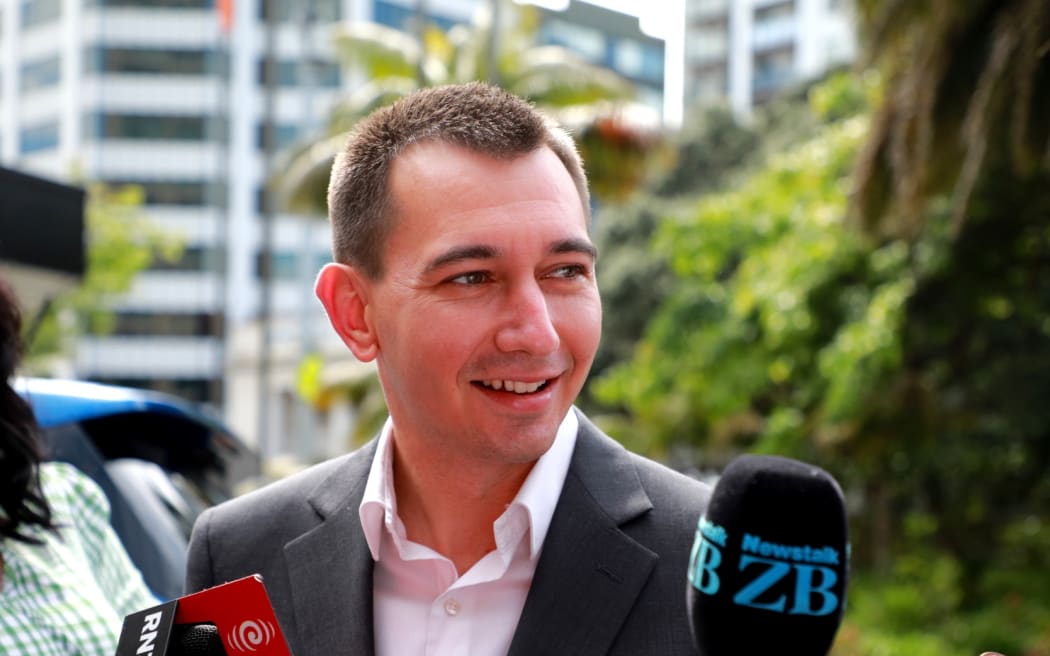
Transport Minister Simeon Brown Photo: Nick Monro / RNZ
Owners of plug-in hybrids that were powered by electricity and petrol have had to pay petrol tax, but not to the same level as petrol equivalent vehicles, Brown said.
“To ensure that plug-in hybrids avoid paying twice through both fuel excise duty and RUCs, these vehicles will pay a reduced rate RUC.”
RNZ has reported the government expects problems ahead over introducing road user charges for EVs.
A May 2023 Waka Kotahi document released to RNZ under the Official Information Act forecast “an increase of non-compliance and debt for customers entering the RUC system”.
“Current resources are set up to manage the existing RUC system,” it said. “There will not be enough resource to cope with the increase in education, engagement and enforcement needed.”
The government intends passing legislation to cover the reduced rate for plug-in hybrids before the start date.
The last National government had exempted EVs from paying road user charges to encourage their uptake, however, it was always intended the exemption would end when EVs hit around 2 percent of the light vehicle fleet and that point had been reached, Brown said.
“With the increasing uptake of EVs and plug-in hybrids being brought into the RUC system, this means that these vehicles will now be contributing towards the maintenance and upkeep of our roading system like all other road users and will support the government’s priority of building and maintaining our roading network.”
Owners of light EVs and plug-in hybrids will need to buy a RUC licence from 1 April. There will be a two-month transition period to allow time for people to get registered in the RUC system without being penalised for unpaid charges.
The New Zealand Transport Agency / Waka Kotahi will get in touch with EV and plug-in hybrid owners about the change and what it will mean for them.
The details:
- Owners of light EVs will pay $76 per 1000km, in line with equivalent diesel-powered vehicles
- Owners of plug-in hybrid vehicles will pay a reduced rate of $53 per 1000km so that they are not double taxed when paying fuel excise duty. The partial rate of $53 per 1000km assumes that on average, a plug-in hybrid will consume petrol at a rate of just under 3 litres per 100km
- Every EV and plug-in hybrid owner will receive a letter before 1 April that will explain the RUC process. The first time an EV owner buys their RUC licence they need to give their odometer reading
- Whenever a warrant of fitness is carried out, a vehicle’s odometer will be reviewed. If the odometer exceeds the RUCs purchased by the vehicle’s owner, they will be invoiced for any difference
VIA RNZ



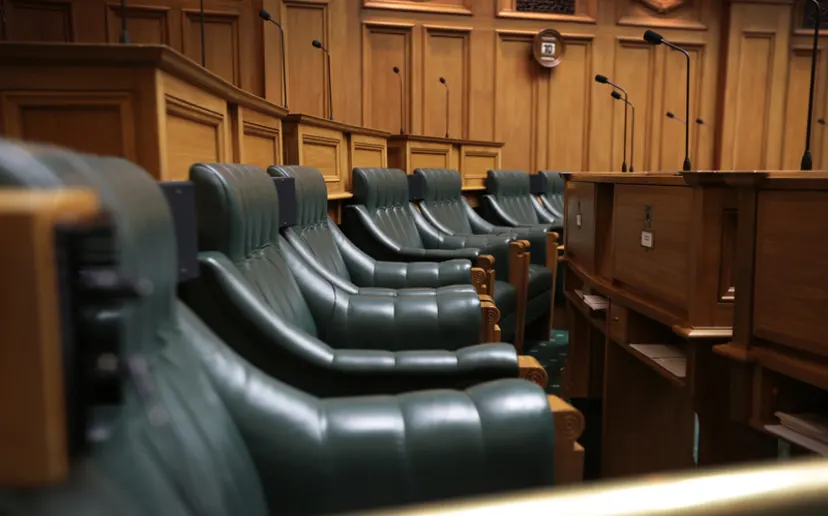
The chief executive of the Parliamentary Service is confident there will be enough room to accommodate the increased number of MPs and their staff coming into Parliament.
On current numbers, up to 131 MPs could be sitting in the Chamber following the election, brought on by a record overhang result.
Clerk of the House of Representatives Dr David Wilson told the Spinoff that currently the debating chamber had enough chairs to seat 124 MPs – including the Speaker of the House – and work was being done to accommodate more by altering the seating arrangement.
In a statement, Parliamentary Service chief executive Rafael Gonzalez-Montero said planning for a larger Parliament had been going for “some time”.
“Now that the election results have confirmed an increase to the number of members we are looking at several options.
“We are confident we will be able to accommodate all members within the Chamber.”
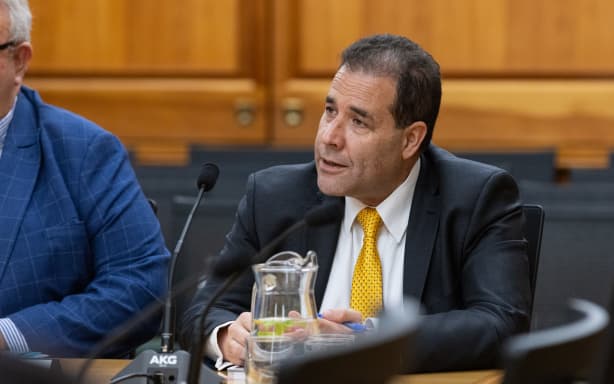
VNP / Phil Smith
Gonzalez-Montero said office accommodation for members and their staff would be “stretched” for a short time, but the new Members’ Building was only a few months away from “practical completion”.
That building – located behind Parliament – was due to be ready to occupy in April next year and had capacity to accommodate around 30 backbench MPs.
“All members should be in fit-for-purpose accommodation from that point,” Gonzalez-Montero said.
Following the 2023 election, 123 MPs sat in the Chamber – a record number at the time. That decreased to 122 following the resignation of National MP Judith Collins.
Collins held the seat of Papakura and stepped down in May and Parliament voted against holding a by-election because it was too close to the election.
The election result also meant high-ranking National Party MPs like Chris Bishop, Paul Goldsmith, Nicola Willis and Gerry Brownlee – Speaker of the House and an MP for 30 years – would likely not make it back into Parliament.
Only resigning or retiring MPs were permitted to give a valedictory speech meaning none of them would get the chance to give a valedictory statement.
Asked if their would be special allowances for valedictories, Wilson said in a statement that normally only MPs were allowed to speak in the House but the House could suspend its own rules or temporarily alter them.
“It could do so to allow former members to address the House.”
Wilson said no such arrangements could be made until the next Parliament opened and members sworn in.
rnz


Police say person who fired gun at officers still at large

New Zealand sides named for RLWC finals

Parliamentary Service working on extra chairs and offices for increased number of MPs


-

 Latest News2 months ago
‘Chilling’: Business groups speak out against National’s supermarket break-up plan
-

 NZ News2 months ago
Tom Phillips report: The missed opportunities to find the children
-

 Politics2 months ago
National vows to try to split Pak’nSave and New World
-

 Latest News2 months ago
Cars bearing Chinese police markings stir unease in Auckland
-

 Fiji News2 months ago
Plans to have new Constitution by Dec 24th 2026
-

 NZ News2 months ago
Cop who stole $68,000 can now be named as champion Muay Thai fighter Haimona Tamati-Te Paki
-

 Politics2 months ago
MBIE confirms botched biometric projects costs blown out to $50.7 million
-

 Latest News2 months ago
Five Karangahape Road venues lose their liquor licences after police intervention