

Latest News
NZ will meet first target for transport emissions cuts without EV subsidy, Simeon Brown says

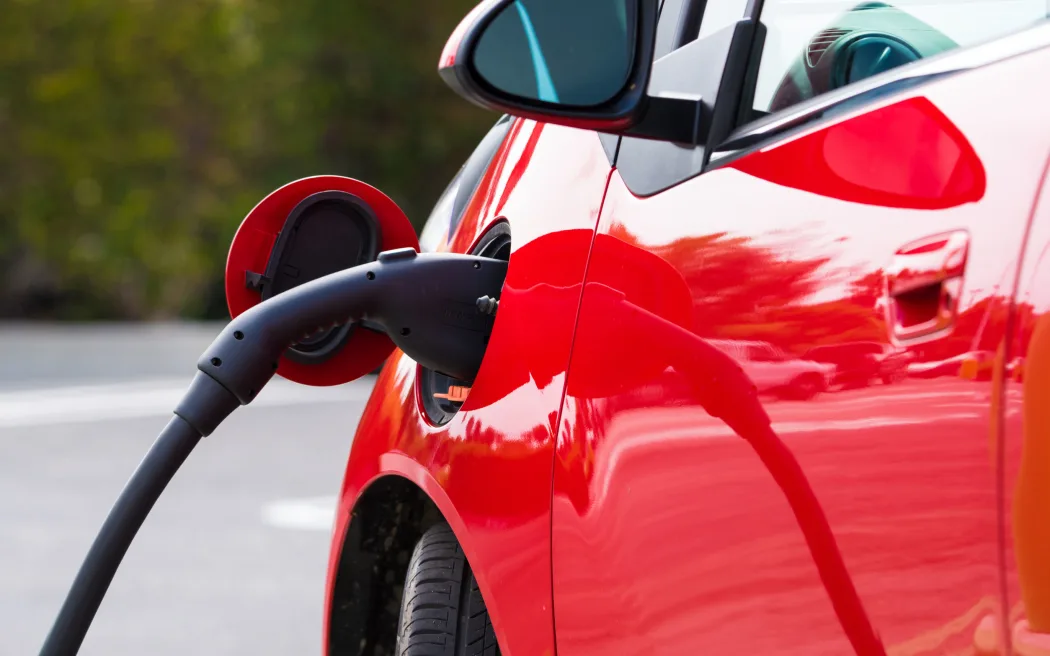
New Zealand will still meet its first target for cutting transport emissions even without government discounts for EVs, Transport Minister Simeon Brown says.
Brown has received advice on the climate impacts of the government’s call to scrap the Clean Car Discount, which he said will be publicly released this week.
The minister said the advice showed scrapping EV payments would not derail the country from meeting its first carbon budget, which runs from 2022-2025.
He did not share what the advice said would happen beyond that.
However, other reports and briefings on climate policies and targets suggest the government’s policy pivot could bite budgets after 2025, unless Cabinet comes up with substantial replacements for scrapping EV payments, delaying pricing on farm emissions, and ditching subsidies for companies switching away from coal boilers.
New Zealand has three budgets capping its planet-heating gases, running from 2022-25, 2026-2030 and 2031-2035. Each five-year period, the cuts get steeper.
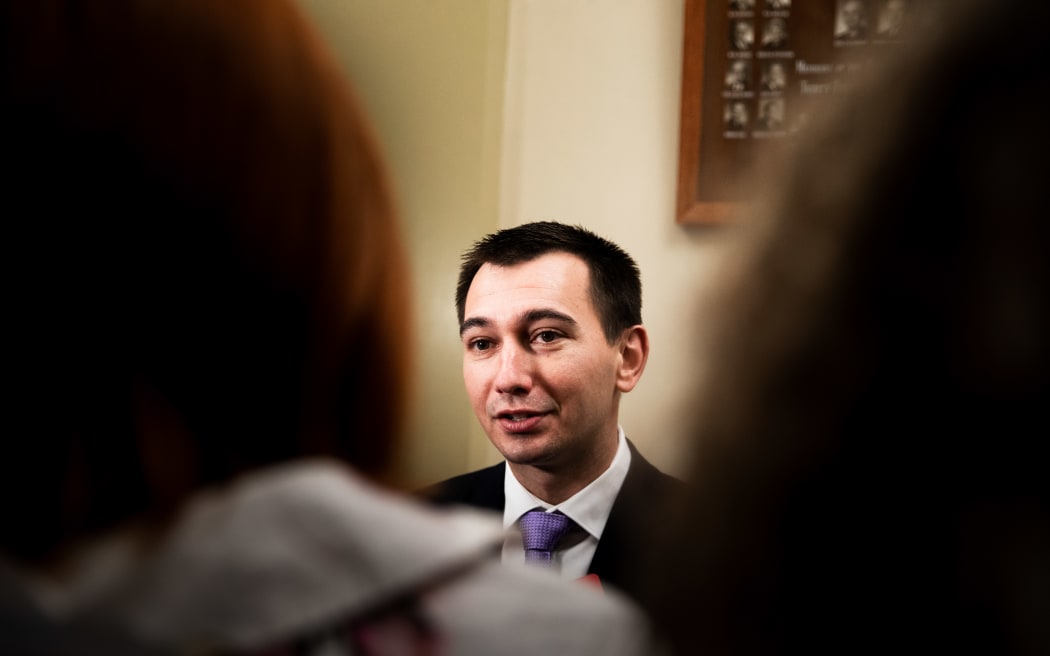
Simeon Brown has not shared the advice he was given on scrapping the subsidy for EVs. Photo: RNZ / Samuel Rillstone
How big is the climate hole?
The Climate Change Commission warned last week that seemingly small delays during the first budget could have major impacts on the second and third.
For example, it said, uptake of EVs this decade could make or break New Zealand’s ability to meet its 2030-2035 transport targets.
Transport is not the only area where today’s decisions can snowball.
In New Zealand’s biennial emissions report, officials made a forward-looking snapshot of how much they thought 2022 policies would impact future emissions.
In 2025, policies already in place in 2022 would be saving the country 4.2 million tonnes of emissions a year, they estimated.
By 2030, the impact of those same policies would more than double to 10.1m tonnes – without changing said policies.
Climate policies can work a little like compounding interest on savings, growing in impact over time.
The open question is how big a gap the government has opened that it needs to fill during 2024.
The Climate Commission will release a stocktake of progress but not until mid next year.
In the meantime, the government itself has access to official briefings that will give it a steer. Officials declined RNZ’s request to publicly release these under official information laws this side of Christmas.
Some clues, however, are available that give a hint of the task ahead.
Why it matters

File pic Photo: 123RF
New Zealand’s first two emissions budgets – for 2022-2025 and 2026-2030 – are building blocks for meeting the country’s international climate pledge, under the Paris Agreement.
Failing to meet the budgets means paying more for offshore credits, while beating them would save on spending money overseas.
Here is why.
Under the Paris Agreement the government has promised to shave around 150 million tonnes off normal greenhouse gas levels from 2021-2030 (roughly equal to culling two years’ worth of emissions).
Paris requires countries to make their best efforts, compatible with keeping the planet under 1.5C-2C.
New Zealand’s target was set in the full knowledge there was almost no chance of making what the government of the day considered a respectable contribution to the climate effort solely by making savings within New Zealand.
Instead, the plan was to make around 50 million tonnes of savings here – the most the commission thought realistic.
The other 100m tonnes were to be purchased from overseas, likely from Asia-Pacific countries, in the form of renewable energy or other projects. That will cost a minimum $3 billion from the public purse (but likely less than making the carbon savings here).
Those proportions are not set in stone, however.
Cabinet papers from July show the previous government wanted to try to beat the next budget, so it could spend less overseas. Cabinet asked government departments to prepare options for undershooting the 2026-2030 emissions cap using activities such as planting native forests. But those plans were in their infancy, and subject to feasibility checks.
New Climate Change Minister Simon Watts also made upbeat comments before the election about doing more inside New Zealand and spending less offshore.
As things stand, though, even meeting the budgets is looking difficult, let alone beating them.
rnz



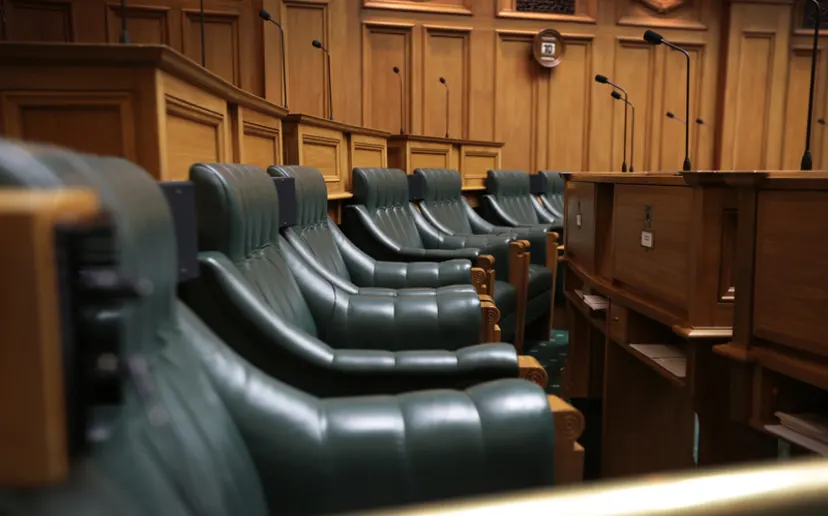
The chief executive of the Parliamentary Service is confident there will be enough room to accommodate the increased number of MPs and their staff coming into Parliament.
On current numbers, up to 131 MPs could be sitting in the Chamber following the election, brought on by a record overhang result.
Clerk of the House of Representatives Dr David Wilson told the Spinoff that currently the debating chamber had enough chairs to seat 124 MPs – including the Speaker of the House – and work was being done to accommodate more by altering the seating arrangement.
In a statement, Parliamentary Service chief executive Rafael Gonzalez-Montero said planning for a larger Parliament had been going for “some time”.
“Now that the election results have confirmed an increase to the number of members we are looking at several options.
“We are confident we will be able to accommodate all members within the Chamber.”
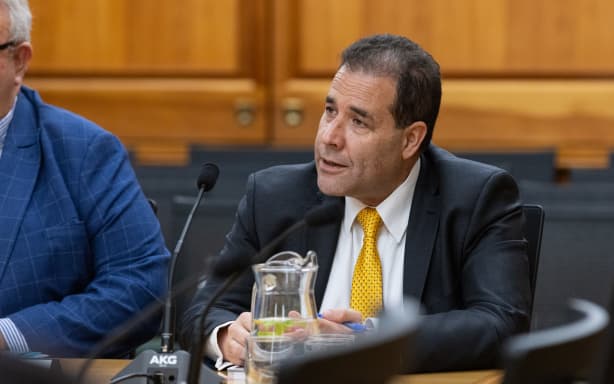
VNP / Phil Smith
Gonzalez-Montero said office accommodation for members and their staff would be “stretched” for a short time, but the new Members’ Building was only a few months away from “practical completion”.
That building – located behind Parliament – was due to be ready to occupy in April next year and had capacity to accommodate around 30 backbench MPs.
“All members should be in fit-for-purpose accommodation from that point,” Gonzalez-Montero said.
Following the 2023 election, 123 MPs sat in the Chamber – a record number at the time. That decreased to 122 following the resignation of National MP Judith Collins.
Collins held the seat of Papakura and stepped down in May and Parliament voted against holding a by-election because it was too close to the election.
The election result also meant high-ranking National Party MPs like Chris Bishop, Paul Goldsmith, Nicola Willis and Gerry Brownlee – Speaker of the House and an MP for 30 years – would likely not make it back into Parliament.
Only resigning or retiring MPs were permitted to give a valedictory speech meaning none of them would get the chance to give a valedictory statement.
Asked if their would be special allowances for valedictories, Wilson said in a statement that normally only MPs were allowed to speak in the House but the House could suspend its own rules or temporarily alter them.
“It could do so to allow former members to address the House.”
Wilson said no such arrangements could be made until the next Parliament opened and members sworn in.
rnz


Police say person who fired gun at officers still at large

New Zealand sides named for RLWC finals

Parliamentary Service working on extra chairs and offices for increased number of MPs


-

 Latest News2 months ago
‘Chilling’: Business groups speak out against National’s supermarket break-up plan
-

 NZ News2 months ago
Tom Phillips report: The missed opportunities to find the children
-

 Latest News2 months ago
Cars bearing Chinese police markings stir unease in Auckland
-

 Politics2 months ago
National vows to try to split Pak’nSave and New World
-

 Fiji News2 months ago
Plans to have new Constitution by Dec 24th 2026
-

 NZ News2 months ago
Cop who stole $68,000 can now be named as champion Muay Thai fighter Haimona Tamati-Te Paki
-

 Politics2 months ago
MBIE confirms botched biometric projects costs blown out to $50.7 million
-

 Latest News2 months ago
Five Karangahape Road venues lose their liquor licences after police intervention