

Latest News
Mt Messenger Bypass: Transport Minister unhappy with annual $750k pest control bill

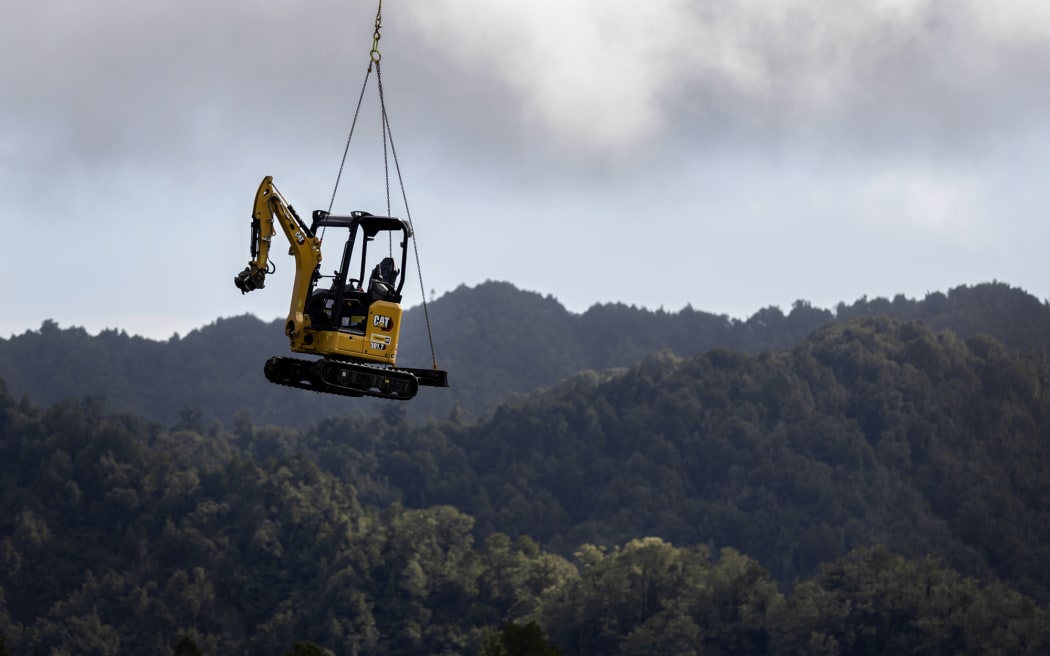
Transport Minister Simeon Brown is concerned about the significant cost of a pest control programme included in consent conditions for the Mt Messenger Bypass / Te Ara o Te Ata project in Taranaki.
The New Zealand Transport Agency / Waka Kotahi is committed to undertaking pest control over 3650 hectares of native bush – in perpetuity – as part of the $280 million project on State Highway 3.
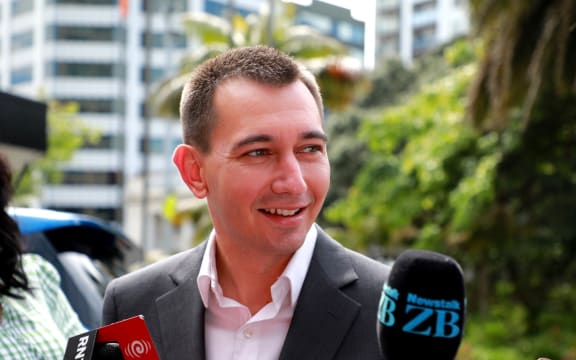
Simeon Brown Photo: Nick Monro / RNZ
The trapping programme has been estimated to cost more than $750,000 a year.
Brown was worried about the non-roading costs being imposed on the transport agency.
“I am concerned about the significant cost that is being applied as part of this project. It does have a significant effect on taxpayers.”
He would rather Waka Kotahi could concentrate on its core business.
“My interest is that they can be focused on their sole job which is building roads. Ultimately, I want to see NZTA be able to build roads as efficiently as possible so New Zealanders can get where they are going quickly and safely.
“At the moment there is significant cost being imposed on them for a variety of reasons.”
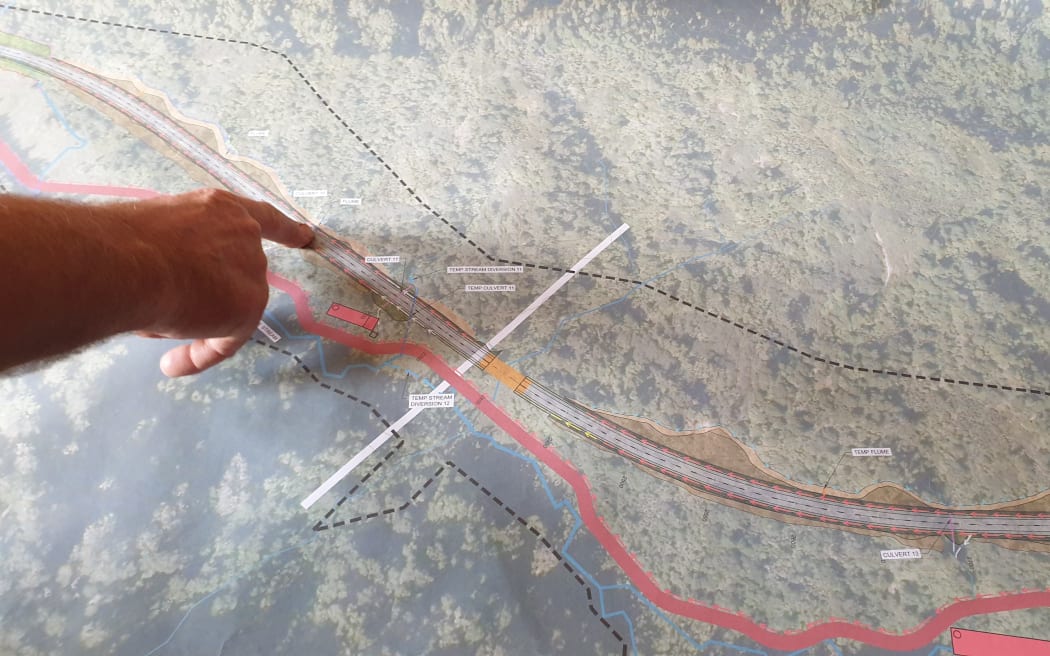
A sketch of the route of the Mt Messenger Bypass. Photo: RNZ / Robin Martin
Brown did not want to revoke consents already granted, but signalled the government would be looking at consenting processes as part of its review of the Resource Management Act.
NZTA said the pest control programme at Mt Messenger – which encapsulated Ngāti Tama land and conservation estate – was a condition of its consents.
“In this instance, it is a condition of consent which has been agreed with the support of landowners, DOC [Department of Conservation] and Ngāti Tama, that requires Waka Kotahi NZTA to fund pest management over 3650 hectares of land around the project area.
“One of the most important objectives during the construction process is to tread lightly on the land and leave the wider project area in much better condition for future generations.”
The agency said pest management costs were not included in the project budget, but were being paid via the State Highway Maintenance and Operations budget which was funded through the National Land Transport Programme.
“It’s important to note the NLTP fund covers costs associated with the project, including those to meet consent conditions, and other works, such as pest management.”
An opponent of the bypass route, Marie Gibbs, said the money should be being spent elsewhere.
“It’s coming out of the road maintenance budget money that has been appropriated by Parliament to be spent on potholes, clearing slips and emptying rubbish bins and things like that. Instead, it’s being spent on pest control over a large tract of land that is not even part of the road reserve.”
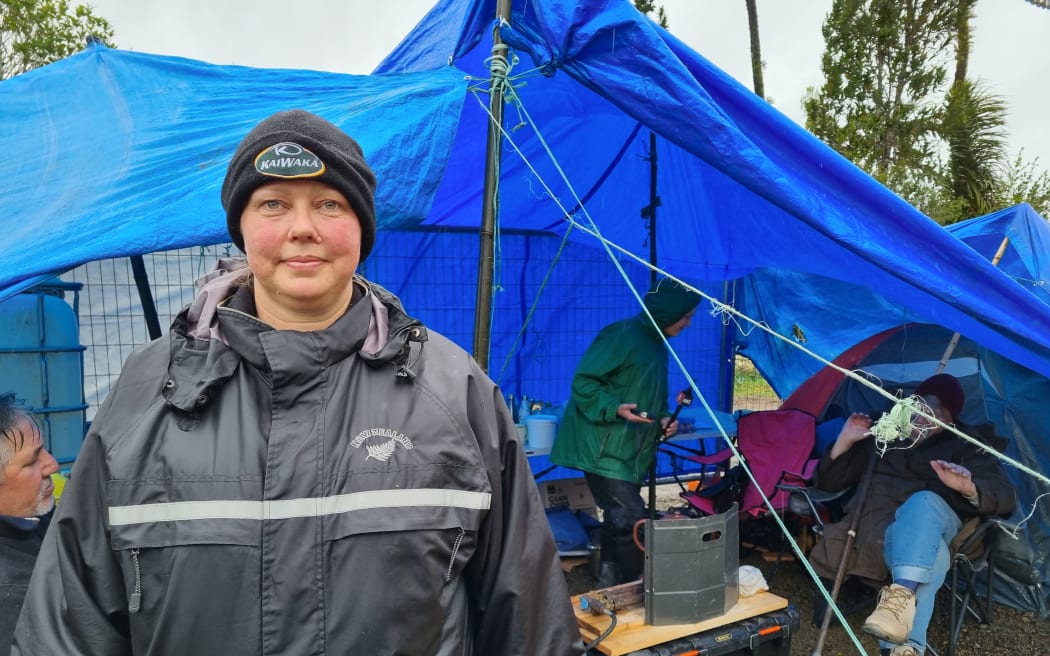
An opponent of the project, Marie Gibbs. Photo: RNZ / Robin Martin
Gibbs believed DOC was responsible for pest control on the conservation estate and Ngāti Tama land as part of the iwi’s Treaty settlement.
Pest control was not imposed on NZTA as a condition of its consents for Te Ara o Te Ata; it was included in its application for consents, she said.
“They put up proposed conditions. The Environment Court can’t impose conditions on NZTA; it can only approve conditions NZTA themselves propose.
“So, someone at NZTA must’ve given authority to put that proposed condition in the resource consent application.”
Gibbs said if Waka Kotahi had chosen the less environmentally impactful option of upgrading the existing road it would not have had to design such a huge mitigation programme.
Ngāti Tama has been contacted for comment.
NZTA is in the process of securing the last section of privately owned land it requires for the project through the Public Works Act.
It said once that was acquired it would take four years to complete the Mt Messenger Bypass / Te Ara o Te Ata.
VIA RNZ



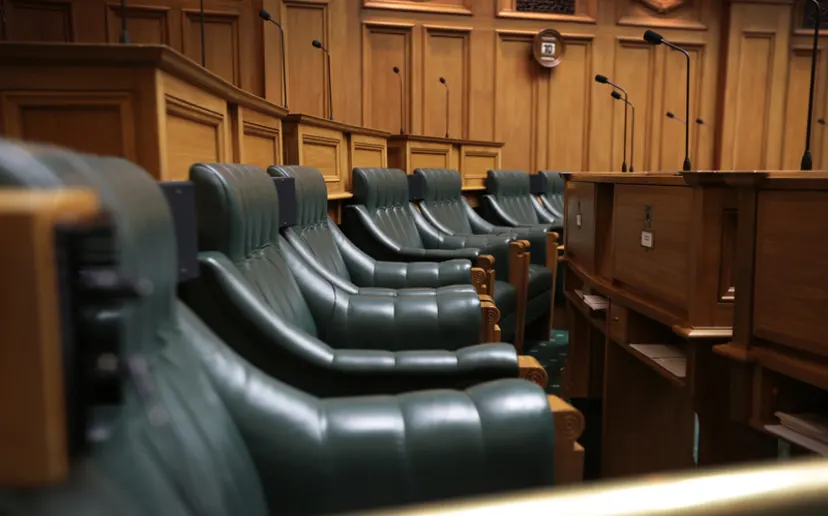
The chief executive of the Parliamentary Service is confident there will be enough room to accommodate the increased number of MPs and their staff coming into Parliament.
On current numbers, up to 131 MPs could be sitting in the Chamber following the election, brought on by a record overhang result.
Clerk of the House of Representatives Dr David Wilson told the Spinoff that currently the debating chamber had enough chairs to seat 124 MPs – including the Speaker of the House – and work was being done to accommodate more by altering the seating arrangement.
In a statement, Parliamentary Service chief executive Rafael Gonzalez-Montero said planning for a larger Parliament had been going for “some time”.
“Now that the election results have confirmed an increase to the number of members we are looking at several options.
“We are confident we will be able to accommodate all members within the Chamber.”
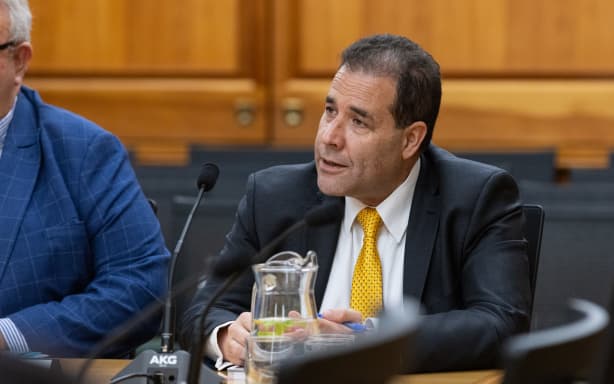
VNP / Phil Smith
Gonzalez-Montero said office accommodation for members and their staff would be “stretched” for a short time, but the new Members’ Building was only a few months away from “practical completion”.
That building – located behind Parliament – was due to be ready to occupy in April next year and had capacity to accommodate around 30 backbench MPs.
“All members should be in fit-for-purpose accommodation from that point,” Gonzalez-Montero said.
Following the 2023 election, 123 MPs sat in the Chamber – a record number at the time. That decreased to 122 following the resignation of National MP Judith Collins.
Collins held the seat of Papakura and stepped down in May and Parliament voted against holding a by-election because it was too close to the election.
The election result also meant high-ranking National Party MPs like Chris Bishop, Paul Goldsmith, Nicola Willis and Gerry Brownlee – Speaker of the House and an MP for 30 years – would likely not make it back into Parliament.
Only resigning or retiring MPs were permitted to give a valedictory speech meaning none of them would get the chance to give a valedictory statement.
Asked if their would be special allowances for valedictories, Wilson said in a statement that normally only MPs were allowed to speak in the House but the House could suspend its own rules or temporarily alter them.
“It could do so to allow former members to address the House.”
Wilson said no such arrangements could be made until the next Parliament opened and members sworn in.
rnz


Police say person who fired gun at officers still at large

New Zealand sides named for RLWC finals

Parliamentary Service working on extra chairs and offices for increased number of MPs


-

 Latest News2 months ago
‘Chilling’: Business groups speak out against National’s supermarket break-up plan
-

 NZ News2 months ago
Tom Phillips report: The missed opportunities to find the children
-

 Latest News2 months ago
Cars bearing Chinese police markings stir unease in Auckland
-

 Politics2 months ago
National vows to try to split Pak’nSave and New World
-

 Fiji News2 months ago
Plans to have new Constitution by Dec 24th 2026
-

 Latest News2 months ago
Five Karangahape Road venues lose their liquor licences after police intervention
-

 Politics2 months ago
MBIE confirms botched biometric projects costs blown out to $50.7 million
-

 NZ News2 months ago
Cop who stole $68,000 can now be named as champion Muay Thai fighter Haimona Tamati-Te Paki