

Latest News
COP28: Deal struck to phase out global use of fossil fuels


Representatives from nearly 200 countries agreed at the COP28 climate summit on Wednesday to begin reducing global consumption of fossil fuels to avert the worst of climate change, a first of its kind deal signalling the eventual end of the oil age.
The deal struck in Dubai after two weeks of hard-fought negotiations was meant to send a powerful signal to investors and policy-makers that the world is united in its desire to break with fossil fuels, something scientists say is the last best hope to stave off climate catastrophe.
COP28 President Sultan Al Jaber called the deal “historic” but added that its true success would be in its implementation.
“We are what we do, not what we say,” he told the crowded plenary at the summit. “We must take the steps necessary to turn this agreement into tangible actions.”
Several countries cheered the deal for accomplishing something elusive in decades of climate talks.
“It is the first time that the world unites around such a clear text on the need to transition away from fossil fuels,” said Norway Minister of Foreign Affairs Espen Barth Eide. “It has been the elephant in the room. At last we address it head on.”
More than 100 countries had lobbied hard for strong language in the COP28 agreement to “phase out” oil, gas and coal use, but came up against powerful opposition from the Saudi Arabia-led oil producer group OPEC, which argued that the world can slash emissions without shunning specific fuels.
That battle pushed the summit a full day into overtime on Wednesday.
Members of the Organization of the Petroleum Exporting Countries together control nearly 80 percent of the world’s proven oil reserves along with about a third of global daily oil production, and their governments rely heavily on those revenues.
Small climate-vulnerable island states, meanwhile, were among the most vocal supporters of phasing out fossil fuels and had the backing of huge oil and gas producers such as the United States, Canada and Norway, along with the EU bloc and scores of other governments.
Danish Minister for Climate and Energy Dan Jorgensen marvelled at the circumstances of the deal: “We’re standing here in an oil country, surrounded by oil countries, and we made the decision saying let’s move away from oil and gas.”
The deal specifically calls for “transitioning away from fossil fuels in energy systems, in a just, orderly and equitable manner… so as to achieve net zero by 2050 in keeping with the science.”
It also calls for a tripling of renewable energy capacity globally by 2030, speeding up efforts to reduce coal use, and accelerating technologies such as carbon capture and storage that can clean up hard-to-decarbonize industries.
Now that the deal is struck, countries are responsible for delivering on the agreements through national policies and investments.
In the United States, the world’s top producer of oil and gas and the largest historical emitter of greenhouse gases, for example, climate-conscious administrations have struggled to pass laws aligned with their climate vows through a politically divided Congress.
US President Joe Biden scored a major victory on that front last year with passage of the Inflation Reduction Act, which contained hundreds of billions of dollars in subsidies for electric vehicles, wind, solar and other clean energy technologies.

People walk past a COP28 logo ahead of the United Nations climate summit in Dubai on 28 November 28, 2023. Photo: JEWEL SAMAD / AFP
Mounting public support for renewables and electric vehicles from Brussels to Beijing in recent years, along with improving technology, sliding costs, and rising private investment have also driven rapid growth in their deployments.
Even so, oil, gas, and coal still account for about 80 percent of the world’s energy, and projections vary widely about when global demand will finally hit its peak.
OPEC Secretary General Haitham Al Ghais had said in a letter dated 6 December to OPEC members and allies at COP28 that the world should target emissions rather than fossil fuels themselves, rallying them to oppose any deal targeting oil.
Oil producers have argued that fossil fuels can be cleansed of their climate impact by using technology that can capture and store carbon dioxide emissions. Carbon capture, however, is expensive and has yet to be proven at scale.
For daily comprehensive coverage on COP28 in your inbox, sign up for the Reuters Sustainable Switch newsletter here
– This story was first published by Reuters
rnz



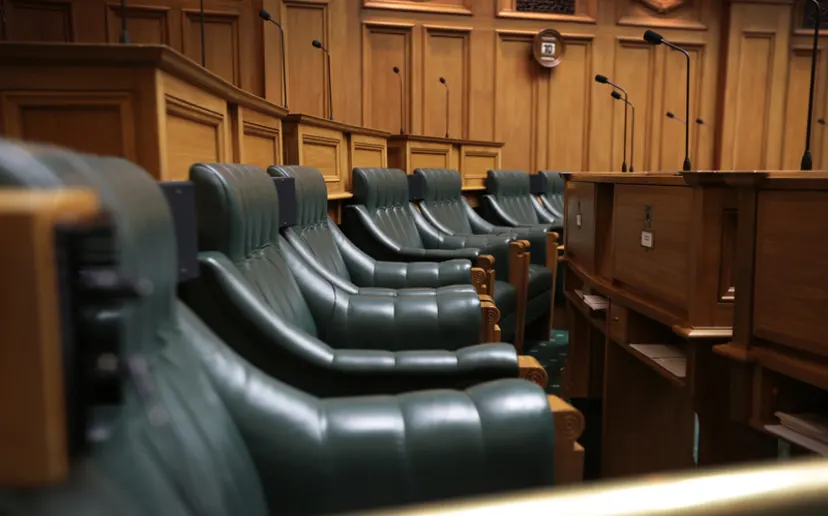
The chief executive of the Parliamentary Service is confident there will be enough room to accommodate the increased number of MPs and their staff coming into Parliament.
On current numbers, up to 131 MPs could be sitting in the Chamber following the election, brought on by a record overhang result.
Clerk of the House of Representatives Dr David Wilson told the Spinoff that currently the debating chamber had enough chairs to seat 124 MPs – including the Speaker of the House – and work was being done to accommodate more by altering the seating arrangement.
In a statement, Parliamentary Service chief executive Rafael Gonzalez-Montero said planning for a larger Parliament had been going for “some time”.
“Now that the election results have confirmed an increase to the number of members we are looking at several options.
“We are confident we will be able to accommodate all members within the Chamber.”
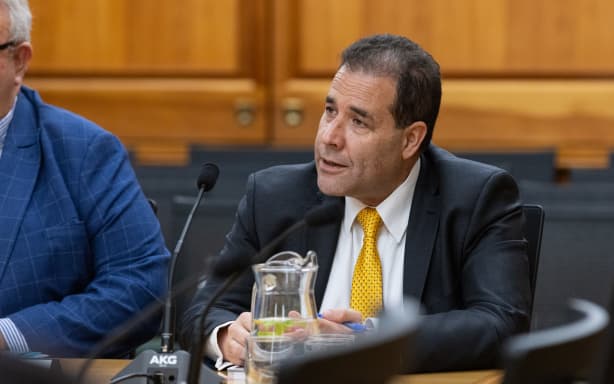
VNP / Phil Smith
Gonzalez-Montero said office accommodation for members and their staff would be “stretched” for a short time, but the new Members’ Building was only a few months away from “practical completion”.
That building – located behind Parliament – was due to be ready to occupy in April next year and had capacity to accommodate around 30 backbench MPs.
“All members should be in fit-for-purpose accommodation from that point,” Gonzalez-Montero said.
Following the 2023 election, 123 MPs sat in the Chamber – a record number at the time. That decreased to 122 following the resignation of National MP Judith Collins.
Collins held the seat of Papakura and stepped down in May and Parliament voted against holding a by-election because it was too close to the election.
The election result also meant high-ranking National Party MPs like Chris Bishop, Paul Goldsmith, Nicola Willis and Gerry Brownlee – Speaker of the House and an MP for 30 years – would likely not make it back into Parliament.
Only resigning or retiring MPs were permitted to give a valedictory speech meaning none of them would get the chance to give a valedictory statement.
Asked if their would be special allowances for valedictories, Wilson said in a statement that normally only MPs were allowed to speak in the House but the House could suspend its own rules or temporarily alter them.
“It could do so to allow former members to address the House.”
Wilson said no such arrangements could be made until the next Parliament opened and members sworn in.
rnz


Police say person who fired gun at officers still at large

New Zealand sides named for RLWC finals

Parliamentary Service working on extra chairs and offices for increased number of MPs


-

 Latest News2 months ago
‘Chilling’: Business groups speak out against National’s supermarket break-up plan
-

 NZ News2 months ago
Tom Phillips report: The missed opportunities to find the children
-

 Politics2 months ago
National vows to try to split Pak’nSave and New World
-

 Latest News2 months ago
Cars bearing Chinese police markings stir unease in Auckland
-

 Fiji News2 months ago
Plans to have new Constitution by Dec 24th 2026
-

 NZ News2 months ago
Cop who stole $68,000 can now be named as champion Muay Thai fighter Haimona Tamati-Te Paki
-

 Politics2 months ago
MBIE confirms botched biometric projects costs blown out to $50.7 million
-

 Latest News2 months ago
Five Karangahape Road venues lose their liquor licences after police intervention