

Latest News
Growing calls for stricter dog control following two deaths

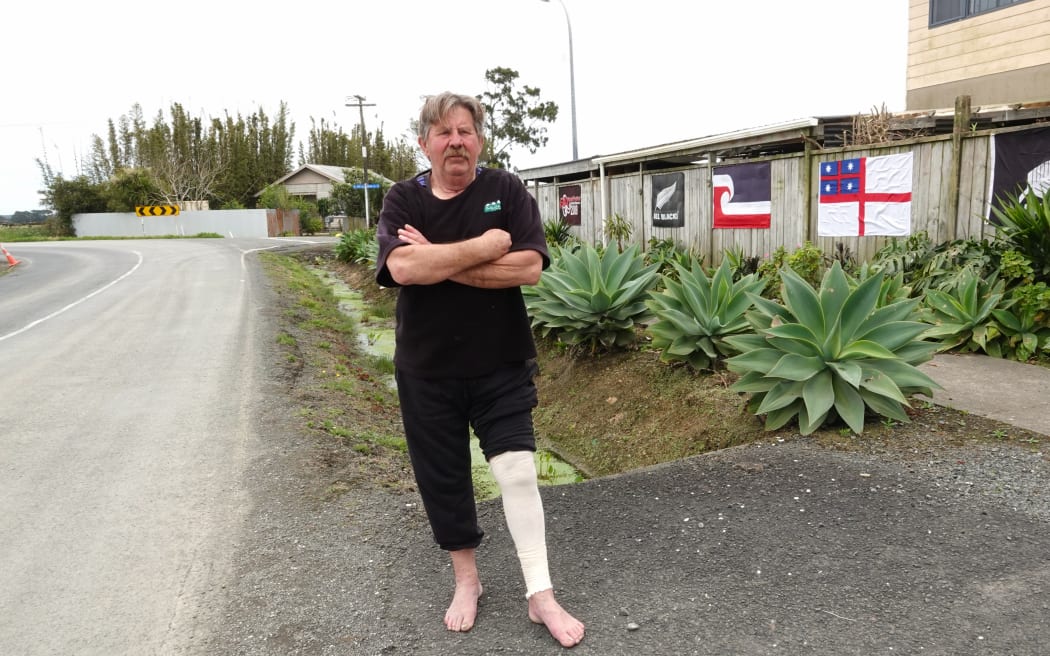
Calls are growing in the Far North for stricter dog control – and more prosecutions of owners who flout the rules – after two deaths in little more than a year.
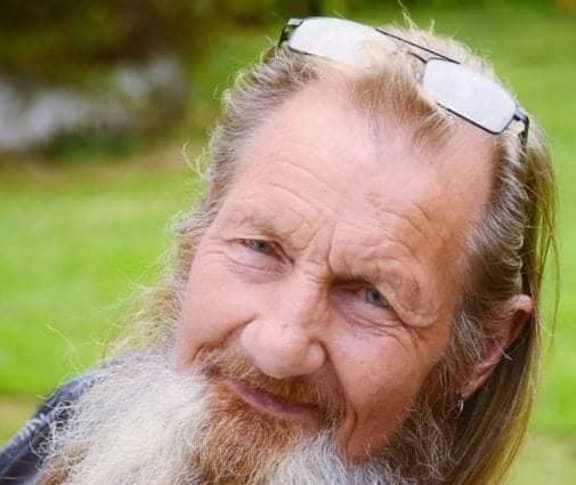
Neville Thomson Photo: Supplied
Neville Thomson, who was 69, was mauled to death by a lodger’s dogs at his home in Panguru in August last year, while 78-year-old Elizabeth Whittaker, better known as Auntie Effie, died earlier this month in her backyard in Moerewa.
The exact circumstances of her death are still under investigation.
Both attacks sent shock waves through their communities, and now a dog attack survivor is organising a petition calling for tougher action by the Far North District Council.
Chris Radich, 77, said he almost bled to death after an attack near his Awanui home last October.
He was familiar with the dog, which was usually tied up, and had spoken to its owner about a month earlier.
“I told the owner: ‘Cuz, I’m frightened of that dog. It’s tied up day after day after day. If it gets off the leash it’ll be dangerous’,” Radich said.
“One day I was walking with my dog. It [the other dog] was off the leash, it got me on the ground. It was on top of me, I was holding it and it was going for my throat … just as well I was strong enough to hold it off.”
A man working nearby rescued Radich’s pet, then used a spade to fend off the attacking dog.
“It just ripped my legs to smithereens. It was a bloodbath,” Radich said.
“We had the police, the fire brigade, the ambulance. They even called a farmer with a gun to come and shoot the dog. That’s how dangerous that dog was.”
Now the retired mill worker is organising a petition urging the council to ensure irresponsible dog owners are prosecuted, to bar dogs from places frequented by children, and to do more to promote responsible dog ownership.
Radich said he had so far collected more than 600 signatures.
A year on he still had a bandage on his injured leg and struggled to walk.
Radich said it was not the dog rangers’ fault – they did the best they could with the powers they had – or even the animals’ fault.
“The dog owners need to be made responsible. They know they can get away with it.
“We need more accountability for the owners. The dog gets shot, and the owner gets another dog. Over and over again,” he said.
“The kids around here, they don’t bike any more, they don’t run on the road any more, they’re afraid of the dogs. We’re sick of it. This has got to stop.”
Also calling for change is Kohukohu man Wally Hicks, who said he was driven by the two recent deaths and a horrific dog attack he attended when he was a volunteer ambulance officer.
In that incident a child was left with severe facial injuries and her parents were badly injured in a crash as they tried to race her to hospital.
Hicks made an impassioned plea to councillors at a recent meeting in Kaikohe.
“For heaven’s sake people, two people have been killed by the dogs in the Far North District in the last two years. This situation is morally untenable … as a volunteer ambulance officer I have dealt with these injuries,” he said.
Hicks called for a “sinking lid policy” for the breeds disproportionately responsible for attacks.
That would mean people could keep dogs of those breeds they currently owned, but could not replace them with any of the same type.
He realised that would have to be done at a national level, but the Far North – which bore the brunt of fatal dog attacks – could at least advocate for it.
Hicks also wanted a clampdown on “puppy farming”, breeder licensing, and the council to “go hard” on promoting good ownership.
After each dog attack people would argue whether the problem lay with the owner or the breed, but Hicks believed any solution had to focus on both.
The severity of attacks had increased after 1987 when the then-government permitted the import of breeds such as the American pit bull, he said.
“We just can’t go on with this carnage. I remember a terrible dog attack around 1990, about three years later, and I thought, ‘Well, we’ll stop now’. But we didn’t. It’s up to us and we have to call a stop to it.”
The coordinator of dog advocacy group Bay of Islands Watchdogs, Leonie Exel, agreed on the need for effective dog control, but believed breed-specific regulation would fail.
“There are three things that research tells us are really important in any community that wants to manage the dog population,” she said.
“The first is, as many people as possible need to get their dogs desexed. Second, there needs to be very effective community education, where everybody is taught not only how to treat and raise a dog properly, but also how to be wary of what can go wrong. The third arm is effective animal control. All three of those put together will ensure a safe community.”
Exel said de-sexing had increased dramatically in recent years, though there were still too many entire dogs, but the other two requirements had been lacking in the Far North for a long time.
She understood why people called for breed-specific regulations, but evidence from overseas showed they did not work and could even be counter-productive.
“You can spend a lot of time and money implementing breed-specific legislation instead of doing the things we know that work.”
She agreed, however, with calls for more effective animal control.
“The animal control department at the Far North District Council does need to take a good long look at itself – not the junior staff, but the management – and decide what they want to do for the future, because this has been a failing for a long time, for decades now.
“Having effective animal control when people continue to let their dogs wander or continue to have dogs which act dangerously towards other people, that is critical.
“We need to follow up on people who are repeat offenders and make sure they don’t keep having dogs that put other people in danger.”



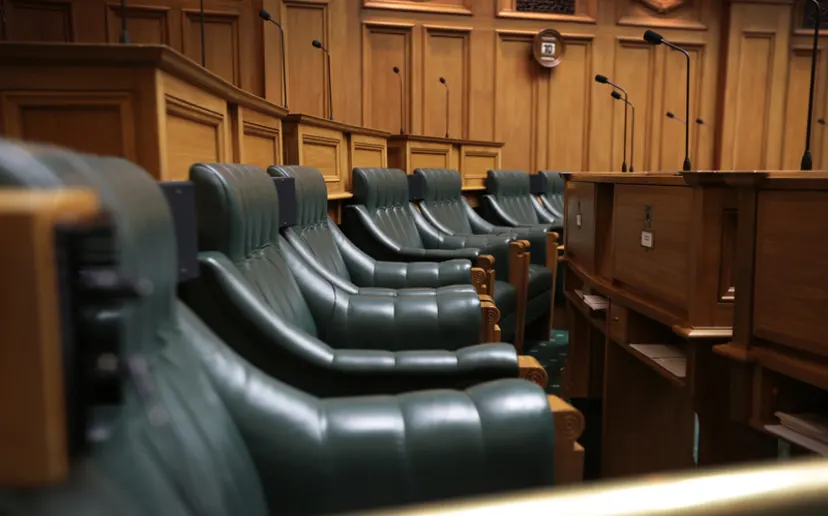
The chief executive of the Parliamentary Service is confident there will be enough room to accommodate the increased number of MPs and their staff coming into Parliament.
On current numbers, up to 131 MPs could be sitting in the Chamber following the election, brought on by a record overhang result.
Clerk of the House of Representatives Dr David Wilson told the Spinoff that currently the debating chamber had enough chairs to seat 124 MPs – including the Speaker of the House – and work was being done to accommodate more by altering the seating arrangement.
In a statement, Parliamentary Service chief executive Rafael Gonzalez-Montero said planning for a larger Parliament had been going for “some time”.
“Now that the election results have confirmed an increase to the number of members we are looking at several options.
“We are confident we will be able to accommodate all members within the Chamber.”
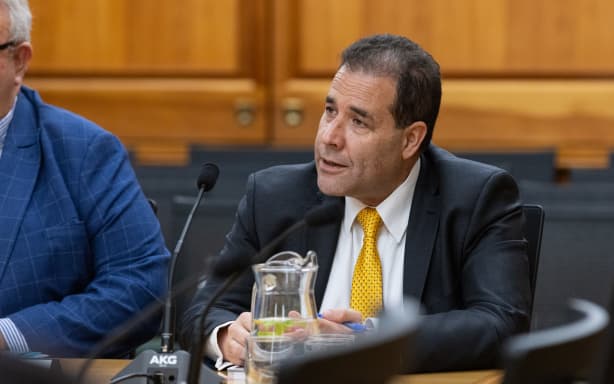
VNP / Phil Smith
Gonzalez-Montero said office accommodation for members and their staff would be “stretched” for a short time, but the new Members’ Building was only a few months away from “practical completion”.
That building – located behind Parliament – was due to be ready to occupy in April next year and had capacity to accommodate around 30 backbench MPs.
“All members should be in fit-for-purpose accommodation from that point,” Gonzalez-Montero said.
Following the 2023 election, 123 MPs sat in the Chamber – a record number at the time. That decreased to 122 following the resignation of National MP Judith Collins.
Collins held the seat of Papakura and stepped down in May and Parliament voted against holding a by-election because it was too close to the election.
The election result also meant high-ranking National Party MPs like Chris Bishop, Paul Goldsmith, Nicola Willis and Gerry Brownlee – Speaker of the House and an MP for 30 years – would likely not make it back into Parliament.
Only resigning or retiring MPs were permitted to give a valedictory speech meaning none of them would get the chance to give a valedictory statement.
Asked if their would be special allowances for valedictories, Wilson said in a statement that normally only MPs were allowed to speak in the House but the House could suspend its own rules or temporarily alter them.
“It could do so to allow former members to address the House.”
Wilson said no such arrangements could be made until the next Parliament opened and members sworn in.
rnz


Police say person who fired gun at officers still at large

New Zealand sides named for RLWC finals

Parliamentary Service working on extra chairs and offices for increased number of MPs


-

 Latest News2 months ago
‘Chilling’: Business groups speak out against National’s supermarket break-up plan
-

 NZ News2 months ago
Tom Phillips report: The missed opportunities to find the children
-

 Politics2 months ago
National vows to try to split Pak’nSave and New World
-

 Latest News2 months ago
Cars bearing Chinese police markings stir unease in Auckland
-

 Fiji News2 months ago
Plans to have new Constitution by Dec 24th 2026
-

 NZ News2 months ago
Cop who stole $68,000 can now be named as champion Muay Thai fighter Haimona Tamati-Te Paki
-

 Politics2 months ago
MBIE confirms botched biometric projects costs blown out to $50.7 million
-

 Latest News2 months ago
Five Karangahape Road venues lose their liquor licences after police intervention