

Sports
Cricket World Cup – History, format and favourites

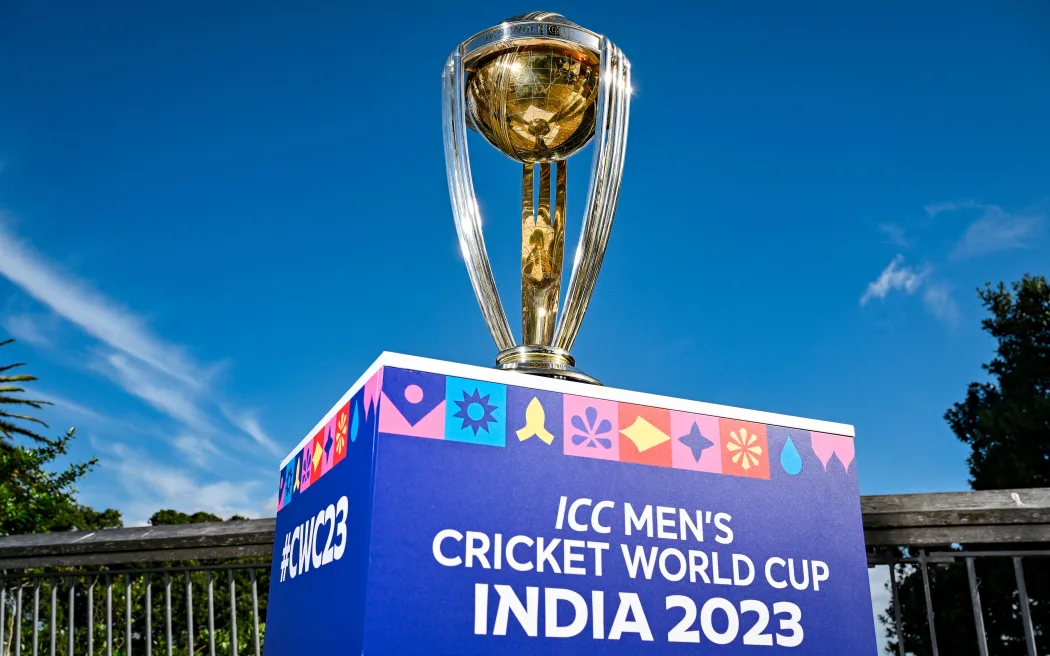
The 2023 Cricket World Cup will run from 5 October to 19 November in India.
Here’s what you need to know about the biggest tournament in cricket.
Decades of history
The first World Cup was played in England in 1975, just four years after the first one day international cricket match was played.
The first few tournaments were played with 60 overs per team, players in whites and red balls.
Eight teams were involved in the inaugural tournament, the six test-playing nations at the time, along with Sri Lanka and a composite team from East Africa.
The tournament was played outside of England for the first time in 1987, when India and Pakistan hosted. The overs dropped to 50 per team for these games.
In 1992, the tournament in Australia and New Zealand introduced coloured clothing, white balls, day and night games, and fielding restrictions. After the end of apartheid, South Africa was added to the teams, increasing the participants to nine.
The number of teams involved increased to 12 in 1996 and 16 in 2007, before reducing to 14 in 2011 and 10 in 2019.
Past winners
The West Indies dominated the game in the seventies, with Gordon Greenidge, Alvin Kallicharran, Viv Richards, Clive Lloyd, Andy Roberts, Joel Garner, Michael Holding and Colin Croft in their line-up.
The West Indies won in 1975 and 1979, before India won the first of their two titles in 1983.
Australia won in 1987 and since then has become the most successful team with five titles, while Pakistan, Sri Lanka and England are the only other nations to have won.
New Zealand finished as runners-up in 2015 and 2019.
This year’s format
All 10 teams will play each other in the round-robin phase.
The top four teams will qualify for the semi-finals, with first place winners facing the team that came fourth, and the second and third placed teams facing off.
The top four will be decided by points, wins, net run rate, result of any game between tied teams, and pre-tournament seeding.
In 2019, six wins from nine games got three teams into the semi-finals, while New Zealand sneaked in with five wins and a superior net run rate to Pakistan.
The venues by city, stadium and capacity
- Ahmedabad, Narendra Modi Stadium, 132,000
- Bangalore, M Chinnaswamy Stadium, 40,000
- Chennai, MA Chidambaram Stadium, 50,000
- Delhi, Arun Jaitley Stadium, 41,800
- Dharamshala, HPCA Stadium, 23,000
- Hyderabad, Rajiv Gandhi International Stadium, 55,000
- Kolkata, Eden Gardens, 66,000
- Lucknow, BRSABV Ekana Stadium, 50,000
- Mumbai, Wankhede Stadium, 32,000
- Pune, Maharashtra Stadium, 37,400
Prize money in $NZ per team
- Winner $6.7 million
- Runner-up $3.35m
- Losing Semi-Finalist $1.3m
- Teams eliminated after group stage $167,000
- Winner of each group stage match $67,000

New Zealand batsman Martin Crowe playing against Pakistan in the 1992 World Cup. Photo: PHOTOSPORT
Who are the favourites?
Playing the tournament in India is likely to give the teams from the sub-continent an advantage, especially the home side.
However, with so many internationals now playing in the Indian Premier League, the significance of the local conditions may not be as pronounced.
RNZ senior sports reporter Barry Guy takes a quick look at each team, with his favoured teams on top.
Predicted semi-finalists
- India: The 2011 champions fell at the semi-final stage in the last two tournaments, going down to Australia in 2015 and New Zealand in 2019. However 2023 appears to be the ideal time for them to add a third World Cup title. A star studded batting line-up and a formidable pace of attack, along with a couple of very capable all-rounders, means there are no obvious weaknesses in their squad. Favourites to win.
- England: The current holders of the one-day and T20 trophies, England has become the top tournament team in recent years. Led by Jos Buttler, England has a strong batting line-up and a game changer in captain Ben Stokes. A solid bowling line-up should keep them in most games and in recent years they have found the knack of winning from difficult situations. Experience will count a lot for them at this tournament.
- Pakistan: Winners in 1992 and runners-up in 1999, Pakistan went through some tough years, but they are back at their best under the leadership of Babar Azam. They were runners-up at the 2021 T20 World Cup and in the sub-continent conditions can be expected to excel. Ranked three in the world, Azam is the top-ranked batter, while Iman-ul-Haq is number three. Shaheen Afridi leads their attack, which should get them into the semi-finals.
- Australia: Never discount Australia – their form has been a little patchy in recent months, but the five-time winners have the pedigree to perform on the big stage. Fast bowler Pat Cummins leads the side, which includes fellow quicks Josh Hazlewood and Mitchell Starc. David Warner, Steve Smith and Travis Head are the backbone of the batting line-up, along with all-rounders Mitchell Marsh, Glenn Maxwell, Marcus Stoinis and Cameron Green. Australia lost to India in a warmup series, but were without a couple of key players. They will be contenders once again.
Predictions for the rest
- South Africa: A top-ranked side, but they may struggle in the conditions. They have a habit of not showing their best in tournaments.
- New Zealand: A great tournament team, but this side may not be as good as the team four years ago, that should have won in favourable conditions.
- Bangladesh: They have the potential to cause some upsets, but maybe not enough to get them into the last four.
- Sri Lanka: A team with mixed form, but they could do well in the conditions.
- Afghanistan: Another team that can cause upsets in the conditions. They have some experienced players, but not enough game changers.
- Netherlands: After finishing ahead of Scotland, Zimbabwe, West Indies and Ireland in the qualifying tournament, they could grab another couple of wins here.
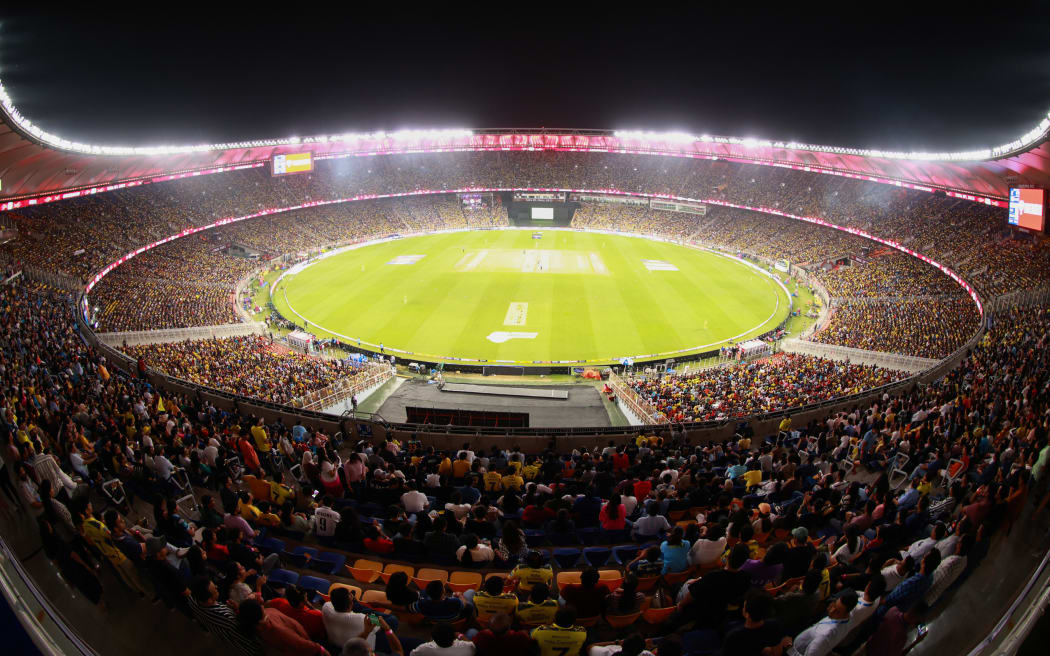
Narendra Modi Stadium in Ahmedabad Photo: PHOTOSPORT
Key games in New Zealand time
- 5 October at 9:30pm NZ vs England, in Ahmedabad
- 9 October at 9:30pm NZ vs Netherlands, in Hyderabad
- 13 October at 9:30pm NZ vs Bangladesh, in Chennai
- 18 October at 9:30pm NZ vs Afghanistan, in Chennai
- 22 October at 9:30pm NZ vs India, in Dharamsala
- 28 October at 6pm NZ vs Australia, in Dharamsala
- 1 November at 9;30pm NZ vs South Africa, in Pune
- 4 November at 6pm NZ vs Pakistan, in Bengaluru
- 9 November at 9:30pm NZ vs Sri Lanka, in Bengaluru
The New Zealand squad
- Kane Williamson (c)
- Trent Boult
- Mark Chapman*
- Devon Conway*
- Lockie Ferguson
- Matt Henry
- Tom Latham (vc,wk)
- Daryl Mitchell*
- Jimmy Neesham
- Glenn Phillips*
- Rachin Ravindra*
- Mitchell Santner
- Ish Sodhi
- Tim Southee
- Will Young*
*First One Day Cricket World Cup selection
RNZ

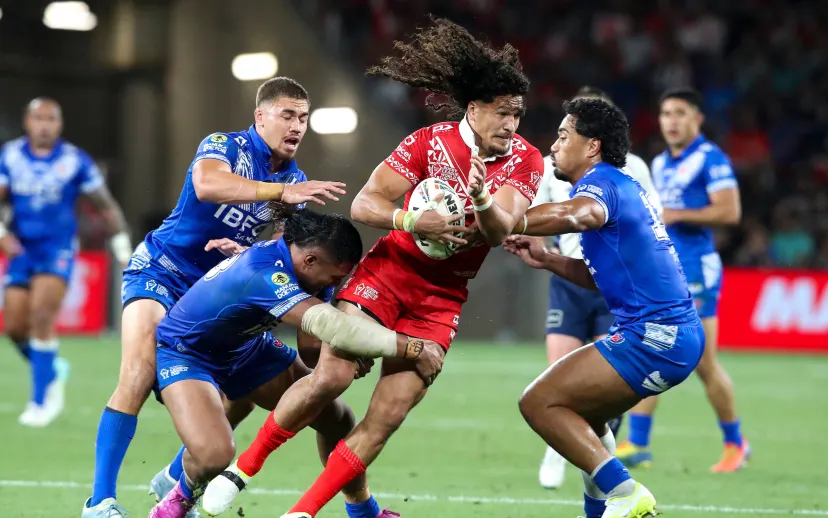
Tongan powerhouse forward Addin Fonua-Blake scored the winner as the Tonga 13 pipped Toa Samoa 20-18 in their final pool match at the Rugby League World Cup in Sydney on Sunday night.
His try saw Tonga regain their lead in the tough, physical battle after Samoa had led 18-14 seven minutes from the end.
The big forward managed to break the Samoans’ defensive line with ball in hand, and was in the clear to score what would be the winner in the game.
The Tongans managed to survive the late Samoan fight-back in the last four minutes of the game, with winger Sualauvi Fa’alogo stepping on the sideline as he dived to score a late try that was cancelled; and fullback Hamiso Tabuai-Fidow passing the ball forward after a mid-air catch close to the Tongan line.
The result meant both Pacific Island teams are into the semifinals next weekend, with Tonga topping the combined Pool B and C, set to face New Zealand, while Samoa meets Australia.
That also marks the first time both teams have made the final four at a world cup, with Samoa getting into the semis in two consecutive world meets, having made the final in 2022.
And in another history-making moment, the two men’s team will join their women counterparts Fetū Samoa and the Fiji Bulikula in the semifinals, making it four Pacific island teams playing off for the finals across the men and women’s competition.
Fonua-Blake’s fellow co-captain Jason Taumalolo thanked divine intervention and paid tribute to the fans post-match.
“First and foremost I would like to thank the man above for bringing everyone here not just as a celebration of Samoa and Tonga but the game of rugby league,” Taumalolo said.
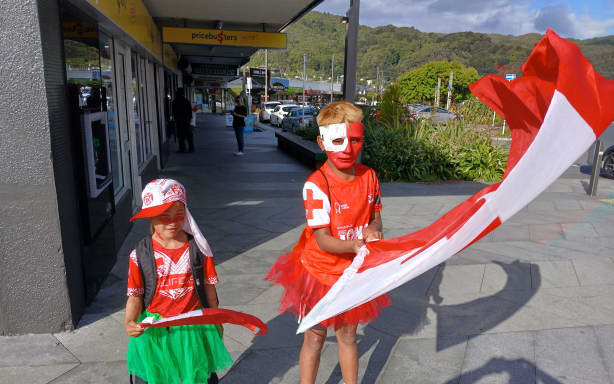
“From the Tongan point of view, to see the red flags, Samoan flags, this is probably the best game I have been a part of and truly blessed.
“We knew tonight was gonna be a physical game and it was going to be a tough one from the start.”
He said Tonga was a bit slow off the mark, and Samoa “being the electrifying team they have been in the last two games” came out and put points on the board and made it a contest to the last minute.
“Big shout to the Samoan boys for tonight and it was a very tough game. Thank you to all the MMT fans tonight and thank you so much to the Toa Samoa fans for making tonight special.”
Taumalolo said they will reset and move on to New Zealand next weekend.
“Obviously the Kiwis and Australia are the benchmark,” he said.
“Tonight was a tough one and we have a short turnaround, the boys will get some recovery; celebrate tonight with our families and all our countrymen that came out here to support us.”
Samoan co-captain Junior Paulo congratulated Tonga and thanked the fans also for their support.
“First of all I thank all of our fans on both sides. Toa Samoans am sorry we didn’t get the job done, but at the end of the day this is what it’s all about, making both nations’ people proud,” he said.
“It was one of the games where you were looking forward to [it] before the tournament started and at the end of the day big credit to the Tongan boys for turning up tonight.
“We knew it was going to be a tough one but all blessings to both nations.”
Samoa scored four tries to Tonga’s three but the difference was Tonga’s Isaiya Katoa, who kicked all conversions and a penalty to seal the deal.
Samoan kickers Harris Channel-Tavita and Ronald Volkman only managed to successfully convert one try each.
Physical battle
The first half of 40 minutes turned out as everyone expected, a torrid and physical battle, which featured big hits across the field.
Tonga laid the challenge with their Sipi Tau, before Toa Samoa responded with the Sivi Tau in front of the packed-out 29,400-plus crowd at the CommBank Stadium, Sydney.
Amongst the fans was All Black captain Ardie Savea, who is originally from Samoa.
Isaiya Katoa kicked off the battle and Tonga came close twice in the first 17 minutes.
Former New Zealand Kiwi Dallin Watene-Zelezniak stepped on the sideline as he planted the ball across the line in the right corner, before his wing partner Jojo Fifita lost the ball over the line in the left corner.
Two minutes later dummy half Salesi Foketi knocked on over the line as Tonga went on attack again.
But their consistent pressure gave them the opening try in the 27th minute when centre Robert Toia got an offload from Haumole Olakau’atu and stepped inside Hamiso Tabuai-Fidow and Sualauvi Faalogo to run around behind the posts. Katoa kicked the conversion as the men in red led 6-0.
In the 35th minute Katoa kicked a penalty from inside the 20-metre zone and pushed Tonga to an 8-0 lead.
However, Samoa got one try back in the 38th minute when veteran winger Brian To’o got the loose ball near the Tongan line and dived over, to reduce the scoreline as Tonga led 8-4 at halftime.
Both sides showed brutal power and physicality upfront, with thunderous hits and tackles, raising cheers from fans.
Tonga had co-captains Addin Fonua-Blake and Jason Taumalolo leading them upfront with Foketi, Olakau’atu, Siua Wong, Tyson Frizell, Stefano Utoikamanu, Taniela Paseka, Demitric Vaimauga and Leka Halasima supporting them.
Toa Samoa were led by Junior Paulo, with Benaiah Ioelu, Connelly Lemuelu, Jermaine McEwen, Francis Manuleleua and Spencer Leniu ably supporting the territorial gains through the middle of the field.
RNZ/ Karoline Tuckey
Close second half
Tonga started the second spell where they had left off at the end of the first, as To’ia was tackled short near the line after their first set of six.
To’ia, who turned down the offer from the Kangaroos to play for them, got to the loose ball after Watene-Zelezniak had caught the high ball from a Katoa bomb near the corner, and tapped it back into the field.
The men from the ‘Friendly Islands’ got the first points in the second 40 in the 47th minute through Jojo Fifita. That came from a scrum near the Samoan 10-metre line, with Katoa combining with veteran Tuimoala Lolohea, who sent a cut-out pass to Fifita, for the winger to run in and score. Katoa’s conversion saw them extend their lead to 14-4.
Samoa got their second try, via To’o again for his second, in the 52nd minute, following a Luai bomb which Critchon collected mid-air and passed it on to Tavita, whose overhead back pass found the unmarked To’o out wide, to stroll in and score.
That try inspired the Samoans into action again with Tabuai-Fidow scoring from a Fa’alogo pass, following another high bomb from Luai that caught the Tongan defence napping – that try reducing the scoreline to 14-12 in favour of Tonga.
But Samoa claimed the lead in the 68th minute after replacement Ronald Volkman rolled over Tongan tacklers on the line to plant the ball, with his conversion giving Samoa an 18-14 lead.
Fonua-Blake got Tonga back in the lead, with Katoa adding the extra two points, with seven minutes remaining.
Samoa attacked twice more, with Fa’alogo stepping on the sideline before scoring in the corner and Tabuai-Fidow passing the ball forward from an aerial catch, but Tonga held on to win the clash.
Mulitalo’s semifinal ban
Meanwhile, Kiwis winger Ronaldo Mulitalo will miss the semifinal clash against Tonga after being hit with a grade 2 careless high tackle charge.
Mulitalo was sent off in the 52nd minute of Saturday’s clash against Fiji after a high tackle on Ronald Philitoga.
The Fijian winger left the field and was ruled out of the rest of the match.
Should Mulitalo enter an early guilty plea he will miss New Zealand’s semi-final but if he fights the charge and is found guilty at the judiciary he will be banned for two games.
Rugby League World Cup media said a two-game ban would rule Mulitalo out of the World Cup final should the Kiwis make it through.
Fiji halfback Brandon Wakeham has also been charged, getting a grade 2 striking offence after he threw a punch at Mulitalo after the high shot on Philitoga.
Wakeham’s tournament is already over as Fiji won’t play in the semis, but he is facing a one-game ban should he plead guilty.
rnz


Police say person who fired gun at officers still at large

New Zealand sides named for RLWC finals

Parliamentary Service working on extra chairs and offices for increased number of MPs


-

 Latest News2 months ago
‘Chilling’: Business groups speak out against National’s supermarket break-up plan
-

 NZ News2 months ago
Tom Phillips report: The missed opportunities to find the children
-

 Politics2 months ago
National vows to try to split Pak’nSave and New World
-

 Latest News2 months ago
Cars bearing Chinese police markings stir unease in Auckland
-

 Fiji News2 months ago
Plans to have new Constitution by Dec 24th 2026
-

 NZ News2 months ago
Cop who stole $68,000 can now be named as champion Muay Thai fighter Haimona Tamati-Te Paki
-

 Politics2 months ago
MBIE confirms botched biometric projects costs blown out to $50.7 million
-

 Latest News2 months ago
Five Karangahape Road venues lose their liquor licences after police intervention