

Latest News
Fuel companies asked to explain price variations between towns & cities

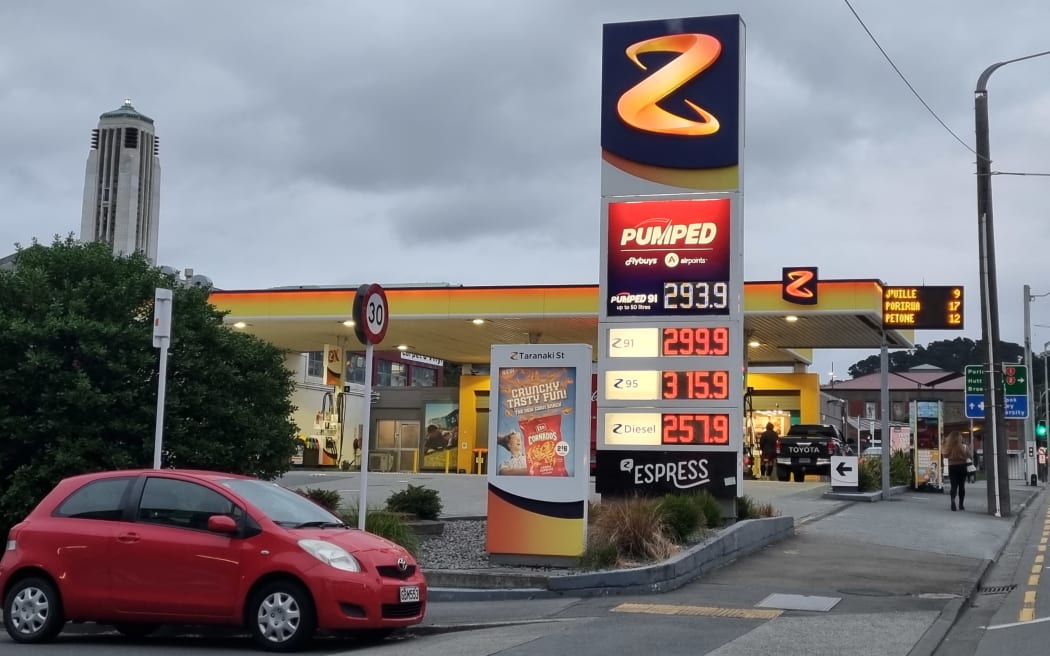
The Commerce Commission cannot do much more than ask the fuel industry to explain why some towns and cities are paying much higher retail prices than others.
The commission is asking major fuel companies to explain why retailers in some places are charging a lot more for what is essentially the same product.
In Auckland there was 52 cents between the cheapest and most expensive regular 91, the commission said in its latest report into fuel pricing.
Chairperson John Small said there were no clear underlying factors to explain the pricing variations.
“There’s a map – I’m just looking at it right now – it’s kind of a heat map showing Auckland and where the cheap and expensive petrol is, and it’s very clustered,” he told Checkpoint on Wednesday.
“There’s a big sort of cheap area in the south, around Mangere, and out west is reasonably cheap. Very expensive centrally, getting more expensive up to the North Shore.
“We’re just really keen to understand how they do set these prices because we can’t explain it in terms of distance or trucking costs or land costs.”
The closest correlation he could think of was how wealthy each region was perceived to be – which was not illegal.
“But you know, we’ve run out of guesses to be honest, so we’re just going to ask them.”
He said the commission can take action against anti-competitive behaviour, but it would not be feasible to impose regulated pricing regardless of any concerning variations in price, and it did not have that kind of power in the retail market anyway.
“Directly regulating and controlling the price of petrol at every station doesn’t seem to be a realistic thing to be wanting to do, so we’re trying to pressurise people in other ways.”
The report also showed motorists in Whangārei in particular were paying more for fuel than the other cities studied, despite being near Marsden Point.
“Its prices were very much in line with other cities up until the middle of last year,” Small said. “Since then it’s been sitting comfortably above all of the other cities we monitor, so something happened in the middle of last year to create that gap, and I’m pretty keen to understand what it was.”
Wholesale prices have been dropping, Small saying not all of that was being reflected in prices at the pump – with retailers’ margins rising.
Big retailers respond
Large retailers, including BP, Mobil and Z Energy, said the industry was highly competitive and planned to respond directly to the commission’s concerns.
Fuel company Z Energy said variations in petrol prices between cities and towns was a sign of a competitive market – prices could be different at service stations within regions or even the same towns based on a range of factors, such as local competition.
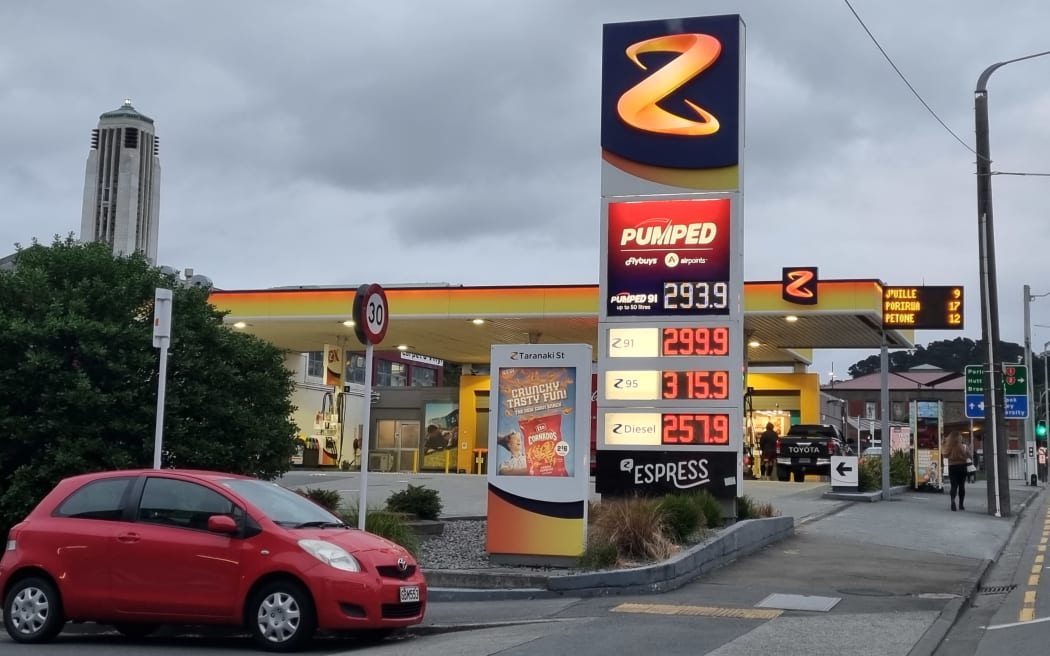
A Z Energy station. Photo: RNZ / Hamish Cardwell
It said it reviews its pricing daily, and they were set by the head office, not individual service stations.
“Z continues to encourage customers to use apps like Gaspy to find the lowest priced fuel in the area that meets their needs,” it said in a statement.
BP said there were “a number of factors that influence prices”, which were also reviewed every day.
“The BP website has more information on the facts about fuel pricing. There are also a number of independent BP operators all around the country who set their own prices and manage their own operations.”
Mobil said New Zealand had a “highly competitive fuel market, with several major fuel suppliers, supermarkets, resellers, and smaller independent retailers all actively engaged in competing for customers”.
“Often there is intense local competition in market areas, which is why prices can differ within relatively short distances. Where Mobil sets the price at service stations, we aim to ensure that our prices are as competitive as possible.
“Setting the prices at the pump is a balancing act between the immediate effects and influences of the market, weighed against the longer term outlook for business and the industry.”
Gull was yet to respond to RNZ’s questions about its pricing.
Challengers welcome
Managing director of family-owned fuel retailer Waitomo Jimmy Ormsby said experience showed prices did tend to come down and become more competitive when it entered a market.
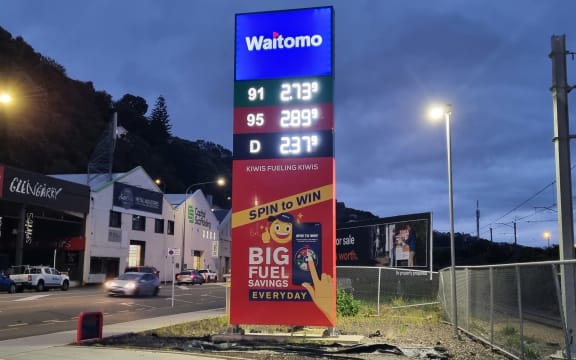
A Waitomo station. Photo: RNZ / Hamish Cardwell
“Big variations are normally explained by lack of competition,” he told RNZ, saying when Waitomo entered the Wellington market, prices dropped 20 to 30c.
“There’s markets that Waitomo’s not operating in where I think some competition would make prices more competitive.”
Small said “in all likelihood”, Ormsby was correct.
“We certainly do know that when some of these challenger brands – and Waitomo is one of them – go into a location, that forces other prices down.”
But often prices only come down at other stations near the ‘challenger’, he said.
“Competition can suppress prices to some extent – we’re also obviously beholden to world prices.”
Small said motorists could shop around for a cheaper price, while smaller communities could arrange to give all their business to a retailer offering the best price.
RNZ



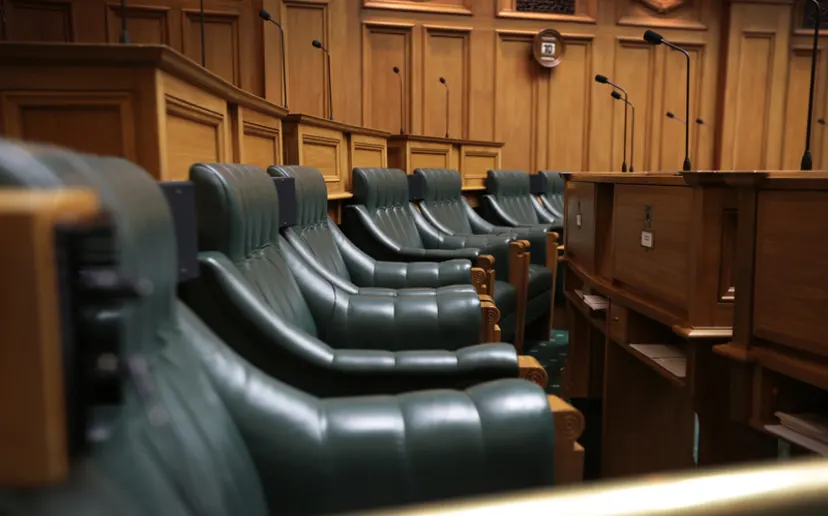
The chief executive of the Parliamentary Service is confident there will be enough room to accommodate the increased number of MPs and their staff coming into Parliament.
On current numbers, up to 131 MPs could be sitting in the Chamber following the election, brought on by a record overhang result.
Clerk of the House of Representatives Dr David Wilson told the Spinoff that currently the debating chamber had enough chairs to seat 124 MPs – including the Speaker of the House – and work was being done to accommodate more by altering the seating arrangement.
In a statement, Parliamentary Service chief executive Rafael Gonzalez-Montero said planning for a larger Parliament had been going for “some time”.
“Now that the election results have confirmed an increase to the number of members we are looking at several options.
“We are confident we will be able to accommodate all members within the Chamber.”
VNP / Phil Smith
Gonzalez-Montero said office accommodation for members and their staff would be “stretched” for a short time, but the new Members’ Building was only a few months away from “practical completion”.
That building – located behind Parliament – was due to be ready to occupy in April next year and had capacity to accommodate around 30 backbench MPs.
“All members should be in fit-for-purpose accommodation from that point,” Gonzalez-Montero said.
Following the 2023 election, 123 MPs sat in the Chamber – a record number at the time. That decreased to 122 following the resignation of National MP Judith Collins.
Collins held the seat of Papakura and stepped down in May and Parliament voted against holding a by-election because it was too close to the election.
The election result also meant high-ranking National Party MPs like Chris Bishop, Paul Goldsmith, Nicola Willis and Gerry Brownlee – Speaker of the House and an MP for 30 years – would likely not make it back into Parliament.
Only resigning or retiring MPs were permitted to give a valedictory speech meaning none of them would get the chance to give a valedictory statement.
Asked if their would be special allowances for valedictories, Wilson said in a statement that normally only MPs were allowed to speak in the House but the House could suspend its own rules or temporarily alter them.
“It could do so to allow former members to address the House.”
Wilson said no such arrangements could be made until the next Parliament opened and members sworn in.
rnz


Police say person who fired gun at officers still at large

New Zealand sides named for RLWC finals

Parliamentary Service working on extra chairs and offices for increased number of MPs


-

 Latest News2 months ago
‘Chilling’: Business groups speak out against National’s supermarket break-up plan
-

 NZ News2 months ago
Tom Phillips report: The missed opportunities to find the children
-

 Latest News2 months ago
Cars bearing Chinese police markings stir unease in Auckland
-

 Politics2 months ago
National vows to try to split Pak’nSave and New World
-

 Fiji News2 months ago
Plans to have new Constitution by Dec 24th 2026
-

 Latest News2 months ago
Five Karangahape Road venues lose their liquor licences after police intervention
-

 Politics2 months ago
MBIE confirms botched biometric projects costs blown out to $50.7 million
-

 NZ News2 months ago
Cop who stole $68,000 can now be named as champion Muay Thai fighter Haimona Tamati-Te Paki