Analysis – The National Party has unveiled its tax cuts plan – including new taxes to pay for it.
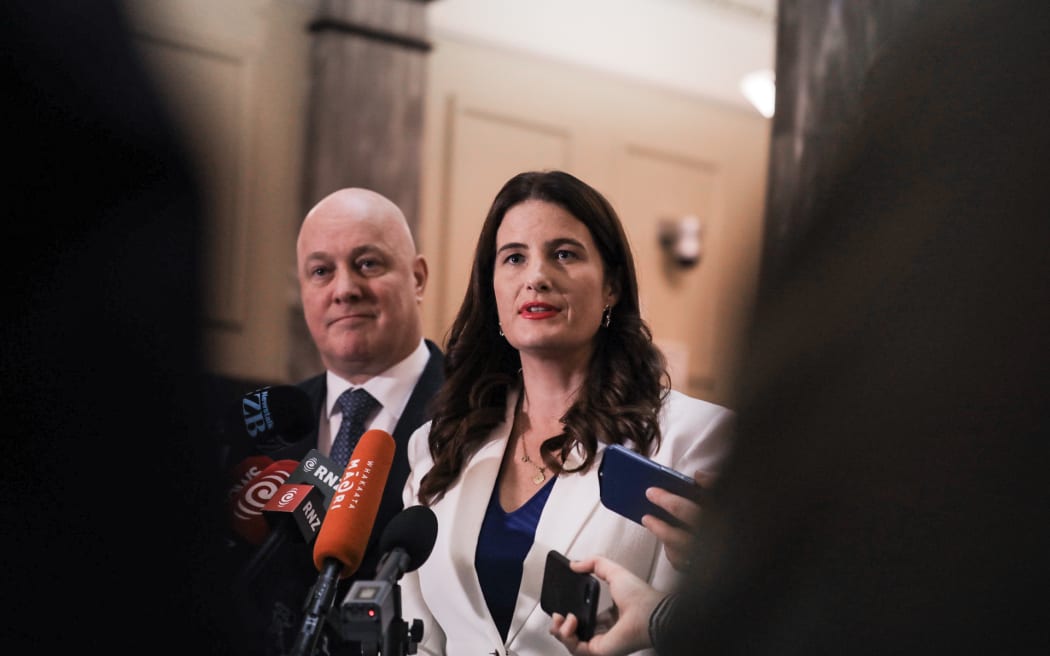
The party launched its “Back Pocket Boost” policy at Parliament on Wednesday, promising tax cuts, paid for with a combination of new taxes and cuts to public spending.
They contracted Castalia to check the numbers, with the consultancy describing the party’s estimates as “cautious and consistent” and the total level of savings – even combined with those outlined by Finance Minister Grant Robertson earlier in the week – “possible and plausible”.
Here’s the finer details on the plans and how much each policy will cost. Costings below are expressed over four years, unless otherwise stated.
Income relief
The plan includes several tax cuts, credits and rebates aiming to boost New Zealanders’ after-tax incomes, expected to cost a total $14.6 billion over four years.
The first is tax bracket adjustments at a cost of more than $8.9b:
Flourish logoA Flourish data visualization
Superannuation payments are also indexed to after-tax average wages, which means NZ Super would be expected to increase by $680 a year or $26 a fortnight.
Second, the Independent Earner Tax Credit will be extended. Currently it gives people earning between $24,000 to $44,000 a year access an extra before-tax income of $10 a week. The amount reduces by 13 percent for those earning between $44,000 and $48,000.
National proposes to increase the upper limit of eligibility rising from the current $48,000 income, to $70,000, with amounts reducing from $66,000+ instead of $44,000+.
The party expects this will benefit 380,000 New Zealanders, and would cost $707m.
The third is the already announced FamilyBoost policy, which would give a rebate for childcare costs, worth up to $150 a fortnight. Those on higher incomes would get a smaller rebate, with the amount reducing to $112.50 a fortnight for joint household incomes of $150,000; $75 for incomes of $160,000, and $37.50 a fortnight for $170,000 incomes.
It estimates this will benefit an extra 130,000 households, and would cost $996m.
The fourth support is via Working for Families, with the in-work tax credit increasing from $72.50 a week to $97.50. This would cost $1.4b, and is the same amount as the increase Labour has promised.
The party says this combination of policies would mean a family with children on an income of $120,000 would have up to an $250 extra a fortnight. Without children, they would have an extra $100 a fortnight.
However, the documents also showed it would mean an independent earner with no children on $44,000 or less would get just $4 more a fortnight.
Higher income earners would still benefit from the income bracket changes, but the total benefit for those earning more than $78,100 would be capped at $40 a fortnight.
National committed to continuing to fund emissions reductions through operating and capital allowances instead of through the CERF, and it would maintain capital funding for the Green Investment Fund, but it would end investment into the Government Investment in Decarbonising Industry (GIDI) Fund, which primarily has helped industry switch from coal boilers to more climate-friendly heating.
The total $14.6b figure also includes the cost of reimposing interest deductibility, reversing the “app tax”, and changing the brightline test.
Other Labour policies cut or kept
National abandoned its earlier plans to scrap the top tax rate of 39 percent on earnings over $180,000 in November. At the time, it announced all other parts of its tax policy – apart from cuts to adjust for inflation – would be up for review.
The party has now confirmed it would continue with scrapping several changes brought in by Labour:
Fully restore interest deductibility for rental properties. This would be phased in, with current deductibility of 50 percent remaining until April 2025, when it would increase to 75 percent, going up to 100 percent a year later (Cost: $2.1b over four years)
Bring the brightline test back to two years ($200m)
Cancel the ‘app tax’ passed in March which removes an exemption from GST for accommodation and transport provided through an online marketplace ($206m)
It also plans to scrap a series of other Labour policies. The policy document says closing former Labour programmes would save a total $2.1b over four years, though some cancellations would cost money rather than save it:
Scrap the Clean Car Discount (more details yet to be announced)
End 20 hours free ECE (replaced by FamilyBoost tax credit)
End Community Connect public transport subsidies which give half-price fares to Community Services and Total Mobility card holders and people aged under 24, with free fares for under-12s
End funding for the Workforce Development Councils and Regional Skills Leadership Groups
Remove the Auckland Regional Fuel Tax (11.5 cents per litre of petrol)
Cancel planned fuel tax hikes which would eventually add 12 cents per litre of petrol
However, it would keep the winter energy payment for all superannuitants.
How it would be paid for: ETS
National’s costings show it expects to gain more than $2.3b in funding over four years from what it calls the “climate dividend”.
While initial press releases suggested this would mean “returning taxes raised on climate polluters to Kiwi families”, the full costings suggested the money would instead go directly into the government’s general coffers to help support the funding of tax cuts and other costs.
This would come from the Climate Emergency Response Fund, which is paid for by polluters through the Emissions Trading Scheme.
How it would be paid for: Public service cuts
National has committed to making deeper cuts to the public service than what the government announced earlier in the week:
Reducing back-office government department spending, excluding non-core and frontline agencies: About $594m a year
Reduced spending on government consultants and contractors: About $400 million a year
The party says it expects to reduce back-office expenditure on average across the public service by 6.5 percent, on top of the 1 or 2 percent cuts to total department budgets set out by Robertson on Monday.
The policy document says ministers would also be instructed to reduce existing costs without affecting frontline service delivery, including by reducing advertising and public relations spending; stopping some of Labour’s current work programmes, reduce communications and policy staffing by not filling vacancies, and halting office and property upgrades.
The frontline and core agencies excluded from reductions include: Ministry of Health, Te Whatu Ora, Ministry of Education, Education Review Office, Corrections, Oranga Tamariki, Police, Defence Force, NZTA/Waka Kotahi and Housing NZ/Kāinga Ora.
These would still be expected to make savings, but would be directed to funnel the savings back to frontline services.
By comparison, Labour’s own list of off-limits core and frontline services also included Police and the Defence Force, as well as the less specific “frontline health and education spending”, but did not include Corrections, Oranga Tamariki, Waka Kotahi or Kāinga Ora. However, it did include the NZSIS and GCSB spy agencies, Offices of Parliament and Whaikaka the Ministry of Disabled People.
The party says it would achieve its $400m reduction in consultant and contractor spending in its first Budget.
It also plans on recouping costs from, which would see polluting companies’ payments to the ETS returned to the government’s general coffers, rather than specifically reinvested in projects tackling emissions. This is paid for from the Climate Emergency Relief Fund, so is not counted in the general costs, and is expected to be about $590m per year.
How it would be paid for: New taxes
National would also introduce three new taxes – and keep one revenue-generating measure Labour also wants (commercial building depreciation).
A 15 percent foreign buyer tax on the purchase of houses worth over $2 million: About $740m a year
Tax offshore-based online gambling, closing a tax loophole: About $179m a year
Moving to user-pays immigration levies, excluding tourist visas: About $123m a year
Ending the commercial building depreciation tax break: About $525m a year
Earners with an income of more than $78,100 would have the benefits of the tax cuts capped at $40 a fortnight.
The current foreign buyer ban would remain for houses worth under $2m, while houses above that price would attract the tax for anyone without a resident-class visa. Sensitive land tests would still apply, and the tax would be charged at point of sale. It’s expected to net more than $2.9b over four years
National says it has legal advice suggesting the foreign buyer tax would be consistent with existing free trade agreements, assuming Australian and Singaporean citizens remain exempt like with the foreign buyers ban.
The online gambling tax would be set up by requiring online casino operators to register and report their earnings, with services that do not comply affected by IP geoblocking. It’s expected to recoup $716m over four years.
The immigration levies would heavily increase the costs of applying for work and study visas, but with no increase for Pacific Islanders. Applicants would also be able to pay extra for higher-priority processing.
The higher costs would be set after a review but limited to 90 percent of the equivalent in Australia, and would kick in from 1 July 2024, expecting to gain $492m over four years.
The Commercial Buildings Depreciation is expected to put $2.1b into the government’s coffers over four years. This is what Labour had planned to use to cut GST from unprocessed fresh and frozen fruit and vegetables – a policy widely panned by economists.
VIA RNZ







 Latest News2 months ago

 NZ News2 months ago

 Politics2 months ago

 Latest News2 months ago

 Fiji News2 months ago

 NZ News2 months ago

 Politics2 months ago

 Latest News2 months ago