

NZ News
Rugby World Cup: How the All Blacks have fared in the past

Analysis – We’re now less than a fortnight away from the All Blacks’ showdown with France in the opening game of the Rugby World Cup 2023.
It is the 10th edition of rugby’s global tournament, something that first took place years after it should have and completely reshaped the sport.
The All Blacks have famously won three titles and more infamously lost in iconic, controversial or just plain bad ways, so let’s take a look back at how each World Cup unfolded for them:
1987
Hosts: New Zealand
Champions: All Blacks
The first ever World Cup is fondly remembered by New Zealanders – it was after all rugby’s big redemption moment after an incredibly turbulent past decade.
Only six years after a Springbok tour caused the country to rip itself apart and less than 12 months after a rebel team had toured apartheid South Africa, the game’s image needed something big. It got it when David Kirk lifted the trophy at Eden Park for the first time, after a tournament that saw them dominate everyone they played. The only game where the All Blacks didn’t top 30 points was the final, where they beat France 29-9.
So, happy memories there because the main memory is Kirk’s iconic moment, but the tournament itself was almost laughably put together. This was back when rugby was amateur, and it showed, with sponsorship deals put in place at the 11th hour, sparse crowds for non-local fixtures and dogs running on the field. But everything has to start somewhere.
1987 RWC FACT: The Soviet Union were supposed to attend, but withdrew in protest due to South Africa still being a member of the International Rugby Board.
1991
Hosts: UK, Ireland and France
Champions: Wallabies
The tournament shifted north and was played across several countries, which made for a pretty disjointed feel. The All Blacks came in with an ageing side and having sensationally dropped captain Wayne ‘Buck’ Shelford the year before, as well as having co-coaches Grizz Wyllie and John Hart in charge.
Signs that it wasn’t going to be as straightforward as the last tournament came early, with tight wins over England and very brave Italian and Canadian teams, which led to a semi-final showdown against the Wallabies in Dublin.
The match turned out to be David Campese’s finest in a glittering career, scoring one try and setting up another to send the All Blacks packing 16-6.
The Australians went on to win the title in a pretty turgid final against England, which set up a long period of introspection for the All Blacks over the next few years. Wyllie and Hart were replaced by Laurie Mains, who had his eye on a young player who had just come out of Wesley College in South Auckland.
1991 RWC FACT: The tournament is mostly remembered for the exploits of the Western Samoan team, who upset Wales and reached the quarterfinals. The side featured a number of future All Blacks.
1995
Hosts: South Africa
Champions: Springboks
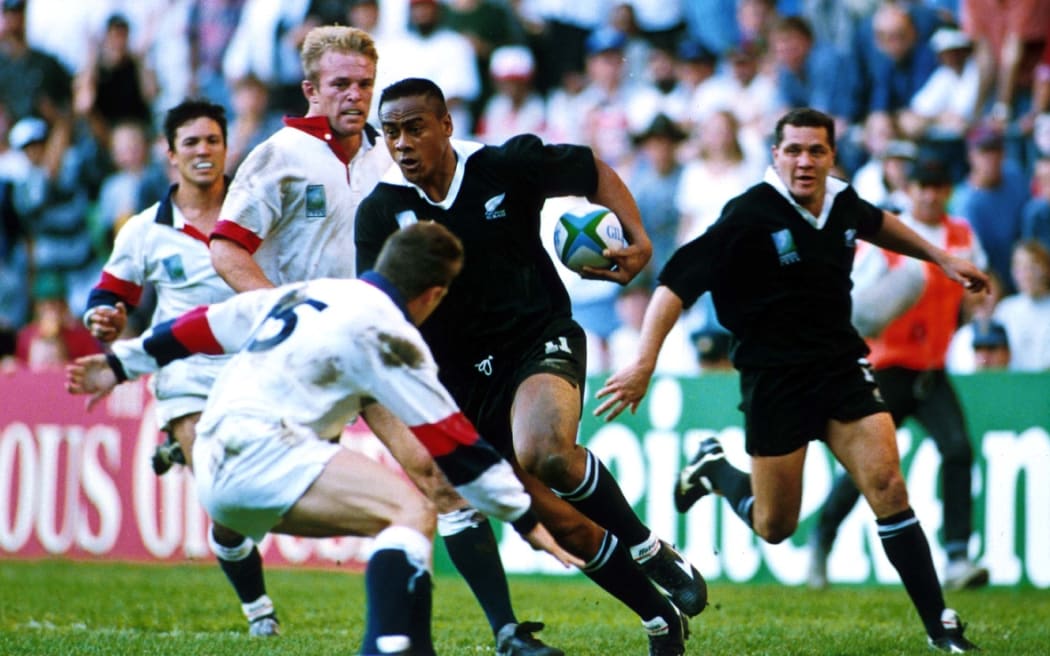
The 1995 World Cup is certainly the most famous, and with good reason. Jonah Lomu, Nelson Mandela, the Rainbow Nation, the epic final and some potential poisoning/bad culinary choices (depending on who you listen to).
At the time, the All Blacks’ 15-12 overtime loss to the Springboks thanks to a Joel Stransky drop-goal was heartbreaking for New Zealanders, but Lomu’s incredible performance in the tournament kicked the game into professionalism by the next year. He scored four tries against England in the semi-final, plus two against Ireland and one more against Scotland, to return home as rugby’s first global super star.
The All Blacks did gain a bit of revenge over the Springboks in 1996, winning a series in South Africa for the first time in the team’s history.
1995 RWC FACT: The All Blacks defeated Wales as well at the tournament, which makes them the only side to claim a ‘Grand Slam’ inside a World Cup. They also defeated France and Italy later that year, which is the last time any team has recorded wins over all those nations in a calendar year.
1999
Hosts: UK, Ireland and France
Champions: Wallabies
Another crushing defeat, but this one wasn’t taken in such good spirit by New Zealanders.
The newly professional All Blacks arrived full of swagger in a personalised painted jet, certainly looked the goods in pool play with a commanding win over England, breezed past Scotland in the quarters only to be beaten in a French ambush that would have made Napoleon proud.
The 43-31 loss at Twickenham ranks as one of the most painful ever, especially given that the All Blacks were comfortably leading well into the second half. Three French tries in 20 minutes saw the game turned on its head, and before they knew it, the All Blacks were playing off for third instead of for the World Cup. They lost that game too.

France celebrate after their semi final World Cup win against the All Blacks in 1999. Photo: Photosport
The Wallabies were in the midst of a golden age when they comfortably beat France in the final to become world champions for the second time. They would also hold the Bledisloe Cup for a five-year period, to date the last time they have ever done so.
1999 RWC FACT: The newly completed Millennium Stadium in Cardiff was the main stadium for the tournament, the first ever rugby venue with a retractable roof. It remains one of the most iconic stadiums in the world.
2003
Host: Australia
Champions: England
It was all going according to plan in ’03, until Wallaby centre Stirling Mortlock picked off a Carlos Spencer pass and gunned it 80 metres up field at Stadium Australia to score a try that sent the All Blacks crashing out of another semifinal.
That was just the on-field failure for the NZRU. The tournament was supposed to co-hosted by New Zealand as well, but that right was lost due to some amateur-hour administration in regards to sponsorship rights.
The loss was even more galling given that the All Blacks had won back the Bledisloe Cup by beating the Wallabies twice earlier that year, including a 50-21 win at the same venue. England, who had beaten the All Blacks a few months previously in Wellington, went on to win thanks to an iconic Jonny Wilkinson drop-goal in the final.
The fallout was swift and strong: coach John Mitchell was shown the door despite an 83 percent winning record, and his preference for picking Leon MacDonald over Christian Cullen led to one of the great ‘what if’ discussions in the years since.
2003 RWC FACT: The All Blacks beat Wales 53-37 in their wildly entertaining pool game. Despite losing, the Welsh points tally was more than their first 64 years’ worth against the All Blacks since they first met in 1905.
2007
Hosts: France, Wales, Scotland
Champions: Springboks
More French-inflicted misery, as the tournament hosts bounced back from a loss to Argentina in their pool to sensationally beat the All Blacks in a quarter-final – to date the worst result the All Blacks have ever had at a World Cup.
Much has been said about the manner of the 20-18 loss, almost entirely about a forward pass, referee Wayne Barnes and the ugly grey jerseys the All Blacks were wearing. But it does skip the fact that this was a very closely fought game, and there was no guarantee the result would have been different had Barnes seen Freddie Michalak’s pass that set up Yannik Jauzion’s try.
The All Blacks’ soft draw certainly contributed to their demise, with games against Scotland, Romania, Portugal and Italy meaning they comfortably managed to be the highest scoring team in the tournament despite playing two fewer games than they should have.
2007 RWC FACT: While Portugal were flogged 108-13, prop Rui Cordiero has the distinction of scoring his nation’s first ever try against the All Blacks. Cordiero barged over to the delight of the Lyon crowd, the same city where the All Blacks are based for the 2023 tournament.
2011
Host: New Zealand
Champions: All Blacks
Finally. After 20 years of waiting, the All Blacks could call themselves world champions again after defeating France 8-7 in an incredibly tense final in front of 60,000 at Eden Park.
The game has gone down in history as one of the most nerve-wracking events in the country’s history, with the team losing Dan Carter, Colin Slade and Aaron Cruden to injury, meaning Stephen Donald was recalled to the side to kick the most important goal of his life. The fever around the country was something that’s unlikely to ever be seen again as New Zealanders packed out stadiums, public viewing areas, pubs, clubs and sitting rooms to make it the largest sporting event ever to be held here.

Dubbed the three-way handshake: IRB boss Bernard Lapasset, PM John Key and All Blacks captain Richie McCaw with the Webb Ellis Cup at the conclusion of the 2011 Rugby World Cup. Photo: Photosport
It is very much worth remembering that the win came only months on from the Christchurch earthquake, which condemned Lancaster Park and meant the city did not host any games.
2011 RWC FACT: France had effectively mutinied against their coach Marc Lievremont after they lost to Tonga in pool play, which meant his team selections certainly carried a very passive-aggressive bent. He selected Jean-Marc Doussain to make his test debut in a World Cup final – meaning the reserve halfback is the only player to be able to claim that status.
2015
Hosts: England, Wales
Champions: All Blacks
The All Blacks did it relatively easily the next time around, with only one close game coming in a 20-18 win over the Springboks in their semi-final.
The 62-13 quarter final destruction of France in Cardiff buried any lingering feelings about the 2007 loss, with the result being an even bigger hiding than the ones the All Blacks had dished out to Namibia, Georgia and Tonga. The final was very much another day at the office against the Wallabies, which was won 34-17 and bookended arguably the greatest four-year period in All Black history.
The final also saw the curtain come down on the test careers of Richie McCaw, Dan Carter, Ma’a Nonu, Conrad Smith and Tony Woodcock – who had 575 test caps between them.
2015 RWC FACT: Despite being held in the UK, the tournament was a stunning success for Southern Hemisphere rugby with the semi-finalists being the All Blacks, Springboks, Wallabies and Pumas.
2019
Host: Japan
Champions: Springboks
Did the All Blacks do the Boks the biggest favour ever by beating them in the opening game of the tournament?
Things might have been very different if Steve Hansen’s side had been sent to the other side of the draw, where they may well have avoided the English team that bundled them out in the semi-finals. The loss was the end of Hansen’s tenure as coach, but the cracks had started to appear two years previously when the All Blacks could only draw a series with the British & Irish Lions.
The Springboks went on to convincingly win the final 32-12, meaning they now share the record for the most World Cups with the All Blacks.
It was the first World Cup held in Asia, and the All Blacks’ massive appeal in the Japanese market has led to it being a repeat destination for them since.
2019 RWC FACT: The final was supposed to be played at the stadium that was being built for the following year’s Olympic Games, but it was unable to be built in time. Instead, it was held at Nissan Stadium in Yokohama, which had also held the 2002 FIFA World Cup final.
RNZ



Latest News
Opportunities to mitigate multi-million-dollar RNZ budget blowout likely missed – experts
Multiple opportunities to identify and mitigate a multi-million-dollar budget blowout at RNZ appear have been missed, according to the former executive director at Audit New Zealand.
The public broadcaster on Monday revealed a near $12 million shock financial loss after a litany of financial blunders, which will now lead to sweeping job cuts.
The $11.8m loss is more than 25 times the $470,000 RNZ had expected to lose over the year to June.
CEO Paul Thompson took responsibility for the result, and said internal reports gave an inaccurate picture of the finances, meaning the scale of the loss only became clear in October.
RNZ’s former chief financial officer Hilary Parker resigned unexpectedly in early October.
The board said it would commission an independent review into what went wrong.
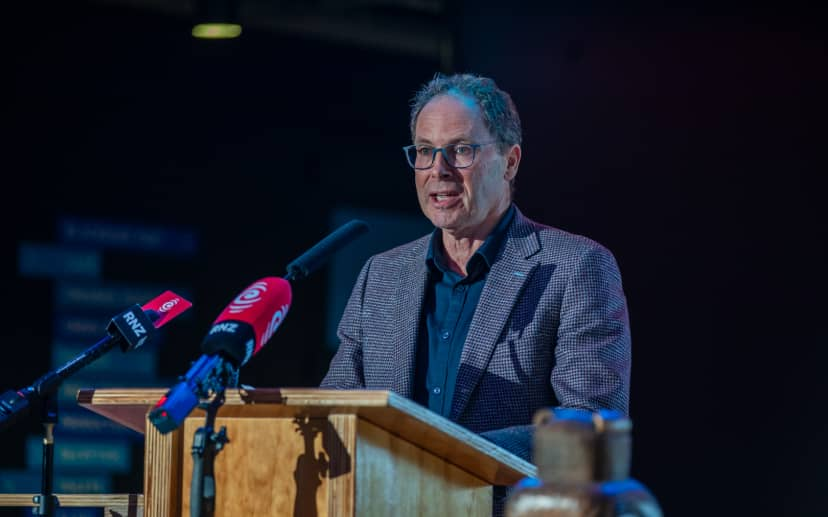
Independent contractor Stephen Walker, who left the Audit Office earlier this year, said the size of the loss was surprising, as was the length of time it took to identify it – months after the financial year ended.

Supplied / OAG
“Probably more of a concern is that they had seemingly been unaware that they were running up a significant deficit until they were in the preparation stage of their annual report in October.”
Walker said public entities typically produced monthly financial reports.
An interim audit also took place before the end of the financial year, he said, but if the organisation hadn’t identified significant losses at that stage, the auditor could also be in the dark.
“It seems that there’s a real weakness in forecasting and budgeting that’s occurred here and that the monthly accounts, when they’re produced, either haven’t identified these significant variances against budget or the magnitude of them really hasn’t come to light until right towards the end of the financial year,” Walker said.
“And really at that point, there’s no opportunity for the chief executive, the leadership team to take, and the board to take, any corrective action because the year has effectively been completed.”
Walker said the “significant miss” was difficult to account for given it was more than 10 percent of RNZ’s total funding.
He said based on RNZ’s annual report, financial complexity didn’t appear to be a factor.
“This $11.8m loss isn’t made up of one particular item … it seems to have been contributed to by a number of separate expense lines running over budget. So I don’t think it’s necessarily to do with complexity.”
Among the errors, RNZ wrongly counted $2m from land sales as income in its budget. Staff costs also came in $3.2m over budget, including $1.4m in redundancy payments.
Professor at Auckland University’s business school Norman Wong said based on media reports the issues identified were “significant and troubling”.

Supplied / University of Auckland
“But recognising the sale of land as income in their budget is a basic error that one would have expected to have been caught and corrected well before it got to this point.”
With funding reductions at RNZ over the past two years, Walker expected greater scrutiny of financial results.
“Virtually every public entity has had their annual budget reduced. And so you would expect … the leadership team on a monthly basis and board – I’m not sure how frequently the board will consider the information – but you would expect them to be interrogating the results on a regular basis throughout the year,” he said.
Walker said initiating an independent review was the correct course of action and that he’d want to understand what information the leadership team and the board were regularly receiving.
He said he’d “love to say” surprising financial results were rare, but conceded they occured on a semi-frequent basis during his time leading the Audit Office.
“The benefit of independent scrutiny by the Audit Office – and the auditors providing that support to the Auditor General – [is] that the reporting is fairly presented at the end of the year, whether it’s good, bad or ugly.”
rnz


Police say person who fired gun at officers still at large

New Zealand sides named for RLWC finals

Parliamentary Service working on extra chairs and offices for increased number of MPs


-

 Latest News2 months ago
‘Chilling’: Business groups speak out against National’s supermarket break-up plan
-

 NZ News2 months ago
Tom Phillips report: The missed opportunities to find the children
-

 Politics2 months ago
National vows to try to split Pak’nSave and New World
-

 Latest News2 months ago
Cars bearing Chinese police markings stir unease in Auckland
-

 Fiji News2 months ago
Plans to have new Constitution by Dec 24th 2026
-

 NZ News2 months ago
Cop who stole $68,000 can now be named as champion Muay Thai fighter Haimona Tamati-Te Paki
-

 Politics2 months ago
MBIE confirms botched biometric projects costs blown out to $50.7 million
-

 Latest News2 months ago
Five Karangahape Road venues lose their liquor licences after police intervention