

Latest News
Taranaki Cathedral to host ‘Super-Awesome Origin Story of Co-Governance’ talks

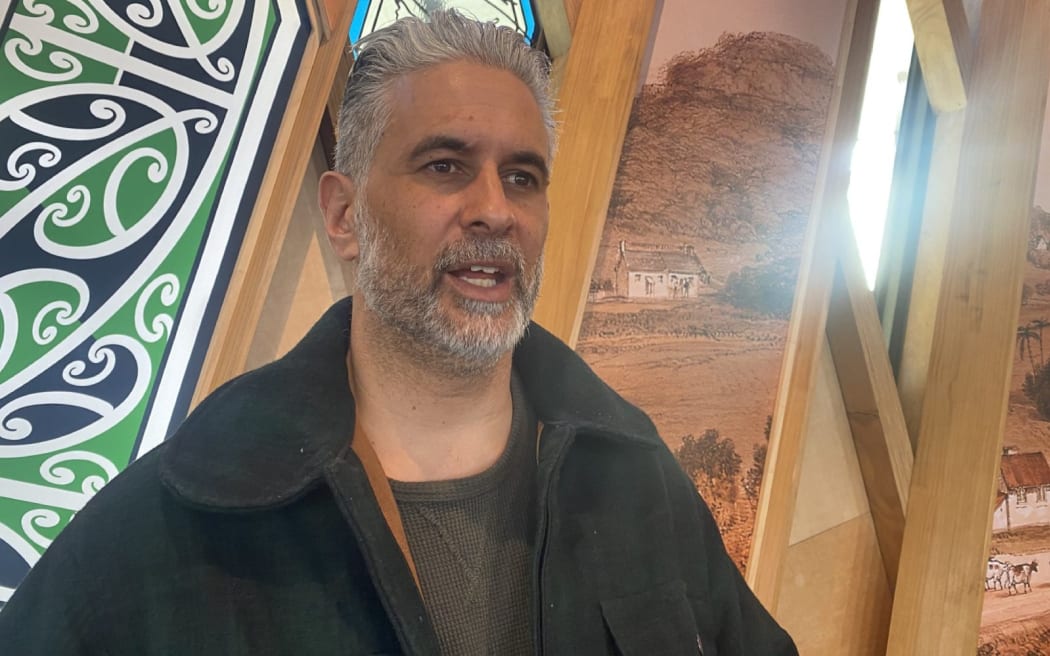
The organiser of a series of Taranaki talks about co-governance says he wants to dispel needless fears around the issue.
The Super-Awesome Origin Story of Co-Governance will see four evening talks at Taranaki Cathedral’s Te Whare Hononga, beginning in a fortnight.
The cathedral’s Dean Jay Ruka said talk about co-governance was mostly framed in fear.
“I wondered, how I could take it to the opposite of that spectrum of fear and just make it the most outrageously positive idea that we’ve ever seen?”
Ruka said the fear of co-governance came after years of hostile debate over the Treaty of Waitangi.
“It’s framed with antagonism and people are scared of it… Because we’ve seen generations of rightful protest, the Pākehā mind wants to back away from that, because nobody wants to sign up to antagonism.
“It’s received by the majority of New Zealand through the lens of loss: We’re missing out, we’re losing.”

But Ruka said understanding the story behind co-governance and the Treaty could bring a sense of maungārongo (peace) to people.
“You’ve got to speak to that wairua, understand that wairua, how people have built up a defence mechanism in themselves.”
“They’ll come away with the idea that co-governance is the best of the Pākehā imagination and the best of the indigenous Māori imagination. What a win it is for our land if those two imaginations are working together.”
Co-governance is an arrangement to share decision-making between central or local government and other stakeholders – in this case iwi or hapū.
In many cases it is about managing natural resources, often with particular attention to cultural and environmental impacts.
Co-governance is also often a label used where co-management is perhaps a more accurate term, when councils and Māori collaborate to operate a public amenity or service or put a policy into practice.
Councils are increasingly utilising co-governance to meet their legislated Treaty obligations, but it has become a political hot potato, especially in the lead-up to October’s election.
Ruka said the first session at the cathedral would focus on why the Crown wanted a Treaty and why Māori were interested in signing it.
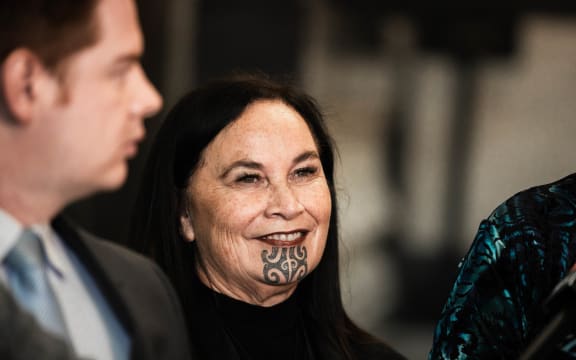
Debbie Ngarewa-Packer Photo: RNZ / Samuel Rillstone
The following week would look at the Te Reo and English versions of the Treaty and arguments that British sovereignty was not monolithic.
“Who is the sovereign of England right now? The king. Who exercises sovereignty? Parliament. So, there’s shared sovereignty within the Westminster system at the moment.”
New Plymouth’s first Māori ward councillor would speak in the third week, along with Puna Wano-Bryant and the cathedral’s priest Dan Lander, who both pushed for the ward as part of Rongomau Community Action.
The final week would feature Taranaki election candidates: Te Pāti Māori co-leader and MP Debbie Ngarewa-Packer, New Plymouth Labour MP Glen Bennett, and National candidate and former Taranaki Regional Council chairman David MacLeod.
“We’re going to have a conversation about their aspirations, their considerations, about what does co-governance mean to them now – what could it look like for them in the next 50 years?
“I’ll keep it away from a political debate, I want it to be a session of imagination – but we’ll see how that goes because it’s one month from the election.”
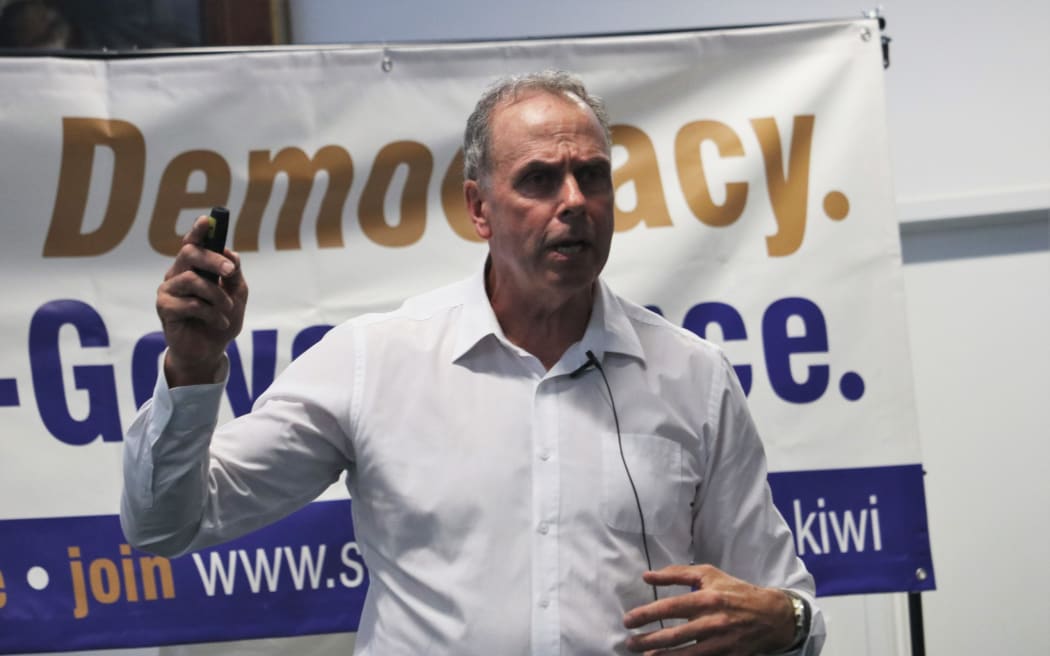
Julian Batchelor. Photo: LDR / Peter de Graaf
Two weeks ago, the Taranaki leg of a nationwide tour of Stop Co-Governance rallies was forced online-only, after organiser Julian Batchelor failed to secure a venue.
New Plymouth Raceway became the latest of many venues across the country to cancel a booking by Stop Co-Governance, citing safety concerns over heated meetings and protests at previous rallies.
Ruka said Batchelor had a right to speak and others a right to protest.
But he was disappointed Batchelor ignored an invitation from Rongomau Community Action to a discussion at Te Whare Hononga.
“[They] invited him to a conversation, so that’s weak man – bring it to the table. It feels like the last stand of the Don Brash era.”
The Anglican Church had a place in the debate as missionaries were central to the Treaty signing in 1840.
It could also offer insight from its own co-governance efforts, said Ruka.
In 1984 the church set up the Anglican Bicultural Commission on the Treaty of Waitangi, leading to a new constitution in 1992 with three autonomous tikanga: Māori, Pākehā and Pāsifika.
Ruka said Anglicans were still working at making that effective and fair, especially after the value of predominantly urban property under the Pākehā tikanga had “gone through the roof” over the past three decades.
“That’s all being talked about by this generation.”
“Now Taranaki Cathedral is the first of our eight cathedrals to come under both Pākehā and Māori tikanga.”
The weekly series begins at 7pm on 22 August at Taranaki Cathedral’s Te Whare Hononga.
Local Democracy Reporting is Public Interest Journalism funded through NZ On Air.
VIA RNZ


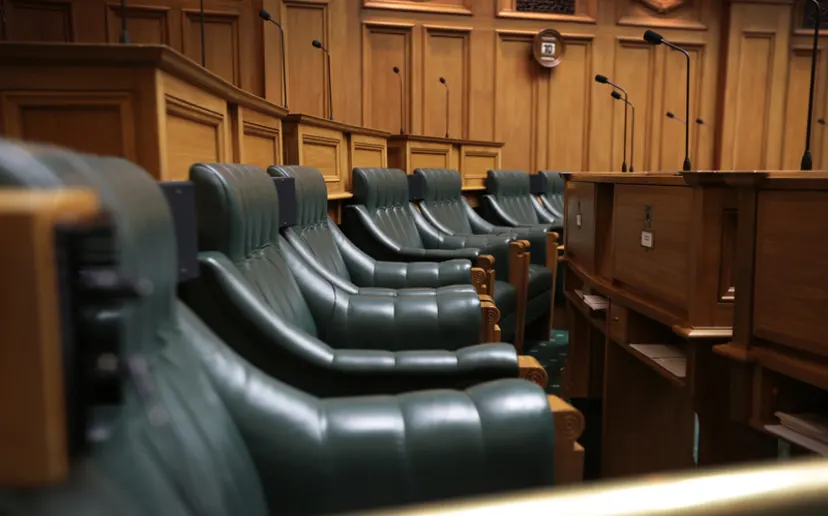
The chief executive of the Parliamentary Service is confident there will be enough room to accommodate the increased number of MPs and their staff coming into Parliament.
On current numbers, up to 131 MPs could be sitting in the Chamber following the election, brought on by a record overhang result.
Clerk of the House of Representatives Dr David Wilson told the Spinoff that currently the debating chamber had enough chairs to seat 124 MPs – including the Speaker of the House – and work was being done to accommodate more by altering the seating arrangement.
In a statement, Parliamentary Service chief executive Rafael Gonzalez-Montero said planning for a larger Parliament had been going for “some time”.
“Now that the election results have confirmed an increase to the number of members we are looking at several options.
“We are confident we will be able to accommodate all members within the Chamber.”
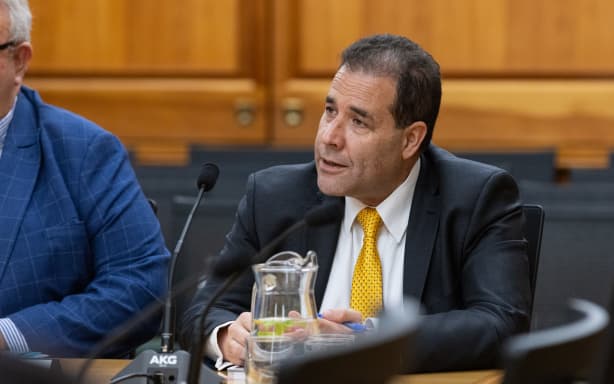
VNP / Phil Smith
Gonzalez-Montero said office accommodation for members and their staff would be “stretched” for a short time, but the new Members’ Building was only a few months away from “practical completion”.
That building – located behind Parliament – was due to be ready to occupy in April next year and had capacity to accommodate around 30 backbench MPs.
“All members should be in fit-for-purpose accommodation from that point,” Gonzalez-Montero said.
Following the 2023 election, 123 MPs sat in the Chamber – a record number at the time. That decreased to 122 following the resignation of National MP Judith Collins.
Collins held the seat of Papakura and stepped down in May and Parliament voted against holding a by-election because it was too close to the election.
The election result also meant high-ranking National Party MPs like Chris Bishop, Paul Goldsmith, Nicola Willis and Gerry Brownlee – Speaker of the House and an MP for 30 years – would likely not make it back into Parliament.
Only resigning or retiring MPs were permitted to give a valedictory speech meaning none of them would get the chance to give a valedictory statement.
Asked if their would be special allowances for valedictories, Wilson said in a statement that normally only MPs were allowed to speak in the House but the House could suspend its own rules or temporarily alter them.
“It could do so to allow former members to address the House.”
Wilson said no such arrangements could be made until the next Parliament opened and members sworn in.
rnz


Police say person who fired gun at officers still at large

New Zealand sides named for RLWC finals

Parliamentary Service working on extra chairs and offices for increased number of MPs


-

 Latest News2 months ago
‘Chilling’: Business groups speak out against National’s supermarket break-up plan
-

 NZ News2 months ago
Tom Phillips report: The missed opportunities to find the children
-

 Latest News2 months ago
Cars bearing Chinese police markings stir unease in Auckland
-

 Politics2 months ago
National vows to try to split Pak’nSave and New World
-

 Fiji News2 months ago
Plans to have new Constitution by Dec 24th 2026
-

 Latest News2 months ago
Five Karangahape Road venues lose their liquor licences after police intervention
-

 Politics2 months ago
MBIE confirms botched biometric projects costs blown out to $50.7 million
-

 NZ News2 months ago
Cop who stole $68,000 can now be named as champion Muay Thai fighter Haimona Tamati-Te Paki