

Latest News
Election 2023: Chris Hipkins and Kelvin Davis announce govt will build two new youth justice units

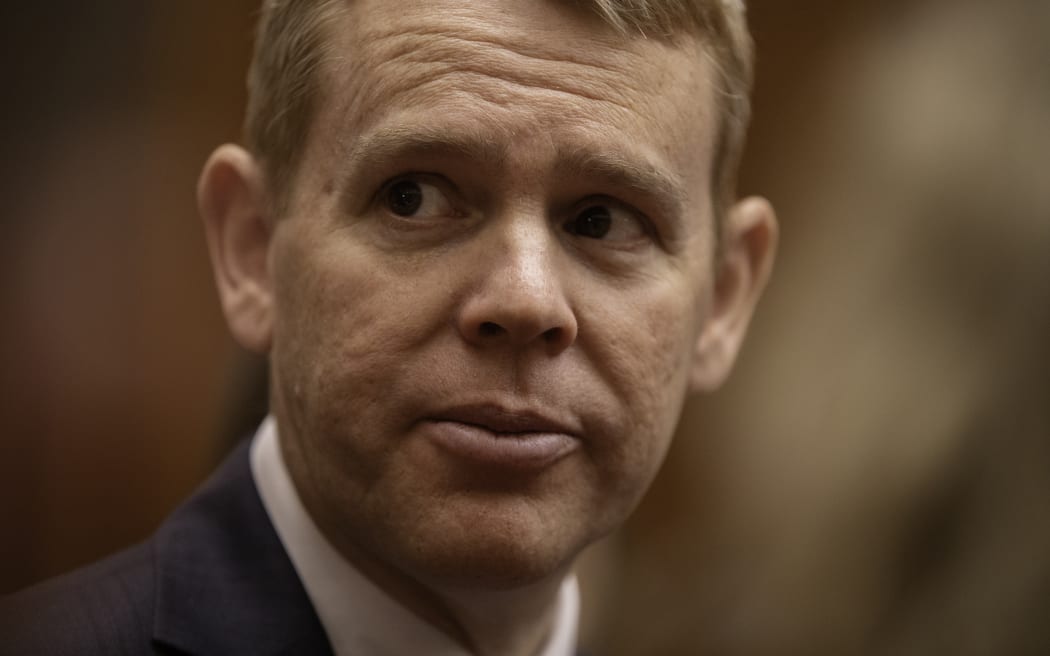
Prime Minister Chris Hipkins and Children’s Minister Kelvin Davis have revealed a law and order policy concerning young offenders.
Hipkins announced the next component of his party’s latest law and order package
“As I indicated yesterday, we are focused on the three pillars of prevention, protection and accountability.”
“I said yesterday that the system needed a shake-up and announced the first of the changes that seek to break the cycle of offending, back the police in their fight against crime, and increase the accountability of offenders. Today the government is taking further steps to strengthen the youth justice system. We’ll be starting work on two new high needs units and will be making changes to legislation to make residences safer and more secure,” Hipkins said.
“When a young person is sent to a youth justice facility by the court, the public have an expectation that they’ll not only be held accountable for the crimes that they’ve committed, such as a ram-raid, but they’ll also receive the rehabilitation support that they need.
“Youth justice residences need to be secure, safe places and it’s become clear that the introduction of 17 year olds into that system has created challenges and we need to do things differently.”
Hipkins said the government would start work towards building two new youth justice units that would cater to up to 30 higher-needs youth.
“These units will aim to provide more intensive support for the most serious offenders, and will predominantly cater for older teenagers. There is a big difference between a 14-year-old and a 17-year-old and the support and guidance that they need.
“We need a continuum of care that recognises that.
“I want to make sure that these units are designed with the best possible rehabilitation models in mind for these offenders. While we are working to provide residences with the flexibility, the resources and the facilities they need to deal with different levels of offending, it’s also clear that the best way to both reduce victimisation and to break the cycle for a young person is to provide support and supervision for them and their family as early on as possible.
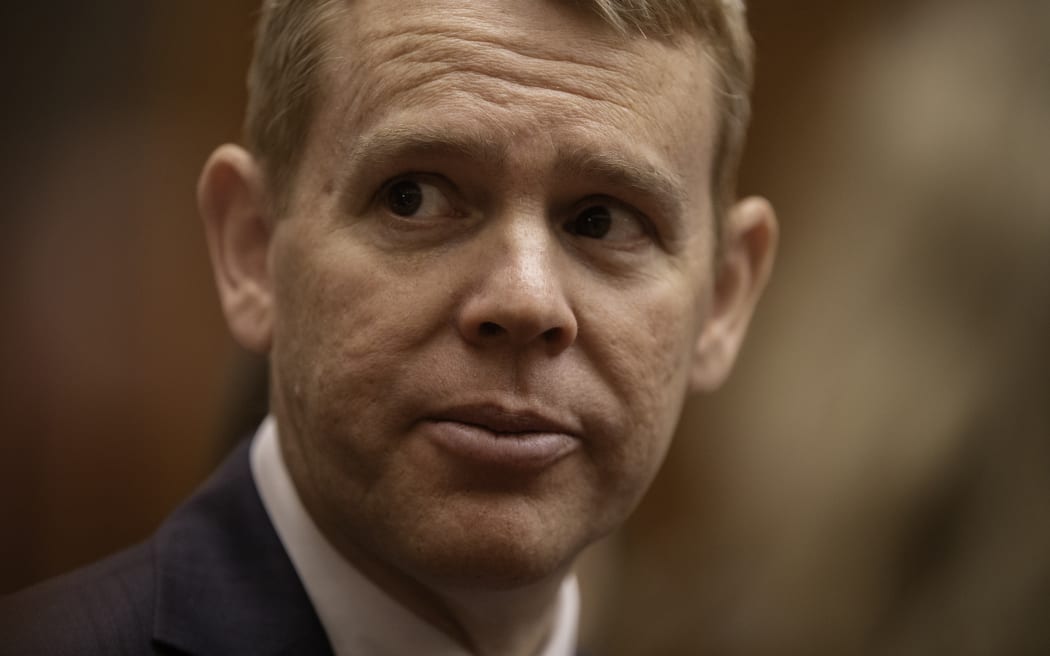
Chris Hipkins Photo: RNZ / Angus Dreaver
Earlier today, Hipkins spoke to Morning Report and admitted a mistake in a crime announcement made on Monday.
Hipkins announced a new offence for adults inciting youth to commit crime but his office issued a correction less than two hours later, saying the policy would instead make it an aggravating factor in sentencing, not a new offence.
Hipkins said the government was originally considering targeting gang members through a new offence and details of the two options were conflated in the preparation for his announcement.
“Unfortunately in the preparation of my speaking notes and my press statement that was conflated and I didn’t pick that up in the preparation for my press conference so yes, I absolutely accept responsibility for that, that was a mistake.”
In today’s announcement, Hipkins said police and Oranga Tamariki would also be changing some of their procedures.
“They will be developing a protocol to streamline the process for referring a young person to a family group conference so we are responding quicker when a young person has breached a Family Court order.
“This will add greater accountability with offences like ram-raids and smash and grabs automatically reaching the threshold for police to refer an offender to a family group conference.”
“We know that these processes often reduce the chances of a young person reoffending. We know the public want us to put effort and resources into breaking the cycle of criminal offending and to get these young people back on to the straight and narrow. When the Family Court has granted custody and support orders for these people, that include conditions to manage the risk of reoffending, we need to respond quicker to any sign that is happening and these protocols will help us to do that.”
Hipkins said making sure police and Oranga Tamariki worked together and had clear processes when someone should or shouldn’t be referred to a family group conference would help to speed up the system, and lead to better results for everybody.
Davis said the public had an expectation that anyone who committed a crime would be held accountable.
“Our youth justice facilities play an important role in that equation and if a judge sends a young person to a residence, they need to be safe, secure, and receive the rehabilitation that they need.
“It’s no secret there has been such issues in youth justice to sort out, that is why Mike Bush has been brought in to lead that work and I have no doubt his review will get to the bottom of it. But we have also seen challenges emerge through the introduction of older teenagers into youth justice residences.
“While Covid masked the initial impact of this, those difficulties have started to become clear and I’ve been working with Oranga Tamariki to try and resolve this, driving changes such as better staff training. But the escalating behaviour, such as increased attempts by groups to escape onto the roof and put themselves and staff at risk means more needs to be done.
“That’s why we are proposing some legislative changes to the Oranga Tamariki Act to make these residences safer and more secure.”
Davis said the first thing they would do is introduce the ability for anybody who entered a youth justice residence to be searched.
“Currently, there is no ability to require this of staff or visitors and only limited ability when a young person arrives. Unfortunately, this is allowing contraband such as vapes, cellphones and even weapons to get into the facilities and that in unacceptable. Under this change, anybody, whether staff, family, or a young person will have to undergo a non-invasive search, akin to courtroom security.”
“Secondly, at the moment, staff can only place a young person in secure care if they are going to escape or hurt somebody else. We will add an extra tool for staff by allowing a young person to be placed in secure care if there is an imminent risk of a mass disorder event, such as the group roof escapes. There will be very strict guidelines around this and de-escalation is always the first approach, but it will allow staff to act when they know something is brewing with a group of young people.
“Lastly, we know that the best option to reduce the chance of a young person reoffending is to put the resources and effort in early to break the cycle. We are doing that with things like the circuit-breaker fast track approach, but family group conferences also play a big part when a child offends. So that is why we will put extra resources into hiring more family group coordinators who for the first time, will focus solely on this issue.”
Hipkins said these measures build on the wide-ranging work that they have already been doing to address youth offending.
“Some of that work is starting to make a real difference but we know we have more work to do. We are going to keep our focus on what works, and that means getting the right mix of consequences, rehabilitation and community protection.”
No timeline for construction
Hipkins said there was no timeframe for when the new units would be built – but they were wanted as soon as possible – ideally, at residences already established in Auckland and Christchurch.
The units would be aimed at 17- and 18-year-olds, but Davis could not state for a fact that people aged as young as 12 or 13 would not also be in them.
He said his “preference” was for it to only be for older teenagers but that would all be part of the business case still to be developed.
Even if younger teens were in the units, there would be ways to keep them separate from older teens.
Hipkins denied the announcement was a “knee-jerk reaction” and the government was simply being transparent.
“We need to let people know that we’re doing this work. If we started doing this design work and started to go out and procure the construction of these facilities without telling anyone about it, you would tell us we were doing some secret agenda. We are being transparent about the work we are doing.”
He also denied it being anything like what the ACT Party had proposed to deal with youth crime.
“What ACT are proposing is effectively a prison run by Corrections which would have, I think, up to 200 beds in it so it’s basically a mega-prison for young people. That is not what we are talking about here.
“We are talking about a continuum of care for troubled young people who, in some cases, have just serious offending and need serious support to rehabilitate, to get back on the straight and narrow, and to face the consequences for what they’ve done. That’s different to basically setting up a mega-prison for kids.”
Davis said those who are found to need higher care will already be in youth justice residences.
“It’s not like building something to fill up with more young people.
“These young people are already in youth justice residences but it is found that they have a higher level of care, and if I can just switch hats and put on my Corrections hat, when we made the decision to build Waikeria (Prison), we also had the 100 mental health beds and it’s akin to that, where they will need a lot more intensive support but it’s not about bringing in more kids and building a whole new facility.”
Davis not happy with recruitment, training
Davis said he anticipated greater mental health support and counselling would be more intensive for those in these units – and staff to deal with that were needed.
He said Oranga Tamariki needed an “intensive campaign” – like Corrections had, to attract the right people with the right skills for the job.
“I haven’t been happy with the way staff have been recruited or trained,” he said.
Training had been extended to six weeks, but even that was not long enough, he said.
The facilities will take some time to be built, giving Oranga Tamariki the time to identify, recruit and train staff.
VIA RNZ



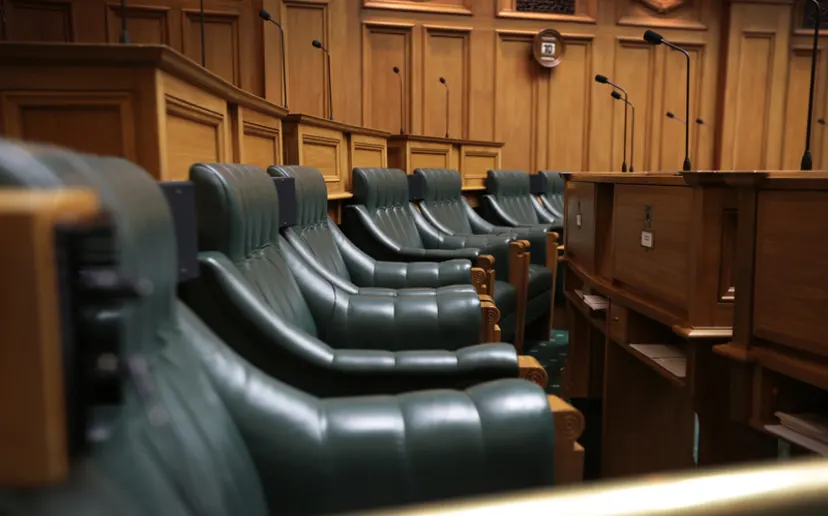
The chief executive of the Parliamentary Service is confident there will be enough room to accommodate the increased number of MPs and their staff coming into Parliament.
On current numbers, up to 131 MPs could be sitting in the Chamber following the election, brought on by a record overhang result.
Clerk of the House of Representatives Dr David Wilson told the Spinoff that currently the debating chamber had enough chairs to seat 124 MPs – including the Speaker of the House – and work was being done to accommodate more by altering the seating arrangement.
In a statement, Parliamentary Service chief executive Rafael Gonzalez-Montero said planning for a larger Parliament had been going for “some time”.
“Now that the election results have confirmed an increase to the number of members we are looking at several options.
“We are confident we will be able to accommodate all members within the Chamber.”
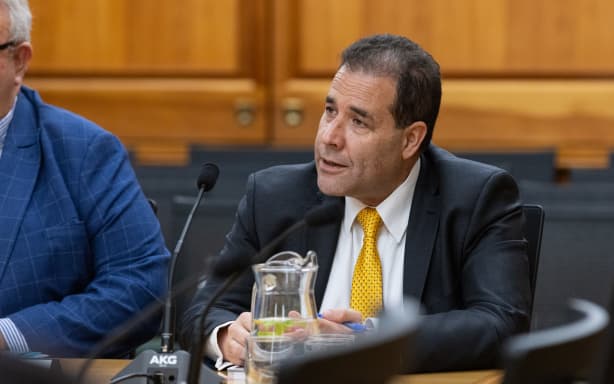
VNP / Phil Smith
Gonzalez-Montero said office accommodation for members and their staff would be “stretched” for a short time, but the new Members’ Building was only a few months away from “practical completion”.
That building – located behind Parliament – was due to be ready to occupy in April next year and had capacity to accommodate around 30 backbench MPs.
“All members should be in fit-for-purpose accommodation from that point,” Gonzalez-Montero said.
Following the 2023 election, 123 MPs sat in the Chamber – a record number at the time. That decreased to 122 following the resignation of National MP Judith Collins.
Collins held the seat of Papakura and stepped down in May and Parliament voted against holding a by-election because it was too close to the election.
The election result also meant high-ranking National Party MPs like Chris Bishop, Paul Goldsmith, Nicola Willis and Gerry Brownlee – Speaker of the House and an MP for 30 years – would likely not make it back into Parliament.
Only resigning or retiring MPs were permitted to give a valedictory speech meaning none of them would get the chance to give a valedictory statement.
Asked if their would be special allowances for valedictories, Wilson said in a statement that normally only MPs were allowed to speak in the House but the House could suspend its own rules or temporarily alter them.
“It could do so to allow former members to address the House.”
Wilson said no such arrangements could be made until the next Parliament opened and members sworn in.
rnz


Police say person who fired gun at officers still at large

New Zealand sides named for RLWC finals

Parliamentary Service working on extra chairs and offices for increased number of MPs


-

 Latest News2 months ago
‘Chilling’: Business groups speak out against National’s supermarket break-up plan
-

 NZ News2 months ago
Tom Phillips report: The missed opportunities to find the children
-

 Politics2 months ago
National vows to try to split Pak’nSave and New World
-

 Latest News2 months ago
Cars bearing Chinese police markings stir unease in Auckland
-

 Fiji News2 months ago
Plans to have new Constitution by Dec 24th 2026
-

 NZ News2 months ago
Cop who stole $68,000 can now be named as champion Muay Thai fighter Haimona Tamati-Te Paki
-

 Politics2 months ago
MBIE confirms botched biometric projects costs blown out to $50.7 million
-

 Latest News2 months ago
Five Karangahape Road venues lose their liquor licences after police intervention