Connect with us

HTML Image

i

Politics

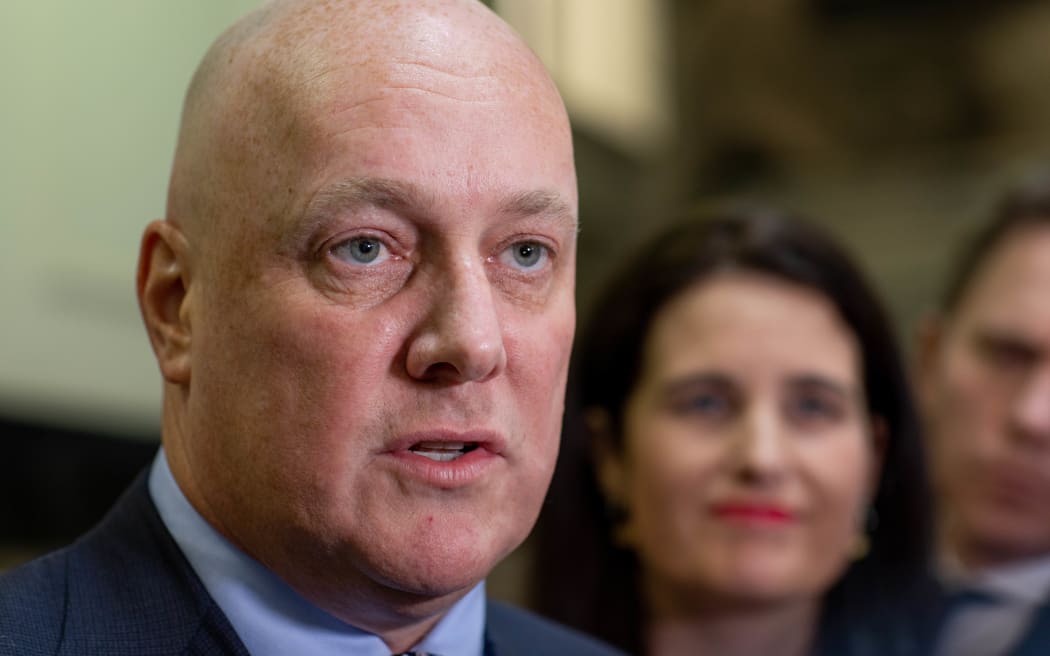
Chris Luxon rejects Chief Science Advisor’s report on gang harm reduction

Published

on

National Party leader Christopher Luxon is disputing a report which says the country cannot arrest its way out of the gang problem.

The Prime Minister’s Chief Science Advisor’s report into gangs warns targeted enforcement runs the risk of strengthening gang cohesion and reinforcing anti-social attitudes.

The report – based on studies from New Zealand and overseas – concludes there is no quick way to reduce gang harm, which would require tackling underlying issues like intergenerational trauma, inequity, housing and family violence.

National Party leader Christopher Luxon told Morning Report he totally disagreed with the report’s statement that a ‘zero tolerance’ style of policing could risk fuelling gang membership by increasing gang dislocation and isolation.

Hitting back at the suggestion the report showed National’s gang-targeting policies were likely to make the problem worse, he said gangs peddled in misery and suffering, and wanted all the rights of being a New Zealander but were not prepared to accept the responsibilities.

“I make no apologies for being tough on gangs, we’re going to ban those gang patches. We’re going to give the police dispersal powers for criminal activity break-up powers, warrant and search powers. We will make it an aggravating factor.”

It was essential to rehabilitate gang members while they were in prison and National would work on the causes of crime as was evident in the party’s social investment strategy, he said.

“But that’s not an excuse for saying you don’t be tough on crime and tough on gangs, you need to … have both stick and carrot, it can’t just all be carrot.”

Put to him that gangs were a politicised issue – with National making accusations Labour was soft on crime – he said it was not.

“It’s not a politicised issue, We’re being really clear about the causes of crime,” he said. “They are soft on crime. Crime is going up … this government’s operating in a very different way, it’s sent a message from the very top that they’re soft on crime.”

He used the example of the $2.7 million given to the Mongrel Mob for rehabilitation services.

“That’s insane, that’s insane, they’re the people that create the drug dependency in the first place, there’s much better rehabilitation providers than the Mongrel Mob.”

Luxon was also questioned over how he could dismiss the report, given his party was quite happy to quote from the Chief Science Advisor when it backed his genetic modification policy.

He said he had looked at other evidence – from Western Australia where (former Premier) Mark McGowan had “done an exceptionally good job of cracking down on gangs”, as well as evidence from Queensland.

Juvenile youth facilities necessary but need better management – Luxon

Luxon said juvenile youth facilities were necessary because there were vulnerable but also very troubled young people who were a risk to society.

Oranga Tamariki said that a video that had been circulating online of two teenage boys attacking one another at the youth justice facility Korowai Manaaki in Auckland on 16 June was filmed by a staff member.

Luxon said the questions were who was accountable, who was running the facility, and who was setting the culture for staff.

“What you’ve got here is a management problem, a leadership problem … you know, the problem in these major facilities where staff members stand around watching an MMA [Mixed Martial arts] type fight and it’s sickening.”

The facilities needed much better management, leadership, mentoring and support to work with the young people, he said.

“Yes they’re being punished in some degree and they’re keeping the rest of the public safe by putting them in these facilities but … they need to be able to deal with their issues, whether it’s addiction, whether it’s numeracy, whether it’s literacy, you know a whole bunch of trauma, a whole bunch of issues.”

The experience could be a positive one for the young people, but the right staffing, leadership and culture in the facilities would be needed for that to happen, he said.

“It starts with the minister, the minister is only fronting after these issues come into the media domain, beyond that he’s not fixing things.”

Source: RNZ

Continue Reading
Click to comment

Leave a Reply

Your email address will not be published. Required fields are marked *

Politics

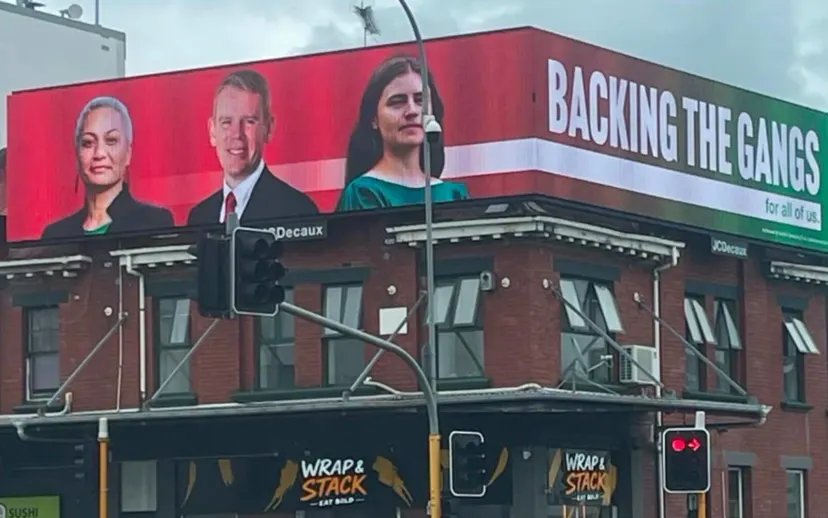
Greens blast ‘backing the gangs’ election billboard ads

Published

on

The Sensible Sentencing Trust is “formally challenging” Green Party co-leader Chlöe Swarbrick to meet with it – and victims of gang violence – before the election.

The lobby group launched election attack ads featuring both Green co-leaders Chlöe Swarbrick and Marama Davidson, as well as Labour leader Chris Hipkins, alongside the text “BACKING THE GANGS” above the Greens’ campaign slogan “for all of us”.

Swarbrick called the ads an “entirely new low” and called on Prime Minister Christopher Luxon to condemn the “despicable downgrading of democracy”.

The party complained to the Advertising Standards Authority (ASA).

JC Decaux, the media company that owns the billboards, told RNZ it had paused the ads while it reviewed the concerns raised.

Sensible Sentencing Trust spokesperson Louise Parsons said the Greens’ outrage over the ads was deeply hypocritical – citing its candidates campaigning with gang members.

“They defend meeting with the Mongrel Mob, smile for photos at gang pads, and have even floated funding the Mob to run drug programmes,” she said.

“They have never sat down with the country’s largest victims’ support and advocacy organisation.”

Parsons said the SST was “challenging” Swarbrick to a meeting.

“We are happy to arrange that meeting at any time. The victims are waiting. The question is whether she has the courage to face them.”

The billboard ads were created by the Campaign Company, owned by Taxpayers’ Union boss Jordan Williams.

The Greens said the SST was a Taxpayers’ Union “astroturf group” – that is, a fake grassroots organisation supporting the same cause.

SST spokesperson Louise Parsons denied that – “We certainly aren’t TPU at all” – but confirmed the involvement of Williams’ company.

“We just want to try and get our message across, and that’s what we’ve done,” she said. “We’re not going to make any apologies for that at all.”

Parsons said the ads were meant to warn voters against a Labour-led coalition, referring to a “spike” in crime under the previous Labour government.

“We are intent on not allowing them back in to do it again,” she said. “We’re trying to avoid further victims.”

The SST was also behind last year’s ‘Defund the police’ billboards, resembling Green Party campaign hoardings.

The Green Party complained to the ASA about those too.

In that case, the ASA upheld the complaints in part, saying the advertiser’s identity must be clearer to avoid confusion. It did not uphold complaints that the ads caused harm or offence.

A Taxpayers’ Union spokesperson said it did not create the latest ads.

“For a party demanding a clean campaign, even getting their facts right would be a good start,” they said.

The SST and the Taxpayers’ Union run a shared website called ‘We can’t afford Labour’.

Asked for his response to Swarbrick’s comments, a spokesperson for Luxon referred RNZ to the organisation responsible for the ads.

A Labour Party spokesperson said: “While this ad is nasty and untrue, we’re unlikely to make a complaint against it.”

The ads follow the saga involving Labour, Greens and Te Pāti Māori candidates campaigning with gang members.

Labour candidate Kerrin Leoni resigned, after Hipkins took a hard line on the matter, but the Greens and Te Pāti Māori have been unapologetic, saying they would not turn their back on gang whānau.

Source: RNZ

Continue Reading

Politics

MBIE confirms botched biometric projects costs blown out to $50.7 million

Published

on

A botched Immigration New Zealand project that has subsequently been abandoned has racked up costs of more than $50 million.

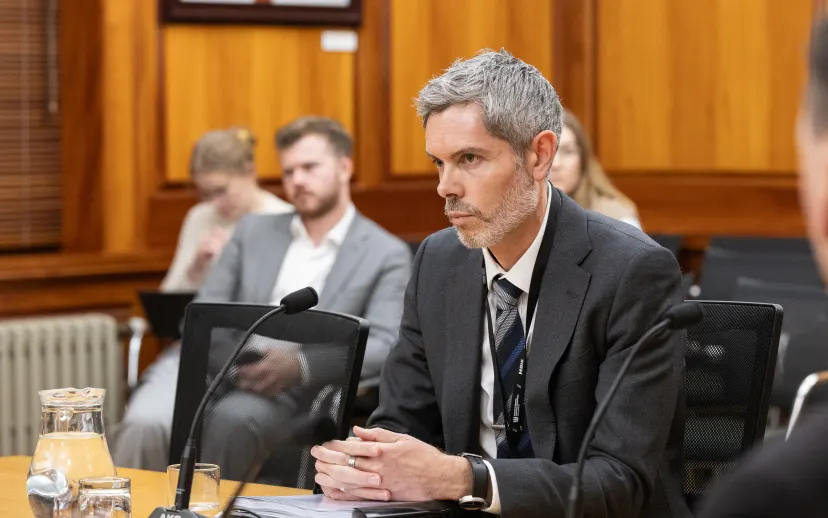
MBIE chief executive Nic Blakely appeared before MPs at select committee on Wednesday morning, the final sitting day of this parliamentary term, and confirmed $50.7 million of taxpayers’ money has now been wasted on the biometric capability upgrades.

Blakely could not promise the costs wouldn’t continue to balloon as more work was done to understand the mega ministry’s financial controls.

It has been recommended to ministers that an In Person Enrolment (IPE) project have its $8.7m costs written off, as it was associated with the Biometric Capability Upgrade (BCU) that has already failed and is no longer usable.

The BCU project has already had $42m of taxpayers’ money written off, and the ministry is unable to say what the cost of the eventual replacement project might be.

Blakely was found in contempt of parliament last month for deliberately misleading MPs about the failed IT projects.

He told the committee on Wednesday he deeply regrets the position MBIE has found itself in, and “I recognise that we have a mountain to climb to rebuild the trust and confidence of this committee and of the Parliament.”

“As chief executive, I take responsibility for the failures and I’m taking accountability by making the changes needed to strengthen the organisation. And I know that I will be judged on the results.”

“In response to these deeply concerning failures, I’ve set up a structured programme of assurance work. Since we were last before you, we’ve now completed a stocktake of 70 active technology projects,” Blakely told the committee.

“Going forward, we will report publicly on a quarterly basis on our technology portfolio, so there is open movement on whether our changes are improving performance.

“I’ll consider the Public Service Commission’s hearing report, findings, and take any necessary action, including employment actions where appropriate,” Blakely said.

Speaking to RNZ after the committee meeting Blakely said “trust gets rebuilt over time” and he hoped what MPs had seen was that the ministry is taking “very seriously” what has happened this year.

Blakely said he would remain in his job to fix the mistakes.

“So both these projects finished before I started. My job is to make the changes that are needed now in the organisation.

“The Public Service Commission has an inquiry into the integrity issues that have been raised by these two projects, and I’ll be looking at the results of that very closely. And if I need to take action, I will.”

Blakely told RNZ there were some staff still at the ministry who had worked on the failed projects, but they were below the senior second tier level.

Culture concerns at MBIE

Speaking to whether staff at MBIE felt comfortable speaking out about concerns at the ministry, Blakely said a culture survey had helped answer that.

“The most recent public service census on the question of do you feel safe to speak up showed that MBIE as a whole actually was above the public sector average, so I’m not sure we have something that is an endemic issue… from the stocktake, that shows we don’t have the same issues at all across the other projects.”

Blakely said the ministry has made it easier to “access the integrity line on our homepage on the intranet after June, and that has seen a jump up in people using that integrity line”.

“We currently have our annual culture survey that’s currently underway. We’ve got some specific questions in there about do people feel safe to speak up, and we’ll be looking at those results closely.”

Blakely said the number of reports requiring attention from the integrity line had increased from about 10-15 a month to between 20-25 a month.

In 2024, RNZ drew attention to major problems and delays plaguing the BCU.

An independent report – released by Immigration New Zealand (INZ) in June – identified major flaws in the department’s handling of the project, resulting in a waste of more than $30 million.

The report’s author Greg James said INZ launched the upgrade in 2018 without first conducting detailed analysis, then lacked due diligence when significantly rescoping the project in 2020.

He said officials persisted despite multiple red flags, including delays, missed milestones and significant inadequacies.

“Despite escalating costs, the project continued for several years before ultimately being stopped [in 2025], having delivered no measurable benefits while incurring significant cost overruns.”

The report found ministerial reporting throughout had been inconsistent: “at times overly optimistic, and occasionally misrepresenting the true status of the project”.

Immigration Minister Erica Stanford said this year’s Budget included a $31.2 million write-off of the project – that has since increased.

Further investigations by RNZ revealed senior INZ officials had repeatedly ignored requests from the minister’s office and progressed work on a project the minister hadn’t agreed to extra funding for.

Found in contempt of parliament

The privileges committee ruling that found Blakely in contempt prompted him at the time to offer his resignation to Public Service Commissioner Sir Brian Roche, but it was turned down.

Roche said he took several factors into account when weighing that decision, including that Blakeley had been fresh into his job and had unreservedly apologised for his actions.

During a select committee appearance in March, Blakeley was asked about the progress of a biometric upgrade programme but failed to disclose that the project had already been cancelled.

In its findings, the Privileges Committee said officials would have known their incomplete answers would leave MPs with a false impression.

“The limited manner in which the ministry answered questions… was intentional,” it said.

“We find that the ministry deliberately misled the Education and Workforce Committee and, in doing so, committed a contempt.”

The report said it was “alarming” that neither of the senior public servants were aware they could have requested to provide evidence in private or secret.

“We wish to be very clear: officials appearing before select committees have an absolute obligation to tell the truth. Being truthful, responsible, and acting in good faith is the very essence of public service.

“To fail to meet these obligations is an insult to the entire public service.”

Source: RNZ

Continue Reading

Politics

National vows to try to split Pak’nSave and New World

Published

on

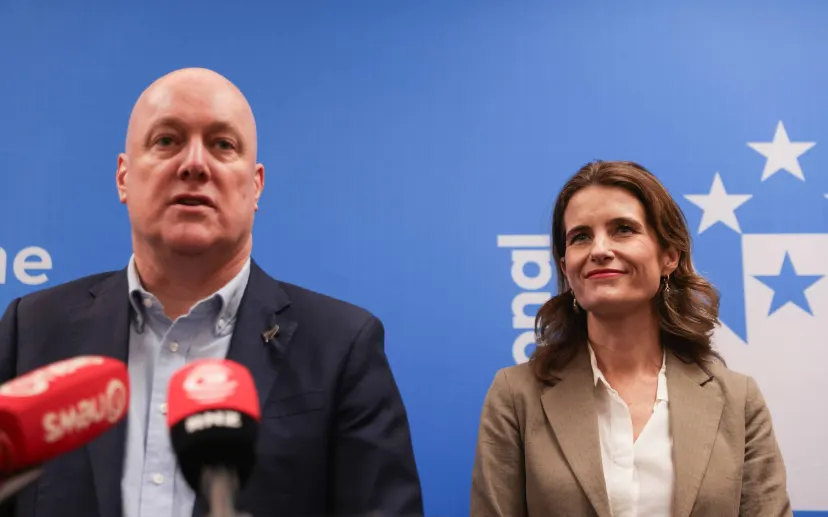
National has made a supermarket break-up a key part of its election pitch, proposing to sever Pak’nSave from New World in a bid to drive down grocery prices.

The significant policy was announced with little warning on Wednesday morning, and on the same day that Labour promised to ban big companies from charging excessive prices.

National’s plan would turn the company into supermarket chains: Pak’nSave, New World/Four Square and Woolworths.

The breakup, however, would be contingent on a six-month review by the Commerce Commission into whether the split would leave shoppers better off.

If the watchdog gave it the green light, National said it would legislate to force through the separation.

In a statement, finance spokesperson Nicola Willis said the shake-up could eventually save households up to $1320 a year, pushing down grocery prices about 5 percent lower than they would otherwise be.

The numbers came from a government-commissioned cost-benefit analysis also released today.

The modelling estimated prices would be about 3.5 percent lower in the first year of separation, with gains growing as the new chains bedded in. By 2035, the estimated annual household benefit ranged from $200 to $1320 depending on income and family type.

“That’s real money back in the pockets of New Zealanders,” Willis said.

“More competition means supermarkets have to work harder for every customer, on price, specials, range and service. That is how shoppers get a better deal.”

The independent report also carried some hefty warnings, with the economists warning their analysis was “indicative rather than definitive” and flagging potential “insurmountable” legal and implementation hurdles.

Willis stressed that National would act carefully on the Commission’s advice and not play “supermarket executive from the Cabinet table”.

“There is a very high bar for this kind of intervention and National is not pursuing structural separation in any other sector,” Willis said.

“However, after years of reviews and incremental reform, it’s clear the status quo isn’t working. It’s time for change.”

National said no individual Pak’nSave, New World or Four Square owner would be forced to sell or change brands.

Instead, the two Foodstuffs brands would be split into rival nationwide groups, with separate structures and incentives to compete against each other.

The Commerce Commission’s latest monitoring showed Foodstuffs and Woolworths still controlled about 82 percent of the grocery market, with little movement in the core measures of competition over the past year.

Source: RNZ

Continue Reading

Trending

Copyright © 2026 The Buzz: Powered by Apna Network Limited - Concept by Digital Hub NZ