Connect with us

HTML Image

i

Uncategorized

Kidney dialysis system at breaking point, health professionals warn

Published

on

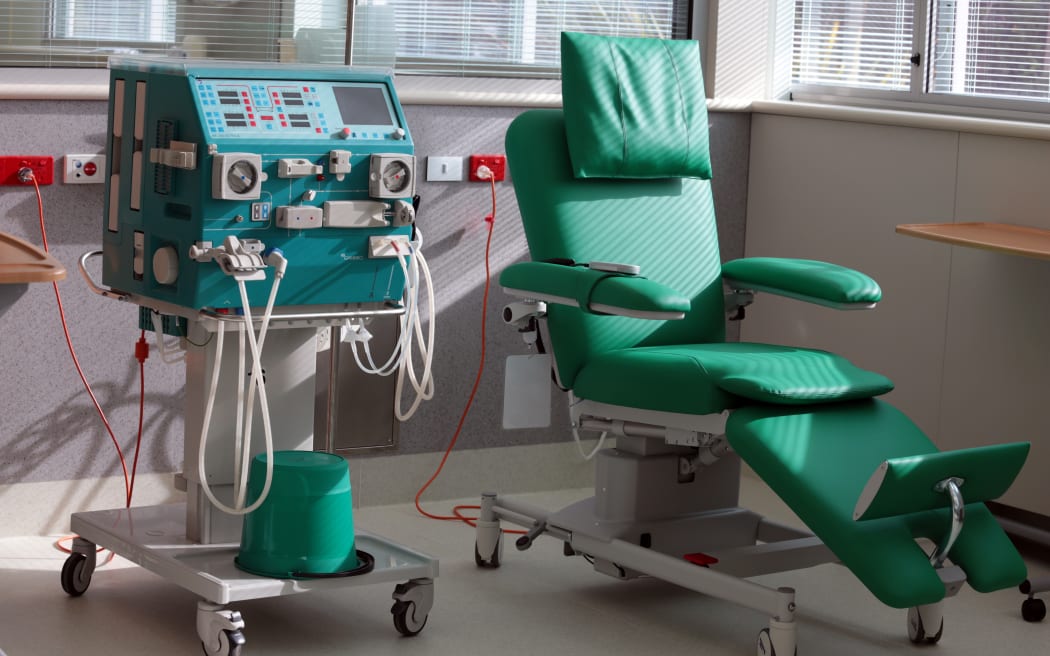
Health professionals are warning New Zealand’s kidney dialysis system is at breaking point.

A major report by Kidney Health New Zealand (KHNZ) shows Aotearoa’s 15 dialysis units are struggling to cope with growing numbers of patients, too few treatment spaces and chronic understaffing.

The Australian and NZ Society of Nephrology claims the report’s stark figures show patients’ lives are being put at risk.

KHNZ acting general manager Traci Stanbury said the report’s findings showed a health service struggling to cope, despite the best efforts of dedicated staff.

“We are calling for the government, Te Whatu Ora and Te Aka Whai Ora to urgently address shortages in haemodialysis capacity nationwide. While some investment is indeed underway, the capacity coming on-stream this year will not address current gaps, nor urgent staffing shortages.

“This shortfall is due to a lack of planning over many years to provide critical infrastructure across the system.”

Longer-term planning and a strategy to cope with increasing rates of chronic kidney disease were urgently needed, Stanbury said.

The report (carried out from June 2022 to February 2023) showed 1980 patients were receiving long-term outpatient haemodialysis at a hospital or satellite facility, with hundreds more having dialysis at home.

However, there was current capacity for only 1764 patients weekly, in 441 outpatient spaces across 15 units, with the preferred care model requiring patients to receive haemodialysis three times per week for a minimum of four hours at a time.

Stanbury said the capacity crisis was compounded by a 25 percent shortfall in dialysis unit staff up and down the motu, with most regions reporting their staffing levels could not meet the demand.

The head of Nephrology for Te Whatu Ora Southern, Professor Rob Walker, said chronic kidney disease was not being well managed across the country.

“There’s been no emphasis on screening individuals at risk and putting measures in place that would slow or minimise the risk of chronic kidney disease in our communities, it’s just not something that has been put up by the Ministry of Health or Te Whatu Ora.”

Walker said despite the pressures, Aotearoa’s dialysis units and their staff were doing great work, going above and beyond on a daily basis.

But many renal teams were struggling to attract or keep staff, with many suffering from burnout, he said.

Many dialysis units were adopting interim measures to ensure patient safety was prioritised, balancing need with capacity in the short term, Walker said.

“Some units are reducing staff-to patient ratios, asking staff to work overtime and double shifts, and stopping home dialysis training to get by.”

KHNZ said one in 11 people in Aotearoa New Zealand have chronic kidney disease yet less than half are aware of it.

There are also inequities in access to dialysis facilities nationwide, particularly in rural areas where Māori are disproportionately represented.

Kidney disease is usually silent, so early and effective intervention is cost-effective, and reducing the number of patients reaching end-stage would also reduce the escalating financial burden of haemodialysis on the health system.

Demand for dialysis is forecast to grow by 30 percent over the next decade, which will see costs increase by $150 million per annum in the next decade.

The report makes 27 recommendations – among them inviting the government to re-think its delivery of all kidney services in Aotearoa; and screening to detect kidney disease earlier, to slow down the progression of kidney disease.

SOURCE RNZ

Continue Reading
Click to comment

Leave a Reply

Your email address will not be published. Required fields are marked *

Uncategorized

Rugby League: Kangaroos edge Kiwis in World Cup classic 24 -22

Published

on

In one of the most stunning starts to a sporting tournament, the Kiwis and Kangaroos played out an absolute classic to kick off the Rugby League World Cup.

It was match chock full of barely believable moments, dramatic twists and turns, and superstars stepping up on the biggest stage, with Australia holding on for an enthralling 24-22 win.

Though unlikely to affect the Kiwis semi-final hopes, the loss may come at a different cost, with Kalyn Ponga forced from the field with a suspected broken arm.

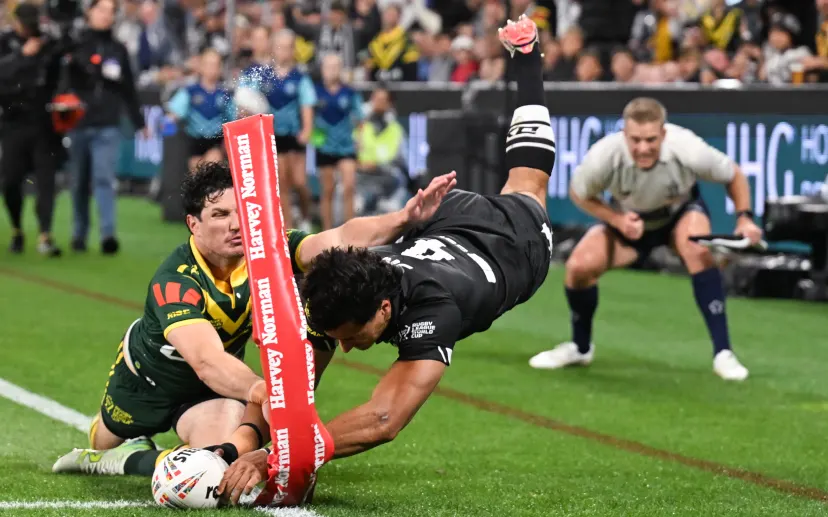
It will take something special to top the tournament’s opening try as the Kiwis struck first in sensational style.

With absolutely no room to move in the left hand corner, Casey McLean managed a miracle, finding the grass with his entire body forced over the touchline

The Kangaroos replied with a runaway, Jack Bostock snatching a Jahrome Hughes pass out of the air and streaking away to score.

With the Kiwis forcing a line drop out, Reece Walsh sent it out on the full, Jaymayne Isaako slotting an easy two points.

After the Kiwis forced the defending champs again, Australia nabbed another intercept, this time to take the lead as Tom Trbojevic latched onto a McLean ball and fended off a scrambling Kodi Nikorima to go 90.

As the siren approached, the Kiwis bagged another two points as Nikorima was taken off the ball by Katoni Staggs, the centre sent to the bin as a result as Isaako squared the scores 10-apiece at half-time.

On his first international outing, fullback Ponga put the Kiwis back in front courtesy of a deft offload from Isaiah Papali’i.

After an extended period under the pump, it looked as if Ronaldo Mulitalo had stretched the Kiwis advantage after Trbojevic spilled a kick, but the chasers were ruled to be offside.

The Kangaroos relief turned to rapture as Bostock got his second, leaping above the pack to take a towering Cameron Munster bomb and reinstate the stalemate.

It wouldn’t last long though after Ponga chimed into the line and sliced right through, standing up Walsh to reclaim the lead for the Kiwis.

But Walsh would respond with a stunner of his own, exploding onto a Bostock offload 80 out, showcasing his blistering speed as he beat both Ponga and Hughes who collided with each other, the Australian full back far too fast for the desperate chase of Joseph Tapine.

That chase proved crucial however, as Latrell Mitchell sprayed the conversion to keep the Kiwis in front by two.

Cue more Kangaroos magic, Munster sending it to the skies, Bostock and Isaako with a clean aerial contest, won by Bostock to complete his hat-trick and put the home side up 24-22 with four minutes remaining.

A final Kiwis assault proved futile as the Kangaroos held on to break New Zealand hearts, but ignite a tournament.

See how the game unfolded in our blog:

rnz

Continue Reading

Uncategorized

Election 2026: Luxon faces Hipkins in first leaders’ debate

Published

on

Analysis – Three years ago, Christopher Luxon headed into his first head-to-head debate with Chris Hipkins on the back of a poll that had National on 37 points and able to form a government with ACT alone.

Labour under then-Prime Minister Chris Hipkins was on a downward spiral on 27 percent in that same 1News-Verian poll and had no path to power.

Fast-forward three years and both parties headed into Tuesday night’s debate with two fresh new polls.

RNZ-Reid Research’s results had National on 26 percent and Labour on 31, while 1News-Verian had a much tighter race with just one point in it and both parties just under 30.

Those results spell early retirement and unemployment for a decent number of National Party MPs currently enjoying the government benches.

MMP has evolved so much in the past two elections that the combined Labour-National vote has gone from 81 percent at the 2017 election to just 57 in Tuesday’s RNZ-Reid Research poll.

So-called minor parties have grown in both size and influence, capturing the imagination of voters that traditionally voted blue or red.

Increasingly polling is suggesting another new party – Opportunity – has a good chance of making it into Parliament and being a potential kingmaker.

There’s now a very real possibility that the next government could be made up of four political parties.

That has happened before under Sir John Key’s National government in 2008, but because he chose to welcome the Māori Party into the fold, not because he had to.

The minor parties of 2026 have leverage and power going into any coalition talks well beyond any previous election years.

It makes a head-to-head between Christopher Luxon and Chris Hipkins far more redundant in this political age.
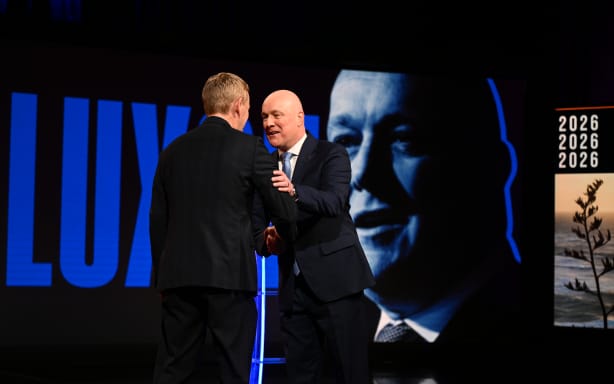
Christopher Luxon and Chris Hipkins at the TVNZ debate, hosted by Jake Tame, Oct 6 2026
The two Chrises greet each other.

TVNZ/Harley Peters

They can’t fully commit to any of the promises they make because the slate is almost entirely wiped clean after 7 November when political parties sit down to discuss what a future government might look like.

Luxon has ruled out working with Opportunity after the election because of its land tax policy and National campaigning on no new taxes.

On Tuesday night he repeatedly refused to answer whether he would pick the phone up if he needed the party to be prime minister.

Instead, he repeated his previous comments about an untenable land tax, and then told reporters after the debate the question was a “hypothetical” that didn’t need an answer.

To be clear, that’s not a no.

At times in the debate the leaders could have been put in a time machine and transported back to three years ago, so similar were some of the issues and answers to them.

The cost of living crisis continued to be the overwhelming theme, a healthcare system under pressure and patients waiting too long in emergency departments hadn’t improved, and neither Chris had fully grasped the meaning of a yes or no question.

There was no big revelation or pledge – on the latter neither party has the headroom in their fiscal plans to do so.

It’s unlikely undecided voters watching were swayed one way or the other by the end of it.

That’s not to say the two Chrises performed badly.

They were both across their briefs, and while they had some nervous energy at the outset both settled into a comfortable rhythm and got their key messages across.

While Hipkins managed to land a few blows on Luxon over his failure to discipline New Zealand First’s Winston Peters and Shane Jones over racist remarks, Luxon in return made a strong argument on education and had Hipkins concede he had done what Labour couldn’t and got India across the line on a free trade agreement.

The biggest controversy of the night was the pair being asked to pick between the All Blacks and the Warriors with Luxon going Team ABs while Hipkins chose to “Up the Wahs”.

Both would have gone to bed happy with their performance and grateful they didn’t say or do anything they deeply regretted.

There is a week until they face-off again – another week of smiling at the cameras and hoping voters return them to the major party league.

rnz
Continue Reading

Uncategorized

Sydney Roosters win NRL Grand Final with one point victory over Newcastle Knights

Published

on

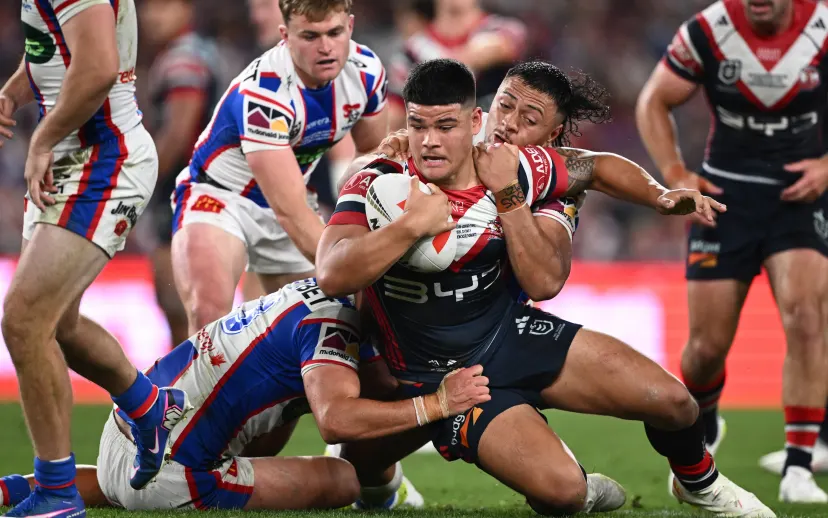
A Daly Cherry-Evans field goal proves the difference as the Sydney Roosters beat the Newcastle Knights 19-18 in the NRL grand final.

The Roosters dictated for most of the night, but Newcastle led 12-0 on the back of two first-half tries against the run of play, including a spectacular 95-metre effort by Kalyn Ponga.

Mark Nawaqanitawase, whose bat-back led directly to Ponga’s try, got the Roosters on the board just before half-time and Billy Smith muscled his way over shortly after the break.

Desperate scrambling defence kept the Knights level until Nawaqanitawase scored his second after a lucky ricochet off the upright, and Cherry-Evans slotted a one-pointer with 10 minutes left.

Knights winger Greg Marzhew scored in the 77th minute to set up a grandstand finish, but they could not get into range to try to level the game.

Earlier, the Roosters won their third NRLW premiership, scoring seven tries to thrash the Brisbane Broncos 30-6 in a blowout and exact revenge in a rematch of the 2025 decider.

– ABC News

Continue Reading

Trending

Copyright © 2026 The Buzz: Powered by Apna Network Limited - Concept by Digital Hub NZ