Connect with us

HTML Image

i

Latest News

NZ’s housing market drives inequality – why not just tax houses like any other income?

Published

on

Opinion – The Green Party made waves recently when it proposed to tax net wealth over $2 million for individuals and $4m for couples. As part of a broad range of actions, the policy aims to “end poverty”.

Reactions ranged from endorsement to accusations it was fuelled by envy, but the debate signalled what could become a major election issue: The wealth gap and how to fix it.

The claim it amounts to an “envy tax” assumes all wealth has been fully earned and fully taxed in the first place. But we know that’s not the case. A good portion of the wealth accumulated at the top is attributable to fortunate circumstances generating significant tax-free gains.

Inland Revenue’s recent survey of the wealthiest 311 New Zealand families revealed an average net worth of $276m. At the same time, we know many households are struggling with the rising cost of living.

According to Stats NZ, about 155,000 households feel their incomes aren’t sufficient to meet everyday basic needs. Foodbanks report ever-rising numbers of families unable to feed themselves.

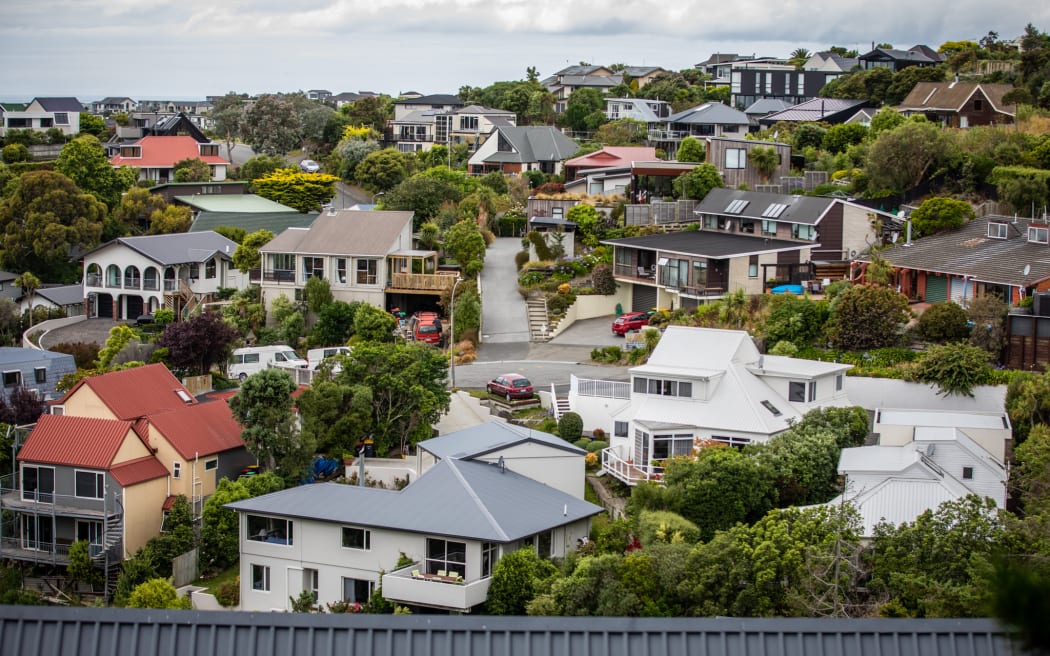
The major source of this lopsided wealth is the housing market. New Zealand has seen the biggest housing boom in the western world. Property owners have ridden the wave to make large tax-free capital gains, while others languish in substandard emergency housing or are forced to live in garages and cars.

Far too much of our scarce labour, building materials, imported fixtures and land have been diverted to unproductive high-end housing, leaving too little to meet the real housing need. Because it isn’t taxed properly, investing in housing has been encouraged as a way to accumulate wealth.

The trouble with a wealth tax
While the Greens’ wealth tax is a useful start to a wider discussion about inequality, it inevitably creates obstacles that in the end may be too difficult to overcome.

Probably the biggest hurdle is that this kind of tax can be incredibly complex and would provoke endless debate about what should be included.

The Greens’ proposal, for example, would capture business assets, shares, art above a certain value, and cars above $50,000. But what if you have two cars worth $49,000 each – why should they be excluded when one valued at $80,000 is included?

And how is debt factored into calculations of net wealth? House mortgages may be straightforward, but what about credit card debt, car finance or borrowing to finance overseas travel?

Not a capital gains tax
For all these reasons, it’s time to get away from debating notions of a confiscatory wealth tax and make the issue simply one of treating all income the same for tax purposes.

Instead of a complicated net wealth tax on everything, let’s start with the biggest culprit – housing. This would address the under-taxation of income from holding housing as an asset.

This is not the same as a capital gains tax – those days are over. Numerous tax working groups have failed over 30 years to make headway on this. Politically it is a dead duck.

Besides, the real problems – inequality and misallocation of resources – wouldn’t be touched by a capital gains tax. Such a tax can only apply to gains made on houses sold in the future, not the accumulated gains over many years, and it will always exempt the family home.

How a house tax works
Instead, let’s take the total value of all housing held by each individual, subtract registered first mortgages, and allow a $1m exemption to reflect that everyone is entitled to a basic family home.

Then we treat this net equity as if it was in a term deposit generating a taxable interest return. When houses are held in trusts and companies, in most cases the income would be taxed at the trust or company rate with no exemption.

Calculated annually and pegged to the capital value of properties, this effective income would be taxed at the person’s marginal tax rate. It would affect those with second homes, multiple rentals, high-value properties – but without significantly affecting the great majority of homeowners who have much less than $1m of net equity.

Thus a couple living in a $3m house with a $1m mortgage would fall under the threshold.

This approach would help put investment in housing, after a basic home, on the same footing as money in the bank or in shares. Better choices for the use of scarce housing resources should follow.

Landlords would no longer need expensive accountants to minimise taxable rental income. And it would reduce the blight of “ghost houses” and residential land-banking.

A circuit breaker
The simplicity of this income approach means the government can build on the existing tax system. It lives up to the mantra of a “broad base, low rate” tax system and affects only the very wealthy and those whose tax rates are highest.

Moreover, it is possible to implement quickly, using existing property valuations and registered mortgages, unlike a net wealth tax where the devil is in the contentious detail.

The effect should be positive for those struggling in the housing market, as more housing for sale or rent is opened up. Good landlords should welcome the greater simplicity.

In the longer term, the extra taxable income could produce revenue for redistribution and social investment. Critically, however, it would start to give the right price signals to reduce the over-investment in luxury housing and real estate held for capital gain.

The approach is essentially a circuit breaker that can simply and quickly address the accumulation of wealth by a small group of people.

Crucially, it has a sound economic rationale. By taking the first step and including luxury and investment housing returns that are currently under the radar, it reduces the advantages of holding housing rather than more productive investments.

*Susan St John is Honorary Associate Professor, Economic Policy Centre, Auckland Business School, University of Auckland.


VIA RNZ

Continue Reading
Click to comment

Leave a Reply

Your email address will not be published. Required fields are marked *

Latest News

Police say person who fired gun at officers still at large

Published

on

Police say a person who fired a gun at officers in Napier is still at large.

Eastern District Commander Superintendent Joel Lamb said Police tried to stop a vehicle in the Pirimai Area at about 10pm on Tuesday.

He said someone in the back seat pointed what was presumed to be a firearm at officers pursuing the vehicle.

“Staff have then heard two distinct gunshots as the firearm was discharged.

“Fortunately, neither of our officers were injured, and the patrol vehicle did not sustain any damage.”

He said hours later, the vehicle was seen travelling north on the Waikato Expressway towards Auckland.

Police seized the vehicle at an address in Manurewa, but they had not found the alleged offender.

Lamb said people who lived at the Manurewa address were engaging with Police.

He said Eastern District and Counties Manukau Police were making enquiries.

“Presenting a firearm at a Police officer is a serious escalation that puts our staff and the wider community at risk. This behaviour is entirely unacceptable.

“We are taking this incident extremely seriously and will be pursuing all lines of enquiry to locate the offender and hold them accountable.”

Police asked anyone who witnessed the incident to contact Police on 105 or online using the reference number 261111/3764.

Information could also be provided anonymously via Crime Stoppers on 0800 555 111.

rnz

Continue Reading

Latest News

New Zealand sides named for RLWC finals

Published

on

The players tasked with ending Australia’s Rugby League World Cup dominance have been named.

The Kiwis and Kiwi Ferns have announced their squads for this Sunday’s World Cup finals in Brisbane.

Both sides are chasing their first titles since 2008, and both are looking to end their opponents run of three crowns in a row.

“Our Kiwi Ferns have been so dominant in years gone by, and we want to bring dominance back to this jersey, so I think it will be a case of who wants it more,” said co-captain Georgia Hale of the impending clash.

The Kiwis get a major boost for the final as they welcome back Ronaldo Mulitalo after he served a one-match ban for a high tackle against Fiji Bati.

Mulitalo replaces Charnze Nicoll-Klokstad, who moves to the six-man bench, which again includes utility Te Maire Martin, middle forwards Naufahu Whyte, Erin Clark and Xavier Willison plus fullback Keano Kini.

Loose forward Joseph Tapine will make his 30th Test appearance in a familiar pack again, including second-rowers Isaiah Papali’i and Briton Nikora, and props James Fisher-Harris and Moses Leota.

Winger Jamayne Isaako is on the cusp of claiming the New Zealand record for most Test points.

His five goals against Tonga lifted his career points tally to 225 – level with Shaun Johnson – while centre Casey McLean goes into the final with 16 tries in just eight Tests.

Fisher-Harris will again captain the team.

Fullback Ponga said the goal of the group was clear.

“We have high expectations around what we want to achieve, and obviously winning a world Cup is one of them.”

Meanwhile, Ricky Henry has selected a settled side to take on the Jillaroos, led by their lethal centre combination of Stacey Waaka and Mele Hufanga.

Veteran Apii Nicholls takes the number one jersey, Leianne Tufuga and Mackenzie Wiki on the wings.

Henry has stuck with his halves pairing of Chantay Kiria-Ratu and Raecene McGregor with Alexis Tauaneai, Georgia Hale and Otesa Pule up front.

Rounding out the starting pack is Shaniece Monschau, Kaiyah Atai, and Angelina Teakaraanga-Katoa.

“We have been building well throughout the tournament; we understand the Jillaroos side, and will give it our all to make New Zealand proud this weekend,” said Henry.

RLWC Finals:

Kiwi Ferns vs Jillaroos- 6.10pm

Kiwis vs Kangaroos – 9.35pm

Sunday November 15

Suncorp Stadium, Brisbane

Live blog updates on RNZ

Kiwi Ferns:

1. Apii Nicholls 2. Leianne Tufuga 3. Mele Hufanga 4. Stacey Waaka 5. Mackenzie Wiki 6. Chantay Kiria-Ratu 7. Raecene McGregor 8. Alexis Tauaneai 9. Georgia Hale 10. Otesa Pule 11. Shaniece Monschau 12. Kaiyah Atai 13. Angelina Teakaraanga-Katoa.

Interchange: 14. Ashleigh Quinlan 15. Annessa Biddle 16. Shannon Mato 17. Ivana Lauitiiti.

Reserves: 18. Brooke Anderson 19. Zahara Temara 20. Brianna Clark 21. Abigail Roache 22. Tenika Willison.

Kiwis:

1. Kalyn Ponga, 2. Jamayne Isaako, 3. Dane Gagai, 4. Casey McLean, 5. Ronaldo Mulitalo, 6. Kodi Nikorima, 7. Jahrome Hughes, 8. James Fisher-Harris (c), 9. Jeremy Marshall-King, 10. Moses Leota, 11. Isaiah Papali’i, 12. Briton Nikora, 13. Joseph Tapine (v/c).

Interchange: 14. Te Maire Martin, 15. Naufahu Whyte, 16. Erin Clark, 17. Xavier Willison.

Reserves: 18. Keano Kini, 19. Phoenix Crossland, 20. Charnze Nicoll-Klokstad, 21. Scott Sorensen, 22. Leo Thompson.

rnz

Continue Reading

Latest News

Parliamentary Service working on extra chairs and offices for increased number of MPs

Published

on

The chief executive of the Parliamentary Service is confident there will be enough room to accommodate the increased number of MPs and their staff coming into Parliament.

On current numbers, up to 131 MPs could be sitting in the Chamber following the election, brought on by a record overhang result.

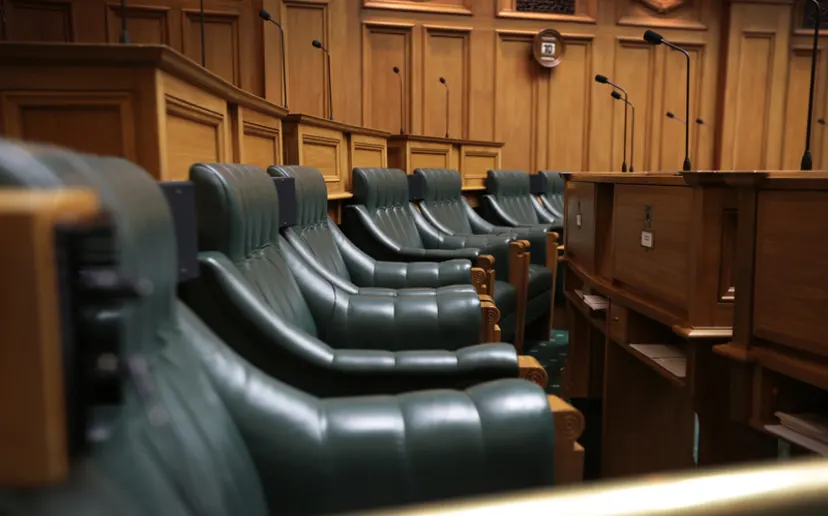
Clerk of the House of Representatives Dr David Wilson told the Spinoff that currently the debating chamber had enough chairs to seat 124 MPs – including the Speaker of the House – and work was being done to accommodate more by altering the seating arrangement.

In a statement, Parliamentary Service chief executive Rafael Gonzalez-Montero said planning for a larger Parliament had been going for “some time”.

“Now that the election results have confirmed an increase to the number of members we are looking at several options.

“We are confident we will be able to accommodate all members within the Chamber.”
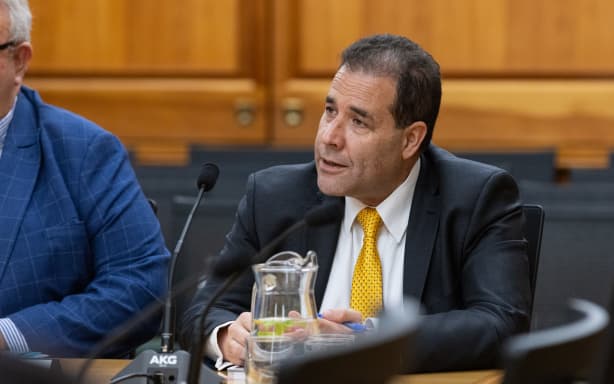
Chief Executive of the Parliamentary Service Rafael Gonzalez-Montero appears before select committee.
Parliamentary Service chief executive Rafael Gonzalez-Montero.

VNP / Phil Smith

Gonzalez-Montero said office accommodation for members and their staff would be “stretched” for a short time, but the new Members’ Building was only a few months away from “practical completion”.

That building – located behind Parliament – was due to be ready to occupy in April next year and had capacity to accommodate around 30 backbench MPs.

“All members should be in fit-for-purpose accommodation from that point,” Gonzalez-Montero said.

Following the 2023 election, 123 MPs sat in the Chamber – a record number at the time. That decreased to 122 following the resignation of National MP Judith Collins.

Collins held the seat of Papakura and stepped down in May and Parliament voted against holding a by-election because it was too close to the election.

The election result also meant high-ranking National Party MPs like Chris Bishop, Paul Goldsmith, Nicola Willis and Gerry Brownlee – Speaker of the House and an MP for 30 years – would likely not make it back into Parliament.

Only resigning or retiring MPs were permitted to give a valedictory speech meaning none of them would get the chance to give a valedictory statement.

Asked if their would be special allowances for valedictories, Wilson said in a statement that normally only MPs were allowed to speak in the House but the House could suspend its own rules or temporarily alter them.

“It could do so to allow former members to address the House.”

Wilson said no such arrangements could be made until the next Parliament opened and members sworn in.

rnz

Continue Reading

Trending

Copyright © 2026 The Buzz: Powered by Apna Network Limited - Concept by Digital Hub NZ