Connect with us

HTML Image

i

India News

India train crash: Hospital overwhelmed by injured passengers, treating people on floor

Published

on

A man injured in a train smash in India says the hospital is overwhelmed and people are being treated on the floor.

At least 288 people were killed and 1000 injured when three trains collided, many of them seriously.

The cause of the crash, which was being described as India’s worst this century, was not yet clear.

The collision in the state of Odisha was one of the country’s worst rail disasters in decades.

New Zealander Jaimini Joshi, who has family in the state in the east of the country, said she spoke to a man about his brother who was badly injured in the crash.

She said 23-year-old Gafur Sheikh was travelling from Calcutta when the tragic accident occurred.

He suffered a severe head injury, lost a lot of blood and also hurt his eye.

He needed 15 stitches.

Joshi said there were no beds left at the hospital – and Sheikh was treated while sitting on the floor.

She said people were very angry and upset about the whole situation.

India’s Prime Minister Narendra Modi was believed to have visited the hospital overnight New Zealand time, Joshi said.

Joshi said the community in New Zealand was waiting anxiously to learn if any of their loved ones were among the dead or injured.

She said the full picture was yet to emerge, and more should be known today.

“It is just such a big shock and it is a major incident and a lot of causalities.”

Joshi said accidents happen regularly on India’s massive rail network and she was sad the country did not appear to be learning from its mistakes.

An Indian community leader in New Zealand has called for the community to stand together and support each other after the devastating accident.

Chairman of the Dairy and Business Owners Group, Sunny Kaushal, said people were waiting for more information to come through.

“This is very sad news for the Indian community in New Zealand,” he said.

“Our thoughts and prayers and condolences are with those who are dead, and also we are praying for the injured for a speedy recovery.”

Kaushal said the community would rally together to provide whatever help they can.

How did three trains collide in Odisha?

India’s Railway Minister Ashwini Vaishnaw, who has been at the site of the accident, said “a high-level committee” will be set up to investigate the accident.

Vaishnaw’s cabinet colleague Dharmendra Pradhan blamed “technical reasons” for the crash, describing it as “an unfortunate incident” that “shouldn’t have happened”.

An official said the inquiry would be headed by the commissioner of railway safety for the south-eastern circle – which includes Balasore district where the accident occurred.

23-year-old Gafur Sheikh was travelling from Calcutta when the tragic accident occurred. Photo: SUPPLIED

A man injured in a train smash in India says the hospital is overwhelmed and people are being treated on the floor.

At least 288 people were killed and 1000 injured when three trains collided, many of them seriously.

The cause of the crash, which was being described as India’s worst this century, was not yet clear.

The collision in the state of Odisha was one of the country’s worst rail disasters in decades.

New Zealander Jaimini Joshi, who has family in the state in the east of the country, said she spoke to a man about his brother who was badly injured in the crash.

She said 23-year-old Gafur Sheikh was travelling from Calcutta when the tragic accident occurred.

He suffered a severe head injury, lost a lot of blood and also hurt his eye.

He needed 15 stitches.

Joshi said there were no beds left at the hospital – and Sheikh was treated while sitting on the floor.

She said people were very angry and upset about the whole situation.

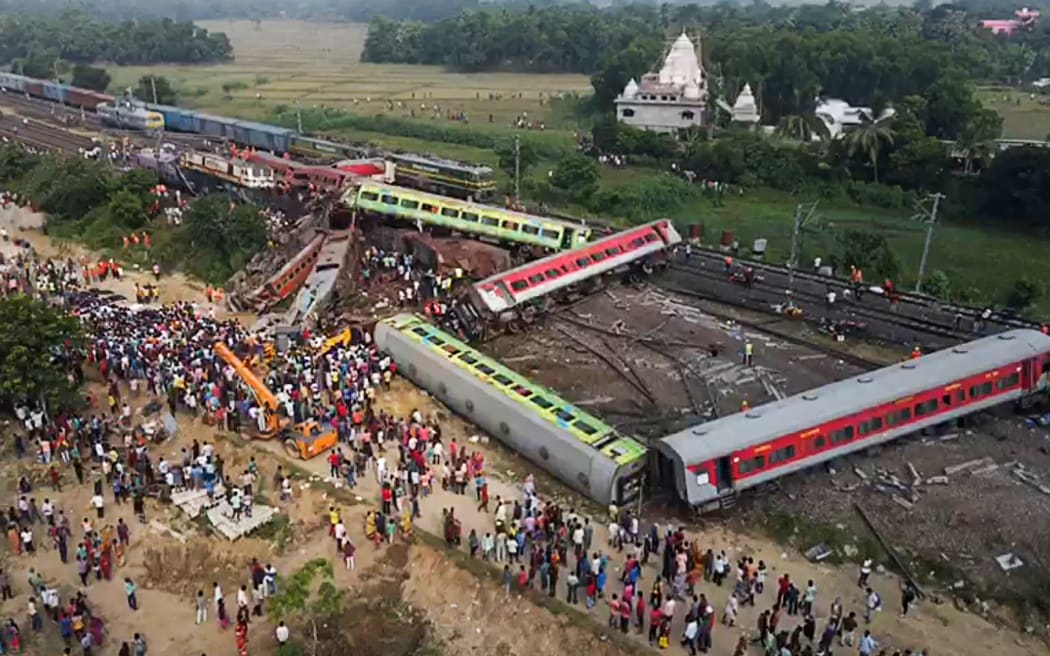
Rescue workers gather around damaged carriages at the accident site of a three-train collision near Balasore, about 200 km (125 miles) from the state capital Bhubaneswar in the eastern state of Odisha, on June 3, 2023. At least 288 people were killed and more than 850 injured in a horrific three-train collision in India, officials said on June 3, the country's deadliest rail accident in more than 20 years. (Photo by DIBYANGSHU SARKAR / AFP)

Photo: AFP / Dibyangshu Sarkar

India’s Prime Minister Narendra Modi was believed to have visited the hospital overnight New Zealand time, Joshi said.

Joshi said the community in New Zealand was waiting anxiously to learn if any of their loved ones were among the dead or injured.

She said the full picture was yet to emerge, and more should be known today.

“It is just such a big shock and it is a major incident and a lot of causalities.”

Joshi said accidents happen regularly on India’s massive rail network and she was sad the country did not appear to be learning from its mistakes.

An Indian community leader in New Zealand has called for the community to stand together and support each other after the devastating accident.

Chairman of the Dairy and Business Owners Group, Sunny Kaushal, said people were waiting for more information to come through.

“This is very sad news for the Indian community in New Zealand,” he said.

“Our thoughts and prayers and condolences are with those who are dead, and also we are praying for the injured for a speedy recovery.”

Kaushal said the community would rally together to provide whatever help they can.

How did three trains collide in Odisha?

India’s Railway Minister Ashwini Vaishnaw, who has been at the site of the accident, said “a high-level committee” will be set up to investigate the accident.

Vaishnaw’s cabinet colleague Dharmendra Pradhan blamed “technical reasons” for the crash, describing it as “an unfortunate incident” that “shouldn’t have happened”.

An official said the inquiry would be headed by the commissioner of railway safety for the south-eastern circle – which includes Balasore district where the accident occurred.

This screen grab made from AFPTV video footage taken on June 3, 2023 shows people gathering at the accident site of a three-train collision near Balasore, about 200 km (125 miles) from the state capital Bhubaneswar in the eastern state of Odisha. At least 288 people were killed and more than 850 injured in a horrific three-train collision in India, officials said on June 3, the country's deadliest rail accident in more than 20 years. (Photo by Jayanta SHAW / AFPTV / AFP)

Photo: JAYANTA SHAW / AFP

Full details of how it happened were still not available, but the railway ministry said the crash took place around 6:55pm local time on Friday near the Bahanaga Bazar station, about 270 kilometres south of Kolkata.

The accident involved three trains:

  • Coromandel Express, which had started just hours before from Shalimar railway station in the state of West Bengal and was headed to the southern city of Chennai
  • Howrah Superfast Express, which had started from Yesvantpur station in Bengaluru and was due to reach Howrah
  • A stationary goods train, which was standing at the Bahanaga Bazar station

There were varying accounts of which train derailed first and how the collision happened. But railway spokesperson Amitabh Sharma said it was the Coromandel Express that derailed first.

A railway ministry official told the BBC that the Bahanaga Bazar station had four tracks.

“Lines 1 and 4 had goods trains parked on them. The passenger trains were running parallelly and simultaneously on track two and three. It’s a matter of investigation why and how the Coromandel Express got derailed and hit the goods trains,” he said.

He added that coaches from the derailed train fell onto the two rear coaches of the Howrah Superfast and derailed it too.

An Odisha government press release said that, in total, 17 coaches of the two passenger trains were derailed and severely damaged.

Villagers from the nearby area and eyewitnesses to the crash also spoke of three trains being involved in the crash.

Girija Shankar Rath, who lives near the station and was among the first people to reach the accident site, told BBC Hindi that the Coromandel Express derailed and hit the goods train parked on a nearby track from behind.

“There was total chaos and the whole area was engulfed in smoke. And then we saw Shalimar Express which came hurtling down and hit some of the Coromandel wreckage and two of its coaches also derailed,” he said.

Another eyewitness, Tutu Biswas, said he came to the site when he heard a loud noise.

“Some of the coaches of the Coromandel Express had gone over the goods train,” Biswas said.

“There were lots of injured people and bodies here. I met a young boy who had lost both his parents. He was crying and then he died too,” he added.

Friday’s crash was among the five deadliest accidents in the history of India’s railways.

Atul Karwal, chief of the National Disaster Response Force (NDRF), said the force of the collision had left several coaches crushed and rescuers had to cut through the wreckage to reach the passengers.

Hundreds of ambulances, doctors, nurses and rescue personnel were sent to the scene and worked for 18 hours to rescue passengers and pull out bodies.

India has one of the largest train networks in the world.

It runs more than 12,000 passenger trains daily, which are used by tens of millions of passengers to travel across the country – but a lot of the railway infrastructure needs improving.

Source RNZ

Continue Reading
Click to comment

Leave a Reply

Your email address will not be published. Required fields are marked *

Breaking News

South Asians most targeted by racial abuse, police hate crime data reveals

Published

on

It has been one and a half years since Auckland bus driver Rajnish Trehan was told by a violent and angry passenger he was a servant in Aotearoa before the man smashed out four of his teeth – an incident not treated as a hate crime by police.

By Lucy Xia of rnz.co.nz

People of South Asian descent have copped the most hate as victims of reported racist abuse in New Zealand, according to the police’s latest hate crime data – with 4767 hate incidents reported involving South Asian victims in New Zealand between January 2022 and October 2025.

More than four years since the beginning of a $10.4 million initiative – Te Raranga, aimed at helping police officers better respond to hate-motivated offending and collect hate incident data following the Christchurch mosque attacks – police said they are continuing to work to mitigate hate-motivated offending over time.

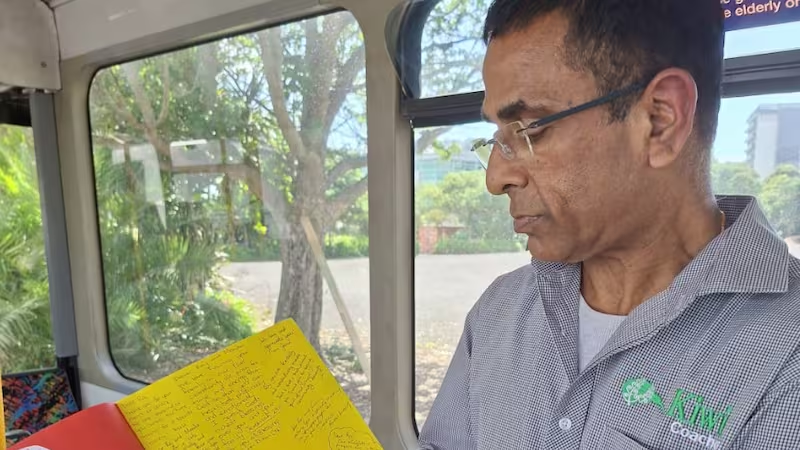
Trehan, who was punched in the jaw by a passenger who told him “You’re in my country, you’re my servant” in September 2024, said the trauma still haunts him today.

“You can heal yourself physically, but when you get emotionally hurt, it’s very hard to come out [from] those emotions,” he said.

Trehan said he was unable to eat properly for half a year and had to get dental treatment for the dislocated teeth.

He had since left his job on public buses to drive school buses instead.

Trehan said his daughter, who was just five at the time, hugged him tight and would not let him leave the house for several days following the attack.

He said he told police about the racist comments, but was not aware of them recording it as a hate incident.

Trehan’s attacker Paki Keepa was sentenced to one month of home detention on December 19, 2024, and police confirmed that the crime was not treated as hate-motivated.

“This determination was based off inquiries made into the circumstances of the assault, including speaking with a witness,” police said in a statement.

Trehan said there was no justice in the outcome.

“It was very hard for my family to digest this thing, what has happened to us, so it’s not proper justice [that] has been done, because something needs to be done very strongly … regarding in future also, if these things happen [again],” he said.

Trehan said he had experienced several instances of racist verbal abuse on the job in the months following the attack, and now, after leaving his old job, he continued to see racism towards South Asians in his neighbourhood in Papakura, including people throwing stones at the homes of South Asian families.

Police data showed nearly 80% of the 22,069 hate incidents reported between January 2022 and October 2025 related to racial discrimination. South Asians (4767), Asians (2616), People of Colour (1884) and Māori (1427) were the most targeted.

Rajnish Trehan has since left his old job out of safety concerns, and is now driving school buses. Photo: RNZ / Lucy Xia

While Asians were around 17% of New Zealand’s population (2023 Census), South Asians alone made up 27% of the victims of reported racial incidents.

The data showed 5.3% (1187) of the total number of hate incidents in this period had resulted in court action.

An Auckland social worker of Indian descent, who was punched in an unprovoked racial attack in Aotea Square last year, said he felt police put “minimal” effort into investigating his case, and also lacked empathy.

The man in his twenties, who did not want to be named, recalled hanging out with a friend outside Aotea Centre one evening when he noticed a man shouting “F** off, go back, you don’t belong here”, before making eye contact with him and approaching to punch him in the face.

Aotea Square (file image).

He said that straight after punching him, the man confronted another South Asian male in the area.

“It did feel like on reflection, there was a huge substance factor there, then the behaviour was followed by whatever racial bias and hate this person had, again – those words were big,” he said.

He said while police did take note of the racial comments and recorded it as a hate incident, they did not ask too many questions about that aspect of his experience.

“It felt like they lacked empathy, like the fact that I had gone through this, and I’m sure they see a lot of worse things daily, but it would have been nice if they … if there was a little bit more of a human touch to how they approach it.

“They were just kind of asking me questions to tick-box their report,” he said.

He said police called him for a welfare check-in after a few days, but closed his case within weeks, saying they did not have footage of the offender’s face.

Police said to RNZ in a statement only one camera yielded footage.

“This footage was unclear and did not capture the offender or the incident clearly, leaving police unable to make an identification.

“Unfortunately, there were no further lines of enquiry for police to progress our investigation”.

The man said he felt horrible that police closed the case with “minimal” effort, when considering the number of cameras available to check in the Aotea Square area.

He said police were not giving enough attention to hate incidents, which were significant for individuals who experienced them.

“Compared to a stabbing, it was a lot more minor, but if I now look at it from a racial lens, it makes me mad, because I know there’s so much hate, and it’s worse that it happens in person and physically and tangibly, but there’s also a massive online component to the South Asian hate, that I experienced as well – and I feel like there’s a huge factor of both of them playing in together,” he said.

Carlos Cheung

Meanwhile, Mount Roskill MP Carlos Cheung – whose electorate has over 50% of its population born overseas – said he was not surprised by the recent data and had heard lots from people experiencing hate speech and racism.

He said he was aware of constituents not reporting to police their experiences, and fears that the number of hate incidents was under-reported.

“In order to address the issues, we need more accurate data, so we can address the problem, so we should encourage people to report to the police, no matter how big or how small the issues,” he said.

When asked whether he would advocate for hate crimes to be made a standalone offence, in his capacity as an Asian MP with a diverse electorate, Mr Cheung said that was not something an electorate MP could answer.

He said he had been talking to police regularly about how to promote social harmony.

Meanwhile, hate targeting immigrants, particularly South Asians, had become increasingly visible with far right demonstrations in New Zealand and overseas – including the anti-immigration protest led by the Freedom and Rights Coalition in Auckland in January, and two Sikh parades disrupted in South Auckland and Tauranga.

Priyanca Radhakrishnan

Labour Party MP and former ethnic communities minister Priyanca Radhakrishnan said the latest police data on hate incidents and its impact on the South Asian community was alarming, both in a global context, and in New Zealand’s own context of the mosque terror attacks in 2019 – and that things were not getting better.

When asked whether her party would look into hate speech law reforms and making hate crimes standalone offences, Radhakrishnan said Labour would have a focus on improving diversity and inclusion, and strengthening social cohesion.

The Law Commission was looking into whether it should reform hate speech laws under the previous government, but Justice Minister Paul Goldsmith ordered it to stop in 2024, saying it would undermine free speech.

~ 1 NEWS

Continue Reading

India News

More yellow-legged hornet queens found in Auckland

Published

on

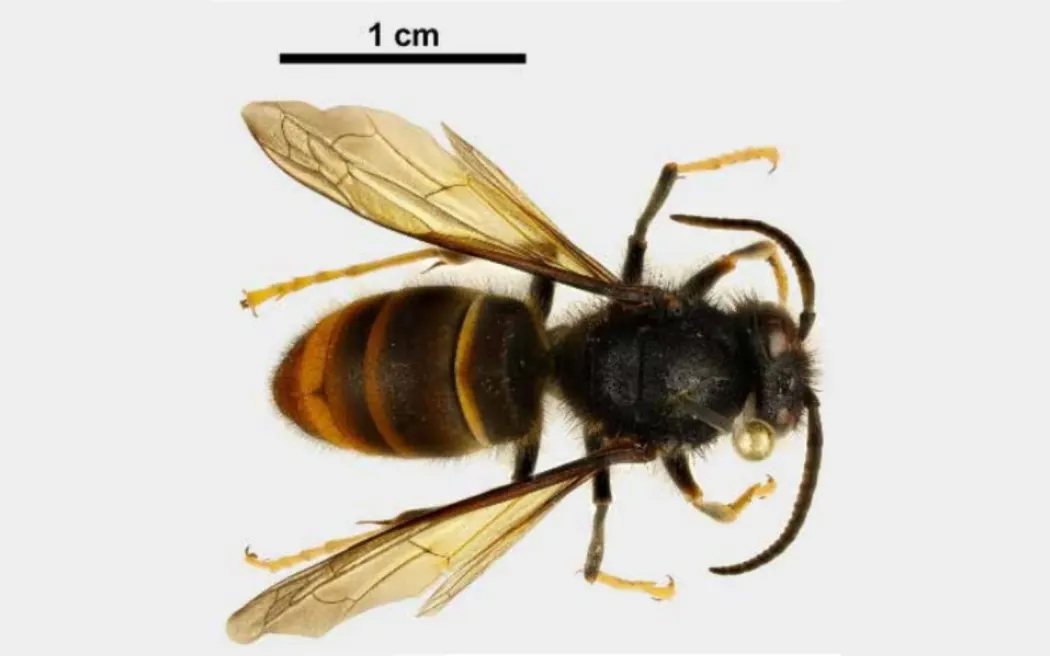
The number of yellow-legged hornet queens found in Auckland has risen to 45 – 32 of them with nests.

Biosecurity New Zealand said it had an excellent response from the public, with 10,270 notifications of suspected sightings.

Even though only a small number of them were actually hornets, the organisation urged Aucklanders to stay on the lookout.

It expected to find more this summer and there were dozens of traps around the city, mostly on the North Shore.

Biosecurity teams were also attaching tiny trackers onto worker hornets to try to lead them to nests.

The hornets had only been found in Auckland.

Biosecurity NZ believed it was unlikely they were outside of the city.

The hornets were a risk to bee populations – they eat them but could also compete with them food if they became established.

~ RNZ

Continue Reading

India News

‘Wedding bomb’ murderer gets life sentence in India

Published

on

‘Wedding bomb’ murderer gets life sentence in India

Soutik Biswas
India correspondent•@soutikBBC
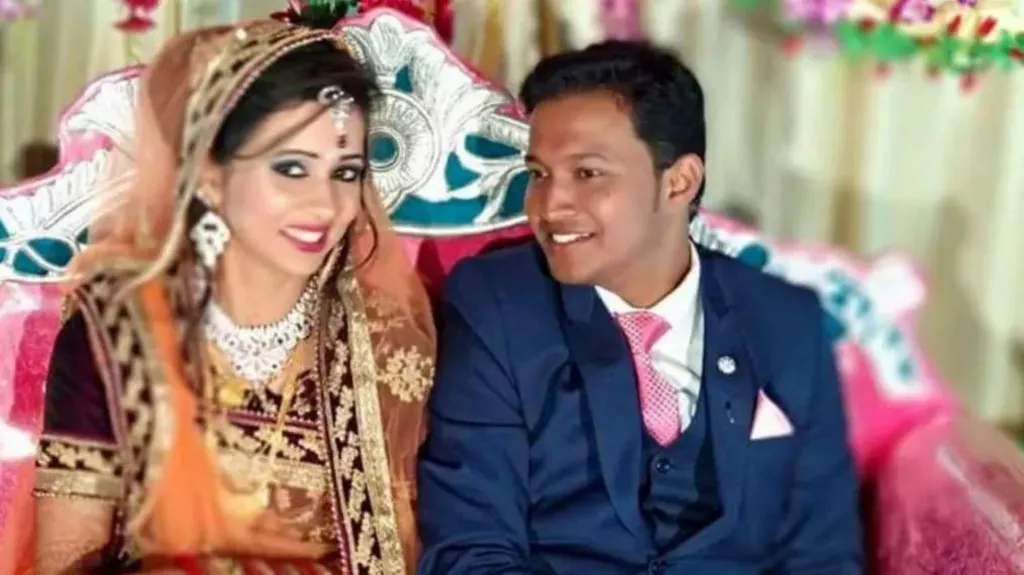
BBC The image is of an Indian couple, with the groom wearing a suit and the bride dressed in traditional Indian wedding attire with jewellery. BBC
Sahu was killed and his wife Reema critically injured by a bomb hidden in a wedding gift

A former college principal in the eastern Indian state of Odisha has been sentenced to life in prison for sending a parcel bomb that killed a newlywed man and his great aunt in 2018.

A court found Punjilal Meher, 56, guilty of murder, attempted murder, and use of explosives in what became known as the “wedding bomb” case that stunned India.

The bomb, disguised as a wedding gift, was delivered to the home of Soumya Sekhar Sahu, a 26-year-old software engineer, just days after his wedding.

When the couple opened the package, it exploded – killing Sahu and his great aunt, and leaving his wife, Reema, who opened the package, critically wounded.

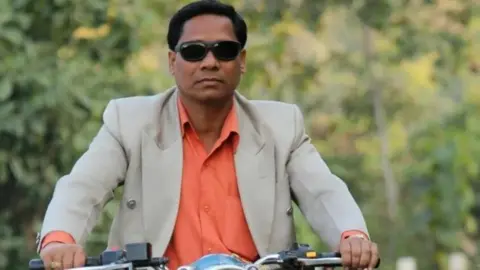
Facebook/Punji Lal Meher The image is of Punjilal Meher wearing a beige suit with an orange shirt on a motorbike. He was found guilty of murder, attempted murder, and use of explosives. Facebook/Punji Lal Meher
Punjilal Meher was found guilty of murder, attempted murder, and use of explosives

While acknowledging the prosecution’s argument that it was a “heinous” crime, the court declined to classify it as a “rarest of the rare” case deserving the death penalty.

The BBC covered the incident in a detailed two-part investigative series.

The February 2018 explosion took place in Patnagarh, a quiet town in Odisha’s Bolangir district.

The victims had been married just five days and were preparing lunch when a parcel arrived at their home. It was addressed to Soumya and appeared to be a wedding gift, allegedly sent from Raipur in Chattisgarh state, over 230km (142 miles) away.

As Soumya pulled a thread on the parcel to open it, a powerful blast tore through the kitchen, killing him and his 85-year-old great-aunt Jemamani Sahu. Reema, then 22, survived with serious burns, a punctured eardrum, and trauma.

After a prolonged investigation, police arrested Meher, then 49, a teacher and former principal of a local college where Soumya’s mother worked.

Investigators had told me then that Meher harboured a grudge over professional rivalry and meticulously planned the attack. He used a false name and address to mail the bomb from Raipur, choosing a courier service without CCTV or parcel scanning.

The bomb travelled over 650km by bus, passing through multiple hands before being delivered. Investigators said it was a crude but deadly device wrapped in jute thread, rigged to detonate on opening.

The parcel carrying the explosive bore a fake name – SK Sharma from Raipur. Weeks passed with no clear suspects. Investigators scoured thousands of phone records and interrogated over 100 people, including one man who had made a threatening call after Reema’s engagement – but nothing stuck.

Then, in April, an anonymous letter reached the local police chief.

It claimed the bomb had been sent under the name “SK Sinha,” not Sharma, and cryptically mentioned motives of “betrayal” and money.

The letter claimed three men had “undertaken the project” and were now “beyond police reach”. It cited the groom’s “betrayal” and money – hinting at a scorned lover or property dispute – as motives. It also asked police to stop harassing innocents.

The letter turned the investigation.

Arun Bothra, a police officer who then headed Odisha’s crime branch, noticed that the handwriting on the parcel’s receipt had been misread: it did resemble “Sinha” more than “Sharma.”

Crucially, the letter writer seemed to know this – something only the sender could have known.

The police now believed the suspect had sent the letter himself.

“It was clear that the sender knew more about the crime than we did. By writing that it was being sent by a messenger, he wanted to tell us that the crime was not the work of a local man. He wanted to tell us that the plot was executed by three people. He wanted to be taken seriously, so he was kind of blowing his fake cover by pointing out a mistake we had made,” Mr Bothra told me in 2018.

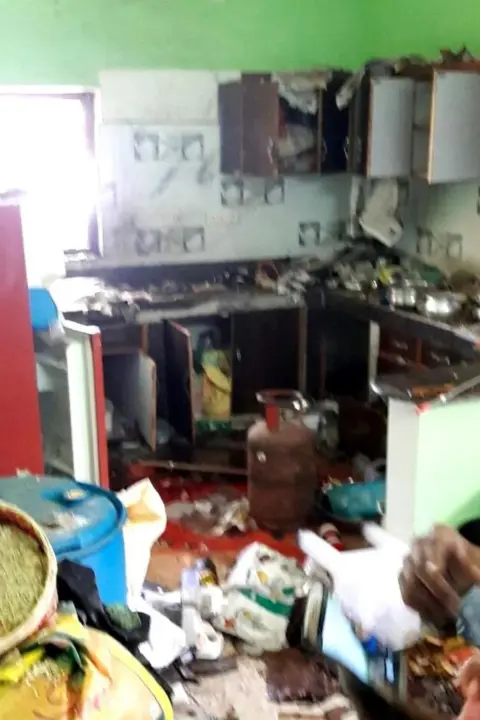
A video grab of the kitchen moments after the incident
A video grab of the kitchen moments after the incident in 2018

The victim’s mother, a college teacher, recognised the letter’s writing style and phraseology as that of a colleague, Meher, a former principal she had replaced.

Police had previously dismissed Meher’s workplace rivalry as routine academic politics. Now he became the prime suspect.

Under questioning, Meher initially offered an implausible story about being forced to deliver the letter under threat.

Police allege he later confessed: he had hoarded firecrackers during Diwali, extracted gunpowder, built the bomb, and mailed it from Raipur using a courier.

He allegedly left his phone at home to create an alibi and avoided CCTV by not buying a train ticket. Meher had even attended both the victim’s wedding and funeral.

Additional reporting by Sandeep Sahu in Bhubaneshwar

BBC

Continue Reading

Trending

Copyright © 2026 The Buzz: Powered by Apna Network Limited - Concept by Digital Hub NZ