

NZ News
Heating NZ’s homes: ‘We’re really still lagging way, way behind’

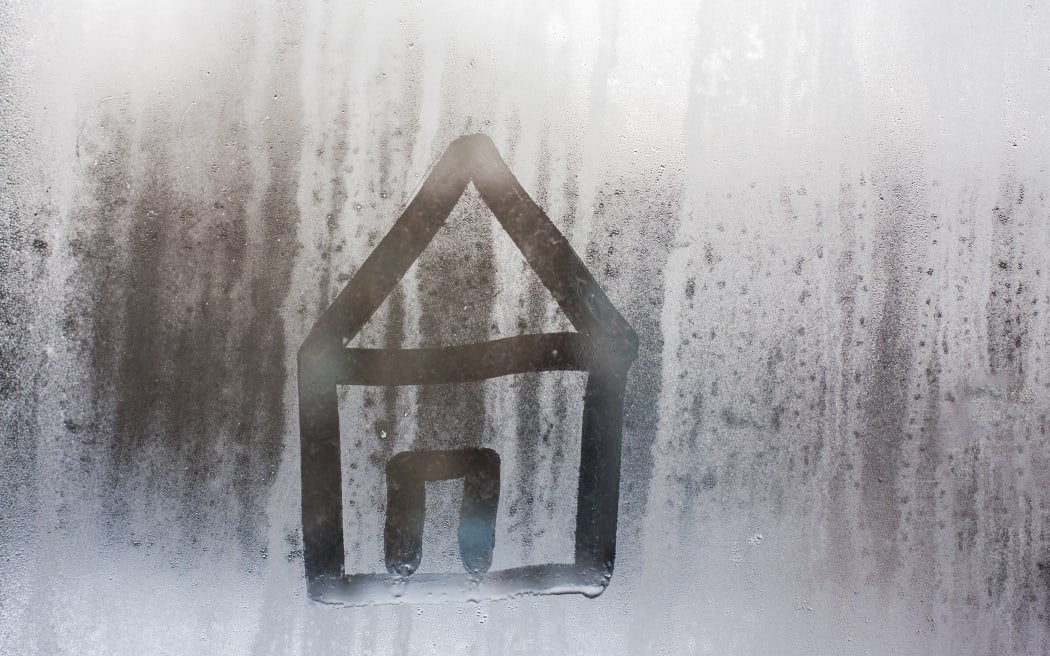
A Reducing Energy Hardship conference in New Plymouth this past week has been told all New Zealand homes should come with an energy performance rating.
The poor condition of many New Zealand properties has been identified as one of the biggest factors affecting households struggling to heat their homes.
Dr Kimberley O’Sullivan – a senior research fellow at the University of Otago – told about 200 delegates from government departments, energy companies, iwi and social agencies that an energy performance certification scheme for all housing in New Zealand could in the long-term help improve the housing stock.
“One thing this would do is increase information about how healthy their home is and maybe give an indication of around about how much it might cost them to run that house in energy terms, so what they might expect to pay for the electricity bill on that house.”
O’Sullivan said certification would help identify where the least energy efficient homes were and allow them to be targeted to bring them up to standard.
“And potentially years down the track, we’d be able to say we don’t want landlords running a business renting those low energy rating houses to families who can’t afford to run those homes and be healthy.”

Kimberley O’Sullivan. Photo: Robin Martin / RNZ
O’Sullivan said there was international evidence that people who couldn’t afford to heat their houses suffered a significant increase in the risk of severe mental health issues.
“If you look overseas in terms of where we are at with our housing and building performance we are really still lagging way, way behind. For example, Ireland is doing much better than we are in Aotearoa.
“In terms of energy hardship we are just starting to grapple with that, so we’ve got a lot of mahi to do.”
She said the conference would help.
“It’s amazing we’ve got to the stage where we have this many people in the room who first of all understand what energy hardship is and are already doing work to improve things in their local areas.”
O’Sullivan – who did her PhD on the rate of disconnections amongst people using prepay electricity accounts – also wanted to see better data available on these, so it was possible to measure more accurately how many people using such accounts got cut off.
Keri Brown is the chair of the Energy Hardship Expert Panel set up about 18 months ago as part of the government’s Electricity Price Review.
The panel’s goal is that all children in New Zealand are in households that can access and afford the energy they need, regardless of income or location.
Brown said the panel had identified the condition of New Zealand homes as one of the biggest contributors to energy hardship, alongside affordability.
“We have a long, long history of cold, damp homes and we haven’t kept up with getting them up to standard and making them warmer.”
She said there had been submissions calling for energy certification of homes, but pointed out there were already problems getting the current regulations adhered to.

The panel’s goal is that all children in New Zealand are in households that can access and afford the energy they need, regardless of income or location. Photo: 123RF
“When every day families have a cold and damp home, the option is to go to the Tenancy Tribunal and their rights are not always enacted to meet the Healthy Homes Standards.
“So really strong support is needed so that the Healthy Homes Standards are not only complied with, but monitored as well to ensure there is action taken when a house is not meeting those standards.”
Brown said the Warmer Kiwi Homes scheme, which offered subsidies to low income families for heating and insulation, was making a difference and she welcomed the extra money for the programme in the budget.
“So, there’s big efforts being made on warming up our homes, but we still have a long way to go to get them all up to standard so that they meet those Healthy Home criteria.”
The Energy Hardship Expert Panel was still taking submissions and would make its final recommendations to the government on 30 June.
The Ministry of Business Innovation and Employment said changes to the Building Act in 2004 introduced mandatory energy rating requirements for public, commercial, industrial and large multi-unit residential buildings.
Manager building for climate change Suzannah Toulmin said this change reflected the government’s long-term plan to reduce buildings’ emissions and enhance their climate resilience.
“While the requirements are currently intended to apply to large buildings, they could be expanded; in in the Emissions Reduction Plan,” she said.
“Initially, they could apply to government, commercial and large residential buildings and potentially expand to other residential buildings in future.
“We need to explore how incentives, support or regulatory requirements could reduce existing buildings’ emissions, while making buildings warmer and drier.”
Toulmin said there was also scope to expand the Warmer Kiwi Homes programme.
“More than 110,000 retrofits have been done since the programme launched in 2018, making homes warmer, drier and healthier. In the Budget last month, we announced an expansion to the programme worth $402.6m over four years.”
That would amount to 26,500 insulation and heating retrofits per year, for the next four years, she said.
Toulmin said Healthy Homes Standards for residential tennancies became law in 2019 and were being phased in for all tenancy types by July 2025. Landlords that did not meet their obligations were in breach of the Residential Tenancies Act 1986.
“The Tenancy Compliance and Investigations team undertake both proactive and reactive work to ensure that landlords comply with the Healthy Homes Standards, and landlords may be liable for exemplary damages of up to $7200.”
Source RNZ



Latest News
Opportunities to mitigate multi-million-dollar RNZ budget blowout likely missed – experts

Multiple opportunities to identify and mitigate a multi-million-dollar budget blowout at RNZ appear have been missed, according to the former executive director at Audit New Zealand.
The public broadcaster on Monday revealed a near $12 million shock financial loss after a litany of financial blunders, which will now lead to sweeping job cuts.
The $11.8m loss is more than 25 times the $470,000 RNZ had expected to lose over the year to June.
CEO Paul Thompson took responsibility for the result, and said internal reports gave an inaccurate picture of the finances, meaning the scale of the loss only became clear in October.
RNZ’s former chief financial officer Hilary Parker resigned unexpectedly in early October.
The board said it would commission an independent review into what went wrong.
Independent contractor Stephen Walker, who left the Audit Office earlier this year, said the size of the loss was surprising, as was the length of time it took to identify it – months after the financial year ended.

Supplied / OAG
“Probably more of a concern is that they had seemingly been unaware that they were running up a significant deficit until they were in the preparation stage of their annual report in October.”
Walker said public entities typically produced monthly financial reports.
An interim audit also took place before the end of the financial year, he said, but if the organisation hadn’t identified significant losses at that stage, the auditor could also be in the dark.
“It seems that there’s a real weakness in forecasting and budgeting that’s occurred here and that the monthly accounts, when they’re produced, either haven’t identified these significant variances against budget or the magnitude of them really hasn’t come to light until right towards the end of the financial year,” Walker said.
“And really at that point, there’s no opportunity for the chief executive, the leadership team to take, and the board to take, any corrective action because the year has effectively been completed.”
Walker said the “significant miss” was difficult to account for given it was more than 10 percent of RNZ’s total funding.
He said based on RNZ’s annual report, financial complexity didn’t appear to be a factor.
“This $11.8m loss isn’t made up of one particular item … it seems to have been contributed to by a number of separate expense lines running over budget. So I don’t think it’s necessarily to do with complexity.”
Among the errors, RNZ wrongly counted $2m from land sales as income in its budget. Staff costs also came in $3.2m over budget, including $1.4m in redundancy payments.
Professor at Auckland University’s business school Norman Wong said based on media reports the issues identified were “significant and troubling”.

Supplied / University of Auckland
“But recognising the sale of land as income in their budget is a basic error that one would have expected to have been caught and corrected well before it got to this point.”
With funding reductions at RNZ over the past two years, Walker expected greater scrutiny of financial results.
“Virtually every public entity has had their annual budget reduced. And so you would expect … the leadership team on a monthly basis and board – I’m not sure how frequently the board will consider the information – but you would expect them to be interrogating the results on a regular basis throughout the year,” he said.
Walker said initiating an independent review was the correct course of action and that he’d want to understand what information the leadership team and the board were regularly receiving.
He said he’d “love to say” surprising financial results were rare, but conceded they occured on a semi-frequent basis during his time leading the Audit Office.
“The benefit of independent scrutiny by the Audit Office – and the auditors providing that support to the Auditor General – [is] that the reporting is fairly presented at the end of the year, whether it’s good, bad or ugly.”
rnz


Police say person who fired gun at officers still at large

New Zealand sides named for RLWC finals

Parliamentary Service working on extra chairs and offices for increased number of MPs


-

 Latest News2 months ago
‘Chilling’: Business groups speak out against National’s supermarket break-up plan
-

 NZ News2 months ago
Tom Phillips report: The missed opportunities to find the children
-

 Politics2 months ago
National vows to try to split Pak’nSave and New World
-

 Latest News2 months ago
Cars bearing Chinese police markings stir unease in Auckland
-

 Fiji News2 months ago
Plans to have new Constitution by Dec 24th 2026
-

 NZ News2 months ago
Cop who stole $68,000 can now be named as champion Muay Thai fighter Haimona Tamati-Te Paki
-

 Politics2 months ago
MBIE confirms botched biometric projects costs blown out to $50.7 million
-

 Latest News2 months ago
Five Karangahape Road venues lose their liquor licences after police intervention