

NZ News
The long game of investigating Loafers Lodge disaster

In the confusion and chaos of the Loafers Lodge fire, a local fire chief called it a “once-in-a-decade fire”.
That gave some idea of the seriousness of it but still did not quite convey the horror.
It was only last Tuesday – more than a week later – that police formally released names of the first three victims.
Among them was Michael Wahrich – who was known to many Wellingtonians as Mike the Juggler.
Stuff and the capital’s daily The Post reported his death before it was confirmed by police because his sister confirmed it.
That confused followers of local Facebook page Wellington Live which had posted earlier that Mike had survived the fire, which then drew angry condemnation from some users who accused the site’s editors of ‘role-playing’ as journalists.
They weren’t satisfied by administrators explaining it was an open group which members could contribute to – and the misleading post about Mike Wahrich was removed the same day it appeared.
For the news media, there is an added complication. A man has been charged with arson in relation to the fire. He behaved erratically in court where the judge ordered interim name suppression and remanded him in custody.
Any further reporting on that is effectively off limits until he appears in court again.
On Monday, The Post‘s Tom Hunt reported Loafers Lodge had just one working ground-floor exit after the main entrance was locked shut due to damage in the days before the fire.
We have also learned Loafers Lodge is just one of a growing network of hostels, motels and boarding houses housing some of New Zealand’s most vulnerable and poorest people – but we do not even know how many there are.
A Parliamentary inquiry report into boarding houses cited MBIE and Fire Services databases which suggested there were between 500 and 550 boarding houses – but that was in 2014. Only 48 of them had sprinkler systems, according to Stuff‘s Steve Kilgallon, who said the $300,000 cost of creating a national register was cited as a reason why it had not been done in 2012.
Loafers Lodge housed people who could not buy or even rent properties from those who own them.
Journalist Bernard Hickey said The Loafers Lodge fire exposed New Zealand’s twin crises of inequality and housing, which were subjects he wrote about a lot. He said he lived not far from the Loafers Lodge for years and often wondered who lived there and what it was like.
“But like most, I didn’t have much insight into the nature and danger of life inside such a place,” he wrote.
He was not alone in that, but since the tragedy, people usually invisible in our media have been heard.
“I’ve read online and on social media saying that this was a place for the vulnerable. I don’t consider myself a vulnerable person. It’s just at the moment there’s a struggle with housing,” Loafers Lodge resident Chris told The Guardian’s reporter Tess McClure.
The shadow of Grenfell
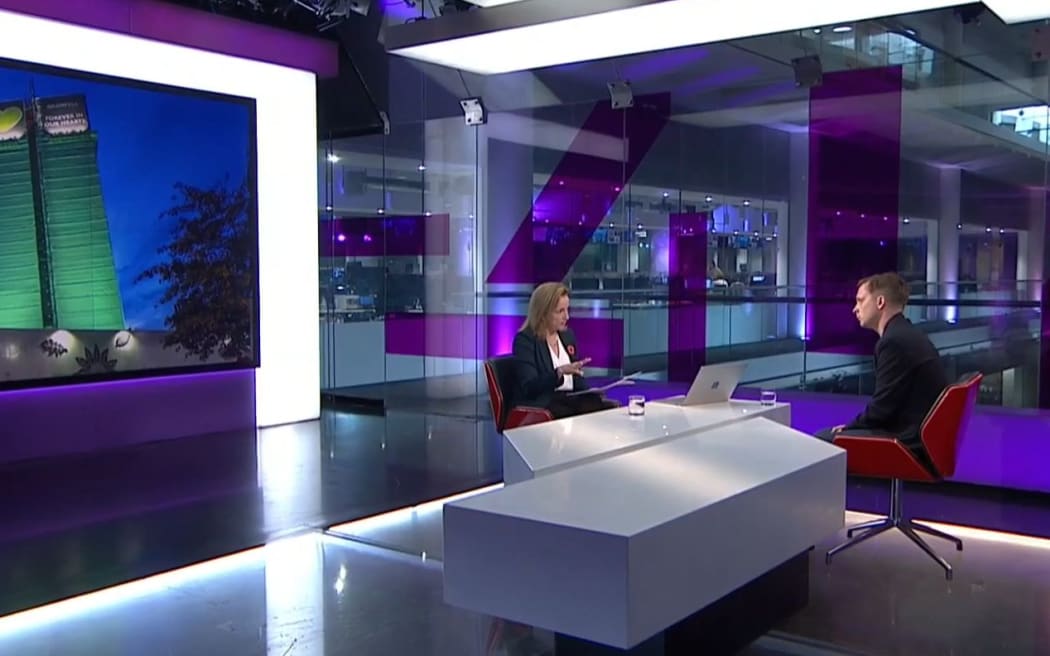
Peter Apps of UK publication Inside Housing with an mage of Grenfell Tower on UK’s Channel 4. Photo: screenshot / Channel 4 News
The day after the fire, RNZ’s Phil Pennington told Morning Report what one of the firefighters had told him: “I wonder if this is our Grenfell moment.”
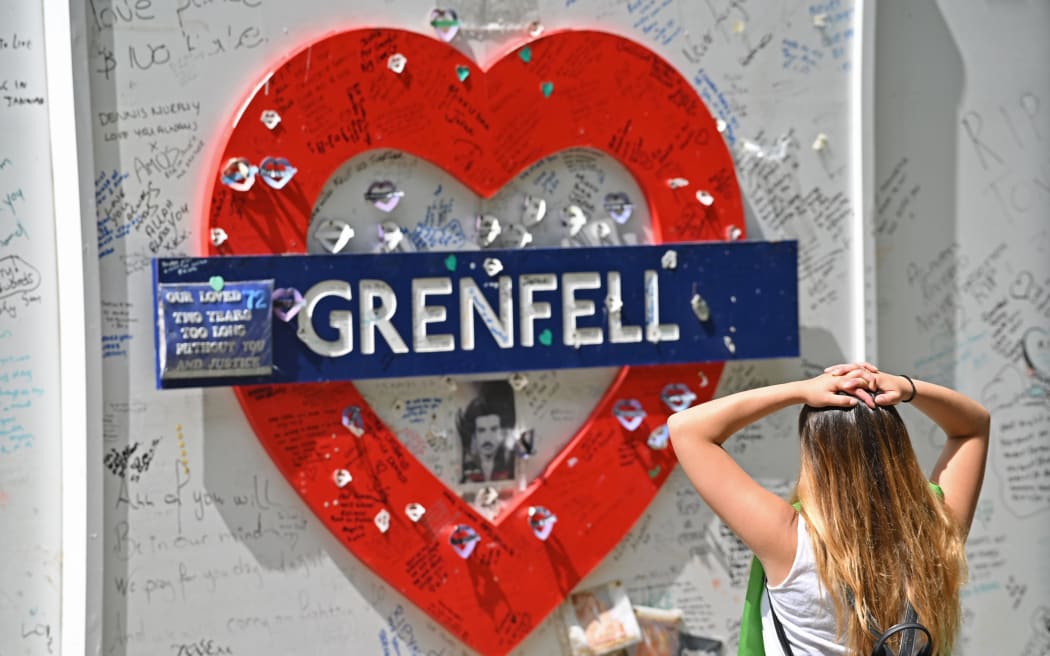
A fire killed 72 residents of Grenfell Tower in June 2017. The circumstances of that were very different to Loafers Lodge, but both disasters raised big questions about the adequacy of social housing, the response to safety concerns of people living there, and the capability of the emergency response.
Veteran British Channel 4 news presenter Jon Snow was confronted angrily by Grenfell residents when he turned up there. They told him they felt ignored by media when they raised newsworthy safety fears before the disaster.
It hit home.
“We can accuse the political classes for their failures, and we do, but we are guilty of them ourselves,” Snow told a conference of media people later in 2017.
“We are too far removed from those who lived their lives in Grenfell and who, across the country, now live on amid combustible cladding, the lack of sprinklers, the absence of centralised fire alarms and more — all revealed by the Grenfell Tower,” he said.
Among those who did know about that were journalists at specialist UK publication Inside Housing.
“[After Grenfell], we decided quite early on that we were experts in this area compared to other journalists. And so we had to really make the most of that by focusing on the policy failures, because there was a narrative at the top, straight after the fire, that this was a horrific one-off,” said Sophie Barnes.
She said it was actually “a horrific example of a much wider problem”.
Barnes sent official information requests to all councils in the country asking about their fire risk assessments. She received 436 fire risk assessments in return, and reported the scale of fire safety issues: 268 tower blocks had problems with fire doors, 71 had no emergency lighting, 54 had no ventilation in escape routes.
To mark the one-year anniversary of Grenfell, Barnes carried out a further investigation: this time analysing more than 1500 tower blocks or about 40 percent of social housing in total across the UK. There were still widespread problems with doors, emergency lighting and signage.
Barnes is now an investigative reporter at one of the UK’s biggest national newspapers, the Daily Telegraph. Source
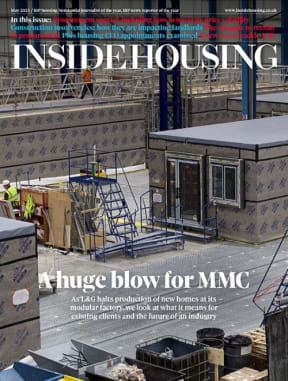
Photo:
Her former colleague Peter Apps, now Inside Housing’s deputy editor, last year published the book Show Me The Bodies – How We Let Grenfell Happen.
It was described by The Times in London as a “forensic book indictment of the construction industry and regulators”.
“You get a kind of low-probability event like (Grenfell Tower) – or what I presume has happened in Wellington – but it comes from a set of circumstances which make it possible. And it’s likely that if that’s possible in that one block, it’s likely to be possible in another,” Apps told Mediawatch.
Inside Housing launched a ‘Never Again’ campaign for immediate action to implement findings from Grenfell Tower.
“Sometimes people say after an event like this you can’t politicse a tragedy and you’ve got to mourn first and then talk about the reasons afterwards. I think that that’s a mistake, from the media’s perspective, because there’s a short period when people are listening and that window will close,” Apps told Mediawatch.
“If you’re not talking about the things that need to change at that time, you’re going to find that you’re talking about them at a time when nobody’s listening to you,” he said.
“Building up data is important in proving this isn’t just a one-off. You can get information out of public bodies (in the UK). It is laborious but it’s an important role the media can play,” he said.
“Fire disasters in the UK do always seem to take place in homes for the people with the least choice about where they live,” he said.
“We had a fire in 2009 in building called Lakanal House which killed six people and the story wasn’t really followed up, to be honest. But the issues were so similar. If a journalist in the UK had been able to get under the skin of that and exposed what was the lessons were, we might not have had the second catastrophe, which was much worse,” he said.
“As bad as what’s happened in Wellington is, you now have the opportunity to prevent that happening again, or prevent it happening in an even worse fashion. That’s something that the media can contribute. Stay with this story over the next few months and even years as the situation and the details emerge, because they won’t have yet. If the media is patient enough, there’s probably a story that matters a great deal.”
Inside Housing journalists also visit buildings where they record shortcomings in safety and maintenance and report the lack on progress.
“If you can … get down there. The landlord of an organisation or a press office will give you assurances about how seriously they take safety, but you can test that and speak to the people in those buildings about whether things are taken seriously or not,” Apps said.
“For the most part, (residents) want people to listen to them and to understand. I think you’d find your background and your outlook on life is maybe a lot less different from them than you think.”
The final report of the official Grenfell Tower inquiry will not be published until 2024 – seven years after the disaster.
Source RNZ


Latest News
Opportunities to mitigate multi-million-dollar RNZ budget blowout likely missed – experts
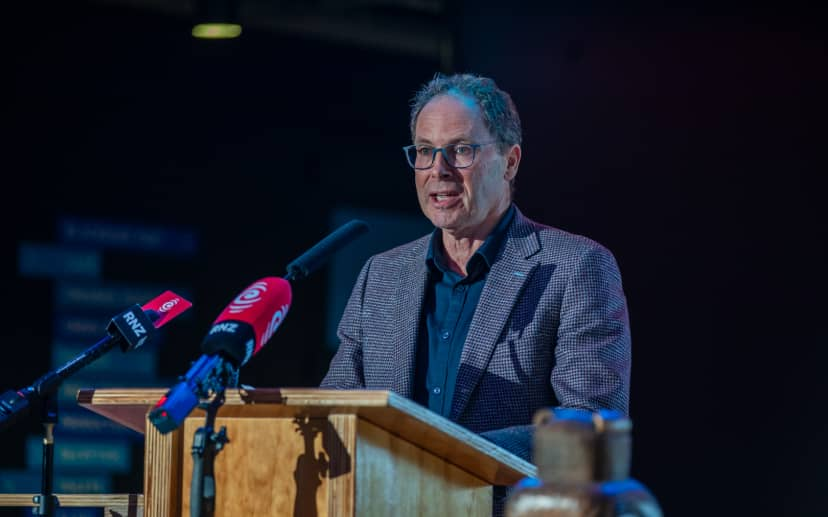
Multiple opportunities to identify and mitigate a multi-million-dollar budget blowout at RNZ appear have been missed, according to the former executive director at Audit New Zealand.
The public broadcaster on Monday revealed a near $12 million shock financial loss after a litany of financial blunders, which will now lead to sweeping job cuts.
The $11.8m loss is more than 25 times the $470,000 RNZ had expected to lose over the year to June.
CEO Paul Thompson took responsibility for the result, and said internal reports gave an inaccurate picture of the finances, meaning the scale of the loss only became clear in October.
RNZ’s former chief financial officer Hilary Parker resigned unexpectedly in early October.
The board said it would commission an independent review into what went wrong.
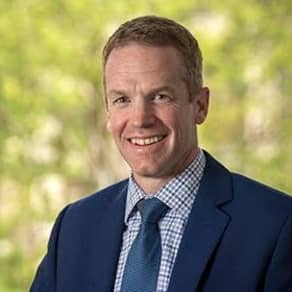
Independent contractor Stephen Walker, who left the Audit Office earlier this year, said the size of the loss was surprising, as was the length of time it took to identify it – months after the financial year ended.
Supplied / OAG
“Probably more of a concern is that they had seemingly been unaware that they were running up a significant deficit until they were in the preparation stage of their annual report in October.”
Walker said public entities typically produced monthly financial reports.
An interim audit also took place before the end of the financial year, he said, but if the organisation hadn’t identified significant losses at that stage, the auditor could also be in the dark.
“It seems that there’s a real weakness in forecasting and budgeting that’s occurred here and that the monthly accounts, when they’re produced, either haven’t identified these significant variances against budget or the magnitude of them really hasn’t come to light until right towards the end of the financial year,” Walker said.
“And really at that point, there’s no opportunity for the chief executive, the leadership team to take, and the board to take, any corrective action because the year has effectively been completed.”
Walker said the “significant miss” was difficult to account for given it was more than 10 percent of RNZ’s total funding.
He said based on RNZ’s annual report, financial complexity didn’t appear to be a factor.
“This $11.8m loss isn’t made up of one particular item … it seems to have been contributed to by a number of separate expense lines running over budget. So I don’t think it’s necessarily to do with complexity.”
Among the errors, RNZ wrongly counted $2m from land sales as income in its budget. Staff costs also came in $3.2m over budget, including $1.4m in redundancy payments.
Professor at Auckland University’s business school Norman Wong said based on media reports the issues identified were “significant and troubling”.

Supplied / University of Auckland
“But recognising the sale of land as income in their budget is a basic error that one would have expected to have been caught and corrected well before it got to this point.”
With funding reductions at RNZ over the past two years, Walker expected greater scrutiny of financial results.
“Virtually every public entity has had their annual budget reduced. And so you would expect … the leadership team on a monthly basis and board – I’m not sure how frequently the board will consider the information – but you would expect them to be interrogating the results on a regular basis throughout the year,” he said.
Walker said initiating an independent review was the correct course of action and that he’d want to understand what information the leadership team and the board were regularly receiving.
He said he’d “love to say” surprising financial results were rare, but conceded they occured on a semi-frequent basis during his time leading the Audit Office.
“The benefit of independent scrutiny by the Audit Office – and the auditors providing that support to the Auditor General – [is] that the reporting is fairly presented at the end of the year, whether it’s good, bad or ugly.”
rnz


Police say person who fired gun at officers still at large

New Zealand sides named for RLWC finals

Parliamentary Service working on extra chairs and offices for increased number of MPs


-

 Latest News2 months ago
‘Chilling’: Business groups speak out against National’s supermarket break-up plan
-

 NZ News2 months ago
Tom Phillips report: The missed opportunities to find the children
-

 Politics2 months ago
National vows to try to split Pak’nSave and New World
-

 Latest News2 months ago
Cars bearing Chinese police markings stir unease in Auckland
-

 Fiji News2 months ago
Plans to have new Constitution by Dec 24th 2026
-

 NZ News2 months ago
Cop who stole $68,000 can now be named as champion Muay Thai fighter Haimona Tamati-Te Paki
-

 Politics2 months ago
MBIE confirms botched biometric projects costs blown out to $50.7 million
-

 Latest News2 months ago
Five Karangahape Road venues lose their liquor licences after police intervention