

Latest News
Latest torrent adds unprecedented statistic to Auckland’s 2023 weather

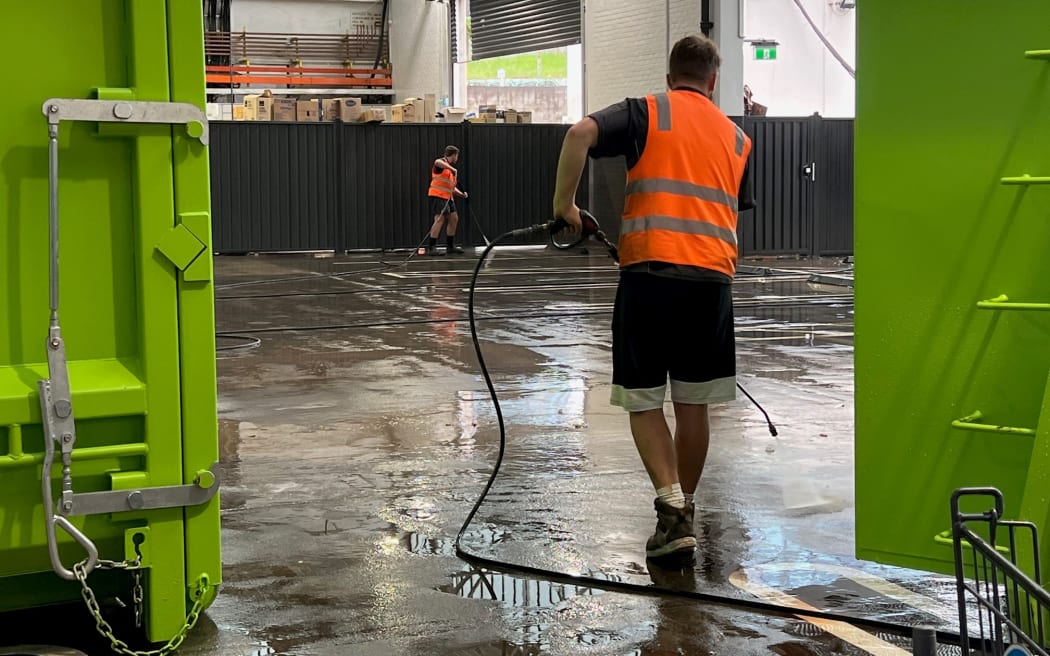
While this week’s intense burst of rain in Auckland might not have beaten the deluges of the 27 January storm – is it a sign they are becoming more common?
Auckland Council data shows that around 77mm of rain fell in 2 hours in Henderson on Tuesday morning, and nearly 70mm of rain fell in about 2½ hours in Whenuapai, while in Glendene about 66mm fell in about 2 hours.
University of Auckland environment school honorary associate professor Anthony Fowler calculated the rainfall event on Tuesday was about a 1-in-5-year event for the amount of rain that fell in 1 hour and in 2 hours.
In contrast, the 27 January event had return periods of hundreds of years.
Fowler also looked at how often Albert Park, in central Auckland, had the same or more rain in a day than the 82mm that fell on Tuesday. The record extended back to 1863, with a few gaps.

This graph by Anthony Fowler, an honorary associate professor at the University of Auckland environment school, shows the return periods, over several hours, for the rainfall events on January 27 and Tuesday. Photo: Supplied / Stuff
He found three times when there had been two such events in a month – August 1965, January 2011 and January 2023. Only once – in 1979 – had there been three such events in a calendar year.
It appeared that so far in 2023 it had happened four times, which was definitely unusual, Fowler said. But he cautioned that was “a bit back of the envelope”, with long term analysis yet to be completed.
Niwa meteorologist Seth Carrier said Tuesday’s heavy rain in the top half of the North Island was tied to the arrival of a colder, much drier air mass from the Southern Ocean, to replace the warm, humid air that had been around for some days.
The rainfall was basically along the transition zone between the warmer northerlies and cooler southerlies.
Some places in Auckland had 24-hour rainfall totals of more than 100mm, which was unusual, but that was still less than half the 265mm recorded in Māngere on 27 January.

Oakley Creek overflowed in Walmsley Park, Mt Albert this week, causing flooding on properties nearby. Photo: RNZ / Finn Blackwell
Despite 27 January being much wetter, the events did have some similarities.
Both involved what were called training rain or thunderstorms.
“Training just means heavy rain is moving over the same place repeatedly,” Carrier said.
The strong cold front that the heavy rain on Tuesday fell along was oriented roughly north to south, and had been moving only slowly eastwards.
Associate professor Asaad Shamseldin, from the engineering faculty at the University of Auckland, said while Tuesday’s rain caused fewer problems than that on 27 January, some places had flooded again.
“The main point is that this short, intense rainfall, I think they are going to increase with climate change,” Shamseldin said. “Specially in urban areas they will cause a lot of damage.”
So, 100mm over a day, might not cause trouble. “But if it’s kind of slow, then you have maybe 50mm in a very short period of time, then the stormwater network can’t cope.”
While improving the pipe network was part of the solution, the problem needed to be looked at holistically throughout each catchment.
“You need to tailor make the solution to particular locations, because you don’t want just pipes everywhere,” Shamseldin said.
In some heavily built-up areas making pipes bigger might be the only solution, but that shouldn’t be the general rule.
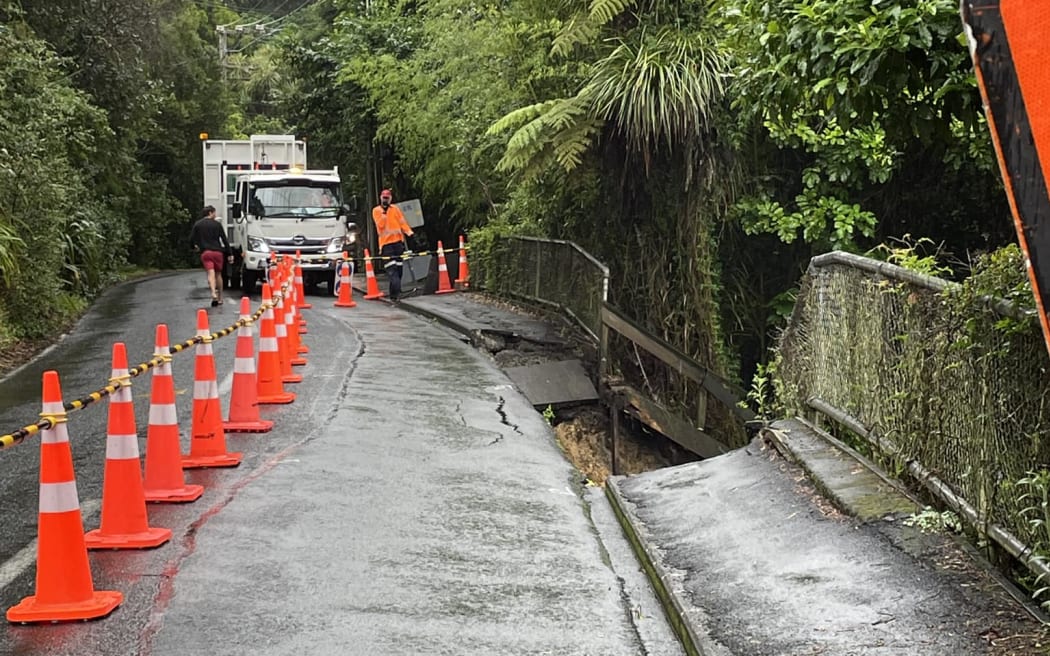
Otitori Bay Road in Titirangi collapsed during January’s floods, leading houses to evacuate. Photo: Facebook / Deborah Russell MP
With bigger pipes, stormwater would travel more quickly, and that could lead to other problems, such as damage to the health of rivers.
Climate scientist Dr Kevin Trenberth, an honorary academic in the physics department at the University of Auckland, said there was a climate change aspect to the heavy rain, related to unusually warm sea temperatures.
Sea surface temperatures to the north of New Zealand were 1-1½C above normal, and the amount of moisture in the atmosphere had been about twice what would be expected for this time of year.
Tuesday’s rain had tropical origins, with the moisture coming from north of 20 degrees south, Trenberth said.
“High rainfall rates certainly had a big affect in this case, but volumes were nowhere near as much as occurred on January 27.”
Amounts of around 65mm in 2½ hours seen on Tuesday was unusual for Auckland, but the weather set up that produced that rainfall was not unusual, although the slow speed at which it moved possibly was.
“There was a big, organised line coming very slowly through the Auckland area, so the rain amount was compounded by the relatively slow movement of this frontal system,” Trenberth said.
“January 27 was a great big huge blob… There were tonnes of moisture in the atmosphere, and it just sat around and poured on us.”
During the past year or so more than a dozen sub-tropical lows had come down from the north towards New Zealand, while “rain bombs” had dropped on the east coast of Australia.
It was part of a much larger pattern of weather related to La Niña.
La Niña is a climate pattern related to the cooling of surface-ocean waters along the tropical west coast of South America. It’s considered to be the counterpart to El Niño, which is characterised by unusually warm ocean temperatures in the equatorial region of the Pacific Ocean.
La Niña faded in recent months, but had affected global weather during the past three years – an unusually long time, although not unprecedented.
* This story originally appeared on Stuff.
SOURCE:RNZ



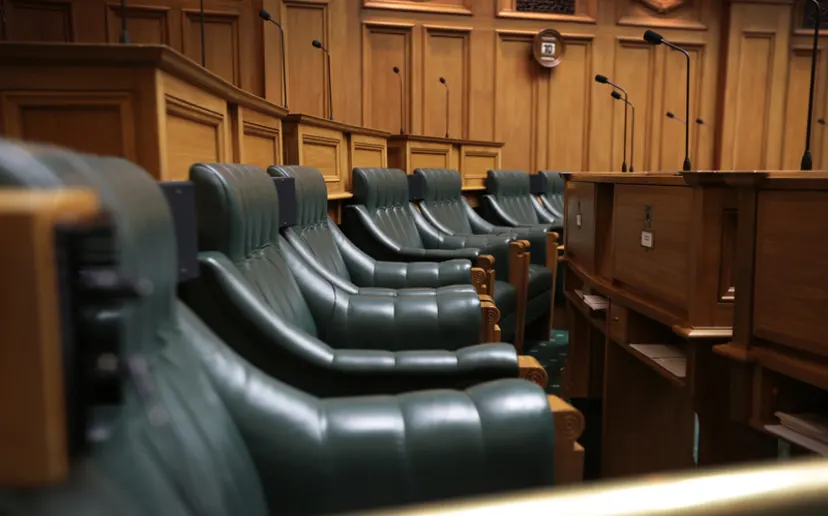
The chief executive of the Parliamentary Service is confident there will be enough room to accommodate the increased number of MPs and their staff coming into Parliament.
On current numbers, up to 131 MPs could be sitting in the Chamber following the election, brought on by a record overhang result.
Clerk of the House of Representatives Dr David Wilson told the Spinoff that currently the debating chamber had enough chairs to seat 124 MPs – including the Speaker of the House – and work was being done to accommodate more by altering the seating arrangement.
In a statement, Parliamentary Service chief executive Rafael Gonzalez-Montero said planning for a larger Parliament had been going for “some time”.
“Now that the election results have confirmed an increase to the number of members we are looking at several options.
“We are confident we will be able to accommodate all members within the Chamber.”
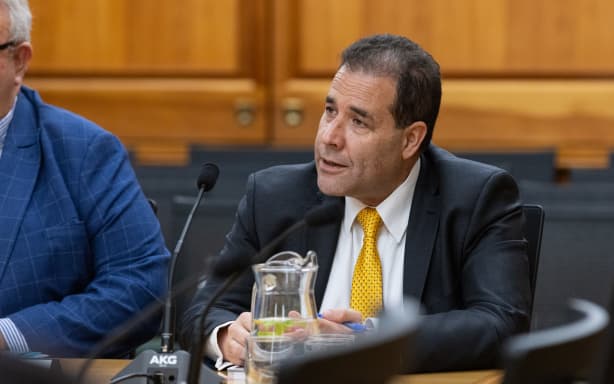
VNP / Phil Smith
Gonzalez-Montero said office accommodation for members and their staff would be “stretched” for a short time, but the new Members’ Building was only a few months away from “practical completion”.
That building – located behind Parliament – was due to be ready to occupy in April next year and had capacity to accommodate around 30 backbench MPs.
“All members should be in fit-for-purpose accommodation from that point,” Gonzalez-Montero said.
Following the 2023 election, 123 MPs sat in the Chamber – a record number at the time. That decreased to 122 following the resignation of National MP Judith Collins.
Collins held the seat of Papakura and stepped down in May and Parliament voted against holding a by-election because it was too close to the election.
The election result also meant high-ranking National Party MPs like Chris Bishop, Paul Goldsmith, Nicola Willis and Gerry Brownlee – Speaker of the House and an MP for 30 years – would likely not make it back into Parliament.
Only resigning or retiring MPs were permitted to give a valedictory speech meaning none of them would get the chance to give a valedictory statement.
Asked if their would be special allowances for valedictories, Wilson said in a statement that normally only MPs were allowed to speak in the House but the House could suspend its own rules or temporarily alter them.
“It could do so to allow former members to address the House.”
Wilson said no such arrangements could be made until the next Parliament opened and members sworn in.
rnz


Police say person who fired gun at officers still at large

New Zealand sides named for RLWC finals

Parliamentary Service working on extra chairs and offices for increased number of MPs


-

 Latest News2 months ago
‘Chilling’: Business groups speak out against National’s supermarket break-up plan
-

 NZ News2 months ago
Tom Phillips report: The missed opportunities to find the children
-

 Latest News2 months ago
Cars bearing Chinese police markings stir unease in Auckland
-

 Politics2 months ago
National vows to try to split Pak’nSave and New World
-

 Fiji News2 months ago
Plans to have new Constitution by Dec 24th 2026
-

 NZ News2 months ago
Cop who stole $68,000 can now be named as champion Muay Thai fighter Haimona Tamati-Te Paki
-

 Politics2 months ago
MBIE confirms botched biometric projects costs blown out to $50.7 million
-

 Latest News2 months ago
Five Karangahape Road venues lose their liquor licences after police intervention