

Uncategorized
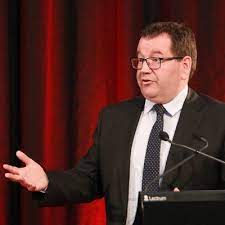
Watch: Finance Minister Grant Robertson makes pre-Budget speech





Analysis – Three years ago, Christopher Luxon headed into his first head-to-head debate with Chris Hipkins on the back of a poll that had National on 37 points and able to form a government with ACT alone.
Labour under then-Prime Minister Chris Hipkins was on a downward spiral on 27 percent in that same 1News-Verian poll and had no path to power.
Fast-forward three years and both parties headed into Tuesday night’s debate with two fresh new polls.
RNZ-Reid Research’s results had National on 26 percent and Labour on 31, while 1News-Verian had a much tighter race with just one point in it and both parties just under 30.
Those results spell early retirement and unemployment for a decent number of National Party MPs currently enjoying the government benches.
MMP has evolved so much in the past two elections that the combined Labour-National vote has gone from 81 percent at the 2017 election to just 57 in Tuesday’s RNZ-Reid Research poll.
So-called minor parties have grown in both size and influence, capturing the imagination of voters that traditionally voted blue or red.
Increasingly polling is suggesting another new party – Opportunity – has a good chance of making it into Parliament and being a potential kingmaker.
There’s now a very real possibility that the next government could be made up of four political parties.
That has happened before under Sir John Key’s National government in 2008, but because he chose to welcome the Māori Party into the fold, not because he had to.
The minor parties of 2026 have leverage and power going into any coalition talks well beyond any previous election years.
It makes a head-to-head between Christopher Luxon and Chris Hipkins far more redundant in this political age.
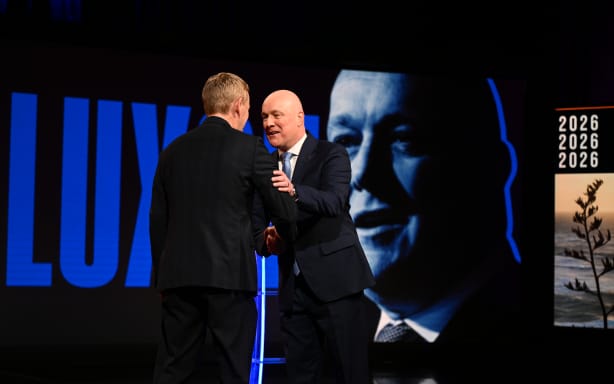
TVNZ/Harley Peters
They can’t fully commit to any of the promises they make because the slate is almost entirely wiped clean after 7 November when political parties sit down to discuss what a future government might look like.
Luxon has ruled out working with Opportunity after the election because of its land tax policy and National campaigning on no new taxes.
On Tuesday night he repeatedly refused to answer whether he would pick the phone up if he needed the party to be prime minister.
Instead, he repeated his previous comments about an untenable land tax, and then told reporters after the debate the question was a “hypothetical” that didn’t need an answer.
To be clear, that’s not a no.
At times in the debate the leaders could have been put in a time machine and transported back to three years ago, so similar were some of the issues and answers to them.
The cost of living crisis continued to be the overwhelming theme, a healthcare system under pressure and patients waiting too long in emergency departments hadn’t improved, and neither Chris had fully grasped the meaning of a yes or no question.
There was no big revelation or pledge – on the latter neither party has the headroom in their fiscal plans to do so.
It’s unlikely undecided voters watching were swayed one way or the other by the end of it.
That’s not to say the two Chrises performed badly.
They were both across their briefs, and while they had some nervous energy at the outset both settled into a comfortable rhythm and got their key messages across.
While Hipkins managed to land a few blows on Luxon over his failure to discipline New Zealand First’s Winston Peters and Shane Jones over racist remarks, Luxon in return made a strong argument on education and had Hipkins concede he had done what Labour couldn’t and got India across the line on a free trade agreement.
The biggest controversy of the night was the pair being asked to pick between the All Blacks and the Warriors with Luxon going Team ABs while Hipkins chose to “Up the Wahs”.
Both would have gone to bed happy with their performance and grateful they didn’t say or do anything they deeply regretted.
There is a week until they face-off again – another week of smiling at the cameras and hoping voters return them to the major party league.
rnz


Police say person who fired gun at officers still at large

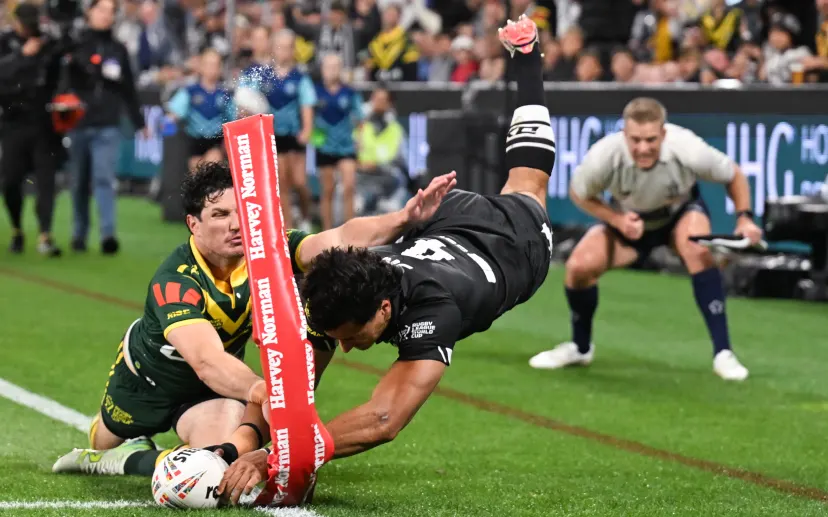
New Zealand sides named for RLWC finals

Parliamentary Service working on extra chairs and offices for increased number of MPs


-

 Latest News2 months ago
‘Chilling’: Business groups speak out against National’s supermarket break-up plan
-

 NZ News2 months ago
Tom Phillips report: The missed opportunities to find the children
-

 Politics2 months ago
National vows to try to split Pak’nSave and New World
-

 Latest News2 months ago
Cars bearing Chinese police markings stir unease in Auckland
-

 Fiji News2 months ago
Plans to have new Constitution by Dec 24th 2026
-

 NZ News2 months ago
Cop who stole $68,000 can now be named as champion Muay Thai fighter Haimona Tamati-Te Paki
-

 Politics2 months ago
MBIE confirms botched biometric projects costs blown out to $50.7 million
-

 Latest News2 months ago
Five Karangahape Road venues lose their liquor licences after police intervention