

Latest News
The lottery keeping families apart and holding New Zealand back

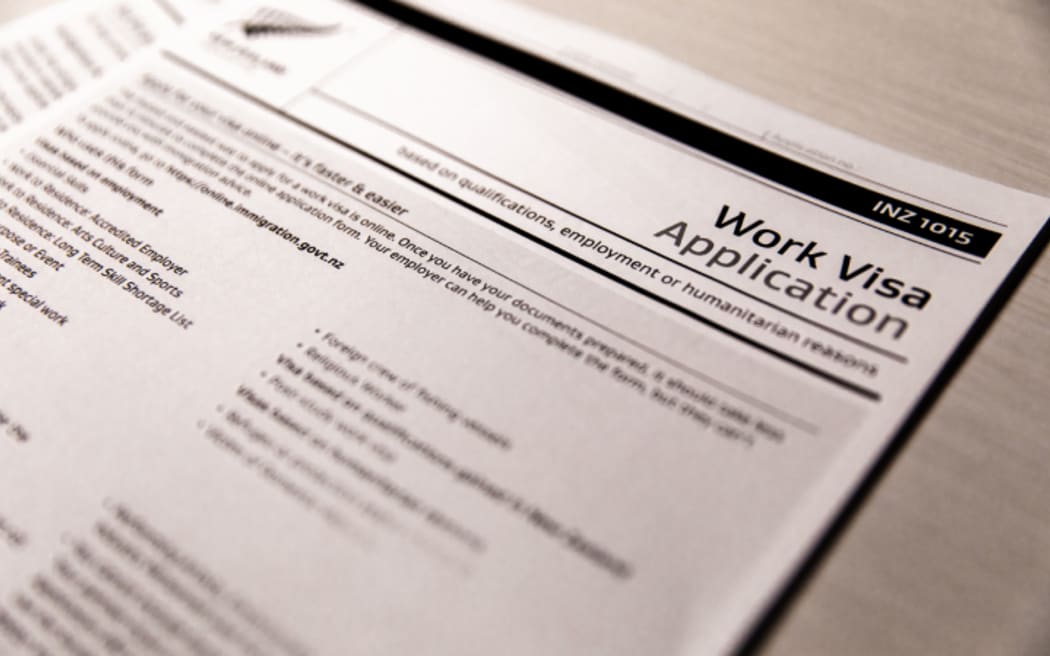
The announcement that New Zealanders will soon have access to Australian citizenship after four years makes it more important than ever to make our own immigration settings fair and appealing.
In order to counteract the potential escalated loss of highly skilled workers to Australia, we need to urgently maximise the numbers of skilled workers moving to New Zealand.
One immigration policy in particular falls short in this regard – the Parent Resident Visa that enables new migrants to sponsor their parents’ move to join them in New Zealand. There are many criteria that currently limit the likelihood of new migrants being able to do this.
Let me paint a picture.
In a classic Kiwi scenario, a couple with young children work skilled jobs during the day, and help with the kids’ homework in the evenings. In their spare time, they nurture friendships, participate in their community and eke out precious hours for leisure and recreation.
So far, so familiar. But this couple are new migrants, welcomed to New Zealand before our borders closed due to Covid-19 pandemic on skilled migrant category resident visas for their skills we are desperately short of.
What is missing from this picture is their family – specifically their parents, their children’s grandparents. This couple have uprooted their lives, accepting most losses that come with this. The learning curve that comes with a new country is a welcome distraction and they are generally getting on with life.
But the severed connection to their parents hurts. They are missing their elders’ advice, support, knowledge, deep cultural and family connections. In a world scarred by the emotional and financial toll of the pandemic, with resultant lengthy separation of families and skyrocketing international travel costs, it is only natural they want to be together.
So what are the odds of being able to sponsor your parents to New Zealand? They’ve waited the mandatory three years to apply, met the income threshold and their parents meet the criteria, but the odds are still unknown. This is because under the Parent Resident Visa, you must take your chances with all expressions of interest (EOI) submitted since 12 October 2022 going into a ballot.
The first random selection from the ballot is in August, with further draws every three months from then, until 500 visas have been approved by August 2024. Your EOI might be drawn, or it might not. It might even expire before it gets a look-in.
This will be top of mind for new migrants, like the couple described earlier, in the lead-up to this month when Immigration New Zealand is due to open the online EOI submissions. How much hope should they attach to their EOI? Should they even mention it to the kids, explaining what it means to be a sponsor and that a ballot is a bit like a lottery?

Michael Wood Photo: RNZ / Samuel Rillstone
When Immigration Minister Michael Wood announced the move to a ballot system he asserted that a ballot would mean people would “avoid a lengthy queue”.
But this logic is flawed, and the public sentiment he might have been aiming for is superficial. A queue by nature enables you to keep your place. It gives you certainty and peace of mind whereas a ballot is based on luck and is inherently unfair in this situation.
It is also incredibly short-sighted and counter-productive to the exact intent of the Skilled Migrant Category Resident Visa for people who have the skills that will contribute to New Zealand’s economic growth.
Migrants deserve chance for normal family life
If we are going to ask migrants to work and live here, to look after our rapidly aging population in hospitals, general practices and aged care facilities, to teach our children, contribute to the construction and engineering efforts in our cities, fill critical gaps in our information and communications tech sector, telecommunications, primary industries, science and trades sectors, policymakers need to factor in that a proportion of people will inevitably want to bring their parents to New Zealand once they have settled here. And that they deserve this opportunity to live a normal family life.
But the odds are too high and the cap is too low. This was another change trumpeted by the government – increasing the number of visas granted in a year from 1000 to 2500. In reality, the increase was made to address the mass of EOIs (expressions of interest) in the queue that were received before 11 October 2022. With the Parent Resident Visa having been suspended for the previous six years you can imagine the volume of interest.
The cap for new EOIs going into the ballot is a paltry 500. New Zealand is missing an opportunity to attract and retain the people with the skills we need to move forward. Many skilled migrants who have been trying to bring their parents to New Zealand are leaving, moving to countries like Australia, Canada and the US where it is easier for them to be together.
They may be frustrated, feel used, or they may not even be able to meet the income threshold as sponsors. Even lowered, the threshold is still a barrier and excludes many – a single earner without siblings or a couple on a single income, for example. It is all up to them and their income; the parent visa category does not consider their parents’ own wealth, income or assets.
This is fundamentally unfair. The parent category does not treat one family the same as another. Instead it discriminates, entitling one family to a fuller, richer life and relegating another to second tier. Australia beckons.
A 2019 report by MBIE found that migrants who sponsored parents made a more substantial commitment to New Zealand than those who didn’t. That migrants whose parents live with them are more likely to find a job and work longer hours, especially when they have young children. It makes sense right?
Economic benefits from family reunification
An insistence on an income threshold raises questions about how the government, and New Zealand society (as voters for that government), perceive and then evaluate the contributions of migrant families. By ‘perceive’ I mean that the benefits an extended migrant family bring are less visible, and harder to quantify, than the costs loudly shouted by anti-immigration factions.
The fact is that studies show that family reunification has a positive economic impact on countries that reduce the barriers towards this. While older parent immigrants may not bring immediate economic gain, they bring emotional, social and cultural capital to their children and grandchildren which can create economic opportunities later.
At this point I should remind readers that Parent Resident Visa holders are not the financial burden to New Zealand some people might assume. They must be in acceptable health and cannot access NZ Super for their first 10 years here, increasing to 20 years from July 2024.
So what is the solution?
With the immigration reforms still underway, and the uncertainty that comes with our three-year general election cycle, it is too much to expect the overhaul needed for this visa. It has, after all, only recently re-opened to EOI and been changed to include the new ballot system.
Instead, policymakers should seriously consider establishing an additional option under the current visa category, like the successful Australian Sponsored Parent (Temporary) Visa. This is a long-stay, non-residential visa for three to five years.
No ballot. No lottery. When you apply, your application goes in the queue and you can see the path ahead and start to make plans towards life in a new country alongside your children and grandchildren.
*Elly Fleming is an associate with Pitt & Moore in Nelson, working exclusively in immigration law.
SOURCE RNZ




The chief executive of the Parliamentary Service is confident there will be enough room to accommodate the increased number of MPs and their staff coming into Parliament.
On current numbers, up to 131 MPs could be sitting in the Chamber following the election, brought on by a record overhang result.
Clerk of the House of Representatives Dr David Wilson told the Spinoff that currently the debating chamber had enough chairs to seat 124 MPs – including the Speaker of the House – and work was being done to accommodate more by altering the seating arrangement.
In a statement, Parliamentary Service chief executive Rafael Gonzalez-Montero said planning for a larger Parliament had been going for “some time”.
“Now that the election results have confirmed an increase to the number of members we are looking at several options.
“We are confident we will be able to accommodate all members within the Chamber.”
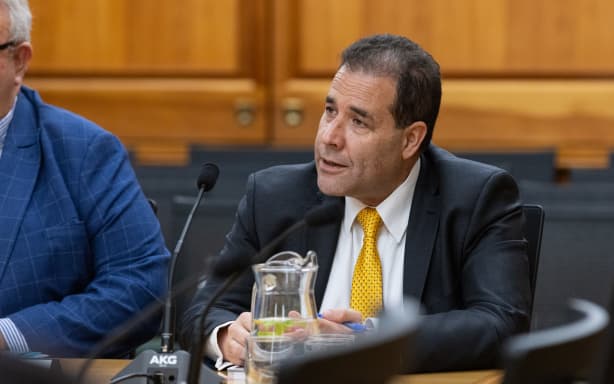
VNP / Phil Smith
Gonzalez-Montero said office accommodation for members and their staff would be “stretched” for a short time, but the new Members’ Building was only a few months away from “practical completion”.
That building – located behind Parliament – was due to be ready to occupy in April next year and had capacity to accommodate around 30 backbench MPs.
“All members should be in fit-for-purpose accommodation from that point,” Gonzalez-Montero said.
Following the 2023 election, 123 MPs sat in the Chamber – a record number at the time. That decreased to 122 following the resignation of National MP Judith Collins.
Collins held the seat of Papakura and stepped down in May and Parliament voted against holding a by-election because it was too close to the election.
The election result also meant high-ranking National Party MPs like Chris Bishop, Paul Goldsmith, Nicola Willis and Gerry Brownlee – Speaker of the House and an MP for 30 years – would likely not make it back into Parliament.
Only resigning or retiring MPs were permitted to give a valedictory speech meaning none of them would get the chance to give a valedictory statement.
Asked if their would be special allowances for valedictories, Wilson said in a statement that normally only MPs were allowed to speak in the House but the House could suspend its own rules or temporarily alter them.
“It could do so to allow former members to address the House.”
Wilson said no such arrangements could be made until the next Parliament opened and members sworn in.
rnz


Police say person who fired gun at officers still at large

New Zealand sides named for RLWC finals

Parliamentary Service working on extra chairs and offices for increased number of MPs


-

 Latest News2 months ago
‘Chilling’: Business groups speak out against National’s supermarket break-up plan
-

 NZ News2 months ago
Tom Phillips report: The missed opportunities to find the children
-

 Politics2 months ago
National vows to try to split Pak’nSave and New World
-

 Latest News2 months ago
Cars bearing Chinese police markings stir unease in Auckland
-

 Fiji News2 months ago
Plans to have new Constitution by Dec 24th 2026
-

 NZ News2 months ago
Cop who stole $68,000 can now be named as champion Muay Thai fighter Haimona Tamati-Te Paki
-

 Politics2 months ago
MBIE confirms botched biometric projects costs blown out to $50.7 million
-

 Latest News2 months ago
Five Karangahape Road venues lose their liquor licences after police intervention