

Latest News
Time to ‘de-prioritise’ Covid-19 for most and shift focus to the at-risk – epidemiologist

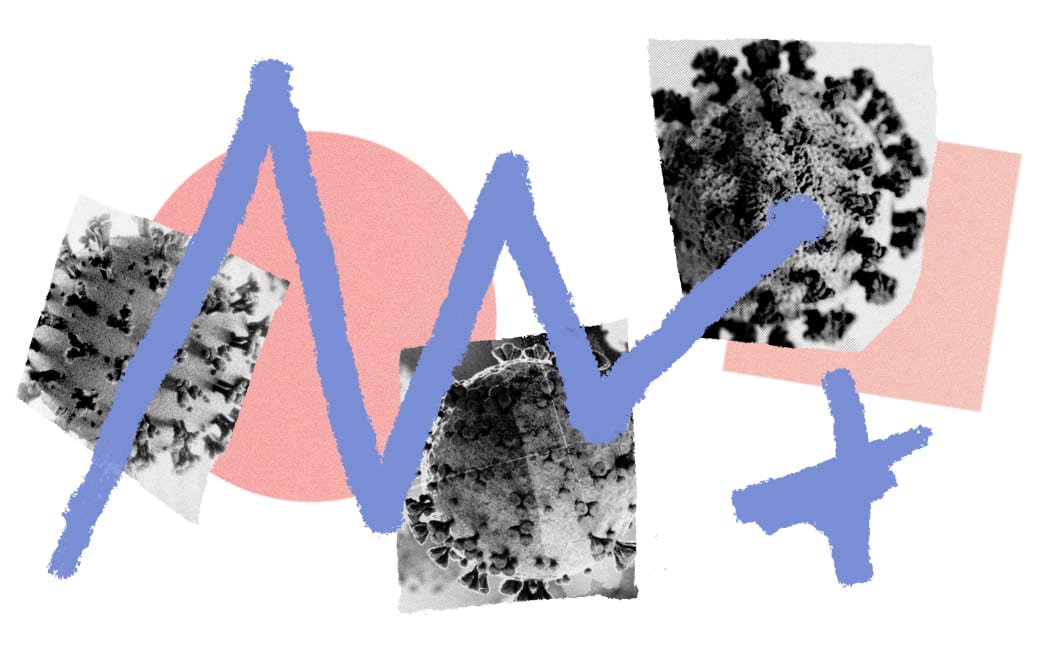
It is time to ‘de-prioritise’ the response to Covid 19, which will now be no worse than the flu for the majority of the population, an epidemiologist says.
University of Otago professor Peter McIntyre said the focus should now be on getting those at higher risk double-boosted, rather than worrying about infection control through increased mask wearing or improved ventilation.
That group included the elderly and Māori and Pasifika over 60 years old.
Covid-19 numbers rose in recent weeks, prompting some epidemiologists to talk about a fourth wave of the disease, and calls for the government to enable better ventilation in classrooms and order masking on public transport.
Monday’s case numbers released by the Ministry of Health showed the case average for the week had risen on the previous week by 300 cases, up to 2029.
Hospitalisations were also up by 144, with 363 patients in hospital with Covid-19. And the deaths of 21 people were attributed to Covid-19, up from eight the previous week.
Professor McIntyre – also medical advisor for the Immunisation Advisory Centre – said rather than looking at the total numbers we should identify groups that were not double-boosted or did not have anti-virals available to them.

Professor Peter McIntyre Photo: University of Otago
“The people we’re really worried about now are those people who’ve got significant underlying diseases or because they’re in very advanced years, so we’re talking about people over 70 or 75,” McIntyre said.
Māori and Pasifika older than 60 years were also in that group, he said.
“For everybody else it’s going to be a less severe problem for them than flu.”
McIntyre was also head of the Department for Women’s and Children’s Health at the University of Otago.
He said the combination of the number of historic Covid-19 infections and the country’s high vaccination rates meant there was a really good level of immunity in New Zealand.
“To be honest I get a bit frustrated … at the fact this keeps popping up with all these messages about avoiding infection.
“I just think without any disrespect … to the people who still think that’s important, I just believe the game’s moved on and we should have our attention elsewhere.”
At this point in the pandemic, most rules have finished, though anyone who tests positive must still self-isolate for seven days, and masks must be worn in hospitals in some circumstances. Cabinet voted on 11 April to keep those rules for at least the next two months.
University of Canterbury Covid-19 modeller professor Michael Plank said there had been a significant rise of people admitted to hospital, but it was too early to say whether New Zealand was experiencing a new wave of infections or just a bump.

Professor Michael Plank Photo: Supplied.
“I think that’s probably a consequence of rising cases in the over 60s who are primarily contributing to those hospital numbers.”
Plank said the focus needed to be on getting those at-risk groups double-boosted, but overall the story was an improving one.
“Certainly the direction of travel is in a positive direction around a de-escalation of the risk that we are seeing from Covid-19 and in the long term Covid isn’t going to go away.
“So we are going to see a movement towards treating alongside all the other public health issues we have to deal with.”
He said attention needed to be paid to hospital admission and death rates rather than weekly infections.
Those indicated that Covid-19 could be attributable for about 1000 deaths a year compared to the 500 attributed to the flu.
Despite this risk, less than 50 percent of those over 50 years of age had taken up the second booster jab.

Te Whānau o Waipareira clinical governance director Ngaire Harris Photo: Supplied/ Te Whānau o Waipareira
That was weighing on the mind of West Auckland’s Te Whānau o Waipareira clinical governance director Ngaire Harris.
“Covid is more about the hard to reach hearts and minds.
“So you’re going to have geographical hard to reach and then there’s pockets of whānau like the vulnerable, those that don’t have any vehicle, those that don’t have any data access.”
Harris worried about how low the booster and vaccine uptake was amongst Māori.
Epidemiologist Michael Baker yesterday told RNZ that while the fourth wave of the virus was not as intense as the previous waves, it was definite, with a gradual rise in the number of self-reported cases every day, as seen in RNZ’s ongoing database of Covid-19 information.
Last week, Cabinet decided to keep the few remaining Covid-19 restrictions for at least the next two months.
Most pandemic rules have been scrapped, but people still have to self-isolate for seven days if they test positive, and masks must be worn in hospitals in some circumstances.
SOURCE RNZ



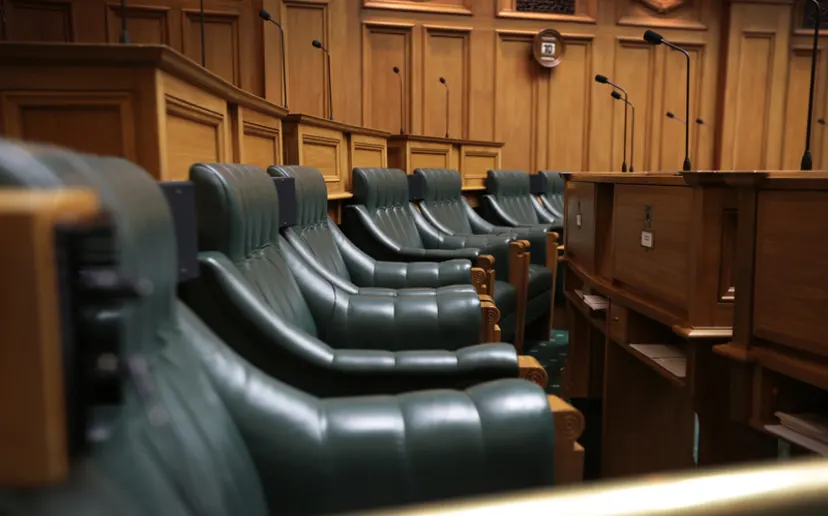
The chief executive of the Parliamentary Service is confident there will be enough room to accommodate the increased number of MPs and their staff coming into Parliament.
On current numbers, up to 131 MPs could be sitting in the Chamber following the election, brought on by a record overhang result.
Clerk of the House of Representatives Dr David Wilson told the Spinoff that currently the debating chamber had enough chairs to seat 124 MPs – including the Speaker of the House – and work was being done to accommodate more by altering the seating arrangement.
In a statement, Parliamentary Service chief executive Rafael Gonzalez-Montero said planning for a larger Parliament had been going for “some time”.
“Now that the election results have confirmed an increase to the number of members we are looking at several options.
“We are confident we will be able to accommodate all members within the Chamber.”
VNP / Phil Smith
Gonzalez-Montero said office accommodation for members and their staff would be “stretched” for a short time, but the new Members’ Building was only a few months away from “practical completion”.
That building – located behind Parliament – was due to be ready to occupy in April next year and had capacity to accommodate around 30 backbench MPs.
“All members should be in fit-for-purpose accommodation from that point,” Gonzalez-Montero said.
Following the 2023 election, 123 MPs sat in the Chamber – a record number at the time. That decreased to 122 following the resignation of National MP Judith Collins.
Collins held the seat of Papakura and stepped down in May and Parliament voted against holding a by-election because it was too close to the election.
The election result also meant high-ranking National Party MPs like Chris Bishop, Paul Goldsmith, Nicola Willis and Gerry Brownlee – Speaker of the House and an MP for 30 years – would likely not make it back into Parliament.
Only resigning or retiring MPs were permitted to give a valedictory speech meaning none of them would get the chance to give a valedictory statement.
Asked if their would be special allowances for valedictories, Wilson said in a statement that normally only MPs were allowed to speak in the House but the House could suspend its own rules or temporarily alter them.
“It could do so to allow former members to address the House.”
Wilson said no such arrangements could be made until the next Parliament opened and members sworn in.
rnz


Police say person who fired gun at officers still at large

New Zealand sides named for RLWC finals

Parliamentary Service working on extra chairs and offices for increased number of MPs


-

 Latest News2 months ago
‘Chilling’: Business groups speak out against National’s supermarket break-up plan
-

 NZ News2 months ago
Tom Phillips report: The missed opportunities to find the children
-

 Politics2 months ago
National vows to try to split Pak’nSave and New World
-

 Latest News2 months ago
Cars bearing Chinese police markings stir unease in Auckland
-

 Fiji News2 months ago
Plans to have new Constitution by Dec 24th 2026
-

 NZ News2 months ago
Cop who stole $68,000 can now be named as champion Muay Thai fighter Haimona Tamati-Te Paki
-

 Politics2 months ago
MBIE confirms botched biometric projects costs blown out to $50.7 million
-

 Latest News2 months ago
Five Karangahape Road venues lose their liquor licences after police intervention