The second set of government programmes to be cut, trimmed or delayed include the voting age, alcohol reform, a used container refund, and various transport projects.
Aimed at helping tackle the cost of living, it comes alongside a decision to increase benefits in line with inflation rather than average wages.
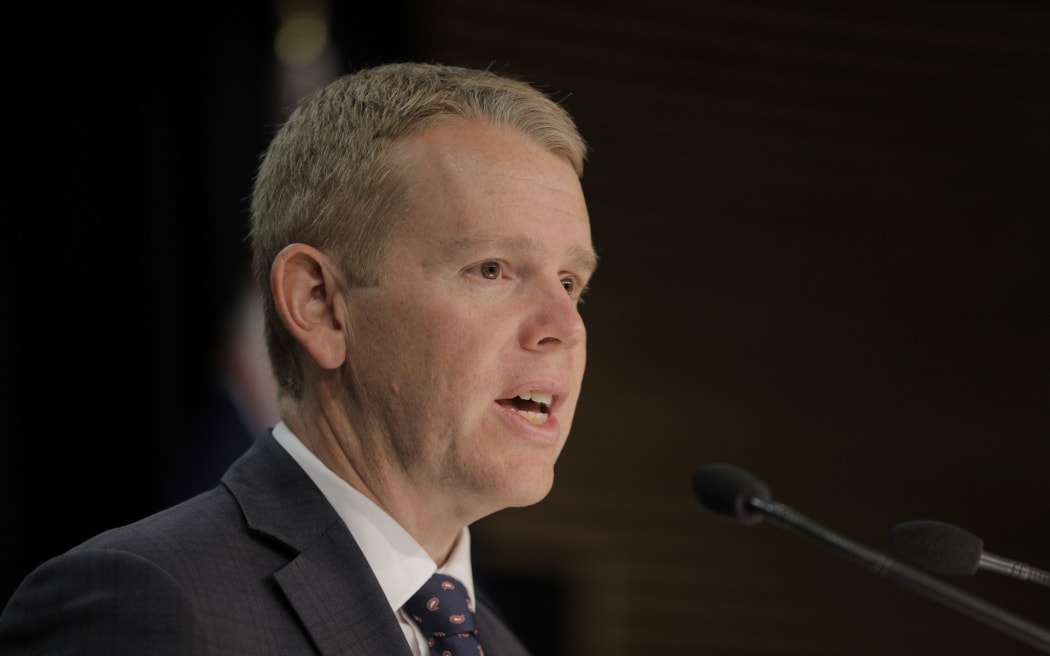
Prime Minister Chris Hipkins announced the decisions this afternoon following the weekly Cabinet meeting, saying combined with the first round of reprioritisation it was expected to save the government $1 billion.
He said this would give ministers and the government “more bandwidth to deal with cost of living” and the cyclone.
“The two lots of reprioritisation will save about $1 billion, which will be reallocated to support New Zealanders with the cost of living,” he said.
“That’s in addition to the over $700m in savings we reallocated to fund the petrol excise cut and half-price public transport extension through to the end of June.”
Hipkins said the government was focused on bread-and-butter issues and the things that mattered most to New Zealanders.
“At the moment, the cost of living and the recovery from Cyclone Gabrielle are right at the top of the list.”
The reprioritisation would also help save some money to provide extra support to families, and help curb inflation, he said.
“I want New Zealanders to know that the government’s doing its bit and it cutting its cloth to suit the times that we are in. Some of the things that we’re delaying or stopping do mean a lot to us as a government, but we’re taking the hard decisions because we know that Kiwis are also making some tough calls.”
Hipkins said aside from Three Waters, the reprioritisation work was largely done now, but “every government every year should be doing regular reprioritisation as part of its Budget process”.
Programmes on the chopping block:
- Clean car upgrade scrapped: A scheme which gives people a grant for a cleaner vehicle or a public transport subsidy if they scrap an old gas-guzzler is being stopped.
- Speed limit reductions narrowed: The programme will be significantly narrowed to refocus on the most dangerous 1 percent of highways, with some changes also around schools and marae and in small townships that a state highway runs through.
- Social leasing car scheme ended: A car leasing arrangement for families on low incomes. It was proving difficult to implement and many of the areas where it was trialled were affected by recent severe weather.
- Vote 16 legislation refocused: Work on the legislation that would lower the voting age to 16 in the general election – but would have required the support of three quarters of MPs to pass – is refocused on lowering the age for local body elections, which does not need to meet that threshold.
- Alcohol reform delayed: Advice looking at reform of alcohol pricing, sponsorship and advertising will be pushed back to April 2024 instead of March 2023.
- Container return scheme deferred: The scheme would have given small refunds to people who return used containers, which was estimated to add slightly to household costs.
- Advice on contractors deferred: The advice following an Employment Court ruling was set to look at the differences between a contractor and an employee. This will be put on hold until all cases are heard.
- Public transport refocused: The goal of increasing and improving public transport is being scaled back to target Auckland, Hamilton, Tauranga, Wellington and Christchurch.
- Auckland light rail in stages: Work on Auckland Light Rail will continue, but will be delivered in stages with the first stage expected to be confirmed by the middle of this year.
Speaking to the changes, Hipkins said he $1b saved is now available for reallocation to support New Zealanders with the cost of living.
“We also know that we face big bills to fix parts of the transport network, that have been decimated under Cyclone Gabrielle. It will be a massive task for our road builder, Waka Kotahi, and one that needs their total focus.”
As a result, Transport Minister Michael Wood suggested cuts to various transport projects, he said.
The clean car scheme’s trials were proving to be difficult and it was not clear it was the most effective way to encourage uptake of low-emissions vehicles, Hipkins said.
It was one of two emissions-reducing schemes being curtailed, along with the public transport programme being reduced from all cities to just five main centres. Hipkins said reducing transport emissions was “critical to meeting New Zealand’s climate change targets, but we need to focus our efforts on the areas where we need to achieve the greatest reductions, and that’s in our biggest cities”.
He said where changes to speed limits were proposed, the government would ensure Waka Kotahi was consulting meaningfully with the affected communities.
“That means that speed limits will reduce in the places where there have been the highest numbers of deaths and injuries.”
The social leasing scheme will save $19m.
On staging of Auckland transport projects: “It’s where we can make the largest single gains in future-proofing transport systems to tackle congestion and to reduce emissions.”
Hipkins said Auckland light rail, “will be continuing alongside other city-shaping investments such as the second Waitematā Harbour crossing, more rapid busways, and better connections to growth areas like the North-West, but just like the London Underground didn’t suddenly appear fully formed, and in fact took many years to develop, Auckland Light Rail will happen in stages – with the first stage expected to be confirmed by the middle of this year”.
He said there was nothing new in taking a staged approach to transport projects.
“Auckland Light Rail is no different. Staging the rollout will align it with other critical transport investments – particularly the second Waitematā Harbour Crossing.”
On alcohol reform he said “these are areas that we do need to take the time to investigate properly so that we can ensure that there aren’t unintended consequences. For example when community groups are doing it tough, I don’t want to see any restrictions on sponsorship increasing costs for community sports teams.”
On voting age: “There is a process set out for how Parliament will respond to the recent Supreme Court decisions and we will continue to pursue that, but in terms of legislation we will be introducing legislation to lower the voting age in local body elections”.
“It is clear that we do not have a 75 percent majority in the current Parliament to make that change.”
He said he did support giving the vote to 16 and 17 year olds, and was happy to see it progressed, and there was more support for lowering the age in local elections. The legislation would be introduced in this Parliamentary term, but would be progressed by the next Parliament.
“I don’t intend to progress a bill that’s doomed to fail, because ultimately that would be an expensive exercise to simply make a political statement and I’m not willing to do that.”
More announcements would be made on climate change, but Hipkins refused to set out when that would be.
“I don’t think we’re kicking the can down the road.”
On the container returns scheme, Hipkins said: “We don’t want to be imposing those additional costs right at the moment. This policy does remain on the agenda and we will look to assess it again in future when the time is right to do so.”
On contractor/employee advice and public consultation, he said: “A recent Employment Court case found that Uber drivers were employees rather than contractors. That is a significant court ruling and it has implications for the legal definition of a contractor.”
He said that did not mean there were not more areas the government would look at cutting back, and he expected ministers to continue to prioritise their work programmes as part of their business as usual jobs, including rescoping and amending plans where necessary.
On climate, Hipkins said the policies would have made a very small contribution to the overall emissions reduction targets which have not changed.
“Across the two – the clean car upgrade, social leasing – schemes that we’ve announced today we’re not going to be progressing with we’d be talking about 7000 tonnes of reductions during the first emissions budget period. To put that into context we’re aiming to reduce emissions by about 1.2 million during that same period through the GIDI scheme, and about 183,000 through the state sector decarbonisation work.”
The schemes had been set to be paid for under the climate emergency fund. Hipkins said the Budget would show “how this all shakes out”.
Schemes like the Clean Car discount were proving much more successful than early estimates suggested.
“We’ve actually had success in the transport space, including that we’ve had a greater uptake of electric vehicles than we had anticipated at this point. So we will be looking at how we can progress more of that faster.”
Hipkins said the two car schemes had a relatively high cost for a relatively low level of reductions.
“It’s a focus on making sure that we can actually meet the immediate needs that we’ve got in front of us and the cyclone and recent natural disasters have actually put new pressures on us that we have to be able to meet.”
Benefits to increase higher, in line with inflation – PM Chris Hipkins
The government will also increase benefits and superannuation payments in line with inflation rather than average wages, Prime Minister Chris Hipkins says.
Student support and Superannuation payments will also increase by the same amount, kicking in from 1 April.
For example, a couple with children will see an increase of $40.86 to jobseeker support payments, to a total of $606.86 a week. It amounts to $5.54 more than the $601.32 they would have received under wage-aligned scheme.
The move will cost the government an extra $311 million, and is expected to affect about 1.4 million New Zealanders.
Hipkins said it would help people “feeling the bite” from the ongoing rise in living costs.
The Labour-led government had indexed main benefits to increases in the average wage rather than the Consumer Price Index (CPI) which monitors inflation, bringing it in line with the calculation for increases to Superannuation, as part of the 2019 Budget.
Wages had typically risen faster than the CPI but, with cost of living pressures increasing rapidly this year, Hipkins said Cabinet had agreed to provide additional support and increase main benefits by 7.22 percent, compared to the average wage increase of 6.24 percent.
“It was a practical solution to ensure those being supported by the government didn’t fall behind,” he said.
“Alongside this, working families will see increases to Working for Families, including an extra $4 for Best Start Payments taking it to $69 per week and an increase of $9 for the eldest child rate of Family Tax Credit lifting it to $136 per week.”
The changes from 1 April will also be accompanied by already-announced decisions to increase minimum wage by $1.50 an hour to $22.70, and the Childcare Subsidy announced in November at a cost of $189m over four years.












 Latest News2 months ago

 NZ News2 months ago

 Politics2 months ago

 Latest News2 months ago

 Fiji News2 months ago

 NZ News2 months ago

 Politics2 months ago

 Latest News2 months ago