

NZ News
Rob Campbell’s Health NZ sacking an opportunity to gain better leadership – ex-DHB member


A doctor says Health NZ should be led by someone with a healthcare background to deliver reforms, but ousted chairperson Rob Campbell says his sacking may signal a lack of appetite for change.
Former member of the Hutt Valley DHB Dr Richard Stein told Morning Report there needed to be somebody with key knowledge of the healthcare system and Campbell wasn’t that person.
The gastroenterologist also criticised a lack of transparency around what Health NZ/ Te Whatu Ora and its board had been doing to address a systemic crisis in healthcare.
He said there was a disconnect between leadership and health staff, who hadn’t see any change or vision, or an increase in staffing levels over several months.
Campbell took to LinkedIn at the weekend to criticise National’s Three Waters policy and its co-governance component, saying it was a thin disguise for dog-whistling on co-governance.
He maintains those comments were made in a private capacity, but Health Minister Ayesha Verrall decided otherwise and stripped him of his chairperson role over concerns he could not be politically neutral.

Sir Ashley Bloomfield Photo: RNZ / Samuel Rillstone
Even former director-general of health Ashley Bloomfield has weighed in on the sacking of Campbell, saying Campbell’s comments were a big story because it is a very rare event.
Sir Ashley, who is now a Professor at the University of Auckland’s School of Public Health, tweeted that he spent much of the past 25 years in New Zealand’s public health service and saw no evidence of either left or right leaning public servants.
Sir Ashley said he had no idea how any of his former chief executive colleagues voted, because they just did not talk about it.
Some in the healthcare sector believe Campbell’s department is an opportunity for more informed leadership and reform.
“Looking at Rob Campbell’s background, there’s absolutely nothing in his background that I can see that would give him an understanding of the complexities of healthcare in New Zealand,” Stein said.
He said legislation that disestablished the 20 district health boards and set up a centralised national service in July last year had initially signalled hope of positive and meaningful reform and a more equitable system.
But since Health NZ/ Te Whatu Ora was launched Stein said nothing had changed and the issues seemed to be getting worse, while meetings by management over reform plans had been held privately, leaving health workers in the dark.
“I saw it as a way to consolidate or create centres of excellence, bring medical care to communities that were severely lacking in health care,” Stein said.
“But I just haven’t seen anything. I think that one of Rob Campbell’s first decisions was to hold board meetings in private and keeping out the media… I think the people in the healthcare system really feel disconnected from leadership.”
Stein said Campbell’s lack of medical background made him less than appropriate for the role.
“Health care professionals are a different breed of workers – doctors, nurses, midwives, GPs – they were all trained to work independently. They make life and death decisions every day,” he said.
“That’s what you need – somebody with an understanding of the healthcare system in the lead role. When you look at the board of Te Whatu Ora – eight members I think there are – there are only two members of the board that actually have a background in clinical medicine.
“That’s critical, especially for the chair to have just an understanding of how things work, the issues of the frontline workers.
“We have incredible shortages, GPs are so overworked, nurses, midwives, the number of vacancies is just unbelievable.
“I just don’t see that the people on the front line have any idea what’s going on, what the direction of healthcare is.
“Since the disestablishment of the DHBs there’s just a sense of a lack of understanding of local issues. We’ve seen, I think, the shortage is just getting worse.”
Campbell’s presence had been far from ubiquitous among health workers, Stein suggested.
“Healthcare professionals need to be informed, we need to know what’s happening. If you ask people on the front line who Rob Campbell is, I just wonder how many people actually even know who he is.”
Campbell suggests lack of appetite for change
Campbell hoped his replacement would be as committed as he was to reform of health services, but questioned whether his departure meant a lack of political commitment to change.
“It doesn’t matter to me that I’ve lost this job,” he told Morning Report
“Hopefully, they appoint someone who’s really competent, and is really committed to all the same kaupapa that I have been.
“But I think that the intention is, frankly, to lighten up on some of the ways that I have been pushing within the health sector to get change. And I think the appetite for change is not perhaps as high as they thought it was, when they passed the legislation.”
Campbell said he was concerned that politics was getting in the way of health reform and he had a right to express political views in a private capacity.
He said the code of conduct in the Crown Entities Act 2004 allowed for the free expression of views by officials, so long as these didn’t undermine confidence in the organisation.
“I think the Public Service Commissioner is interpreting the Act and the code in an excessively restrictive way.”
Campbell said the context of his removal from the board was the government had not appreciated his views on a number of issues, not simply his criticism of National’s position on Three Waters.
“I don’t believe that this action is actually entirely about the particular opinion I expressed,” he said.
“It’s pretty clear to me that the government wasn’t happy when I, acting on the advice of our public health officials, wanted to support Chloe Swarbrick ‘s Sale of Liquor Amendment Bill and did so publicly.
“They weren’t that happy recently when I expressed strong support for Te Aka Whai Ora – Māori Health Authority and their role and warned that there was a significant push back against it going on. So they weren’t happy about that. They tried to reprimand me about it. And I didn’t agree with them.”
The government had wanted to change its language around co-governance, downplaying it, and his pointed views on National’s Three Waters position and its co-governance component had been an issue for them, he said.
“I have had a discussion with the minister quite recently, where she expressed the view that I should be toning down that rhetoric,” he said.
Campbell said he would not be taking legal action against the government, but maintained the government’s decision to make him stand down was wrong and had set a worrying precedent.
He said: “I would very much hope, not just in relation to me, but into every other Crown entity director, a wide range of whom have contacted me to express support and concern, that they would think about what the strict interpretation means to the ability to attract and retain commercially competent and social activists, competent directors on the Crown entity boards that you’re going to have.
“There’s a whole lot of bland yes men and yes women who don’t have any opinions about anything outside their day job. There’s no virtue in that.”

Ngātiwai Trust board chief executive and Green Party candidate for Te Tai Tokerau Hūhana Lyndon told Morning Report Campbell had been courageous in his efforts to reduce health inequalities and had been a partner for Māori in honouring Te Tiriti.
“In terms of board leadership, and somebody from outside of the health sector, he’s been asking the question around, how do we embody the spirit of Te Tiriti o Waitangi and reducing health inequalities.”
She said the momentum towards reform Campbell had helped create must continue with his replacement.
“You need somebody who can have the confidence of the minister, and there’s a lot of talent that exists within the sector, but also outside of the sector,” she said.
“It is about maintaining the momentum and I guess that’s the challenge. How do you keep the waka moving forward with another strong chair?”
She said co-governance was a crucial part of Māori healthcare and that the country needed mature conversations about co-governance in general.
Source : RNZ










Latest News
Opportunities to mitigate multi-million-dollar RNZ budget blowout likely missed – experts
Multiple opportunities to identify and mitigate a multi-million-dollar budget blowout at RNZ appear have been missed, according to the former executive director at Audit New Zealand.
The public broadcaster on Monday revealed a near $12 million shock financial loss after a litany of financial blunders, which will now lead to sweeping job cuts.
The $11.8m loss is more than 25 times the $470,000 RNZ had expected to lose over the year to June.
CEO Paul Thompson took responsibility for the result, and said internal reports gave an inaccurate picture of the finances, meaning the scale of the loss only became clear in October.
RNZ’s former chief financial officer Hilary Parker resigned unexpectedly in early October.
The board said it would commission an independent review into what went wrong.
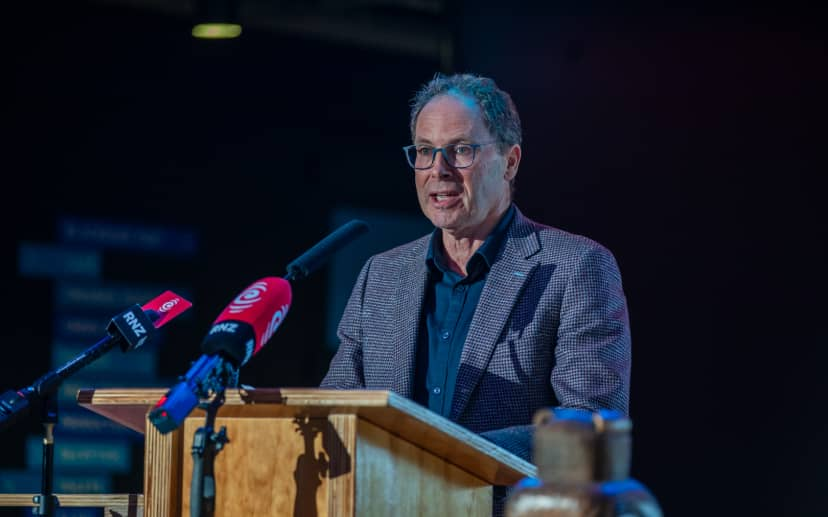
Independent contractor Stephen Walker, who left the Audit Office earlier this year, said the size of the loss was surprising, as was the length of time it took to identify it – months after the financial year ended.
Supplied / OAG
“Probably more of a concern is that they had seemingly been unaware that they were running up a significant deficit until they were in the preparation stage of their annual report in October.”
Walker said public entities typically produced monthly financial reports.
An interim audit also took place before the end of the financial year, he said, but if the organisation hadn’t identified significant losses at that stage, the auditor could also be in the dark.
“It seems that there’s a real weakness in forecasting and budgeting that’s occurred here and that the monthly accounts, when they’re produced, either haven’t identified these significant variances against budget or the magnitude of them really hasn’t come to light until right towards the end of the financial year,” Walker said.
“And really at that point, there’s no opportunity for the chief executive, the leadership team to take, and the board to take, any corrective action because the year has effectively been completed.”
Walker said the “significant miss” was difficult to account for given it was more than 10 percent of RNZ’s total funding.
He said based on RNZ’s annual report, financial complexity didn’t appear to be a factor.
“This $11.8m loss isn’t made up of one particular item … it seems to have been contributed to by a number of separate expense lines running over budget. So I don’t think it’s necessarily to do with complexity.”
Among the errors, RNZ wrongly counted $2m from land sales as income in its budget. Staff costs also came in $3.2m over budget, including $1.4m in redundancy payments.
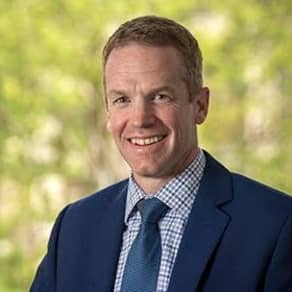
Professor at Auckland University’s business school Norman Wong said based on media reports the issues identified were “significant and troubling”.

Supplied / University of Auckland
“But recognising the sale of land as income in their budget is a basic error that one would have expected to have been caught and corrected well before it got to this point.”
With funding reductions at RNZ over the past two years, Walker expected greater scrutiny of financial results.
“Virtually every public entity has had their annual budget reduced. And so you would expect … the leadership team on a monthly basis and board – I’m not sure how frequently the board will consider the information – but you would expect them to be interrogating the results on a regular basis throughout the year,” he said.
Walker said initiating an independent review was the correct course of action and that he’d want to understand what information the leadership team and the board were regularly receiving.
He said he’d “love to say” surprising financial results were rare, but conceded they occured on a semi-frequent basis during his time leading the Audit Office.
“The benefit of independent scrutiny by the Audit Office – and the auditors providing that support to the Auditor General – [is] that the reporting is fairly presented at the end of the year, whether it’s good, bad or ugly.”
rnz


Police say person who fired gun at officers still at large

New Zealand sides named for RLWC finals

Parliamentary Service working on extra chairs and offices for increased number of MPs


-

 Latest News2 months ago
‘Chilling’: Business groups speak out against National’s supermarket break-up plan
-

 NZ News2 months ago
Tom Phillips report: The missed opportunities to find the children
-

 Politics2 months ago
National vows to try to split Pak’nSave and New World
-

 Latest News2 months ago
Cars bearing Chinese police markings stir unease in Auckland
-

 Fiji News2 months ago
Plans to have new Constitution by Dec 24th 2026
-

 NZ News2 months ago
Cop who stole $68,000 can now be named as champion Muay Thai fighter Haimona Tamati-Te Paki
-

 Politics2 months ago
MBIE confirms botched biometric projects costs blown out to $50.7 million
-

 Latest News2 months ago
Five Karangahape Road venues lose their liquor licences after police intervention