

NZ News
All-rounder Muhammad Abbas turns heads for Wellington at under-19 nationals

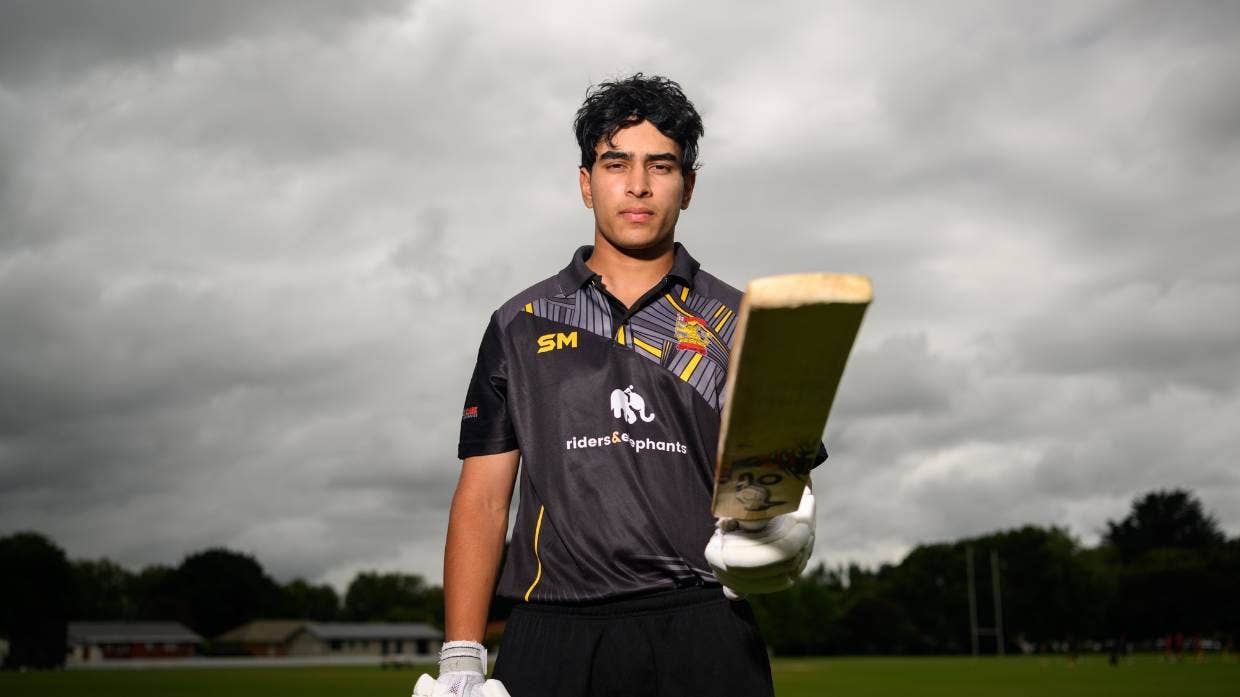
The moment emerging New Zealand cricket talent Muhammad Abbas first walked as a baby he reached for a bat.
Cricket has been a lifelong passion for Abbas ever since and it’s not surprising given his bloodlines – former Pakistan first-class cricketer Azhar Abbas, who also played for Auckland and Wellington, is his father.
The 19-year-old has been the talk of the under-19 men’s nationals at Lincoln this week for Wellington, who he only linked up with four weeks ago. The Abbas family shifted south from Auckland after Azhar was appointed Wellington Cricket’s new pace bowling coach.
Abbas is tipped for a bright future and demonstrated his class, scoring back-to-back unbeaten centuries to open the tournament this week. Keep going the way he is and he could one day become the first Black Cap of Pakistan origins.
Batting at four, he struck 101 not out from 68 balls in Sunday’s 50-over win over a Northern Districts side, featuring England test coach Brendon McCullum’s son, Riley, who hit 48 in the same match.
A day later, he was in the runs again, notching 103 not out as Wellington beat Central Districts by eight wickets on Monday, chasing down 267.
“[Back-to-back under-19 hundreds] it’s very rare, but it was the quality of the hundreds. He just made it look easy and no disrespect to the bowlers, he played it pretty well,” New Zealand Cricket high performance coach Paul Wiseman said.
Abbas, a top order right-hand bat, doesn’t just score runs. He is viewed as a genuine allrounder, bowling left-arm swing. He opens the bowling for his Wellington under-19 side and has either taken the new ball or been first change through his career.
Born in Lahore, Pakistan’s second most populous city, Abbas moved to New Zealand when he was one after Azhar ended up at Wellington’s Karori club in 2004, via Richard Petrie, the former New Zealand, Canterbury and Wellington bowler.
He discovered cricket at an early age and has never looked back.
“The first day I walked my dad gave me a bat and we played a little bit of tennis ball. I started playing all my cricket at my cricket club, Eden Roskill [in Auckland],” he said.

Softly spoken, Abbas lets his cricket do the talking.
He was 11 when he brought up his first century for Western against Central in an Auckland year seven tournament.
In his first year at high school at Auckland’s King’s College, he played a couple of warm-up matches for the first XI and broke into the side the next season – spending four years in the team where he was coached by former New Zealand spinner Dipak Patel.
“There’s a lot to like. He makes the game look pretty easy. He’s got a lovely bowling action and with the bat he hits it cleanly and times it beautifully,” Wiseman said.

“The world is light on allrounders, so it’s nice to see.”
Wellington under-19 coach Neeraj Chawla has spent the past few seasons coaching against Abbas when he was a member of the Auckland age-group side.
The Abbas family settled in the capital in December and Chawla was delighted he no longer had to come up with plans to counter him.
Chawla has worked with many Wellington age-group cricketers and said Abbas was a special player, reminding him a lot of Rachin Ravindra, who graduated on to play for New Zealand.

“He thinks differently about the game. He thinks about the game for his age very differently. He’s very mature about his thinking and the way he looks at the game.
“We’re happy to see him playing for us and scoring those hundreds.”
Watching Abbas bat at Lincoln this week, Chawla said it was a joy seeing him out in the middle. For someone so young, he had the full range of strokes and could quickly assess the match situation and pitch conditions.
“He doesn’t think about anything apart from playing good cricket and I don’t think he feels anything like that [pressure]. I’ve been talking to him quite a bit about the sport and he doesn’t really think about all those things. He just knows he wants to keep getting better every day.”
Abbas focused more on his bowling growing up, learning everything from father Azhar, who was a right-arm pace bowler and enjoyed a successful domestic career in Pakistan.
He marvelled at old video footage of Pakistan left-arm swing legend Wasim Akram as a youngster before discovering the Black Caps and idolising another left-arm quick in Trent Boult. Kane Williamson is his batting role model, even meeting him once at a hotel and sharing a conversation.

Azhar’s influence on his game had been huge, teaching him everything from a young age and developing his skills.
“He’s been there for all my cricket career so far. He’s been the mentor and has given me all the coaching and has done everything to support me and grow my game, whether that’s with the ball, bat, or fielding. He’s the one who’s helped me grow my game the most.”
Having only been in Wellington since December, Abbas has joined his father’s former club, Karori, and is excited to represent them for the first time after the under-19 nationals.

Both Wiseman and Chawla said Abbas would be comfortable playing domestic cricket, but he wanted to be patient, keep improving, and wait for his opportunity. The next step in his career would be to break through into the Wellington Firebirds and secure a domestic contract for next season.
“He needs to keep progressing both skills because it’s such a sought after thing having an allrounder. He’s got a great work ethic. He’s a smart cricketer. I don’t think it will be too long before Wellington are looking pretty closely at him,” Wiseman said.
Abbas will study second year commerce at Victoria University this year.
Source – Stuff



Latest News
Opportunities to mitigate multi-million-dollar RNZ budget blowout likely missed – experts

Multiple opportunities to identify and mitigate a multi-million-dollar budget blowout at RNZ appear have been missed, according to the former executive director at Audit New Zealand.
The public broadcaster on Monday revealed a near $12 million shock financial loss after a litany of financial blunders, which will now lead to sweeping job cuts.
The $11.8m loss is more than 25 times the $470,000 RNZ had expected to lose over the year to June.
CEO Paul Thompson took responsibility for the result, and said internal reports gave an inaccurate picture of the finances, meaning the scale of the loss only became clear in October.
RNZ’s former chief financial officer Hilary Parker resigned unexpectedly in early October.
The board said it would commission an independent review into what went wrong.
Independent contractor Stephen Walker, who left the Audit Office earlier this year, said the size of the loss was surprising, as was the length of time it took to identify it – months after the financial year ended.

Supplied / OAG
“Probably more of a concern is that they had seemingly been unaware that they were running up a significant deficit until they were in the preparation stage of their annual report in October.”
Walker said public entities typically produced monthly financial reports.
An interim audit also took place before the end of the financial year, he said, but if the organisation hadn’t identified significant losses at that stage, the auditor could also be in the dark.
“It seems that there’s a real weakness in forecasting and budgeting that’s occurred here and that the monthly accounts, when they’re produced, either haven’t identified these significant variances against budget or the magnitude of them really hasn’t come to light until right towards the end of the financial year,” Walker said.
“And really at that point, there’s no opportunity for the chief executive, the leadership team to take, and the board to take, any corrective action because the year has effectively been completed.”
Walker said the “significant miss” was difficult to account for given it was more than 10 percent of RNZ’s total funding.
He said based on RNZ’s annual report, financial complexity didn’t appear to be a factor.
“This $11.8m loss isn’t made up of one particular item … it seems to have been contributed to by a number of separate expense lines running over budget. So I don’t think it’s necessarily to do with complexity.”
Among the errors, RNZ wrongly counted $2m from land sales as income in its budget. Staff costs also came in $3.2m over budget, including $1.4m in redundancy payments.
Professor at Auckland University’s business school Norman Wong said based on media reports the issues identified were “significant and troubling”.

Supplied / University of Auckland
“But recognising the sale of land as income in their budget is a basic error that one would have expected to have been caught and corrected well before it got to this point.”
With funding reductions at RNZ over the past two years, Walker expected greater scrutiny of financial results.
“Virtually every public entity has had their annual budget reduced. And so you would expect … the leadership team on a monthly basis and board – I’m not sure how frequently the board will consider the information – but you would expect them to be interrogating the results on a regular basis throughout the year,” he said.
Walker said initiating an independent review was the correct course of action and that he’d want to understand what information the leadership team and the board were regularly receiving.
He said he’d “love to say” surprising financial results were rare, but conceded they occured on a semi-frequent basis during his time leading the Audit Office.
“The benefit of independent scrutiny by the Audit Office – and the auditors providing that support to the Auditor General – [is] that the reporting is fairly presented at the end of the year, whether it’s good, bad or ugly.”
rnz


Police say person who fired gun at officers still at large

New Zealand sides named for RLWC finals

Parliamentary Service working on extra chairs and offices for increased number of MPs


-

 Latest News2 months ago
‘Chilling’: Business groups speak out against National’s supermarket break-up plan
-

 NZ News2 months ago
Tom Phillips report: The missed opportunities to find the children
-

 Politics2 months ago
National vows to try to split Pak’nSave and New World
-

 Latest News2 months ago
Cars bearing Chinese police markings stir unease in Auckland
-

 Fiji News2 months ago
Plans to have new Constitution by Dec 24th 2026
-

 NZ News2 months ago
Cop who stole $68,000 can now be named as champion Muay Thai fighter Haimona Tamati-Te Paki
-

 Politics2 months ago
MBIE confirms botched biometric projects costs blown out to $50.7 million
-

 Latest News2 months ago
Five Karangahape Road venues lose their liquor licences after police intervention