There were thousands of stories published by RNZ in 2022. You may have missed some of the most significant.
Here are some of our picks from the In Depth team in 2022.
Crime and justice
No captionPhoto: RNZ/Vinay Ranchhod
The harrowing story of Sam – and his mother Rachel – was among the most-read pieces published by RNZ in 2022. Sam was sexually abused by his father. His mother fought for years to keep him safe and to achieve justice. They also struggled against a town that turned on them, backing the abusive father and turning against Rachel and Sam. This is their story.
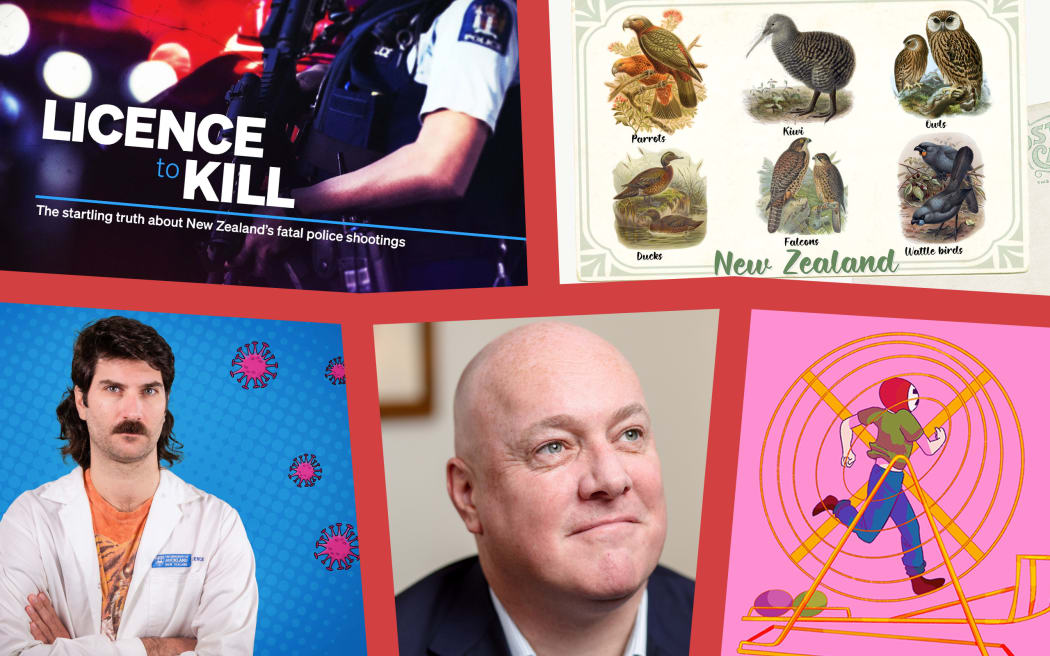
New Zealand police fatally shoot people at 11 times the rate of officers in England and Wales. Why? An RNZ investigation went in search of answers.
That investigation was followed by a series of stories on the death of Shagrin Stephens, who was shot dead by a police officer in 2016. Stephens appeared to be getting his life on track but became upset with constant bail checks by police. It emerged in RNZ’s reporting that police described “ninja style” tactics to carry out checks on Stephens repeatedly late at night. Shagrin was shot and killed in Rotorua in July 2016 after lashing out and smashing up an empty police car.
In February, RNZ’s Sam Olley revealed Crime Scene Cleaners – a company used by a number of public sector agencies – had posted images of the aftermath of suspected suicides, attempted suicides, assaults, sudden deaths and domestic violence on social media. The posts were sometimes accompanied by flippant, disrespectful comments. Following a series of news stories on the case, an in-depth feature on the ensuing investigations by police and the Privacy Commissioner was published just before Christmas.
Billy Macfarlane stands outside Kohuora Auckland South Corrections Facility, a SERCO run high security men’s prison located at Wiri, in Auckland.Billy Macfarlane Photo: RNZ / Cole Eastham-Farrelly
Billy Macfarlane, a former convict who earned millions dealing methamphetamine, runs the Pūwhakamua course for prisoners. Its current rate of reoffending is 17% – well below the 70% recidivism rate for the wider prison population. RNZ took a close look at the scheme.
Environment
Photo:
In ‘The Dirty Truth about the Waikato River’, Farah Hancock examined the mess of contaminants polluting Aotearoa’s longest river. All along the river are towns, farms, dams, and outflows from sewage plants, dairy factories, meatworks and a pulp and paper mill that degrade the water quality as it flows.
A two-part investigation examined the threats – and our response – to the bio-diversity crisis that threatens our most endangered species.
Health
Following Proof, a documentary on alcohol by Guyon Espiner and Cole Eastham-Farrelly in 2021, the pair combined again for Wasted, another feature-length video, this time investigating the cost of the decades-long war on drugs. View the documentary, and a range of related stories on the project’s homepage.
In 2022, reforms to the health system took effect and a new Māori Health Authority started operating. A four-part series examined the scale of its challenge, looking in particular at the life expectancy gap between Māori and non-Māori, the scourge of diabetes, workforce inequities and cancer.
New Zealand’s Covid-19 story took a decisive turn in 2022, shifting to a reliance on vaccination as main measure addressing the impact of the pandemic. As case numbers surged, fell, then surged again, data journalist Farah Hancock has kept track of a range of metrics throughout. The page continues to evolve as the shape of the pandemic changes.
No metadata
Hancock has also reported in-depth on air quality and ventilation, finding alarmingly high CO2 levels in public transport. The crowded spaces and poor ventilation that lead to such high levels of CO2 are indicative of a high risk for spreading Covid-19.
Investigative journalist Anusha Bradley, meanwhile, revealed the full story of a $1.59m vaccination campaign that did most of its work after almost everyone was vaccinated.
Society and politics
Leader of the National Party Christopher LuxonRNZ’s Guyon Espiner spoke in depth with National Party leader Christopher Luxon Photo: RNZ / Cole Eastham-Farrelly
We’re within a year of the election now and the man who would be Prime Minister, Christopher Luxon, is the subject plenty of BBQ banter. Our detailed look at Luxon’s background, including an in-depth video interview, will help you get clued up on the National Party leader.
Papakāinga – intergenerational communal housing on Māori ancestral land – are in demand. They’re popular because they support whānau to achieve their housing aspirations. Why then are they so hard to create? Ella Stewart explained in this in-depth feature.
Stewart joined the In Depth team early in 2022 as a specialist Te Ao Māori reporter. She wrote about her personal story, as a fair-skinned wahine dancing between a Māori and Pākehā world.
7RNZ took a close look at how Lotto works. Photo: RNZ/Asia King
Most of the stories you’ll read about Lotto have an “imagine if…?” kind of vibe. RNZ decided to take a harder look at it. The series included stories on disproportionally high Lotto store sales in the poorest half of New Zealand and an in-depth examination of the marketing and sales techniques it uses to boost sales.
Most of us would be unaware of the sheer number of cameras filming us as we go about our daily lives, mistakenly believing ourselves unobserved. But there are more than 10,000 CCTV cameras surveilling public outdoor spaces in New Zealand. Learn more about them in this interactive feature by data journalist Farah Hancock.
When very young children say they are coerced into sexualised encounters at school, parents expect a response from the school’s leaders. For two families who shared their stories with RNZ’s Anusha Bradley, it was a years-long struggle to protect their children from ongoing harm.
The Trump administration denounced CNN on Thursday (local time) for airing a portion of the new Iranian supreme leader’s public statement, the second time in three days the network has been targeted for reporting on how the regime is responding to the American attacks.
The attack illustrated the care news outlets must take in reporting during wartime, and the responsibilities of American journalists to report the perspective of countries its government views as enemies. It also exposed inconsistencies.
The message of Supreme Leader Ayatollah Mojtaba Khamenei during his first public statement since he succeeded his father, who was killed in an Israeli airstrike, was widely available elsewhere.
The White House said on social media that “fake news CNN just aired four straight minutes of uninterrupted Iranian state TV, run by the same psychotic and murderous regime that prided itself on brutally slaughtering Americans for 47 years”.
Earlier CNN interview criticised by Trump’s communications leader
Two days earlier, White House communications director Steven Cheung took issue with CNN anchor Erin Burnett’s interview with Hossein Mousavian, a former Iranian nuclear negotiator. Burnett asked Mousavian what he had been hearing about the Iranian government’s interest in having talks with the United States. There wasn’t much, he said.
“Ever notice how CNN just regurgitates quotes and unverified information from Iranian terrorists?” Cheung wrote on X.
“Total disgrace. They have become the murderous Iranian Regime’s version of Pravda,” he said, referring to the official newspaper of the former Soviet Union.
CNN did not address Cheung’s statement but did respond to the White House attack on Thursday. It noted that CNN, Sky News and Al Jazeera also showed portions of the ayatollah’s statement live.
“The world is watching with anticipation which direction this war will take,” CNN said. “Purported remarks from Iran’s new supreme leader are a critical component in helping audiences understand where this conflict is heading and were aired for their obvious news value.”
Other news outlets, including The Associated Press, sent out alerts on what Khamenei said. His vow to keep up attacks on other Arab countries in the region and plans to choke off the world’s oil supply were headlines.
Mojtaba Khamenei, the son of Iran’s Supreme Leader, Ayatollah Ali Khamenei, center, attends the annual Quds, or Jerusalem Day, rally in Tehran, Iran, May 31, 2019. (Source: Associated Press)
The New York Times led its website with a story on the speech in its immediate aftermath, later writing that the speech “was an early indication of how the new supreme leader would approach the war, as well as how he would lead the country”.
CNN has long been a favoured target of President Donald Trump, dating back to his first term. It’s a particularly vulnerable time for the network with Paramount Global’s agreement to purchase CNN’s parent company, Warner Bros Discovery, raising questions about its future editorial independence.
CNN showed a news anchor reading a portion of Khameini’s remarks in Farsi, with an English translation. It did not air them in full. After the speech, correspondent Nick Paton Walsh gave a debrief to anchor Kate Bolduan, noting how the non-appearance of the leader — reportedly injured in an air attack — was as important as what he said.
“We were waiting to see the face of the man to have proof of his health and survival,” Walsh said, “and they’ve not met that moment. Instead, a handwritten message, it seems, that mostly reiterates things we kind of already knew.”
A social media message board for Iran’s point of view
The Tech Transparency Project has reported that several Iranian leaders and institutions maintain verified accounts on X, formerly Twitter, owned by Trump ally Elon Musk. CNBC said Thursday that Khamenei has one of them, and an X account with his portrait posted the text of his remarks, available in Farsi and in an English translation.
Even though Khamenei’s father is dead, an account with his portrait was active on Thursday, mainly reposting messages from his son. “The revenge we have in mind is not just because of the martyrdom of the illustrious Leader of the Revolution,” read one message posted Thursday. “Every member of the nation martyred by the enemy is a separate case that demands we seek revenge.”
X is officially blocked in Iran, although many use a virtual private network to bypass restrictions. A message sent to the platform on Thursday was not immediately returned.
There’s a long history of journalists seeking interviews with world leaders, even when they are regarded as enemies of the United States. Most notable was 60 Minutes correspondent Mike Wallace’s interview with Iran’s Ayatollah Ruhollah Khomeini in 1979, when that country was holding Americans hostage.
Thursday’s remarks by Iran’s new supreme leader were absolutely newsworthy and legitimate for CNN to air them, said Jane Ferguson, a veteran international correspondent and founder of the journalism platform Noosphere. It’s not the job of government leaders to pick apart what CNN is reporting, she said.
“We’ve always faced this,” she said, about when reporters interview leaders or other figures hostile to American interests. “This has been a bit of low-hanging fruit for a while.”
Historian Douglas Brinkley of Rice University said that it’s unfair for CNN to be singled out in this instance. He, too, believes it is newsworthy to learn what leaders of an adversary are thinking, but it’s important to make sure that journalists are careful.
“You have to be leery of being used as a propaganda tool by the Iranian regime,” he said. “On the other hand, knowing what the enemy is saying and looking for a sign of a peace offering or a nuance is important … It’s a difficult balance.”
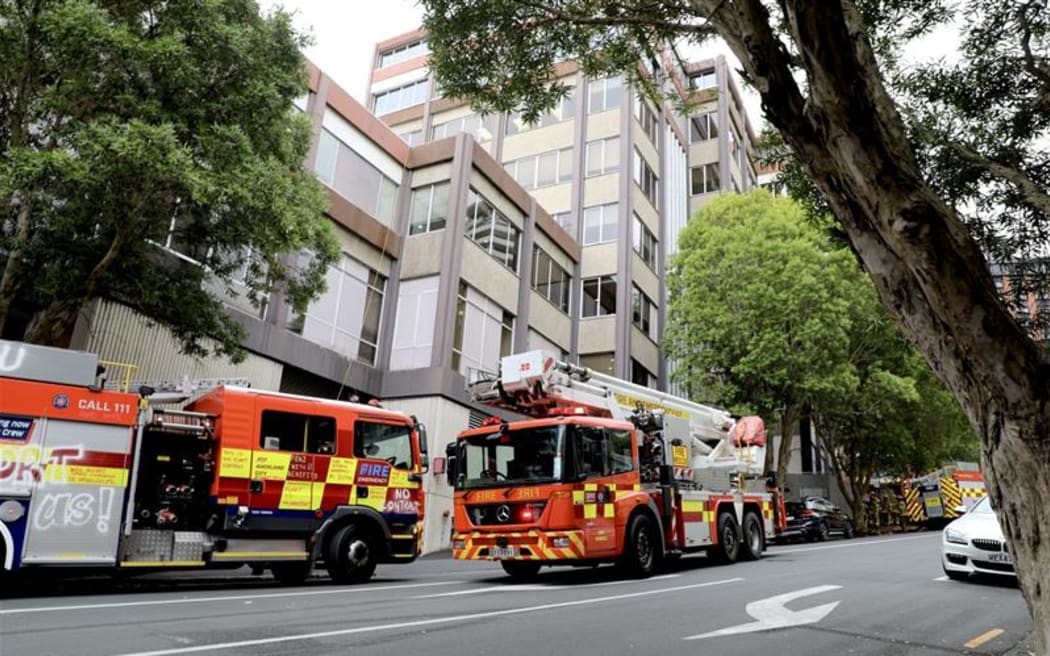
A fire at the University of Auckland law school building has now been extinguished.
A Fire and Emergency spokesperson said there had been a fire at the University and six fire trucks were at the scene on Short Street. The call to 111 came through at about 2.40pm.
FENZ said the fire was now extinguished but crews will stay near the building this afternoon.
Staff and students were seen going in floor by floor, starting with level 6, to retrieve any belongings left behind
A student who was evacuated from the fourth floor of the building said it seemed the fire started on level two.
Police were at the scene talking to students who have been evacuated.
Student Talisha Lal said when the fire alarm went off she, and other students, thought it was a drill.
Lal said once she was out of the building, she could see smoke.
An Auckland teacher has had her registration cancelled after recording explicit videos of herself urinating on the floor of a classroom and on a student’s belongings.
The New Zealand Teachers Disciplinary Tribunal found Lisa Marie Edmondson had committed serious misconduct.
The school was alerted to the content after the deputy principal of the school was approached by a member of the public who had come across a video on TikTok and recognised the setting. A search for the username led to a pornographic account.
The account contained more than 30 explicit videos which had been recorded at various locations over a period of two-and-a-half years.
In one of the videos, Edmondson appeared to urinate on the floor of a classroom with genitalia clearly visible. A second video showed the teacher urinating on a hat with a student’s name clearly visible in a lost property box.
The summary of facts stated there was an “ongoing urine smell” in some classrooms during the time of her employment which had been attributed to rats and mice. Bait stations had been set up during the school holidays but no rodent activity was noted. The tribunal said her students were “likely to have been adversely affected” due to evidence of an “unpleasant smell that required deep cleaning”.
While she was not visible in the videos, the teacher was recognised due to her voice and clothing.
Edmondson resigned in May 2023 after receiving notice of a formal investigation.
Following her resignation, Edmondson worked as a relief teacher at a second school before being invited to apply for a fixed-term position.
The tribunal found that Edmondson had failed to disclose her full employment history when applying for – and subsequently working at – a new school in 2023 and failing to inform her employer that she was the subject of a mandatory report and current investigation by the Teaching Council.
In her reflective statement, Edmondson acknowledged that she had let her students down and “was not the role model that I should have been for them”.
“I have accepted that the likelihood of returning as a teacher has ended. This has been a very difficult concept to accept because I loved teaching, loved being in the classroom and loved my students and their whānau.”
The tribunal noted Edmondson failed to address the conduct head on or express concern for her former students and colleagues.
Edmondson’s registration was cancelled and the former teacher was issued a formal censure. She was ordered to pay $3,255.87 towards the Complaints Assessment Committee’s costs and $582 to the Teaching Council.
‘I have let down so many people’
In a statement to Stuff, Edmondson said she had no choice but to accept the ruling, but regretted her actions.
“During a two-year period which covers this time I was suffering from extreme anxiety, I can’t explain why I did it other than self sabotage and treating myself badly for things that had happened. By the time it was reported, I really did not even remember and hadn’t done anything else.”
Her actions had impacted her children and her ability to provide for them.
“I can’t change what I have done, but can make sure it never happens again.”