

NZ News
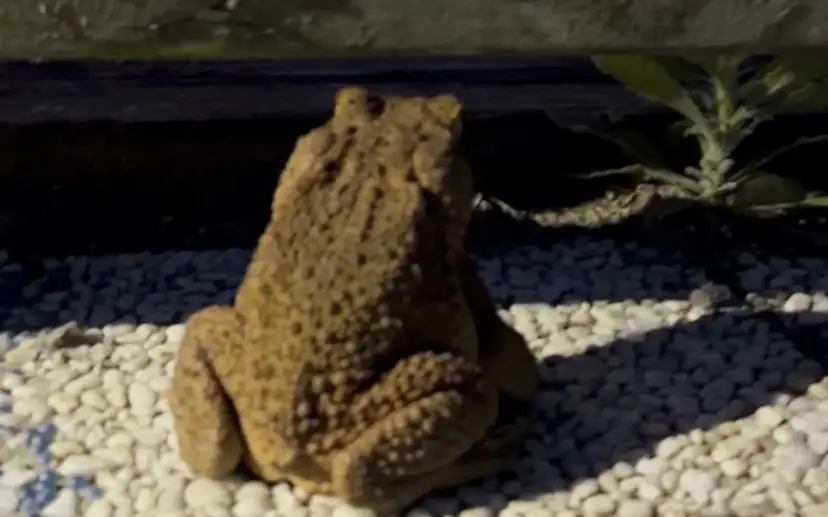
Poisonous invasive cane toad ‘size of a guinea pig’ spotted in Tauranga


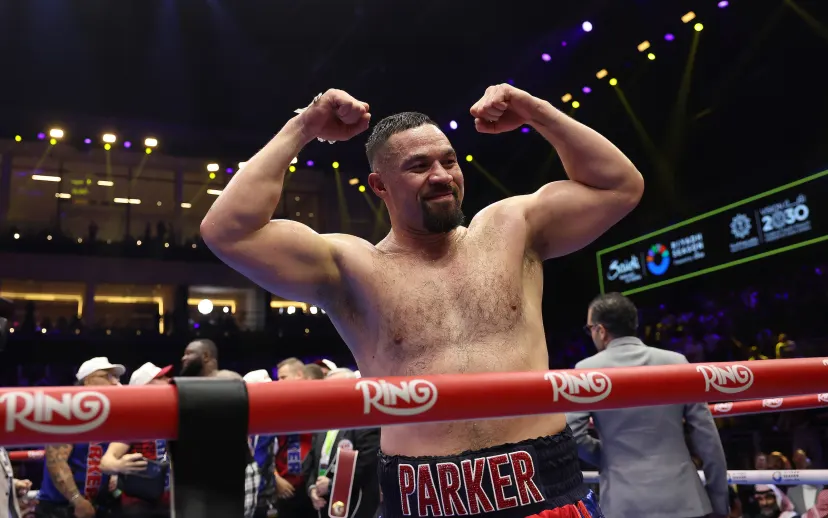
Analysis – Joseph Parker’s world heavyweight title fight against Daniel Dubois, dubbed “New Year’s Retribution”, will provide him with an excellent pay-day, not to mention a chance to win back his WBO belt.
It will also, as the tagline suggests, give the New Zealander a shot at revenge for the way his English opponent mysteriously withdrew from their scheduled bout in Saudi Arabia in February last year.
Parker was in form and with momentum behind him when on the brink of fighting Dubois in Riyadh, only for his opponent to withdraw claiming “illness” and then quickly sign up for a title fight against the then undisputed champion Oleksandr Usyk.
The suspicion remains that Dubois, 29, had his eyes on a bigger prize. As it was, he was knocked down twice against Usyk at Wembley Stadium in July last year before being counted out. It was the second time he had been stopped by the Ukrainian. It appeared karma was on the side of the Kiwi.
Now, Parker is on the brink of fighting Dubois again, and for a bigger reward.
Since Dubois lost to Usyk, the Englishman has twice beaten countryman Fabio Wardley – the first time for the WBO world championship and the second time when defending the belt. Both were stoppages – the second one, in London, in the second round.
Wardley, of course, is the man who stopped Parker the last time 34-year-old fought – in October last year. It was a knockout defeat, and, while it came via a mildly controversial intervention by the referee, Parker could have no complaints. Indeed, as is his style, he did not air any.
For all of the possibilities ahead, though, Parker’s recent inactivity will be his camp’s major concern going into this blockbuster clash at Manchester’s Co-op Arena on 30 January.
This fight against Dubois, a fighter not without his flaws but one who has shown vast improvement – one, too, with a couple of big results behind him – has been in the works for some time but has only now been formalised.
Parker’s camp would have preferred a warm-up fight – there was talk of a bout against Englishman Frazer Clarke – but it never eventuated. There is no time and Parker will now enter an eight-week training camp.
Combatting so-called “ring rust” will be an issue for Parker, who reinvented himself after winning the WBO world championship belt in Auckland 10 years ago (and losing it to Anthony Joshua in 2018) alongside coach Andy Lee. However, he is now without a nutritionist and strength and conditioning trainer after parting ways with American George Lockhart following a failed drugs test.

Leigh Dawney/Photosport
It is understood Parker earned around $13 million for his fight against Joshua in Cardiff – an indication as to how much money he has made in the fight game.
Should he lose in Manchester this will almost certainly be his last fight on the biggest stage, and, while there will be opportunities to serve as a division “gate-keeper” – particularly against rising Australian heavyweights Justis Huni and Teremoana Teremoana – Parker is nearing the age of his predicted retirement.
Parker, a professional since 2012 who put boxing back on the map in New Zealand with his dramatic title win a decade ago and stunning successes against Deontay Wilder in 2023 and Zhilei Zhang a year later, is no stranger to long odds.
But this may be his last hurrah.
RNZ
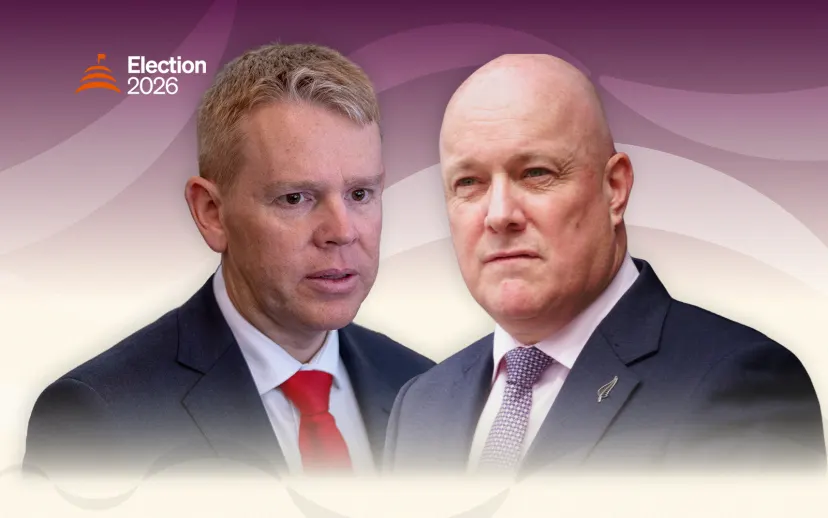
Analysis – The wait for the final count ends at 2pm today, concluding a three-week ordeal which has bugged a bewildered Christopher Luxon and kept Chris Hipkins conspicuously quiet.
Then a new wait begins: for the politicians to turn the votes into a government.
Set your alarm for 2pm
Election night offered plenty of suspense and little certitude. Luxon declared it an “MMP special”, while Hipkins suggested “a bit longer” was needed to work out what voters had said.
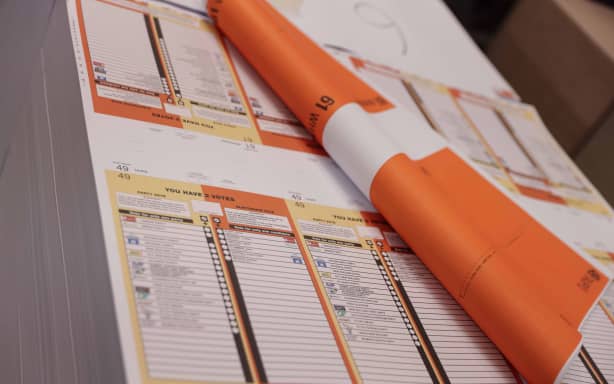
That first count covered roughly 2.4 million ordinary votes but was short an estimated 400,000 “special” ballots requiring extra checks.
They include votes from people overseas, away from home or not the printed electoral roll.
For the past three weeks, the Electoral Commission’s boffins have been battling paper cuts, shuttling ballots, counting and recounting, checking and rechecking.
Samuel Rillstone/RNZ
And at 2pm, they deliver the problem back to the politicians.
A rabble of reporters will get a half-hour headstart to prepare their stories, which will be shaped by the shift in party votes and electorate races.
Parliament’s 11-seat overhang means National and Te Pāti Māori can lose MPs only if they lose electorates, making those contests unusually important.
One of three broad headlines will prevail:
1. Three’s still company: the coalition survives
After three weeks of spreadsheeting and speculation, it’s possible the special votes make little difference.
On the provisional numbers, National, ACT and New Zealand First have 67 seats to everyone else’s 64.
If that majority holds or strengthens, then another term awaits, but with National a weaker component of the trio than last time.
They would still need a new coalition deal and no doubt intense negotiations.
But this is the most straightforward outcome.

Phil Walter
2. A draw, but with strings attached: Opportunity can go right, but not left
Another scenario is that the numbers tighten enough to stymie the coalition, but not so much as to empower the left.
Imagine, for example, National loses Wairarapa to Labour, and NZ First loses a list seat to the Greens.
The result would be a 65-65 deadlock between the coalition and the rest, including Opportunity.
The government would remain in caretaker mode while the parties tried to break the impasse. If repeated attempts failed, the country would go back to the polls.
Given their public positions, the most plausible breakthrough would be an arrangement in which Opportunity backed the existing right bloc.
That could mean joining the coalition or, more likely, supporting or abstaining on “confidence and supply” votes in exchange for policy concessions.
Opportunity could threaten another election as bargaining power, but not the prospect of a left-wing government.
3. Choose your Chris: Opportunity is kingmaker
The final possibility is that Opportunity emerges with the balance of power and the ability to anoint either a National-led or Labour-led government.
Let’s say, as before, Labour takes Wairarapa, the Greens gain an MP, and NZ First loses one.

RNZ / Zach Cornelisen
But now, also imagine Opportunity squeaks in another MP at National’s party-vote expense.
The existing coalition would have 65 seats against the other parties 66, including Opportunity’s eight.
Suddenly, Opportunity’s Qiulae Wong has all the leverage.
Wong has pledged to speak first with National, given it has the most MPs, and to turn to Labour if progress stalls.
Either arrangement would require four parties and the gnarliest of negotiations. Kiss goodbye to any hope of having a deal by Christmas.
The electorates to watch
Five seats have margins below 500 votes, of which four could change the coalition calculus.
In Wairarapa, Labour’s Kieran McAnulty is behind National’s Mike Butterick by 139 votes.
And in Hamilton East, Labour’s Georgie Dansey lags National’s Ryan Hamilton by 456.
A Labour victory in either seat would cost National an MP.
National hopes to gain one in Mt Roskill, where Labour’s Michael Wood leads incumbent Carlos Cheung by 262 votes.
In Te Tai Tokerau, Te Pāti Māori’s Aperahama Edwards has a 436-vote buffer separating him from the Greens’ Hūhana Lyndon.
If Lyndon sneaks ahead, her electorate seat replaces a Green list seat, leaving the Greens’ total unchanged, while Te Pāti Māori would lose an MP. The left bloc would lose a seat by winning one.
The fifth close contest is Wellington Bays, where Labour’s Craig Renney leads the Greens’ Julie Anne Genter by 140 votes. Unlike the others, a reversal would not alter the pathways to power.

RNZ / Samuel Rillstone
A final final count?
Given the tight margins, you can almost bank on there being recounts in key seats.
Candidates have three working days to apply, after which a District Court judge has three working days to begin.
Recounts rarely flip seats, but it happens: in Waitākere in 2011, Carmel Sepuloni’s 11-vote win became a nine-vote loss to Paula Bennett.
A party could also request a nationwide party-vote recount but would have to stump up a $92,000 deposit, which could be used to cover the costs.
So… who’s going to win?
The most likely winner depends on whose spreadsheet you trust.
A medley of mathematicians, with varying levels of proficiency, have modelled the outcomes based on how special votes have fallen in the past.
Some say the first scenario is most likely and the third the least; others put the third first and the second last.
The most sensible course of action is probably just waiting until 2pm.
RNZ


Poisonous invasive cane toad ‘size of a guinea pig’ spotted in Tauranga

Last hurrah? – Joseph Parker back on biggest stage but odds will be against him

Deal or deadlock: Three ways today’s final count could land


-

 NZ News2 weeks ago
Well-known sportsman admits assaulting Wellington taxi driver over $36 fare
-
 Latest News1 week ago
Injuries force Jamie Hannah and Quinn Tupaea to bow out of Nations Championship
-
 Latest News1 week ago
Cyclone Xavier intensifies to Category 4 over Northern Cook Islands
-

 Latest News1 week ago
Conjoined twins born in remote PNG die before help arrives
-

 Latest News1 week ago
Youths forcefully obtain keys, escape care and protection facility
-

 Latest News1 week ago
Hundreds of parcels containing suspected illegal peptides seized at border
-
 NZ News1 week ago
Des Buckingham named All Whites coach
-

 Latest News1 week ago
Last decade sees more people charged for low-level drug offending than ever