

Latest News
rogue-immigration-system-approved-visas-by-itself

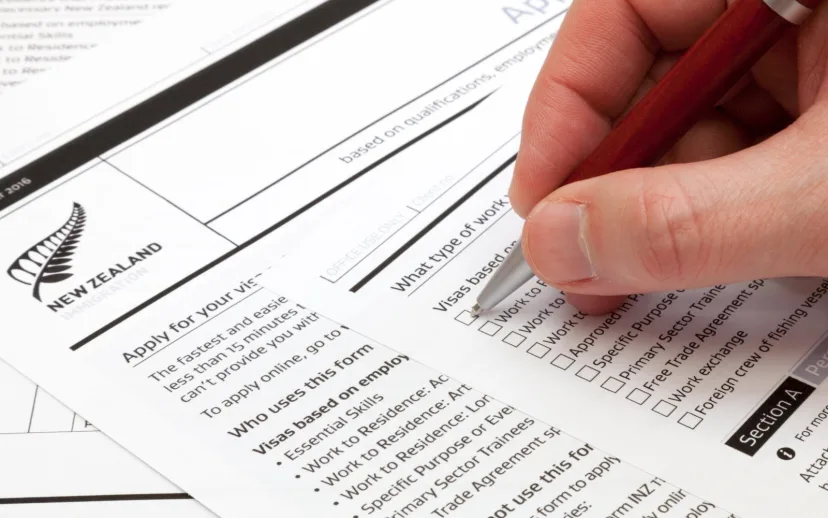
Bugs in a new immigration platform allowed visas to be automatically approved without human intervention.
More than 55 job checks and visitor visas were auto-approved before the fault was discovered last year.
It is one of a number of flaws identified in the Immigration New Zealand (INZ) ADEPT system, part of the $336 million Our Future Services IT project which is now under review, after revelations its predicted benefits had been overstated to the tune of $134m.
Automated decisions had already been enabled through legislation, but INZ had so far not used the power.
Last year, the agency said Our Future Services would include end-to-end automated decision-making, but systems were about two years away from the data input, testing and quality assurance needed to ensure good decision-making.
But months later, it discovered a visitor visa had already been approved without any manual assessment, and later found 32 visitor visa applications were green-lighted in the same way in the previous three years.
“Immediate action was taken to investigate the cause, and a full sweep conducted to identify any other cases,” said INZ when it notified immigration minister Erica Stanford. “To date, 23 Job Check applications have been identified as having been approved without manual assessment between February and November 2022.
“Technical Advisors have reviewed all 32 auto-approved Visitor Visa applications. Twenty of those visas have been used for travel to New Zealand with no adverse outcome noted.”
It reopened six of the applications for full assessment due to high risk factors and one of them was recommended for decline. A fix took two months – “Previous attempts to deploy the fix earlier in October were complicated by wider Microsoft issues” – and the system was being closely monitored problem to check it did not repeat its automatic approvals.
“Applications in enhanced Immigration Online move through a workflow containing both automated steps and points requiring action by an Immigration Officer,” said INZ online services director Katy MacLeod, in a statement. “In the affected cases, applications were able to continue through the workflow, allowing an application to move past the manual assessment stage before that assessment had been completed.
“The issue was caused by a technical fault that, in some cases, allowed the same automated process to run more than once on a visa application, leading to unexpected duplication of actions and a bypass of manual assessment.”
INZ has previously said only immigration officers would be able to make a decision on rejecting a visa application.
RNZ / Samuel Rillstone
System glitches
Other faults have now come to light including in work and visitor visas and in the cases of hundreds of parents and grandparents, who were not asked a crucial health question.
The latest occurred last month when an unknown number of tourists hoping to come to New Zealand were unable to submit their applications after a system update.
MacLeod said it had been resolved.
“The issue affected draft applications for tourism or holidays where a secondary applicant had already been added before a system update on 23 August, preventing those applications from being submitted.
“Immigration New Zealand put measures in place immediately to support any potentially affected applicants to successfully submit their applications while the issue was investigated. A permanent fix was successfully applied on 26 August, and testing confirmed the fix was working as expected.”
Last year, a glitch left some employers and their migrant staff struggling with the job tokens needed for accredited employer work visas, involving 2300 businesses whose accreditation expired and was then renewed.
It left employers not being able to resend a token to a migrant or notify INZ that a migrant had left their employment, because the workers no longer appeared on their ADEPT dashboard.
“When the fix was developed, it was also identified that a data clean-up would be needed for employers who had a gap in their accreditation before the fix,” officials told Stanford. “There were approximately 2300 employers identified as requiring the data clean-up. The exact number of employers affected was difficult to ascertain as some employers with gaps in their accreditation might not have migrants employed, and not all migrants employed would be eligible to reuse tokens.”
It was fixed in March last year.
Two months later, staff unearthed an issue with parent and grandparent multiple entry visitor visas where 364 applicants were not asked if they had lived in a country with high incidence of tuberculosis (TB) since they last submitted a clear chest xray to INZ.
Of those 295 were granted visas. Another 21 applicants were not asked to provide an xray despite declaring they had been in a TB country for more than six months.
“Their individual risk of currently having TB is still relatively low,” Stanford was told. “INZ intends to contact these applicants and request that they seek medical advice should they have, or develop, symptoms consistent with TB.”
Cabinet asked earlier this month for a new business case for Our Future Services, which had promised $453m in savings but on current estimates would now cost money – if it goes ahead. About $25m was spent in its first year.
Ministers want the Ministry of Business, Innovation and Employment to report back before April next year, after reassessing the programme’s strategic case for change, its finances and future delivery frameworks.
rnz



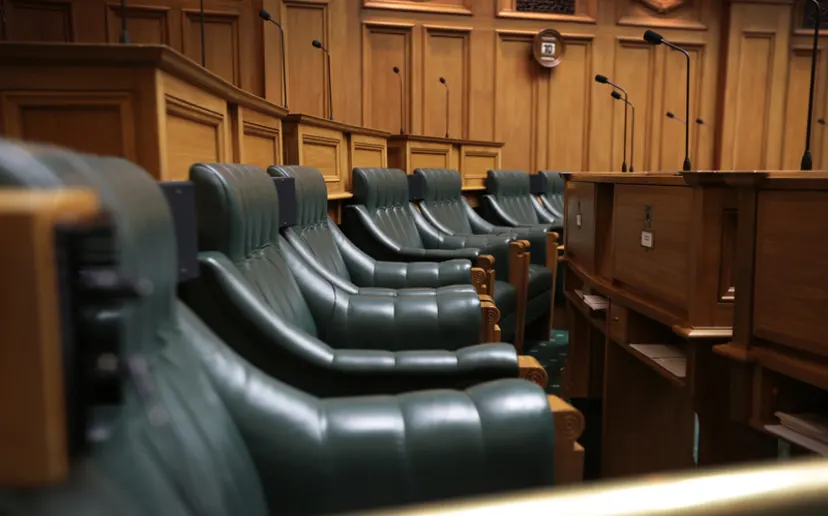
The chief executive of the Parliamentary Service is confident there will be enough room to accommodate the increased number of MPs and their staff coming into Parliament.
On current numbers, up to 131 MPs could be sitting in the Chamber following the election, brought on by a record overhang result.
Clerk of the House of Representatives Dr David Wilson told the Spinoff that currently the debating chamber had enough chairs to seat 124 MPs – including the Speaker of the House – and work was being done to accommodate more by altering the seating arrangement.
In a statement, Parliamentary Service chief executive Rafael Gonzalez-Montero said planning for a larger Parliament had been going for “some time”.
“Now that the election results have confirmed an increase to the number of members we are looking at several options.
“We are confident we will be able to accommodate all members within the Chamber.”
VNP / Phil Smith
Gonzalez-Montero said office accommodation for members and their staff would be “stretched” for a short time, but the new Members’ Building was only a few months away from “practical completion”.
That building – located behind Parliament – was due to be ready to occupy in April next year and had capacity to accommodate around 30 backbench MPs.
“All members should be in fit-for-purpose accommodation from that point,” Gonzalez-Montero said.
Following the 2023 election, 123 MPs sat in the Chamber – a record number at the time. That decreased to 122 following the resignation of National MP Judith Collins.
Collins held the seat of Papakura and stepped down in May and Parliament voted against holding a by-election because it was too close to the election.
The election result also meant high-ranking National Party MPs like Chris Bishop, Paul Goldsmith, Nicola Willis and Gerry Brownlee – Speaker of the House and an MP for 30 years – would likely not make it back into Parliament.
Only resigning or retiring MPs were permitted to give a valedictory speech meaning none of them would get the chance to give a valedictory statement.
Asked if their would be special allowances for valedictories, Wilson said in a statement that normally only MPs were allowed to speak in the House but the House could suspend its own rules or temporarily alter them.
“It could do so to allow former members to address the House.”
Wilson said no such arrangements could be made until the next Parliament opened and members sworn in.
rnz


Police say person who fired gun at officers still at large

New Zealand sides named for RLWC finals

Parliamentary Service working on extra chairs and offices for increased number of MPs


-

 Latest News2 months ago
‘Chilling’: Business groups speak out against National’s supermarket break-up plan
-

 NZ News2 months ago
Tom Phillips report: The missed opportunities to find the children
-

 Politics2 months ago
National vows to try to split Pak’nSave and New World
-

 Latest News2 months ago
Cars bearing Chinese police markings stir unease in Auckland
-

 Fiji News2 months ago
Plans to have new Constitution by Dec 24th 2026
-

 NZ News2 months ago
Cop who stole $68,000 can now be named as champion Muay Thai fighter Haimona Tamati-Te Paki
-

 Politics2 months ago
MBIE confirms botched biometric projects costs blown out to $50.7 million
-

 Latest News2 months ago
Five Karangahape Road venues lose their liquor licences after police intervention