

Latest News
Auckland’s City Rail Link goes into action for first rush hour after ‘incredible’ opening day


After decades of waiting, delays, cost blowouts and disruption, Aucklander commuters finally got to ride on the new City Rail Link on Sunday.
And today commuters see try out brand new rail link in morning rush hour.
The $5.5 billion project has brought two new underground train stations, and turned Waitemata station from a dead-end into a two-way thoroughfare.
It has been touted as a game-changer for Auckland, helping to move more people around the city and reduce car dependence.
On opening day, more than 400 people turned out at Ōtāhuhu station Before 5am to be on the first train to travel through the City Rail Link.
Politicians, train nerds, and advocates alike were crammed in to the carriages, and as the new tunnel drew nearer, the excitement was growing.
Chants of “tunnel, tunnel, tunnel” rang out through the train, and a cheer went up as it entered.
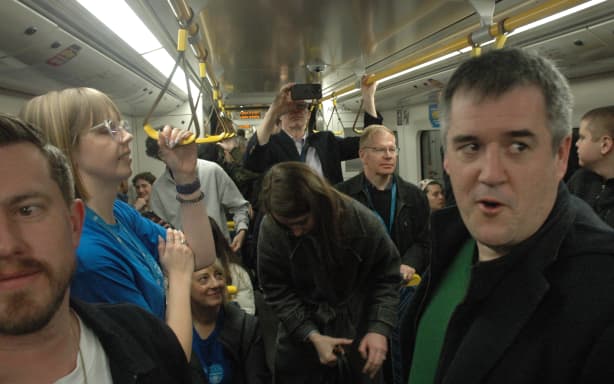
RNZ / Edward Gay
Taylor Parker, 23, arrived at 3.40am in Ōtāhuhu to be the first person in the queue.
“This is incredible. It is like the harbour bridge opening but for the younger generation. It’s truly a once in a lifetime.”
As the day drew on, thousands travelled through the new tunnels and stations at Karangahape road and Te Waihorotiu in mid town, which had entrances on Victoria and Wellesley streets.
Bryce Ongley was checking out the new stations with his two kids.
“Yeah nah, they’ve really enjoyed it. It’s kind of like space age – out of this world when you come down here and see it, eh? All lit up.”
His daughter Frankie was also impressed.
“They’re very cool and very big, and I love them and I think it’s my favourite one. Because it’s in the city and I love the city.”
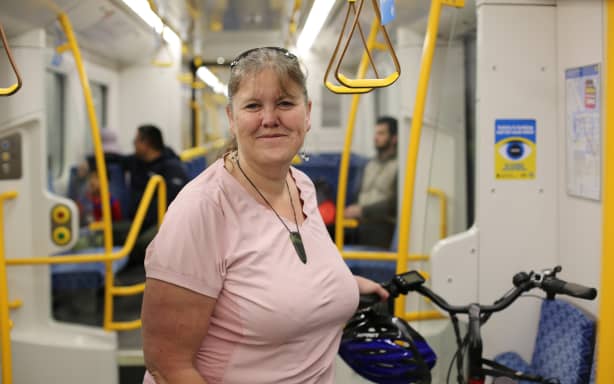
RNZ / Luka Forman
Cyclist Sarah Woodfield said the new stations and tunnels would help her get more places on her bike, and give people more options for getting around.
“No city ever solved its traffic problems by building more roads. So public transport being a good option is really great for everyone.”
Kate Millington lived in Mount Eden, and said the new stations reminded her of Sydney where she used to live.
“It’s bloody amazing. I use the trains a lot, and I timed myself from home to the Maungawhau station, and rather than taking 20 minutes to get to Kingsland it took me seven.”
Manukau Ward Councillor Alf Filipaina said the CRL would help connect South Auckland with the rest of the city.
“It’s a matter of getting off the roads, using the train when they can. And having the ability from south-side to come all the way into town.”
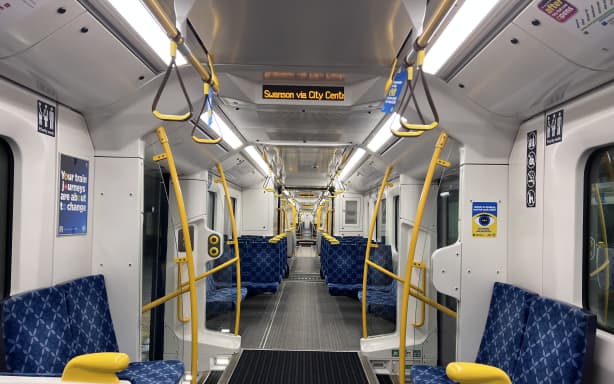
RNZ / Lucy XIa
Patrick Reynolds – director of advocacy at charity Greater Auckland – said despite the excitement, a more joined-up rail network would become the new normal.
“Instead of a train full of very tired nerds. This will just be every day, it’ll be completely ordinary. Getting the train is just a thing you’ll do.”
The opening day was not without an issue – a small fire at Waitemata station caused by a lighting cable early in the day created delays and cancellations across the network – but things were back on track by about noon.
Auckland Transport chief executive Stacy van der Putten said the disruption was disappointing, but she was impressed with how crews responded.
Time will tell whether there are any other kinks to iron out in the first days and weeks of the new network.
rnz

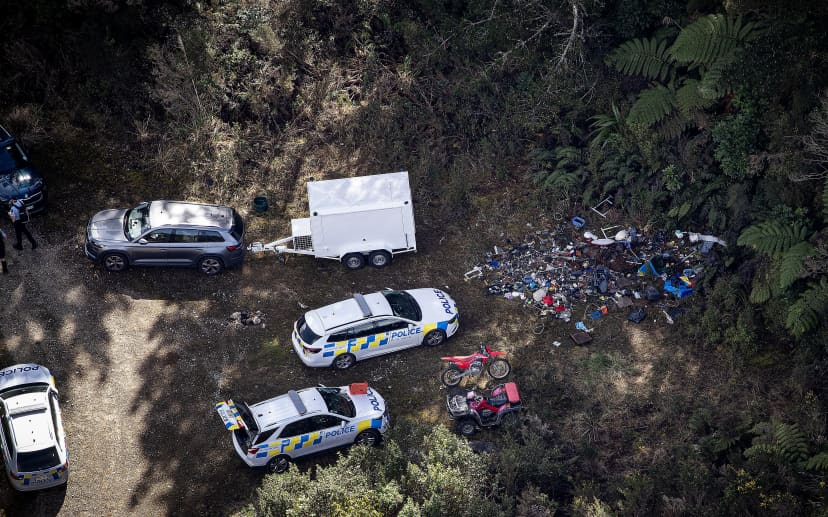
The Ministry of Foreign Affairs and Trade says police are supporting the families of five New Zealanders who remain missing after August’s catastrophic flash flood at the Nepal-China border.
A massive flash flood, believed to have been triggered by a glacial collapse, tore through a Himalayan valley on 26 August, burying villages.
The disaster killed more than 1300 people, with at least 5000 others unaccounted for, according to latest reports on both sides of the border.
In New Zealand, community groups have raised more than $200,000 for the flood victims, according to former honorary consul for Nepal Dinesh Khadka.
“I’m so proud of the Indian community here who … supported us, saying it is not a Nepal problem but our problem,” Khadka said.
He said about 80 percent of the donations had come from New Zealand’s Indian community.
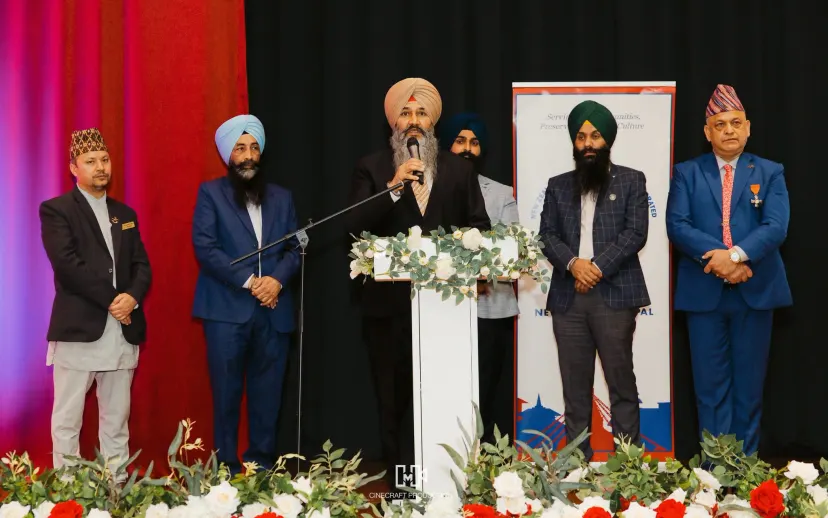
Supplied
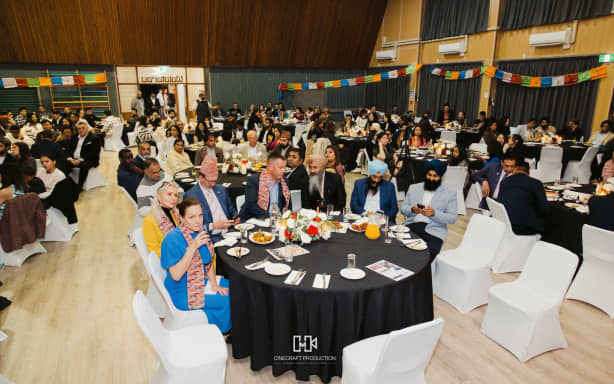
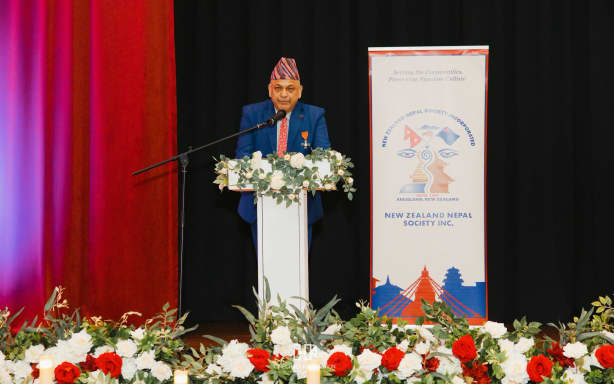
Last week, the Nepali community raised $100,000 through a fundraising dinner at the Freemans Bay Community Centre in Auckland.
The Central Sikh Association donated $50,000 to Nepal that same night.
Earlier this month, Gurdwara Shri Dashmesh Darbaar Sahib in Papatoetoe pledged $15,000, which was matched by the New Zealand Indian Central Association.
Shiv Mandir in Manurewa donated $4000, while Manurewa Local Board member Marshal Ahluwalia and National Party Manurewa candidate Ghouse Majeed donated $7500.
Khadka said the Federation of Islamic Associations of New Zealand had pledged $5000, which would be directly deposited into Nepal’s Prime Minister’s Disaster Relief Fund.
Other fundraising events included a dosa event in Māngere organised by Thiru Subramaniyar Aalayam on 5 September, and a fundraising dinner organised by the Nepal-New Zealand Friendship Society of Canterbury in Rolleston on 12 September.
A similar dinner was organised by the Waikato Indian Association and Nepal-New Zealand Waikato Friendship Society in Hamilton on 9 September, while the Taranaki Nepalese Community is planning a fundraising dinner in New Plymouth on 26 September.
He said the fundraising was a temporary effort to support people who had lost everything in the floods.
“Nepal will take decades to rebuild and whatever we raise now will go to the people who are in most need right now,” he said.
Khadka said more fundraising events were being planned across New Zealand.
Next week, Wellington Mutamizh Sangam’s youth wing will hold a youth festival to raise funds for Nepal, while the Indian Film Festival in October has also pledged to support fundraising efforts for the country, with a Nepali film included in its programme.
Khadka said the response had shown him how much New Zealanders cared about Nepal.
“Wherever we go, I see New Zealanders approaching me and asking how they can support Nepal,” he said.
“That makes me proud of New Zealand and how lucky we are to be called New Zealanders.”
Khadka also warned that some organisations were using the disaster to make money.
“It is very sad to see that there are organisations who are raising money but it doesn’t reach the Prime Minister’s Disaster Relief Fund, so my request to people who are donating their hard-earned money is to make sure that you donate through the right channels,” he said.
Supplied
Khadka said he was receiving regular updates from Nepal Police, who were doing their best to recover bodies and search for survivors.
“More than 1400 bodies [have] already [been] found but they’re looking through the rubble and buildings to find more than 5000 bodies or even survivors,” he said.
Khadka said he did not have an update on the missing New Zealanders.
Five New Zealanders remain missing following the deadly flash floods: Dejan Kuzmic, Shweta Mhatre, Mihir Patel, Kinnari Patel and Suhasini Reddy.
More than 300 foreign nationals have been rescued, according to an update from Nepal’s National Disaster Risk Reduction and Management Authority.
No New Zealanders have been included in that number.
RNZ understands Mhatre and Kuzmic were part of the Isha Foundation’s pilgrimage, and Sadhguru had previously said two New Zealanders were missing from his trekking group.
Meanwhile, Reddy’s family has called on rescuers not to stop searching for the 44-year-old after conflicting reports about her status emerged online.
Reddy’s brother Rajeev and his wife Lauren urged people to keep searching for survivors in a Facebook post several weeks ago.
A spokesperson for the Ministry of Foreign Affairs and Trade said New Zealand’s consular response team in Kathmandu was engaged with local authorities and the Nepalese Government.
“However, challenges on the ground mean that new, verified information will continue to take time to emerge.”
A spokesperson for the Ministry of Foreign Affairs and Trade said New Zealand had extended an offer of technical expertise to aid Nepal’s response effort in addition to humanitarian assistance worth $3.5 million to support the humanitarian response.
rnz
Latest News
NRL finals schedule: Who plays who in week 2 and how the Warriors can make the Grand Final

The Warriors will need to take the hard path to the NRL Grand Final, having lost to the Dolphins in their qualifier at Go Media Mount Smart Stadium.
A victory in week one would have seen the Warriors take a week off and advance straight to the preliminiary finals in week three.
Instead they’ll take on the Newscastle Knights in a must-win elimination final on Sunday.
Here’s who plays who next:
Week two: Semi-finals
The teams that lost their qualifying finals get another chance. They play the winners of the elimination finals in two sudden death games.
The two winners would then move on to the preliminary finals.
- Cronulla Sharks v Sydney Roosters, Saturday, 9.50pm at Allianz Stadium, Sydney
- Warriors v Newcastle Knights, Sunday 6.05pm at Eden Park, Auckland
Warriors boss Cameron George is expecting Sunday’s game to sell out, in what he describes as an international for his side.
“It’s us versus Australia. So the more people we get there, the better New Zealand will be.
“There are 17 teams in this comp and we’re the only one from here so it’s us against them. This is our New Zealand grand final in the NRL and it’s pretty special.”
Warriors club members can buy tickets from midday Monday with general public tickets going on sale Tuesday.
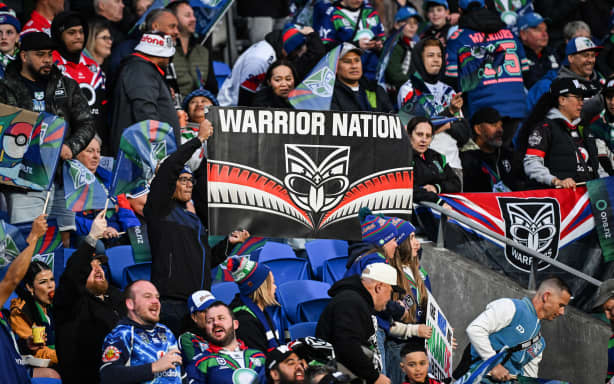
Andrew Cornaga/www.photosport.nz
Week three: Preliminary final
The four remaining teams play in the preliminary finals.
The Panthers and Dolphins have advanced straight to the prelims where they’ll meet the winners of the semi finals.
If the Warriors win against the Knights this weekend, they’ll go on to play the Panthers.
The winner of the Sharks v Roosters match this weekend will face the Dolphins.
The winners book their place in the Grand Final.
rnz


National vows to try to split Pak’nSave and New World

Tom Phillips report: The missed opportunities to find the children

Pieces still missing from Tom Phillips inquiry – academic


-

 Fiji News2 months ago
Fiji finalising diaspora policy to ensure citizens abroad ‘keep coming back’
-

 Latest News2 months ago
41 percent of Kiwis taking on debt to cover increased living costs – Kiwibank
-

 NZ News2 months ago
Mother of Marokopa children says Tom Phillips would take her phone to stop 111 calls
-
 NZ News2 months ago
Coroner told about LynnMall terrorist’s time in prison’s extreme risk unit
-

 Latest News2 months ago
Police searching for missing woman recover body in West Auckland
-
 NZ News2 months ago
Queenstown bouncers guilty of selling drugs while on the job
-

 Sports2 months ago
Junior Bula Boys reach OFC U-16 final, seal U-17 World Cup berth
-
 World2 months ago
Ex-Fiji prosecutions office employee ‘scared to leave Australia’ after leaked corruption allegations