

NZ News
How the 9/11 attacks changed New Zealand

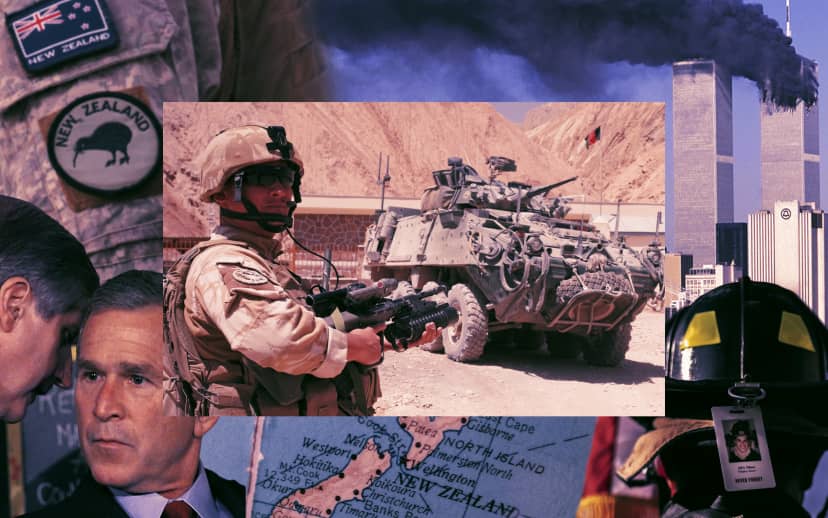
Explainer – New Zealand woke up on 12 September 2001 to a world order that had abruptly changed overnight.
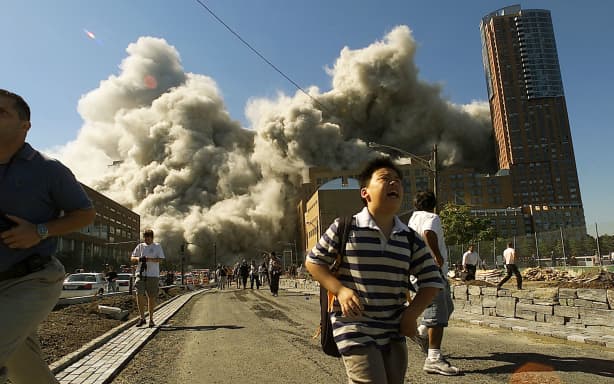
While most of the country slept, terrorist attacks in New York City and elsewhere in America left nearly 3000 people dead and led to decades of conflict in Afghanistan and Iraq.
This week marks 25 years since the 9/11 attacks, which changed air travel forever, but also led to major reassessments of New Zealand’s place in the world and how we work with other nations.
“I think New Zealand politics and foreign policy became less complacent after 9/11,” said Grant Morris, a historian and associate professor of law at Victoria University.
“The attacks proved that no nation was safe from large-scale terrorist attacks. If NYC could be attacked this way, then every city and nation is potentially vulnerable.”
JOSE JIMENEZ/PRIMERA HORA / AFP
How it changed our foreign policy
The events of 9/11 led to what would become New Zealand’s longest overseas military deployment as it joined the US-led action in Afghanistan against the Taliban and al-Qaeda.
Beginning in December 2001, the Labour-led government agreed to send NZ Special Air Service (NZSAS) troops.

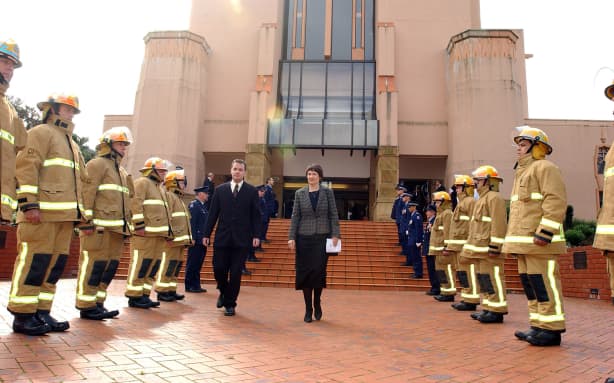
Helen Clark discusses being PM during 9/11 attacks
Prime Minister Helen Clark said after the attacks that “It is important that the international community now work together to fight the scourge of terrorism. New Zealand will do whatever it can to help.”
Morris said the lasting impact of 9/11 for New Zealand is the awareness of “the constant and continuing threat of terrorist attacks around the Western world (including in Australia and NZ)”.
The nature of conflict itself shifted as a result of 9/11, he said.
“It marked a movement from more traditional warfare against known enemies to a much greater focus on asymmetric warfare and counter-terrorism.”
Robert Patterson / Getty Images
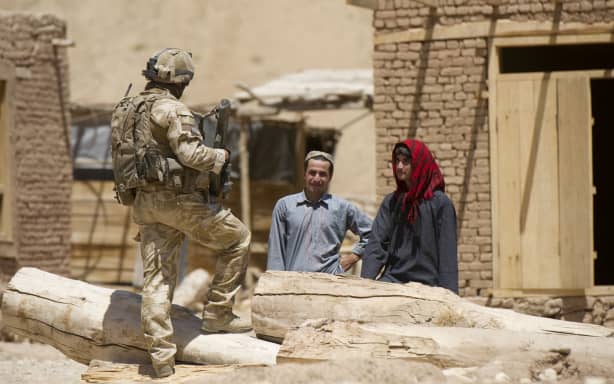
Around 3500 troops served and 10 NZ service personnel died during operations that lasted almost 20 years before the withdrawal in May 2021.
Veterans Affairs New Zealand says that troops in the Bamiyan province and elsewhere “rebuilt infrastructure, new schools, developed the local agriculture, contributed to renewable energy projects as well as community health projects. They enhanced the lives of many Afghanis”.
However, there were also concerns about civilians harmed during the deployment, and the death of a child in an incident involving SAS, which was all investigated in the Operation Burnham inquiry.
Ultimately, the Taliban has since regained power in Afghanistan, which left many questioning the point of the conflict.
“Unfortunately, the humanitarian and security gains made in Bamiyan could not be preserved after the Taliban’s military victory and the chaotic US withdrawal from Afghanistan in September 2021,” said Robert Patman, a professor of international relations at Otago University.
One foreign policy expert said the world became too focused on fighting Islamic extremism at the cost of other issues.
“NZ’s security focus also shifted in accordance with US priorities,” said Paul Buchanan, a security analyst and director of the non-partisan geopolitical consultancy 36th Parallel Assessments.
“Our commitment to the anti-Islamicist cause saw NZ lose troops in Afghanistan and cause casualties there and elsewhere.”
NZ Defence Force
Joining the ‘War on Terror’
While it did join the Afghanistan coalition, New Zealand opted not to send combat forces to join the US-led operation in Iraq in 2003, although some were later deployed in training and reconstruction efforts.
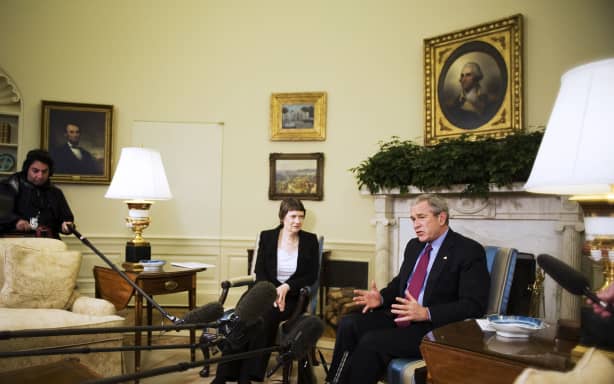
At the time, Helen Clark criticised the failure of diplomacy to avoid military action in Iraq.
“A new and dangerous precedent is being set,” she said in a statement to Parliament. “It may be possible to justify one’s friends taking such action, but where then is our moral authority when other nations use the precedent which is being set?”
“The bottom line is that 9/11 pushed NZ solidly into the US-led alliance system even if not in formal name,” Buchanan said.
“New Zealand stood to gain if it was seen as a ‘good international citizen’ prepared to shoulder its burden of collective security in the era of transnational terrorism,” Patman said.
Patman said after 9/11, it’s now clear that the rules-based order that came into place after World War II began to gradually fall apart.

Provided
“The post-9/11 era had been marked by the steady erosion of an international rules-based order, enshrined in institutions like the United Nations and norms such as multilateralism.
“The US’s illegal invasion of Iraq in 2003, Putin’s annexation of Crimea and subsequent full-scale invasion of Ukraine in 2022, war crimes in Gaza, and Trump’s Iran war have been some major landmarks.”
Patman said given America’s current foreign policy moves, the same kind of coalition isn’t likely to happen again soon.
“I cannot see New Zealand participating in an arrangement led by an ‘America First’ administration in Washington, but given that most security problems require multilateral solutions it is entirely possible New Zealand will contribute assistance to other international military operations.
“For example, the NZDF has been helping Ukraine with military training in Europe since the Russian invasion of Ukraine in 2022.”
“The Afghanistan experience has made New Zealand and others more cautious about large, open-ended wars of nation-building,” geopolitical analyst Dr Geoffrey Miller said.
“In the future, it’s more likely that New Zealand will offer niche, high-value contributions in areas such as special forces, intelligence and logistics, as we’ve seen in some of New Zealand’s recent targeted contributions in the Middle East.”
The very different reactions by New Zealand to joining the conflicts in Afghanistan and Iraq established new guidelines for our foreign policy, he believes.
“In hindsight, the fallout from the 9/11 attacks – and the invasions of Afghanistan and Iraq – did New Zealand foreign policymakers a favour,” Miller wrote in a 2021 piece for RNZ.
“Afghanistan gave New Zealand an opening to show the US what it had to offer, while Iraq clearly showed New Zealand the limits of that engagement.”
AFP
A restart of the relationship with America
Before 9/11, New Zealand and America’s relationship had been somewhat frosty since clashes over our nuclear-free policies in the 1980s.
American nuclear-powered naval ships were barred from entry and as a result, New Zealand was effectively suspended from the ANZUS treaty between NZ, Australia and the United States.
“We part company as friends, but we part company, as far as the alliance is concerned,” US Secretary of State George Shultz said at the time in 1986.
The 2001 attacks marked the finish for the “cold war” between the US and New Zealand, Buchanan said.
“9/11 marked the end of the era of official estrangement between NZ and the US over the 1985 non-nuclear declaration.”
“It brought a thawing in NZ-US security relations, and NZ foreign policy and security elites sought to capitalise on the moment by offering specialist services (like the NZSAS) and closer cooperation within Five Eyes as part of the so-called ‘War on Terror’.”
Miller said the biggest impact of 9/11 for New Zealand is that it “reopened and then locked in a closer security relationship with the United States”.
“Effectively it broke the ice and provided an initial, highly compelling practical reason for military engagement – the need for international cooperation against terrorism.
“Over time, the US-New Zealand cooperation built out into other areas and a more general reset,” Miller said.
Buchanan said that in his opinion, New Zealand too often ended up following the US lead.
“The NZ intelligence community became obsessed with jihadists much in the way the Cold War focused on ‘reds under beds’,” he said.
Buchanan cited examples of abuses of Muslim civil rights, including the case of Algerian refugee Ahmed Zaoui, who was called a security risk when seeking asylum here but was ultimately granted New Zealand citizenship.
Buchanan criticised the actions of the government and security forces over Zaoui’s case, calling it an example of overreaction to the threat of jihadists.
“A man and his family lost several years of their lives together. NZ lost some of its honesty and innocence as well.
“The obsessive focus on jihadists, both foreign and domestic, imagined more than real, not only made the (intelligence community) dishonest in its annual threat assessments issued during the first decade or so after 9/11. It also completely missed or discounted the signs that rightwing extremists were very present and in fact organising in NZ and that they were linked to violent events in Europe and North America.”
He cited the 2019 Christchurch mosque massacre, which was perpetrated by an Australian white supremacist.
“As it turns out, they were watching the victims, not the killer even though he was hiding in plain sight.”
New Zealand Herald
How it changed our politics
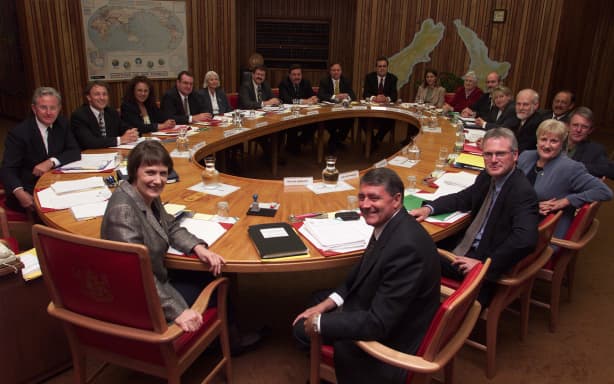
The political after-effects of 9/11 also could have brought down one of our own governments – the Alliance Party, the coalition partner supporting Clark’s Labour-led government circa 1999-2002, broke apart when members disagreed about New Zealand sending troops to Afghanistan.
Its leader, the late Jim Anderton, who was deputy prime minister at the time, agreed with Clark’s call to support the American action in Afghanistan. But other members of the Alliance group were strongly against it, and the party soon splintered.
Directly as a result of Alliance breaking up, Clark called for an early election held in July 2002, and her government successfully went on to easily win a second term – forming a coalition with Anderton’s new Progressive Party.
Win McNamee / Getty Images / AFP
How does 9/11 still shadow US/NZ relations today?
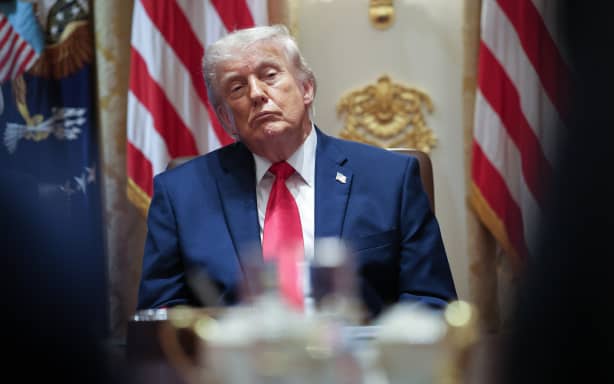
Of course, the current occupant of the White House has stamped an added aura of unpredictability on US/NZ relations.
“All New Zealand governments since 1945 have supported the vision of an international rules-based order and the decline of that prospect seriously impacts the ability of Wellington to navigate the world and sustain an independent foreign policy based on principles and international law,” Patman said.
“It’s true that the Donald Trump era with its tariffs and bombastic rhetoric has made Wellington’s current relationship with Washington more challenging,” Miller said.
“Still, these tensions have not undone the security relationship that 9/11 restarted.”
STUART MILLER / SUPPLIED
Miller cited the recent deal between the US and NZ to fund and build a new NZ$101 million port on Penrhyn atoll in the Cook Islands.
“The new port project isn’t being done out of charity – rather, it’s a sign of how New Zealand-United States cooperation has gradually shifted since 2001 from the original terrorism focus to geopolitical competition.”
Buchanan, however, said that deal also served a military purpose.
“Although NZ calls it a development project, it is a military port construction project first and foremost that is designed to counter (China’s) military expansion into the South Pacific.”
“In the longer term, and essentially from 2016 on, 9/11 has helped create a much [more] challenging security environment for New Zealand,” Patman said.
He cited the competition between the US and China, the rise of far-right populism and Trump’s election.
When it comes to trade, New Zealand has broadened to include deals with India and the European Union, as well as continuing close ties with China.
Buchanan said he felt New Zealand’s image of having an “independent” foreign policy was a misrepresentation.
“It is something that the NZ foreign policy elite tell the NZ public and with which they comfort themselves as supposed ‘honest brokers’, but the truth is that the rest of the world knows that we follow the US and Australian lead when it comes to security affairs, including the diplomatic activities tied to them.
“If Australia and the US are in bed together when it comes to military and intelligence ties, then NZ is the pillow on which they rest their heads.”
That “rules-based order” seems to have firmly been brushed aside this year, many analysts have said. But the future remains impossible to predict, even as the long-term ripples of 9/11’s reshaping of world politics continue to echo.
“In the end, New Zealand knows that Donald Trump will only be in office for another couple of years – it’s anyone’s guess what will happen after that,” Miller said.
Source: RNZ

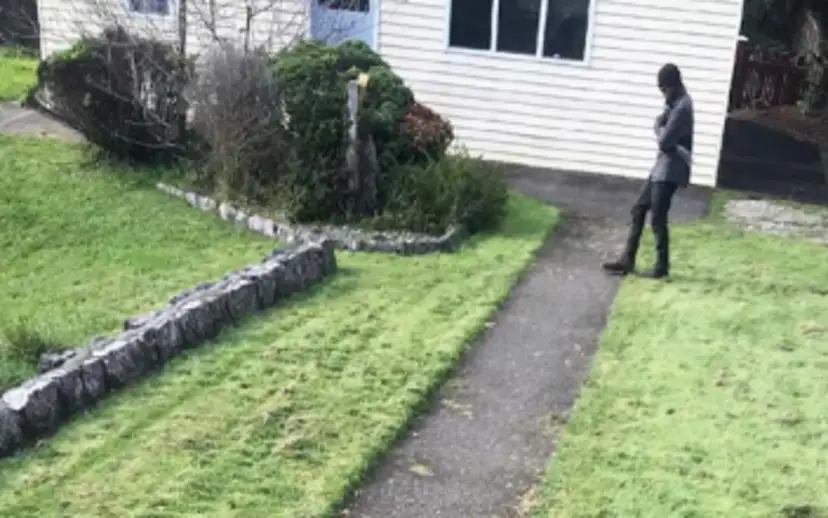
Less than three months after disappearing with his children for the first time, Tom Phillips did it again. A public inquiry into the handling of the case has found Police and Oranga Tamariki missed opportunities to protect the children and bring them home sooner. National Crime Correspondent Sam Sherwood looks into what the report reveals about the second disappearance.
Eighteen days after Tom Phillips left his ute on the Kiritehere beach, disappearing with his children and making headlines throughout the country, he and his children suddenly reappeared.
He initially refused to speak to police, but the following day he gave them a statement. He said the disappearance was merely a spontaneous camping trip, and “not a deliberate act to take the kids away and avoid the Family Court proceedings”.
He also said it was the “first time [he] had taken the kids camping like that”.
As for why he had decided to return, the father-of-three said he “had a little supplies left… but couldn’t [have] stayed for too much longer”, and would not tell police where he had taken the children.
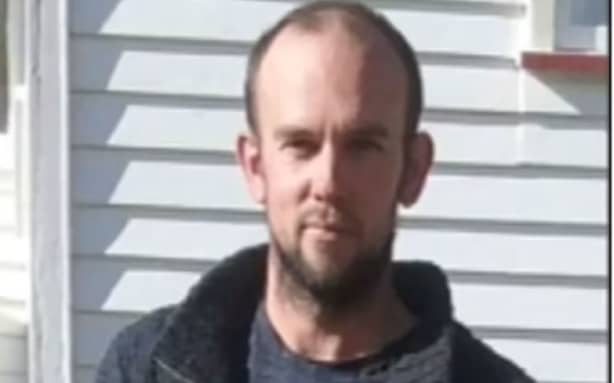
Less than three months later he took his children again. This time he spent 1358 days in the bush, the saga ending with Phillips dying following a shootout with police after they were called to reports of a burglary in the early hours of 8 September 2025.
Following his death, the Government announced an inquiry into the handling of the Phillips case by authorities and whether all “practicable steps” were taken to ensure the safety and welfare of the Phillips children as well as whether the agencies responded appropriately and in a timely way to locate the children once they had disappeared.
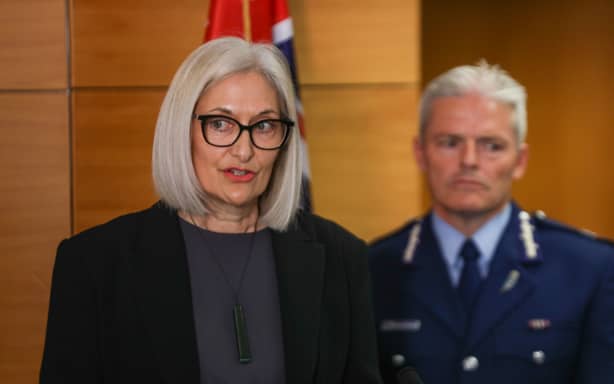
The final report of the inquiry, by Honourable Justice Simon Moore KC, was released on Tuesday.
The report says the harm Phillips caused in isolating the children as well as concerns from the maternal whānau were “minimised or overlooked by agencies for significant periods”.
It also says that while agencies worked well together at times a more consistent and collaborative interagency approach “could have prevented the children’s disappearance and brought them back sooner”.
As for his explanation about his first disappearance, the report says it “sits uncomfortably with the known facts”.
“It is incapable of belief for a variety of reasons. The plain inference to be drawn from all of the known facts is that Tom Phillips went into the bush with his children with the intention of not being found.”
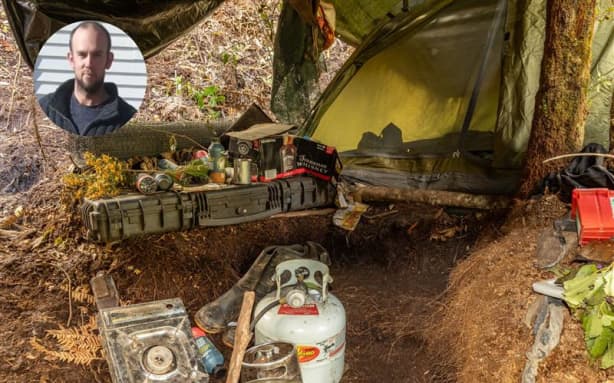
RNZ / Supplied / Police
It says Marokopa was an area Phillips knew very well.
“In some ways it was his backyard”
Operation Marokopa
After Tom Phillips and his children were first reported missing in September 2021, police launched an extensive multi-agency search and rescue investigation dubbed Operation Marokopa.
Moore KC’s report said as part of the investigation police built an “extensive and comprehensive profile” of Phillips by speaking to family, friends and searching the properties he and the children had been living in.
Police understood he had significant mental health issues and there were concerns regarding his alcohol use and “conspiracy views”.
A person close to Tom Phillips said they were worried that, if cornered, he would turn “violent”.
Another person close to him told police he had a dislike of government agencies, “meaning anyone that might try and remove his children from him”.
A neighbour reported he had said “if [Covid-19] gets any worse I’m going to the bush”. He had also been seen going into Ōtorohanga to purchase alcohol wearing “a full face army-style gas mask”.
Moore KC’s report said that police did not appear to accept his claims that the first disappearance was simply an impromptu camping trip.
“They appeared to see it for what it was; a father prepared to put his children at risk, and likely to have staged his own death and that of his children by accidental drowning, to defeat the Family Court’s processes and deny their mother access.”
Supplied
Police contacted Oranga Tamariki to make a report of concern on 30 September 2021.
Oranga Tamariki’s record of the first phone call noted police as saying Phillips had not said anything to police about what happened while he was away with the children.
“There are concerns that Thomas has the potential to do this again and questions as to why his ute was stuck in the sand under the tideline. There are questions around Thomas’s mental state.”
The report also recorded that police had “no immediate concerns for the childrens (sic) safety”.
On 1 October, police developed a “safety plan” to be followed by Phillips which said he would not leave the family farm, would have another family member present at all times, and that police were to be advised of any plans to leave the farm.
A day later police visited him and noted “there were no indications or comments from Tom that he would go bush again with the kids”.
On 5 October, Phillips was charged with making a false report to police, and two days later a police staffer completed a report assessing his suitability to hold a firearms licence.
The report mentioned Phillips’ “bizarre” behaviour, including mentions of doomsday prepping, telling family members he would “just take the kids and disappear” from authorities.
Police recommended temporary suspension of his licence on the basis he was not a fit and proper person. They issued the notice on 8 October, but it was not served on him for nearly two months.
Also on 5 October, a social worker and social work supervisor visited the children at the Marokopa home of his parents. Phillips told the social worker he “had no idea” a search and rescue operation was underway, and said he had been wanting to go camping for a while.
He said the trip was “spontaneous but somewhat planned”, and that he “would never harm his children nor did he intend to”.
Following the visit, Oranga Tamariki (OT) recorded that the family “presented well”.
RNZ / Baz Macdonald
“Tom did not present out of the usual, there were no obvious signs of drug use or mental health. Family was co-operative… Tom appeared to be upset when discussing the court process, but relieved that his family would support him and the children if the children needed to be placed elsewhere.”
Phillips’ first appearance on his charges was adjourned to January 2022 as a result of Covid-19 restrictions.
The second disappearance
The report says when Phillips took the children for a second time in December 2021, police led the efforts to try and locate them.
The report said some officers who spoke as part of the inquiry said they were worried for the children from the moment they were taken again.
“The then-district commander told the inquiry of his sense of ‘foreboding’ on learning that Tom Phillips had disappeared into the bush again with the children.
“In fact, such was his level of concern that he wondered whether Tom Phillips had caused himself and the children harm.”
However, the report says the “dominant view” of the police on the ground was that there were no immediate concerns for the children’s safety.
A senior officer originally assigned to the matter told the inquiry about the thought process.
“The information that I had and the assurance that I sought… from staff that were working on the [first disappearance investigation] was that the kids being away for the first period, there was no major concerns with them being in the bush…. So, I made the assessment at that point given that it had been a short period of time that there was no risk to their health and safety at that point.”
Moore KC said this assessment was reflected by police in the following months in internal notes, including one from January 2022 which said “there is no evidence to indicate that the children are at any risk if Phillips has gone bush with them again”.
“Given the lack of evidence indicating any concern for the welfare of the children, the need to act or direct resources into locating/arresting Phillips from a risk perspective is low”
The then-area commander told the inquiry that he felt the most effective response was to “softly bring him out” via the use of local staff who knew the rural community they lived and worked in.
The report quotes the area commander as saying it was a deliberate strategy not to “scare Tom because this is a guy that doesn’t like the limelight”.
Moore KC said the strategy was to “work softly within the community to get him and his children back”.
“The sense was that Tom Phillips was likely fearful of the ramifications of a second disappearance and that escalating public interest might be counterproductive to a safe and voluntary return.”
In January and early February there were two key sightings which confirmed Phillips was in the broader Marokopa area.
This included Phillips visiting his parents’ home alone on 9 February about 12.30am.
The following day, about 3.30pm, police drove to the Te Kūiti Police Station to report the visit.
“His parents told police that the children were not with Tom Phillips when he visited. They said that their son did not disclose the whereabouts of the children but assured them they were safe.”
Phillips asked his parents for cash, and he took a significant amount of food.
“He told them he was concerned about the charges against him, and about the children’s mother having access to the children.”
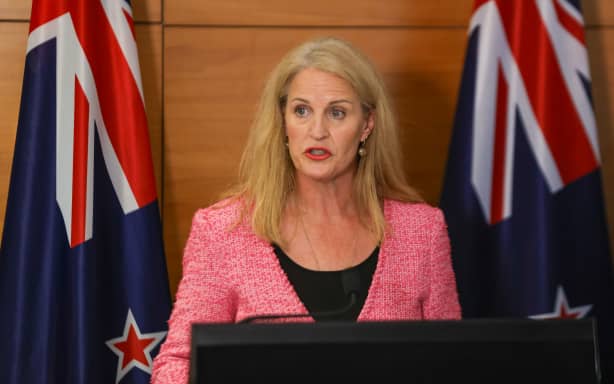
RNZ / Baz Macdonald
Operation Curly
In April 2022, police reassessed their approach and formalised the investigation, Operation Curly.
Moore KC said during Operation Curly police “never gave up on trying to find Tom Phillips and the children”, with about 1080 “taskings”, such as reported sightings or offending attributed to him generated and followed up.
“They followed up on most reported sightings, even where the likelihood of obtaining a useful lead might have seemed tenuous. They tried to generate leads through media campaigns, area canvasses and, later, the offer of an $80,000 reward for information.
“They examined phone records, bank accounts and social media in an effort to identify any signs of activity. They actively investigated persons of interest who might have some knowledge of the whereabouts of Tom Phillips or who might be assisting him in one way or another.”
Moore KC’s report divided Operation Curly into four phases. He said that in May 2022, the area commander emailed the district commander and assistant commissioners that “all enquiries have been completed and have not yielded a result”.
“Police hold no current intelligence that can be acted on or can enable a deployment of resources.”
It was then decided to appoint a “highly experienced” Detective Senior Sergeant as day-to-day officer in charge.
In January, 2023, 13 months into the second disappearance the then-police commissioner made a request for the investigation team to reconsider the possibility of offering a reward.
An application for approval was submitted to the assistant commissioner.
However, the assistant commissioner repeated earlier concerns around “creating a precedent”, Moore KC said.
“Currently the only offence committed by Mr Phillips is breach of a parenting order and failing to appear on charges relating to wasting police time post their initial disappearance.
“It is the lack of a serious offence that is causing concern and could potentially create an unruly precedent. This is also an investigative hindrance in terms of specialist investigative capability.
“To date the reward is not supported by either [the district commander] or [the assistant commissioner].”
They also noted the absence of Oranga Tamariki and their views as to the children’s welfare.
“At this stage I agree with the decision in regard to the breach of a parenting order however if a Place of Safety warrant or OT has specific concerns then these may need to be factored into the considerations.”
Moore KC said the inquiry had seen no evidence that this was put to OT. He said senior police staff “maintained an interest” in the progress of the investigation.
“Through the officer in charge and area and district commanders, requests were made for assistance from specialist police units and NZDF. However, the inquiry notes something of a pattern of these not being followed through in a timely way.”
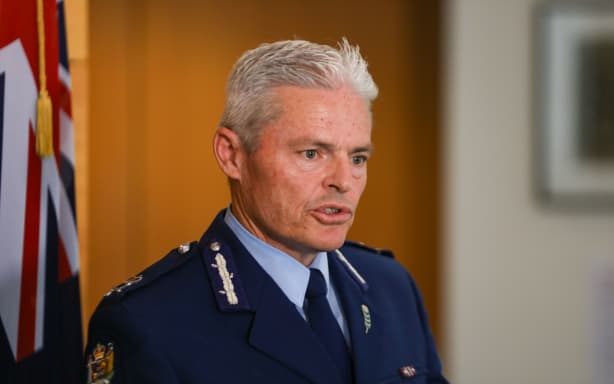
RNZ / Baz Macdonald
The internal review
In October 2022, the area commander arranged for a police officer from outside the investigation team to review the investigation to date. Then, in March 2023, he asked a detective sergeant from Hamilton who had not been part of the investigation to undertake a more thorough review.
“The March 2023 review noted that the investigation had effectively stalled, relying as it had been, on new sightings reported to police or information provided, largely by the children’s mother.
“It noted there were reputational issues for police through the investigation not advancing in the way the public believed it should. It identified that the investigation had been hampered by being carried out largely by uniform staff, with no single person having the necessary ‘ownership’.”
It also said relevant information was “also being split over different locations within various police databases,” Moore KC said.
The review also identified leads that could be followed up from information already gathered, and noted concerns over Phillips’ mental health and the children.
“The children are young and vulnerable due to their ages. Some of the information obtained about Thomas Phillips reveals he is an alcoholic. Taking the children in order to hide them from their mother is not in the best interests of the children. As time passes without any sighting of the children, concern for their welfare mounts. In my view Police are obligated to commit more resource to finding the children, hopefully safe and well…
“The paramount consideration is the safety and welfare of the missing children. In order to finalise this investigation and to achieve the safe return of the children it will be necessary to commit the resources needed to locate them.”
From May 2023, the investigation was moved to the Major Crimes Unit at District Headquarters.
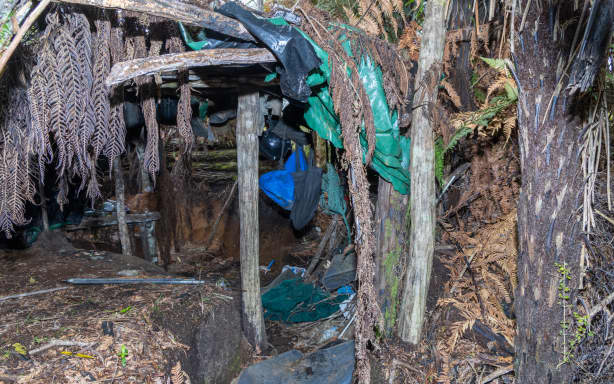
NZ Police / Supplied
The May 2023 sighting
Then, on 28 May 2023, a resident living on the main road out to Marokopa called police on the 105 line and reported a possible sighting of Phillips and his children.
The resident, referred to in the report as Rhonda, said that about 90 minutes earlier a man had knocked on her door and asked for a jump start for his car which he claimed was stuck on a forestry road.
She described him as Caucasian, in his late 30s to early 40s. She said he was wearing a black hat, black/grey shirt, black jeans, and work boots.
She said that he smelled strongly and like someone who had not had a shower in a very long time.
Rhonda and her mother-in-law drove the man along Te Anga Rd to a forestry road, where the man’s car was parked. Rhonda took a note of the man’s number plate, and said she saw a girl by the car as well as other children inside the car.
She expressed her concern about the man and the children because they seemed to be stuck in the middle of nowhere on a forestry road. Her and her mother-in-law suspected it was Phillips.
Following the report, police dispatched a unit about half an hour after receiving the call, but that unit was diverted to a family harm incident shortly after at a different address on Te Anga Rd. The report noted family harm incidents were usually given priority.
Not long after that, the unit advised no further action was required from police.
There was a brief follow up after this, by an “astute senior constable” but what followed was a “series of unfortunate mis-steps and circumstances” that together “conspired to compound the delay in police properly appreciating and investigating the significance” of the sighting.
There is no evidence that the first unit tasked with the report visited the woman’s home or attempted to visit the location of the sighting. Police have not been able to explain to the inquiry why the report was designated as requiring no further action, Moore KC said.
The inquiry found police inaction on the day led to avoidable delays.
It said police should have recognised the sighting was credible, and investigated “more thoroughly and in a more timely way,” and had there been no delay, “there might have been a real prospect of locating the children”.
Phillips warned police ‘would not take him alive’
In July and August 2023, detectives from the new investigation team went to the Phillips family farm to introduce themselves.
During one of the visits, police discussed Phillips’ visit to the property in February 2022. Phillips’ father said that during that visit Tom had warned that the police would not take him alive.
“The officer in charge at the time told the inquiry that this information materially changed the police assessment of the risk Tom Phillips posed.
“It also materially informed what actions were available to them. From that point on, police undertook no searches without Armed Offenders Squad or Special Tactics Group involvement.”
In August, Phillips was also seen by his family on CCTV at his parents’ farm, and the following day he was seen at Bunnings in Hamilton and on Kawhia Rd.
This led to him being identified as the offender in an armed robbery in Te Kūiti which happened several months earlier.
“There then followed a surge of activity in the Police investigation,” Moore KC said.
Then in October 2024, Phillips and the children were photographed by pig hunters on open farmland near Marokopa.
Moore said NZ Police and the New Zealand Defence Force developed a “comprehensive strategy” using trail cameras and road cameras to narrow down the area the group was operating in. These cameras picked up three further sightings of the group over the next six months.
“While the use of cameras and the drone was successful in narrowing the location of the group and gathering intelligence about their habits, police were becoming increasingly concerned about what might happen if they were involved in a violent confrontation with Tom Phillips.
“Their greatest anxiety centred around avoiding any risk of harm to the children, police or the public.”
On July 28 2025, a meeting was held between members of the investigation team, police district management, Technical Operations Group and Special Tactics Group to discuss the next stage of Operation Curly.
Moore KC referred to the minutes of that meeting which said the focus was on “identifying Phillips’ resupply location to support STG in safely rescuing the children and arresting Phillips”.
The following month there were several burglaries in the area which police believed were committed by Phillips.
Then on 8 September, Phillips died following a shootout with police after they were called to reports of a burglary in the early hours of the morning in Piopio.
The ‘ripple effect’
In his findings, Moore KC said police had “limited options” to impose constraints on Phillips to “mitigate the risk of a second disappearance”.
However, he said that police and Oranga Tamariki did not communicate again from 1 October 2021 until after the second disappearance in December 2021.
He also said police’s report of concern to Oranga Tamariki was “commendable”, but police should have ensured all information was provided and “critical discussions were ongoing”.
In relation to Police action after the second disappearance, he said Police should have identified the serious risk to the welfare of the children from the time they were taken, and they should have developed a proactive investigation strategy at the outset.
“During the first two months, police missed specific opportunities to gather more information about where the children might be.”
Operation Curly also should have involved more CIB staffing from the beginning and a review of progress and future options, should have occurred much sooner.
“In the inquiry’s view this delay is likely a result of the initial and erroneous assessment that there were no concerns about the children…
“After April 2022, investigation efforts were stepped up incrementally, but slowly, from that starting point. This failed to recognise the seriousness of the risk to the children, and, as time went on, the ongoing harm from being alienated from their mother, siblings and wider families escalated.”
He also said the police should have taken some steps “much earlier”.
Moore KC said in his report that for the family of the children the four years “represented a long and harrowing ordeal”.
“Every day that the children were missing added to a catalogue of fear and worry borne by the children’s mother and older sisters. At times they wondered whether they were even alive.”
He said Phillips’ family also spoke of the “significant toll”, and added that the “ripple effect” caused by the uncertainty also spread to those involved in trying to find them.
“That recovery of the children took four years should not belie the sincerity and commitment of those men and women who dedicated so much time and energy to completing the recovery mission successfully. Several of the senior police officers the inquiry spoke to were visibly upset when speaking of the children, adding that not a night went by without them pondering on where the children were and how they were faring.”
Source: RNZ
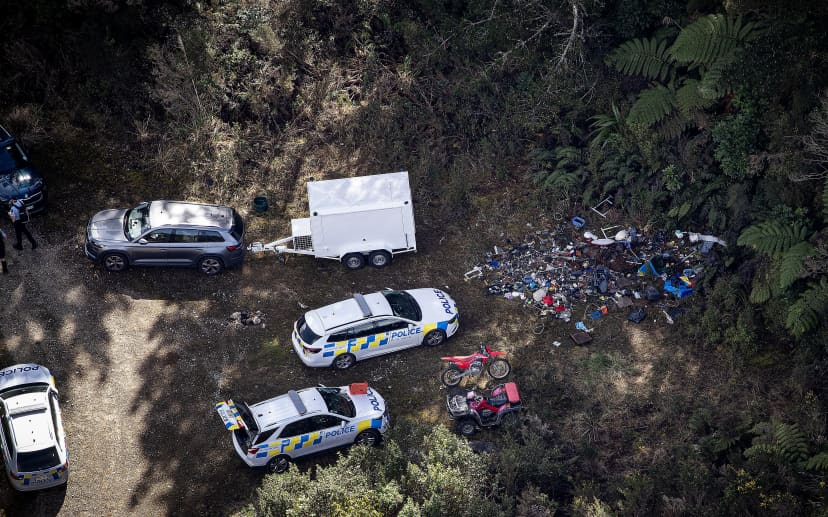

The Ministry of Foreign Affairs and Trade says police are supporting the families of five New Zealanders who remain missing after August’s catastrophic flash flood at the Nepal-China border.
A massive flash flood, believed to have been triggered by a glacial collapse, tore through a Himalayan valley on 26 August, burying villages.
The disaster killed more than 1300 people, with at least 5000 others unaccounted for, according to latest reports on both sides of the border.
In New Zealand, community groups have raised more than $200,000 for the flood victims, according to former honorary consul for Nepal Dinesh Khadka.
“I’m so proud of the Indian community here who … supported us, saying it is not a Nepal problem but our problem,” Khadka said.
He said about 80 percent of the donations had come from New Zealand’s Indian community.
Supplied
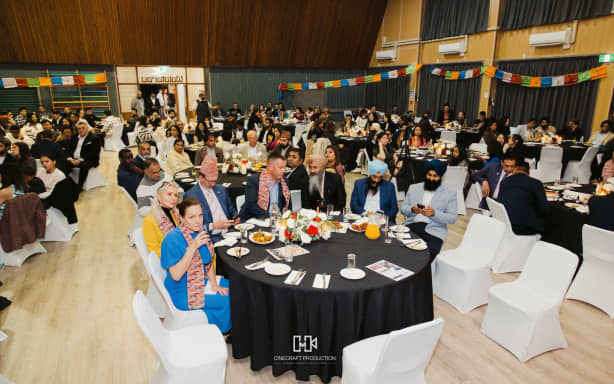
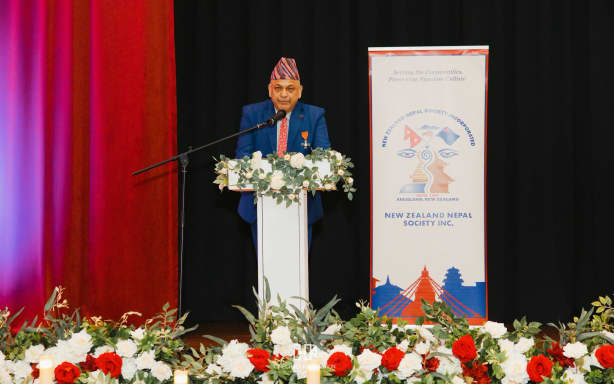
Last week, the Nepali community raised $100,000 through a fundraising dinner at the Freemans Bay Community Centre in Auckland.
The Central Sikh Association donated $50,000 to Nepal that same night.
Earlier this month, Gurdwara Shri Dashmesh Darbaar Sahib in Papatoetoe pledged $15,000, which was matched by the New Zealand Indian Central Association.
Shiv Mandir in Manurewa donated $4000, while Manurewa Local Board member Marshal Ahluwalia and National Party Manurewa candidate Ghouse Majeed donated $7500.
Khadka said the Federation of Islamic Associations of New Zealand had pledged $5000, which would be directly deposited into Nepal’s Prime Minister’s Disaster Relief Fund.
Other fundraising events included a dosa event in Māngere organised by Thiru Subramaniyar Aalayam on 5 September, and a fundraising dinner organised by the Nepal-New Zealand Friendship Society of Canterbury in Rolleston on 12 September.
A similar dinner was organised by the Waikato Indian Association and Nepal-New Zealand Waikato Friendship Society in Hamilton on 9 September, while the Taranaki Nepalese Community is planning a fundraising dinner in New Plymouth on 26 September.
He said the fundraising was a temporary effort to support people who had lost everything in the floods.
“Nepal will take decades to rebuild and whatever we raise now will go to the people who are in most need right now,” he said.
Khadka said more fundraising events were being planned across New Zealand.
Next week, Wellington Mutamizh Sangam’s youth wing will hold a youth festival to raise funds for Nepal, while the Indian Film Festival in October has also pledged to support fundraising efforts for the country, with a Nepali film included in its programme.
Khadka said the response had shown him how much New Zealanders cared about Nepal.
“Wherever we go, I see New Zealanders approaching me and asking how they can support Nepal,” he said.
“That makes me proud of New Zealand and how lucky we are to be called New Zealanders.”
Khadka also warned that some organisations were using the disaster to make money.
“It is very sad to see that there are organisations who are raising money but it doesn’t reach the Prime Minister’s Disaster Relief Fund, so my request to people who are donating their hard-earned money is to make sure that you donate through the right channels,” he said.
Supplied
Khadka said he was receiving regular updates from Nepal Police, who were doing their best to recover bodies and search for survivors.
“More than 1400 bodies [have] already [been] found but they’re looking through the rubble and buildings to find more than 5000 bodies or even survivors,” he said.
Khadka said he did not have an update on the missing New Zealanders.
Five New Zealanders remain missing following the deadly flash floods: Dejan Kuzmic, Shweta Mhatre, Mihir Patel, Kinnari Patel and Suhasini Reddy.
More than 300 foreign nationals have been rescued, according to an update from Nepal’s National Disaster Risk Reduction and Management Authority.
No New Zealanders have been included in that number.
RNZ understands Mhatre and Kuzmic were part of the Isha Foundation’s pilgrimage, and Sadhguru had previously said two New Zealanders were missing from his trekking group.
Meanwhile, Reddy’s family has called on rescuers not to stop searching for the 44-year-old after conflicting reports about her status emerged online.
Reddy’s brother Rajeev and his wife Lauren urged people to keep searching for survivors in a Facebook post several weeks ago.
A spokesperson for the Ministry of Foreign Affairs and Trade said New Zealand’s consular response team in Kathmandu was engaged with local authorities and the Nepalese Government.
“However, challenges on the ground mean that new, verified information will continue to take time to emerge.”
A spokesperson for the Ministry of Foreign Affairs and Trade said New Zealand had extended an offer of technical expertise to aid Nepal’s response effort in addition to humanitarian assistance worth $3.5 million to support the humanitarian response.
rnz


National vows to try to split Pak’nSave and New World

Tom Phillips report: The missed opportunities to find the children

Pieces still missing from Tom Phillips inquiry – academic


-

 Fiji News2 months ago
Fiji finalising diaspora policy to ensure citizens abroad ‘keep coming back’
-

 Latest News2 months ago
41 percent of Kiwis taking on debt to cover increased living costs – Kiwibank
-
 NZ News2 months ago
Mother of Marokopa children says Tom Phillips would take her phone to stop 111 calls
-
 Latest News2 months ago
Police searching for missing woman recover body in West Auckland
-
 NZ News2 months ago
Coroner told about LynnMall terrorist’s time in prison’s extreme risk unit
-
 NZ News2 months ago
Queenstown bouncers guilty of selling drugs while on the job
-

 Sports2 months ago
Junior Bula Boys reach OFC U-16 final, seal U-17 World Cup berth
-
 World2 months ago
Ex-Fiji prosecutions office employee ‘scared to leave Australia’ after leaked corruption allegations